Nissan Altima Hybrid: What You Need to Know in 2026
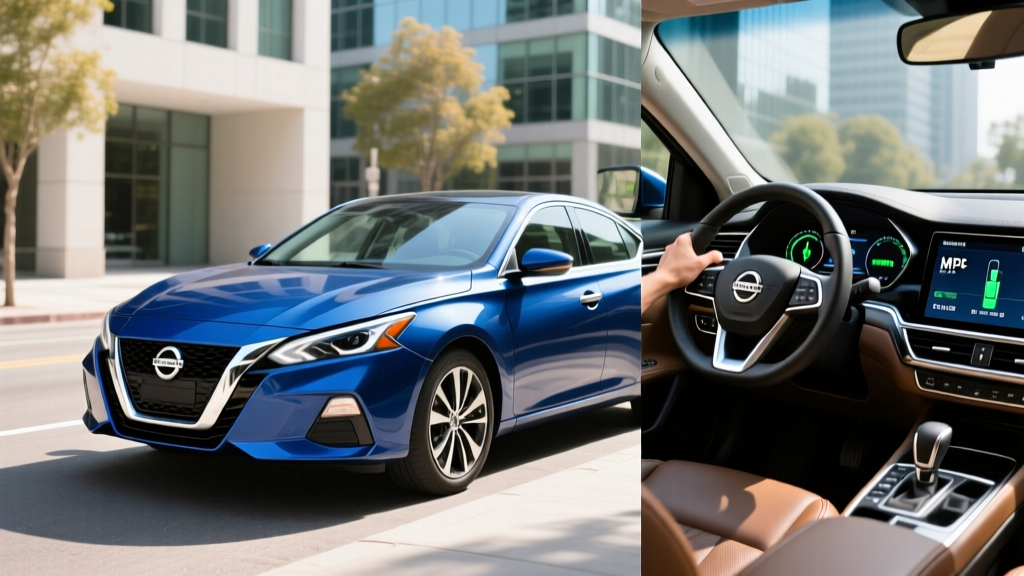
The Nissan Altima has long been a staple in the midsize sedan segment, and its hybrid variant offers an intriguing middle ground between traditional gasoline models and full electric vehicles. For 2026, the Altima Hybrid continues to appeal to drivers seeking improved fuel economy without the range anxiety or charging infrastructure concerns that come with pure EVs.
As a conventional hybrid (HEV), the Altima Hybrid requires no plug-in charging—it generates electricity through regenerative braking and its gasoline engine. This makes it fundamentally different from plug-in hybrids (PHEVs) that offer electric-only driving range but require regular charging to maximize their efficiency benefits.
HEV vs PHEV: Understanding the Altima Hybrid's Approach
Conventional Hybrid (HEV) — Altima Hybrid
- No plug-in charging required
- Self-charging via regenerative braking and engine
- Lower upfront cost than PHEV
- No electric-only range—always uses some gasoline
- Typically 40-50 MPG combined
Plug-in Hybrid (PHEV)
- Requires plug-in charging for maximum benefit
- Larger battery (typically 10-20 kWh)
- 20-40 miles electric-only range
- Higher purchase price, potential tax credits
- Best for drivers with home charging access
The Altima Hybrid falls squarely in the HEV category. If you're looking for electric-only commuting capability, you'll need to consider PHEV alternatives like the Toyota Prius Prime or Honda Clarity Plug-in Hybrid—or step up to a full EV like the Nissan Leaf or Ariya.
Fuel Economy: EPA Ratings and Real-World MPG
| Driving Condition | EPA Rating | Real-World Expectation |
|---|---|---|
| City | 44 MPG | 46-50 MPG (hybrids excel in stop-and-go) |
| Highway | 39 MPG | 37-41 MPG (less regenerative braking benefit) |
| Combined | 42 MPG | 41-45 MPG (varies by driving style) |
The Altima Hybrid's 2.5-liter four-cylinder engine paired with an electric motor delivers an EPA-estimated 42 MPG combined. However, like most hybrids, real-world city driving often exceeds EPA estimates thanks to frequent regenerative braking opportunities. Highway driving typically sees slightly lower efficiency as the system relies more heavily on the gasoline engine at sustained speeds.
For comparison, the standard gasoline Altima achieves around 32 MPG combined, making the hybrid variant approximately 30% more efficient in typical mixed driving. According to fueleconomy.gov, this translates to roughly $500-700 in annual fuel savings for a driver covering 15,000 miles per year.
Powertrain Specs: Engine, Motor, and Combined Output
| Engine | 2.5L DOHC 16-valve 4-cylinder |
| Engine Power | 188 hp @ 6,000 rpm |
| Electric Motor | AC synchronous motor |
| Combined System Power | Approximately 190-200 hp |
| Transmission | eCVT (electronically controlled CVT) |
| 0-60 mph | ~7.5-8.0 seconds (estimated) |
| Drivetrain | Front-wheel drive |
The Altima Hybrid uses Nissan's proven hybrid system, which pairs the familiar 2.5-liter engine with an electric motor integrated into the transmission. Unlike some competitors that offer all-wheel drive in their hybrid sedans, the Altima Hybrid remains front-wheel drive only.
Acceleration is adequate for daily driving but not sporty—the hybrid system prioritizes efficiency over performance. The eCVT transmission provides smooth, seamless power delivery without the gear hunting associated with traditional automatics.
Battery Technology, Warranty, and Lifespan
Hybrid Battery Warranty
Coverage: 8 years or 100,000 miles (whichever comes first)
What's Covered: Hybrid battery pack, power control module, inverter, and related hybrid system components
Replacement Cost (out of warranty): $2,000-$4,000 depending on labor rates and parts availability
Expected Lifespan: Most hybrid batteries last 150,000-200,000+ miles with proper maintenance
The Altima Hybrid uses a lithium-ion battery pack significantly smaller than those in PHEVs or full EVs—typically around 1-2 kWh. This smaller capacity is sufficient for hybrid assist functions but doesn't provide electric-only driving range.
Nissan's hybrid battery warranty aligns with industry standards at 8 years/100,000 miles. Real-world data from hybrid vehicles across manufacturers shows that modern lithium-ion hybrid batteries rarely fail within the warranty period. Many Toyota and Honda hybrids (which share similar technology) routinely exceed 200,000 miles on original battery packs.
Unlike full EV batteries that experience gradual capacity degradation affecting range, hybrid batteries operate within a narrow state-of-charge window (typically 40-60%), which significantly extends their lifespan. The system never fully charges or fully depletes the battery, reducing stress on the cells.
Pricing, Trims, and Tax Credit Eligibility
The 2026 Nissan Altima Hybrid starts at approximately $28,000-$30,000 MSRP for the base SV trim, with the top SL trim reaching $33,000-$35,000. This represents a $2,000-$3,000 premium over equivalent gasoline Altima models.
| Base MSRP (SV trim) | $28,500 (estimated) |
| Top Trim MSRP (SL) | $34,000 (estimated) |
| Hybrid Premium vs Gas Model | $2,000-$3,000 |
| Federal Tax Credit (§30D) | Not eligible (HEV, not PHEV/EV) |
| State Incentives | Varies by state; some offer hybrid rebates |
As a conventional hybrid, the Altima Hybrid does not qualify for the federal §30D clean vehicle tax credit, which is reserved for plug-in electric vehicles (PHEVs and full EVs) meeting specific battery sourcing and MSRP requirements. The IRS guidelines explicitly limit the credit to vehicles with at least 4 kWh of battery capacity that can be recharged from an external power source.
Some states offer their own hybrid incentives, though these have become less common as policy focus has shifted toward plug-in vehicles. Check your state's energy or environmental agency website for current programs.
Who Should Choose the Altima Hybrid?
Choose the Altima Hybrid If:
- You want better MPG without changing your fueling habits
- You lack access to home or workplace charging
- You drive primarily in city/stop-and-go traffic
- You want a proven, reliable sedan with lower operating costs
- You're not ready to commit to a full EV
- You need a vehicle that works in areas with limited charging infrastructure
Consider Alternatives If:
- You want electric-only commuting (look at PHEVs or EVs)
- You're seeking federal tax credits (requires PHEV/EV)
- You prefer AWD (Toyota Camry Hybrid offers this)
- You want the latest hybrid tech (Altima's system is proven but not cutting-edge)
- You prioritize acceleration over efficiency
Hybrid vs PHEV vs EV: Which Fits Your Needs?
The Altima Hybrid makes sense for drivers who want improved fuel economy without lifestyle changes. Here's how it compares to other electrified options:
Choose HEV (Altima Hybrid) if: You want simplicity, no charging requirements, and modest fuel savings. Ideal for apartment dwellers or those without charging access.
Choose PHEV if: You have home charging and a short commute (under 30 miles). You can drive electric most days but want gasoline backup for longer trips. Examples: Toyota Prius Prime, Ford Escape PHEV.
Choose Full EV if: You have reliable charging access, want zero tailpipe emissions, and your daily driving fits within the vehicle's range (typically 200-350 miles). Examples: Tesla Model 3, Hyundai Ioniq 6, Nissan Ariya.
Frequently Asked Questions
How many MPG does the Nissan Altima Hybrid get?
The Altima Hybrid achieves an EPA-estimated 44 MPG city, 39 MPG highway, and 42 MPG combined. Real-world city driving often exceeds EPA estimates, reaching 46-50 MPG in stop-and-go traffic thanks to regenerative braking.
Does the Altima Hybrid need to be plugged in?
No. As a conventional hybrid (HEV), the Altima Hybrid charges its battery through regenerative braking and the gasoline engine. You fuel it exactly like a standard gasoline car—no charging cables or outlets required.
How long will the Altima Hybrid battery last?
Nissan warranties the hybrid battery for 8 years or 100,000 miles. Real-world data from similar hybrid systems shows most batteries last 150,000-200,000+ miles. The battery operates within a narrow charge range to maximize longevity.
What does it cost to replace the hybrid battery?
Out-of-warranty hybrid battery replacement typically costs $2,000-$4,000 including parts and labor. However, most hybrid batteries outlast the vehicle's useful life, making replacement rare.
Does the Altima Hybrid qualify for tax credits?
No. The federal §30D clean vehicle tax credit only applies to plug-in electric vehicles (PHEVs and full EVs). As a conventional hybrid, the Altima Hybrid is not eligible. Some states may offer hybrid incentives—check local programs.
Is the Altima Hybrid reliable?
Nissan's hybrid system has proven reliable in real-world use. The technology is mature, and hybrid components (including the eCVT transmission) typically experience less wear than conventional automatic transmissions due to the absence of traditional gear-shifting mechanisms.
How does it compare to the Toyota Camry Hybrid?
The Camry Hybrid offers slightly better fuel economy (up to 52 MPG combined in LE trim), available AWD, and a longer track record in the hybrid sedan segment. The Altima Hybrid competes on price and Nissan's sedan styling, but the Camry remains the segment benchmark according to IIHS ratings.
Final Verdict
The Nissan Altima Hybrid serves a specific buyer: someone who wants better fuel economy without the complexity or cost of plug-in vehicles. At 42 MPG combined with no charging requirements, it delivers meaningful fuel savings over the gasoline Altima while maintaining the convenience of traditional refueling.
However, the hybrid sedan segment faces stiff competition from the Toyota Camry Hybrid (better MPG, AWD option) and Honda Accord Hybrid (more refined powertrain). The Altima Hybrid's value proposition hinges on Nissan's pricing and the brand's sedan loyalists who prefer its styling and driving dynamics.
For 2026 buyers without home charging access who still want to reduce fuel consumption, the Altima Hybrid remains a practical, no-compromise choice. Just know that you're choosing proven technology over cutting-edge efficiency—and that's perfectly fine for many drivers.