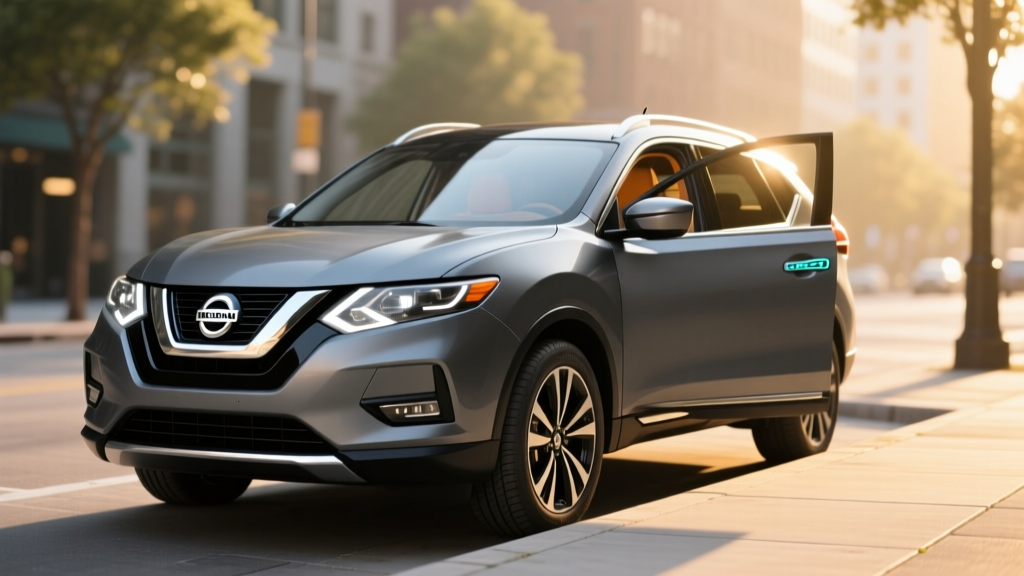
The 2019 Nissan Rogue Hybrid occupies a specific niche in the compact crossover segment: a conventional hybrid (HEV) that requires no plug, no range planning, and no charging infrastructure — just measurably better fuel economy than its gasoline-only sibling. With Nissan discontinuing the Rogue Hybrid after the 2019 model year in the U.S. market, this vehicle now exists exclusively on the used-car lot. For buyers in 2026 evaluating a pre-owned example, the key questions center on real-world MPG, long-term battery reliability, and whether a seven-year-old hybrid still makes financial sense versus a newer plug-in hybrid or full EV.
This guide breaks down every spec that matters — EPA fuel economy, powertrain output, battery warranty coverage, and total cost of ownership — so you can decide whether the 2019 Rogue Hybrid fits your commute, budget, and risk tolerance.
HEV vs PHEV: What the 2019 Rogue Hybrid Actually Is
Before examining specs, it's critical to classify this vehicle correctly. The 2019 Nissan Rogue Hybrid is a conventional hybrid electric vehicle (HEV), not a plug-in hybrid (PHEV). This distinction drives every ownership expectation:
| Feature | HEV (2019 Rogue Hybrid) | PHEV (e.g., Toyota RAV4 Prime) |
|---|---|---|
| Plug-in charging required? | No — regenerative braking + engine charges battery | Yes — plug in for electric-only miles |
| Electric-only range | None (motor assists engine at low speeds) | Typically 25–42 miles |
| Battery size | ~0.9 kWh (small buffer) | 13–18 kWh usable |
| Federal tax credit (§30D) | Not eligible | Up to $7,500 (if requirements met) |
| Primary efficiency gain | City MPG boost via regen & engine-off coasting | Electric-only commuting, then hybrid operation |
The Rogue Hybrid's small lithium-ion battery pack captures energy during braking and deceleration, then deploys it to assist the gasoline engine during acceleration and enable brief engine-off coasting at low speeds. You never plug it in. You never search for a charger. You simply refuel at any gas station and drive.
Fuel Economy: EPA Ratings and Real-World MPG
Fuel economy is the primary reason this vehicle exists. According to fueleconomy.gov, the 2019 Nissan Rogue Hybrid carries the following EPA estimates:
| Drivetrain | City MPG | Highway MPG | Combined MPG |
|---|---|---|---|
| FWD (S, SL, SV trims) | 33 | 35 | 34 |
| AWD (S, SL, SV trims) | 31 | 33 | 32 |
| Gas-only Rogue (FWD, for comparison) | 26 | 33 | 29 |
Real-World MPG vs. EPA Sticker
Conventional hybrids like the Rogue Hybrid tend to meet or slightly exceed their EPA city ratings in real-world stop-and-go driving because regenerative braking recovers energy that a gas-only vehicle wastes as brake heat. Owners who do predominantly urban commuting frequently report 34–36 MPG in FWD models during warmer months.
However, several factors reduce real-world efficiency:
- Highway-dominant driving: At sustained 70+ mph speeds, the electric motor contributes minimally. Expect 30–32 MPG highway in FWD models — closer to the gas-only Rogue.
- Cold weather: Below 40°F, the gasoline engine runs more frequently to provide cabin heat (no electric heater in this generation), dropping city MPG by 2–4 points.
- Battery age: A degraded hybrid battery reduces the system's ability to capture and redeploy regen energy, potentially costing 1–3 MPG on a high-mileage example.
Net result: a driver with a mixed 60/40 city/highway commute can reasonably expect 31–34 MPG combined from a well-maintained FWD 2019 Rogue Hybrid in moderate climates.
Powertrain Specs: Engine, Motor, and Combined Output
The 2019 Rogue Hybrid pairs a 2.0-liter inline-four gasoline engine with a single electric motor integrated into Nissan's Xtronic CVT (continuously variable transmission). Here are the exact figures:
| Specification | Value |
|---|---|
| Gasoline engine | 2.0L DOHC 4-cylinder |
| Engine horsepower | 141 hp @ 6,000 rpm |
| Engine torque | 144 lb-ft @ 4,400 rpm |
| Electric motor output | 30 kW (~40 hp) |
| Net system horsepower | 176 hp |
| Transmission | Xtronic CVT with electric motor integration |
| Drivetrain options | FWD or AWD (Intelligent AWD) |
| 0–60 mph (est.) | ~8.5 seconds (FWD) |
| Towing capacity | 1,000 lbs (not rated for heavy towing) |
| Hybrid battery type | Lithium-ion, ~0.9 kWh capacity |
| Battery location | Under rear cargo floor (slight cargo intrusion vs gas model) |
The combined 176 hp output gives the Rogue Hybrid adequate passing power and confident highway merging, though it won't feel quick by modern EV or turbocharged crossover standards. The CVT delivers smooth, drone-free acceleration in normal driving but exhibits the characteristic "rubber-band" sensation under hard throttle application that Nissan's Xtronic units are known for.
Battery Warranty, Lifespan, and Replacement Cost
2019 Nissan Rogue Hybrid Battery Warranty
- Original warranty: 8 years / 100,000 miles (hybrid system components including lithium-ion battery)
- CARB-state warranty: 10 years / 150,000 miles in California and states that adopted CARB emissions standards (including NY, MA, NJ, CT, and others)
- Warranty status in 2026: The 8-year/100,000-mile factory warranty has expired for all 2019 models by time (2019 + 8 = 2027 at latest, but many will have expired depending on in-service date). CARB-state 10-year coverage may still apply through 2029 for qualifying vehicles.
- Capacity retention threshold: Nissan warranted the hybrid battery against failure or significant capacity loss that triggers a diagnostic trouble code — not against gradual MPG reduction.
How Long Does the Hybrid Battery Last?
Nissan's lithium-ion hybrid battery in the Rogue is a small (~0.9 kWh) pack that undergoes shallow charge/discharge cycles — it never fully depletes or fully charges, which significantly extends cell longevity. Based on industry data from similar Nissan hybrid systems (including the Pathfinder Hybrid and earlier Altima Hybrid), these packs typically deliver 150,000–200,000+ miles before meaningful degradation occurs.
That said, age is a factor independent of mileage. Lithium-ion cells undergo calendar degradation — chemical processes that reduce capacity over time regardless of use. A 2019 model in 2026 is seven years old. Most owners report no significant issues at this age, but buyers of high-mileage examples (120,000+ miles) should budget for potential hybrid system service.
Battery Replacement Cost
If the hybrid battery fails outside warranty coverage:
- OEM Nissan replacement battery: $2,500–$3,500 (part only)
- Dealer-installed (parts + labor): $3,500–$5,000
- Aftermarket/remanufactured battery: $1,500–$2,500 (limited availability for this specific pack)
- Independent hybrid specialist: $2,000–$3,500 installed
Before purchasing a used 2019 Rogue Hybrid, request a hybrid battery health check from a Nissan dealer or qualified hybrid technician. This diagnostic reads the battery's state of health (SoH) and individual cell voltage balance — critical data points that a standard pre-purchase inspection won't reveal.
Pricing, Tax Credits, and Used Market Value
The 2019 Nissan Rogue Hybrid was offered in S, SV, and SL trims with original MSRPs ranging from approximately $29,470 (S FWD) to $36,600 (SL AWD) including destination.
Federal Tax Credit Eligibility
The 2019 Rogue Hybrid does not qualify for the federal §30D Clean Vehicle Credit — now or when it was new. This credit applies only to plug-in electric vehicles (BEVs and PHEVs) with battery capacities of at least 7 kWh. The Rogue Hybrid's ~0.9 kWh pack falls far below this threshold. There is no federal hybrid-specific tax credit for conventional HEVs.
Some states offered modest hybrid incentives at the time of purchase (typically $250–$1,000 rebates), but these have largely expired. Check your state's current energy office website for any residual programs, but do not count on incentives for a used HEV purchase in 2026.
Current Used Pricing (2026 Estimates)
Based on typical used-market depreciation for a seven-year-old compact hybrid crossover:
- 2019 Rogue Hybrid S FWD (80k–100k miles): $14,000–$17,000
- 2019 Rogue Hybrid SV AWD (60k–80k miles): $16,500–$19,500
- 2019 Rogue Hybrid SL AWD (40k–60k miles): $18,500–$22,000
Prices vary significantly by region, condition, service history, and hybrid battery health. Always verify the hybrid system diagnostic before finalizing a purchase.
Reliability, Safety, and Known Issues
The 2019 Nissan Rogue Hybrid carries a mixed reliability profile. The hybrid powertrain itself (engine + motor + battery) has proven durable in Nissan's application, but the vehicle inherits some concerns from the broader Rogue platform:
Strengths
- Hybrid system components (motor, inverter, battery) have low failure rates in this generation
- 2.0L naturally aspirated engine is simpler and less stressed than turbocharged alternatives
- Regenerative braking reduces wear on friction brake pads — many owners report 60,000+ miles on original pads
Known Concerns
- CVT reliability: Nissan's Xtronic CVTs from this era have a documented history of shuddering, overheating under sustained load, and premature failure in some units. The hybrid variant's CVT is a different design (integrated motor), but buyers should check for transmission service bulletins and fluid change records.
- Cargo space reduction: The hybrid battery sits beneath the cargo floor, reducing under-floor storage and slightly raising the load height versus the gas Rogue. Total cargo volume drops from 39.3 to approximately 35.5 cu ft behind the rear seats.
- AWD system: The Intelligent AWD system is a torque-transfer system for slippery conditions, not a performance or off-road drivetrain. It adds weight and complexity without improving fuel economy.
Safety Ratings
The 2019 Nissan Rogue (platform shared with the Hybrid) earned strong safety marks. The NHTSA awarded it a 5-star overall safety rating. The IIHS rated the Rogue as a Top Safety Pick when equipped with optional front LED headlights. Standard safety equipment includes automatic emergency braking, lane departure warning, blind-spot monitoring, and rear cross-traffic alert on SV and SL trims.
2019 Rogue Hybrid vs. Alternatives: What Should You Buy?
Pros
- 33–34 MPG combined (FWD) without any plug-in requirement
- Strong standard safety suite (AEB, BSW, LDW)
- Comfortable ride quality for daily commuting
- No charging infrastructure needed — ideal for apartment dwellers
- Regen braking extends brake pad life significantly
Cons
- CVT transmission concerns in Nissan vehicles of this era
- Reduced cargo space vs gas-only Rogue
- Hybrid battery warranty expiring/expired — replacement is owner's cost
- AWD fuel economy advantage over gas Rogue narrows to ~3 MPG
- Discontinued after 2019 — limited dealer familiarity with hybrid-specific service
Who Should Choose the 2019 Rogue Hybrid?
This vehicle fits you if:
- You drive 12,000–18,000 miles per year with a city-heavy commute (the hybrid system delivers maximum benefit in stop-and-go traffic)
- You cannot charge at home or work (no garage, apartment living, no workplace chargers)
- You want a compact crossover with good visibility, a comfortable ride, and proven safety features
- Your budget is $15,000–$20,000 for a used vehicle and you want to minimize fuel spend without the upfront premium of a newer PHEV or EV
Consider a different vehicle if:
- Your commute is 80%+ highway — the hybrid advantage shrinks to 2–3 MPG over the gas Rogue, reducing payback time
- You want electric-only driving for short trips — look at a used PHEV like the Toyota RAV4 Prime, Mitsubishi Outlander PHEV, or Ford Escape PHEV
- You want zero tailpipe emissions — a used BEV (Chevy Bolt, Nissan Leaf, Tesla Model 3) eliminates local emissions entirely
- You need maximum cargo space — the gas-only Rogue or a non-hybrid competitor (Honda CR-V, Toyota RAV4) offers more room
Quick Comparison: 2019 Rogue Hybrid vs. Key Alternatives
| Vehicle | Type | EPA Combined | Electric-Only Range | Used Price (2026 est.) |
|---|---|---|---|---|
| 2019 Nissan Rogue Hybrid (FWD) | HEV | 34 MPG | N/A | $14k–$22k |
| 2019 Toyota RAV4 Hybrid (AWD) | HEV | 41 MPG | N/A | $18k–$25k |
| 2019 Mitsubishi Outlander PHEV | PHEV | 25 MPG / 74 MPGe | 22 mi | $16k–$22k |
| 2019 Nissan Leaf (62 kWh) | BEV | 112 MPGe (226 mi range) | 226 mi | $12k–$17k |
The Toyota RAV4 Hybrid is the segment benchmark — better MPG, stronger resale value, and a more reliable CVT (Toyota's e-CVT uses a planetary gearset with no belts or pulleys to fail). However, RAV4 Hybrids command a used-price premium. The Rogue Hybrid's value proposition is its lower entry price for buyers who prioritize affordability over class-leading efficiency.
Frequently Asked Questions
How many MPG does the 2019 Nissan Rogue Hybrid get?
The EPA rates the FWD model at 33 city / 35 highway / 34 combined MPG. The AWD model is rated at 31 city / 33 highway / 32 combined. Real-world mixed driving typically yields 31–34 MPG combined in FWD models, with city-dominant commutes sometimes exceeding the EPA city figure thanks to regenerative braking.
Does the 2019 Rogue Hybrid need to be plugged in?
No. This is a conventional hybrid (HEV), not a plug-in hybrid. The small lithium-ion battery charges exclusively through regenerative braking and engine-driven generation. You refuel only at gas stations.
How far can it go on electric power alone?
The 2019 Rogue Hybrid has no meaningful electric-only driving range. The electric motor assists the gasoline engine during acceleration and enables brief low-speed engine-off coasting, but it cannot propel the vehicle at highway speeds or for any significant distance without the engine running. If electric-only driving is a priority, you need a PHEV or BEV.
Is the 2019 Nissan Rogue Hybrid reliable?
The hybrid powertrain components (motor, inverter, battery) have proven reliable in Nissan's application. The primary concern is the Xtronic CVT transmission, which has a documented history of issues in Nissan vehicles of this era. A pre-purchase inspection should include a CVT fluid check and hybrid system diagnostic. Overall reliability is acceptable but trails the Toyota RAV4 Hybrid, which is the segment leader in long-term dependability.
What does a hybrid battery replacement cost?
Expect $3,500–$5,000 for a dealer-installed OEM replacement battery, or $2,000–$3,500 through an independent hybrid specialist using a remanufactured pack. Most 2019 Rogue Hybrid batteries are lasting 150,000+ miles based on industry data, but calendar age (7 years in 2026) is also a degradation factor.
Does the 2019 Rogue Hybrid qualify for any tax credit?
No. The federal §30D Clean Vehicle Credit applies only to plug-in vehicles (BEVs and PHEVs) with batteries of at least 7 kWh. The Rogue Hybrid's ~0.9 kWh battery does not qualify. No current federal incentive exists for conventional hybrids. Some states offered small rebates at time of original purchase, but these have generally expired.
Hybrid vs PHEV vs EV — which should I choose?
Choose the 2019 Rogue Hybrid (HEV) if you cannot charge at home, want zero behavior change from a gas car, and prioritize low purchase price. Choose a PHEV (e.g., RAV4 Prime, Escape PHEV) if you can install a Level 2 home charger, have a commute under 30 miles, and want electric-only daily driving with gas-engine backup for road trips. Choose a BEV (e.g., Bolt, Model 3, Ioniq 5) if you want zero tailpipe emissions, the lowest per-mile fuel cost, and have reliable home or workplace charging access. Each powertrain type has a distinct use case — the right answer depends on your charging access, commute profile, and budget.
Is the 2019 Rogue Hybrid still a good buy in 2026?
At $14,000–$22,000 used, it can be a solid value for budget-conscious buyers who need a compact crossover with strong fuel economy and no charging requirement. The key risk is out-of-warranty hybrid battery and CVT service. Mitigate this by getting a thorough pre-purchase hybrid diagnostic, prioritizing examples with complete service records, and budgeting $1,000–$2,000 as a hybrid-system reserve. If those conditions are met, the 34 MPG combined rating delivers meaningful fuel savings — roughly $400–$600 per year versus the gas-only Rogue for a driver covering 15,000 miles annually at $3.50/gallon.