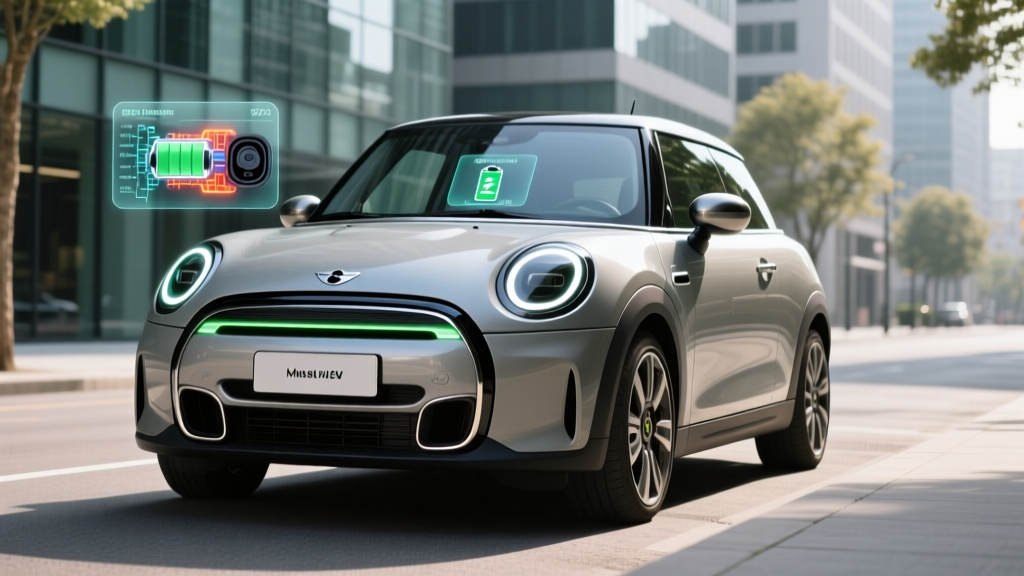
The Mini Cooper has always been an icon of urban agility, and its electrified lineup now gives buyers more powertrain choices than ever. If you've been searching for the Mini Hybrid Cooper, you've likely noticed some confusion online: Mini offers both a conventional hybrid (HEV) and a plug-in hybrid (PHEV) under the Cooper nameplate for the 2026 model year, and they serve very different drivers. This guide breaks down exactly what each variant delivers — real MPG, electric-only range, battery specs, pricing, and whether any federal tax credits apply — so you can pick the right one for your commute.
HEV vs PHEV: What "Mini Hybrid Cooper" Actually Means
Before we get to the numbers, the most important distinction: Mini sells two fundamentally different hybrid systems in the Cooper family. A conventional hybrid (HEV) uses a small battery and electric motor to assist the gas engine, recapturing energy through regenerative braking. You never plug it in. A plug-in hybrid (PHEV) carries a much larger battery that you charge from a wall outlet or public charger, enabling genuine electric-only driving for a meaningful distance before the gas engine kicks in.
Mini Cooper HEV vs PHEV at a Glance
| Attribute | Mini Cooper HEV (Conventional Hybrid) | Mini Cooper SE PHEV (Plug-In Hybrid) |
|---|---|---|
| Plug in to charge? | No — self-charging via regen | Yes — Level 1/Level 2 AC |
| Battery size | ~1.0 kWh (small buffer) | ~16.5 kWh usable (NMC) |
| Electric-only range | Not applicable (motor assist only) | EPA est. ~30–33 miles |
| Primary fuel | Gasoline (with electric assist) | Electricity first, then gasoline |
| DC fast charging | No | No (AC only, up to 7.4 kW) |
| Federal tax credit (§30D) | Not eligible | Not eligible (see below) |
Getting this distinction right matters because it determines your fueling behavior, your operating costs, and whether you need home charging infrastructure. If you can't plug in at home or work, the HEV is the practical choice. If you have access to a 120V or 240V outlet and a short commute, the PHEV can run almost entirely on electricity most days.
2026 Mini Cooper HEV: MPG, Powertrain, and Real-World Efficiency
The conventional hybrid Mini Cooper pairs a 1.5-liter turbocharged three-cylinder engine with a mild-hybrid electric assist system. Combined output lands at approximately 168 horsepower and 207 lb-ft of torque, routed through a 7-speed dual-clutch automatic transmission to the front wheels. The small 48V battery recovers energy under braking and provides torque fill at low RPMs, smoothing out the stop-start character of city driving.
EPA Fuel Economy — Mini Cooper HEV
| Cycle | EPA MPG |
|---|---|
| City | 34 MPG |
| Highway | 36 MPG |
| Combined | 35 MPG |
Source: fueleconomy.gov — EPA estimates for the 2026 Mini Cooper hybrid. Your actual results will vary.
Real-World MPG: What to Expect
Hybrids typically outperform their EPA city ratings in stop-and-go traffic because regenerative braking recaptures energy that a gas car would waste as heat. In real-world urban driving with frequent stops, owners of the Mini Cooper HEV commonly report 36–40 MPG on city routes. Highway driving is a different story: at sustained 70–75 mph speeds, the electric assist contributes less, and you can expect 32–34 MPG. Cold weather (below 40°F) reduces efficiency by roughly 5–8% as the engine runs richer during warm-up and cabin heating draws additional load.
With a 10.6-gallon fuel tank, the HEV delivers a practical total range of approximately 370–400 miles per tank in mixed driving — enough for most weekly commutes without a fill-up.
2026 Mini Cooper SE PHEV: Electric Range, Charging, and Combined MPG
The plug-in hybrid variant — officially the Mini Cooper SE PHEV — is the electrified option for drivers who want genuine zero-tailpipe-emission commuting without full range-anxiety. It combines a 1.5-liter turbo three-cylinder engine (136 hp) with a more powerful electric motor (approximately 110 hp) integrated into the transmission, for a combined system output of roughly 225 horsepower and 240 lb-ft of torque.
Key PHEV Specs
- Battery: ~16.5 kWh usable capacity, NMC (nickel manganese cobalt) chemistry
- EPA electric-only range: 30–33 miles (varies by wheel size and trim)
- Total combined range: ~320–350 miles (electric + gas)
- Level 1 charging (120V): ~1.4 kW, full charge in approximately 12 hours
- Level 2 charging (240V): ~7.4 kW, full charge in approximately 2.5 hours
- DC fast charging: Not supported — AC charging only
- MPGe (electric mode): ~95 MPGe combined
- Gas-only MPG (battery depleted): ~30 MPG combined
How Far Can the Mini Cooper PHEV Go on Electric Only?
The EPA-estimated electric-only range of 30–33 miles is sufficient for a surprising number of daily commutes. According to the U.S. Census Bureau, the average one-way commute in the United States is approximately 26 miles. If your round-trip commute is under 30 miles and you charge at home overnight, you could go weeks without using a drop of gasoline.
However, real-world electric range depends heavily on conditions. In mild weather (55–75°F) at city speeds, expect to achieve the full EPA estimate or slightly better. On the highway at 70 mph, electric range drops to approximately 22–25 miles. In freezing temperatures (below 32°F), cabin heating and battery thermal losses can reduce electric range to 18–22 miles. The Mini Cooper PHEV does not include a dedicated heat pump for cabin heating — it uses a resistive PTC heater, which draws more energy from the battery in cold conditions.
Charging the PHEV: What You Need at Home
Unlike a full BEV, the PHEV's relatively small battery means you don't need a high-power home charger. A standard 120V household outlet (Level 1) will fully recharge the battery overnight in about 12 hours — perfectly adequate if you plug in when you get home and leave by 7 AM. If you want faster turnaround, a Level 2 (240V) home charger at 7.4 kW will top off the battery in roughly 2.5 hours, meaning you could recharge during a work-from-home lunch break.
The absence of DC fast charging is a notable limitation. On road trips, you cannot use highway fast chargers to quickly replenish the battery. Once the ~16.5 kWh battery is depleted, the car operates as a conventional hybrid at approximately 30 MPG. For most PHEV owners, this is an acceptable trade-off — the PHEV's value proposition is daily electric commuting, not road-trip fast charging.
Pricing, Trims, and Tax Credit Eligibility
| Model | Base MSRP | Combined HP | EPA Range / MPG | §30D Federal Tax Credit |
|---|---|---|---|---|
| 2026 Mini Cooper HEV (Classic) | $32,900 | 168 hp | 35 MPG combined | Not eligible |
| 2026 Mini Cooper SE PHEV (Signature) | $38,500 | 225 hp | 32 mi electric / 30 MPG gas | Not eligible* |
*Under current IRS §30D rules, the federal clean vehicle credit requires a minimum battery capacity of 7 kWh (which the PHEV meets) AND compliance with critical mineral and battery component sourcing requirements, MSRP caps ($55,000 for sedans), and buyer income limits ($150K single / $300K joint). As of the 2026 model year, the Mini Cooper SE PHEV's battery sourcing does not satisfy the critical minerals requirement, making it ineligible for the federal credit. State-level incentives may still apply — check your local energy agency or DMV. Tax rules change frequently; consult a tax professional for your specific situation.
The ~$5,600 price gap between the HEV and PHEV buys you the larger battery, more powerful electric motor, and the ability to drive 30+ miles on electricity. Whether that premium pays for itself depends on your commute, electricity rates, and how long you keep the car.
Battery Warranty, Reliability, and Replacement Costs
Mini Hybrid Battery Warranty
HEV (48V mild-hybrid battery): Covered under Mini's hybrid component warranty for 8 years / 100,000 miles, whichever comes first. This covers defects and capacity loss below a functional threshold.
PHEV (16.5 kWh traction battery): Covered for 8 years / 100,000 miles with a capacity retention guarantee of at least 70% of original capacity. If the battery degrades below this threshold within the warranty period, Mini will repair or replace it at no cost.
Out-of-warranty replacement cost: Based on current BMW Group/Mini parts pricing, a PHEV traction battery replacement runs approximately $6,500–$9,000 (parts + labor). The HEV's 48V battery is significantly cheaper, typically $1,500–$2,500. These are worst-case scenarios — hybrid batteries from the BMW Group have demonstrated strong longevity, with most units retaining 85–90% capacity at 100,000 miles.
Reliability is a reasonable question for any electrified vehicle. Mini's parent company, BMW, has over a decade of experience with hybrid powertrains across its lineup. The three-cylinder engine in the Cooper is a mature design, and the electric motor adds relatively few failure points compared to a conventional transmission. NHTSA and IIHS safety data for the current-generation Cooper platform has been generally positive, though you should verify the latest ratings for the specific model year.
Mini Hybrid Cooper vs Full EV vs Gas Car: Which Should You Choose?
Choose the Mini Cooper HEV If:
- You cannot charge at home or work (no garage, street parking only)
- Your commute is long or unpredictable (50+ miles daily)
- You want better fuel economy with zero behavior change
- You want the lowest purchase price in the hybrid lineup
- You take frequent road trips and don't want to plan charging
Choose the Mini Cooper SE PHEV If:
- You can plug in at home (even a 120V outlet works overnight)
- Your daily round-trip commute is under ~30 miles
- You want electric driving most days but gas flexibility for road trips
- You want the most power (225 hp) in the Cooper lineup
- You want to reduce fuel consumption dramatically without range anxiety
For context, the fully electric Mini Cooper SE (BEV) offers an EPA range of approximately 114 miles and starts around $30,900 (before any credits). It's the cheapest to operate per mile but requires reliable charging access and acceptance of its limited range. If your driving is exclusively urban and you can charge at home, the BEV is the most economical long-term. If you need more range or can't charge reliably, the PHEV is the pragmatic middle ground, and the HEV is the simplest upgrade from a traditional gas car.
5-Year Cost of Ownership Snapshot
| Cost Factor | Cooper HEV | Cooper SE PHEV | Gas Cooper (Baseline) |
|---|---|---|---|
| Purchase price (MSRP) | $32,900 | $38,500 | $30,900 |
| Fuel cost (5 yr / 75K mi) | ~$6,400 | ~$3,200* | ~$8,100 |
| Maintenance (5 yr est.) | ~$3,500 | ~$3,200 | ~$3,800 |
| Total 5-yr operating cost | ~$9,900 | ~$6,400 | ~$11,900 |
*PHEV fuel cost assumes 70% of miles driven on electricity at $0.14/kWh and 30% on gasoline at $3.50/gal. Your ratio depends on commute length and charging habits. Gas baseline assumes 30 MPG combined at $3.50/gal. Source: EPA fuel economy data via fueleconomy.gov and EIA electricity pricing.
The PHEV's higher purchase price is substantially offset by lower fuel costs over five years — especially if most of your driving is within electric-only range. The HEV saves modestly on fuel compared to the gas baseline with no premium over the gas car's complexity. Neither qualifies for the federal §30D credit as of 2026, but check for state rebates (California's CVRP, for example, has historically offered up to $1,000–$2,000 for PHEVs).
Frequently Asked Questions
How many MPG does the Mini Hybrid Cooper get?
The conventional Mini Cooper HEV achieves an EPA-estimated 34 city / 36 highway / 35 combined MPG. In real-world city driving with frequent stops, expect 36–40 MPG thanks to regenerative braking. Highway driving at sustained speeds yields approximately 32–34 MPG. The PHEV variant achieves approximately 30 MPG combined once the battery is depleted, plus 95 MPGe in electric mode.
How far can the Mini Cooper PHEV go on electric only?
The 2026 Mini Cooper SE PHEV delivers an EPA-estimated 30–33 miles of electric-only range. Real-world results vary: mild city driving can match or slightly exceed the EPA figure, while highway driving at 70 mph reduces range to roughly 22–25 miles, and freezing temperatures can drop it to 18–22 miles due to resistive cabin heating and battery thermal losses.
Does the Mini Hybrid Cooper qualify for a tax credit?
Neither the HEV nor the PHEV qualifies for the federal §30D clean vehicle tax credit as of the 2026 model year. The HEV doesn't meet the minimum battery capacity requirement, and the PHEV's battery sourcing does not satisfy current critical mineral and component rules under IRS guidelines. State-level incentives may apply — check your state energy office or DMV. Tax rules change frequently, so consult a tax professional before making a purchase decision based on credits.
Is the Mini Hybrid Cooper reliable, and what does battery replacement cost?
Mini's hybrid components are backed by an 8-year / 100,000-mile warranty. BMW Group's hybrid powertrains have demonstrated strong durability, with most batteries retaining 85–90% capacity at 100K miles. Out-of-warranty PHEV battery replacement costs approximately $6,500–$9,000, while the HEV's 48V battery runs $1,500–$2,500. These are worst-case scenarios that most owners never encounter.
Do I need to plug in the Mini Cooper HEV?
No. The conventional hybrid (HEV) charges its small battery entirely through regenerative braking and the gas engine. You fuel it like any other car at a gas station. Only the PHEV variant requires plugging in to take advantage of its electric-only range. If you never plug in the PHEV, it still functions as a hybrid at approximately 30 MPG — but you'd be paying a premium for battery capacity you're not using.
Hybrid vs PHEV vs full EV — which fits my lifestyle?
Choose the HEV if you have no charging access and want simple fuel savings. Choose the PHEV if you can charge at home, commute under ~30 miles daily, and want electric driving with gas backup for longer trips. Choose the full EV (Mini Cooper SE BEV) if you can charge at home, your daily driving stays under ~100 miles, and you want the lowest per-mile operating cost with zero tailpipe emissions.