Quick Verdict: The GLC 350e Bridges Luxury and Electrification
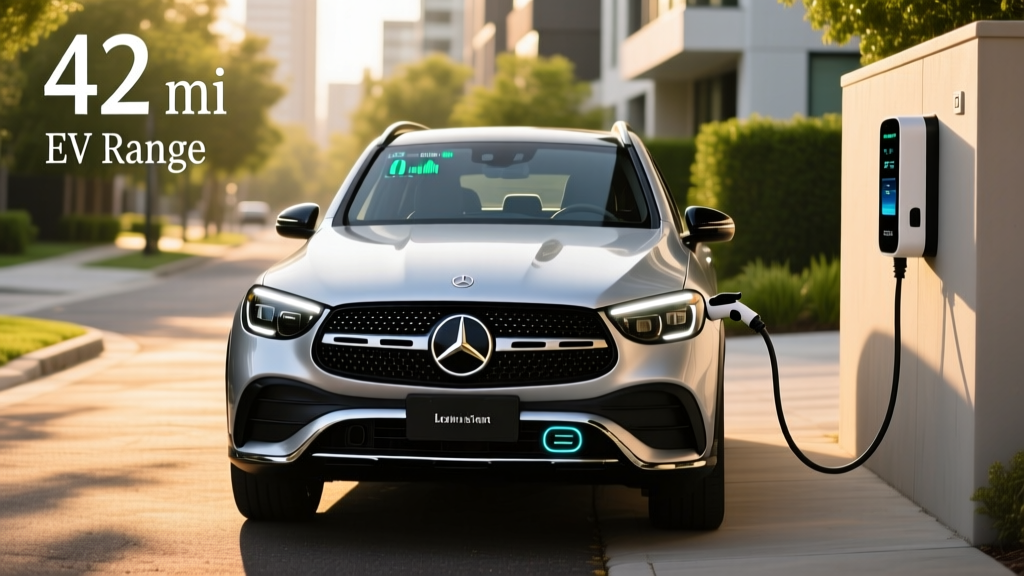
The 2026 Mercedes-Benz GLC 350e plug-in hybrid targets buyers who want electric-only commuting without sacrificing the flexibility of a gasoline engine for longer road trips. With an EPA-estimated 34 miles of electric-only range and a combined 335 horsepower from its turbocharged four-cylinder and electric motor, the GLC 350e occupies a practical middle ground between a conventional hybrid SUV and a full battery-electric vehicle. Starting at $59,900 before destination, it undercuts its German PHEV rivals while offering genuine daily-drivable EV capability for most commuters.
But does the real-world efficiency match the sticker? And does it qualify for the federal tax credit under current IRS §30D rules? This guide breaks down every number that matters.
| Specification | Value |
|---|---|
| Base MSRP | $59,900 (+ $1,150 destination) |
| Powertrain | 2.0L turbo I4 + electric motor (PHEV) |
| Combined Horsepower | 335 hp / 516 lb-ft torque |
| Battery (usable) | 31.2 kWh (NMC lithium-ion) |
| EPA Electric-Only Range | 34 miles |
| Total Combined Range | ~440 miles (EV + gas) |
| MPGe (electric + gas) | 54 MPGe combined |
| Gas-Only MPG | 25 city / 27 hwy / 26 combined |
| 0–60 mph | 6.2 seconds |
| AC Charging (Level 2) | 11 kW onboard charger |
| DC Fast Charging | 60 kW (optional) |
| 10–80% Charge Time (Level 2) | ~2 hours 15 minutes |
| 10–100% Charge Time (DC, optional) | ~30 minutes |
| Battery Warranty | 6 years / 62,000 miles |
| Powertrain Warranty | 4 years / 50,000 miles |
HEV vs. PHEV: Understanding What the GLC 350e Actually Is
Before evaluating the GLC 350e, it is essential to distinguish between the two hybrid architectures buyers encounter:
| Feature | HEV (e.g., Toyota RAV4 Hybrid) | PHEV (e.g., GLC 350e) |
|---|---|---|
| Battery Size | 1–2 kWh | 31.2 kWh |
| Plug-In Required? | No — charges via regen + engine | Yes — for full EV range benefit |
| Electric-Only Range | 0–1 mile at low speed | 34 miles (EPA) |
| Typical MPG | 35–40 combined | 26 combined (gas-only) / 54 MPGe |
| Federal Tax Credit | No | Potentially — see §30D rules below |
| Best For | No home charging access | Home charging + daily commute under 34 mi |
The GLC 350e is a plug-in hybrid (PHEV). It carries a substantially larger battery than a conventional hybrid and can operate as a pure electric vehicle for approximately 34 miles before the gasoline engine engages. If you never plug it in, it functions as a heavy, less-efficient hybrid — you would be carrying 31.2 kWh of battery weight without utilizing its benefit. This vehicle rewards owners who charge regularly.
Electric Range, MPG, and Real-World Efficiency
The EPA rates the 2026 GLC 350e at 34 miles of electric-only range and 54 MPGe combined when operating in blended electric-and-gas mode. Once the battery is depleted and the vehicle runs on its 2.0-liter turbocharged four-cylinder engine alone, the EPA estimates 25 mpg city, 27 mpg highway, and 26 mpg combined, per fueleconomy.gov.
EPA Electric Range: 34 miles
Real-World Expectation: Plan for 28–32 miles in moderate temperatures with mixed city/highway driving. In cold weather (below 40°F), expect 22–26 miles due to cabin heating demands and reduced battery efficiency. Highway-speed electric-only driving at 70+ mph will also reduce range to approximately 25–28 miles. The gas engine will seamlessly engage when the battery is depleted or when you demand hard acceleration.
| Mode | City | Highway | Combined |
|---|---|---|---|
| Electric + Gas (MPGe) | 58 MPGe | 51 MPGe | 54 MPGe |
| Gas Only (MPG) | 25 mpg | 27 mpg | 26 mpg |
Real-world MPG note: PHEVs behave differently than conventional hybrids. If your daily commute falls within the 34-mile electric window and you charge nightly, you may burn almost no gasoline for weeks. Owners with short commutes and diligent charging habits routinely report 80–100+ MPGe over a tank. Conversely, if you never charge and drive it as a conventional hybrid, the 26 mpg combined figure is below what a non-hybrid compact luxury SUV like the BMW X3 xDrive30 achieves (28 mpg combined). The PHEV premium only pays off if you plug in.
Powertrain and Performance
The GLC 350e pairs a 2.0-liter turbocharged inline-four engine (208 hp) with a permanently excited synchronous electric motor integrated into the 9-speed automatic transmission housing. Combined output is 335 horsepower and 516 lb-ft of torque, sent to all four wheels via 4MATIC all-wheel drive.
The result is a 0–60 mph time of 6.2 seconds — quick for a luxury compact SUV and substantially faster than the gas-only GLC 300 (6.8 seconds). The electric motor provides instant torque from a stop, which makes city driving and highway merging feel effortless. In Electric mode, the vehicle can reach speeds up to 87 mph before the engine intervenes, though range drops sharply at those speeds.
Mercedes offers several drive modes: Electric, Hybrid, Battery Hold (preserves charge for later use, useful before entering a city), and Sport. The Hybrid mode intelligently blends power sources based on navigation data and driving conditions — if the onboard navigation knows you are approaching a city center, it can save battery for electric-only operation in stop-and-go traffic.
Charging: Speeds, Connectors, and Home Setup
The GLC 350e's 31.2 kWh battery (approximately 27 kWh usable, with a buffer to protect longevity) can be charged via three methods:
| Level | Power | Time (10–100%) | Notes |
|---|---|---|---|
| Level 1 (120V household) | ~1.4 kW | ~20 hours | Emergency/trickle only |
| Level 2 (240V home/public) | 11 kW (onboard max) | ~2 hours 45 minutes | Standard J1772 connector |
| DC Fast Charge (optional) | 60 kW peak | ~30 minutes (10–100%) | CCS connector, $500 option |
DC fast charging is optional on the GLC 350e, not standard. The base model ships with AC charging only (J1772 connector for Level 2). If you want CCS DC fast charging capability, you must select the DC fast-charging package, which adds approximately $500 to the build. This is a critical spec to confirm on the window sticker before purchase — many dealers stock units without it.
For home charging, a Level 2 wallbox at 11 kW (48 amps on a 60-amp circuit) will fully replenish the battery in under three hours. Given the 31.2 kWh battery size, overnight charging on even a 7.2 kW charger (common for budget-friendly home stations) is more than sufficient — a full charge takes roughly 4 hours at that rate. Most PHEV owners find a basic Level 2 home charger ideal: plug in when you arrive home, and the battery is full well before morning.
Cost to charge: At the US average residential electricity rate of $0.17/kWh, a full charge costs approximately $4.60. That delivers 34 miles of electric driving, or roughly $0.14 per mile. Compare that to premium gasoline at $4.00/gallon and 26 mpg: $0.15 per mile on gas. The per-mile cost is similar, but electricity prices are more stable than gasoline, and if you have solar panels or time-of-use rates with cheap overnight electricity, the EV portion of your driving can drop below $0.08 per mile.
Pricing, Trims, and Federal Tax Credit Eligibility
The 2026 Mercedes-Benz GLC 350e starts at $59,900 before the $1,150 destination charge, bringing the effective base price to $61,050. A well-equipped model with the Premium package, driver-assistance features, and the DC fast-charging option typically lands between $65,000 and $72,000.
Federal tax credit (§30D): The GLC 350e may qualify for a partial or full federal tax credit, but eligibility under current IRS rules is complex and subject to change. Key requirements as of 2026, per IRS.gov:
- MSRP cap: SUVs must have an MSRP at or below $80,000 — the GLC 350e qualifies at most trim levels
- Buyer income cap: Modified AGI must not exceed $150,000 (single), $225,000 (head of household), or $300,000 (joint filing)
- Battery sourcing: Critical minerals and battery components must meet phased-in domestic-sourcing thresholds — verify with your dealer that the specific VIN qualifies
- Point-of-sale transfer: As of 2024+, eligible credits can be transferred to the dealer at purchase, reducing the purchase price directly rather than waiting for tax filing
- Credit amount: Up to $3,750 for meeting critical-mineral requirements, up to $3,750 for battery-component requirements — maximum $7,500 if both are met
Important caveat: Mercedes-Benz vehicles assembled outside the United States face additional sourcing scrutiny. The GLC is built in Bremen, Germany, and battery component origin varies by production batch. Always confirm credit eligibility for your specific VIN with the dealer and a tax professional before purchase. Do not assume the full $7,500 applies.
Battery Longevity, Warranty, and Replacement Cost
High-Voltage Battery Warranty: 6 years / 62,000 miles (whichever comes first), covering defects and capacity loss below approximately 70% of original capacity.
Powertrain Warranty: 4 years / 50,000 miles.
Note: Mercedes-Benz's PHEV battery warranty is shorter than the 8-year/100,000-mile coverage offered by many mainstream brands (Toyota, Hyundai, Kia). This is a meaningful disadvantage for buyers planning long-term ownership. California and states adopting CARB emissions standards may require extended PZEV warranty coverage of 10 years / 150,000 miles — verify with your dealer if you register in a CARB state.
How long will the battery last? The 31.2 kWh NMC (nickel-manganese-cobalt) battery in the GLC 350e is liquid-cooled and thermally managed, which significantly extends cycle life compared to passively cooled packs. NMC chemistry in a well-managed PHEV application typically retains 85–90% of original capacity after 100,000 miles of regular use. Because the GLC 350e only cycles a portion of its total capacity daily (most owners use 25–30 of the 31.2 kWh), the effective cycle count remains low. Real-world data from earlier Mercedes PHEV models (GLE 350e, S 560e) suggests these packs hold up well over 8–12 years with normal use.
Battery replacement cost: If the high-voltage battery requires replacement out of warranty, expect a cost between $12,000 and $18,000 including parts and labor at a Mercedes-Benz dealership. This is a significant expense, though it is comparable to other luxury-brand PHEV battery replacements. Third-party hybrid battery shops may offer refurbished units for $7,000–$10,000 as the vehicle ages and aftermarket support develops.
Reliability and Ownership Considerations
Mercedes-Benz as a brand has posted middling reliability scores in recent years. The GLC class specifically has performed better than the brand average, but PHEV powertrains add complexity: you have both a full internal-combustion drivetrain and a full electric drivetrain, each with its own cooling circuits, inverters, and control modules. More components means more potential failure points over time.
That said, the electric motor and power electronics in PHEVs are generally very reliable — electric motors have far fewer moving parts than engines and rarely fail. The primary long-term risk areas are the high-voltage battery (degradation over 10+ years), the onboard charger, and the power electronics that manage the transition between electric and gas modes.
Insurance costs: Expect insurance premiums for the GLC 350e to run 10–20% higher than the gas-only GLC 300, reflecting the higher replacement cost of the PHEV powertrain. Get quotes before purchasing.
Maintenance: The gasoline engine still requires regular oil changes, spark plugs, and filter replacements — but because the engine runs fewer miles (if you charge regularly), intervals may stretch. Mercedes recommends standard service intervals regardless. Brake wear is typically lower on PHEVs thanks to regenerative braking, which can extend pad and rotor life significantly.
Pros
- 34 miles of real EV range covers most daily commutes
- 335 hp provides confident acceleration (6.2s to 60)
- No range anxiety — 440+ total miles with gas engine
- Luxury interior with MBUX infotainment and premium materials
- Eligible for potential federal tax credit (verify by VIN)
- DC fast charging available (optional) for quick top-ups
Cons
- Battery warranty only 6 years / 62,000 miles — shorter than competitors
- DC fast charging is a paid option, not standard
- 26 mpg gas-only is below non-hybrid rivals when battery is depleted
- Premium fuel required for the 2.0L turbo
- Cargo space reduced slightly vs. gas GLC due to battery placement
- Complexity of dual powertrain may raise long-term maintenance costs
Who Should Buy the GLC 350e — and Who Shouldn't?
Choose the GLC 350e PHEV if:
- Your daily round-trip commute is under 35 miles and you can charge at home nightly
- You want electric driving for daily errands but need a gas engine for weekend road trips without charging-infrastructure planning
- You want a luxury compact SUV with strong acceleration and Mercedes-Benz interior quality
- You are not ready for a full EV due to apartment living, unreliable charging access, or frequent long-distance travel
Choose a full EV (e.g., BMW iX, Mercedes EQB) if:
- You have reliable home Level 2 charging and rarely drive more than 250 miles in a single day
- You want to eliminate gasoline costs and engine maintenance entirely
- You want longer battery warranties (most EVs offer 8 years / 100,000 miles)
Choose a conventional hybrid (HEV, e.g., Lexus NX 350h) if:
- You cannot charge at home or work
- You want better fuel economy without changing your habits (no plugging in)
- You want a lower purchase price and simpler powertrain
Frequently Asked Questions
How many MPG does the Mercedes-Benz GLC 350e get?
When the battery is depleted and the vehicle runs on gasoline only, the EPA rates the GLC 350e at 25 mpg city, 27 mpg highway, and 26 mpg combined. In blended electric-and-gas operation, it achieves 54 MPGe combined. If you charge daily and commute within the 34-mile electric range, you may use very little gasoline at all.
How far can the GLC 350e drive on electric only?
The EPA estimates 34 miles of electric-only range. In real-world conditions, expect 28–32 miles in moderate weather with mixed driving, and as low as 22–26 miles in cold weather or at sustained highway speeds above 70 mph.
Does the GLC 350e qualify for the federal EV tax credit?
It may qualify for up to $7,500 under IRS §30D, depending on battery-component and critical-mineral sourcing, your income level, and the vehicle's MSRP (must be under $80,000 for SUVs). Because the GLC is assembled in Germany, sourcing requirements are the main variable. Always verify eligibility for your specific VIN with the dealer and consult a tax professional before relying on the credit.
Is the GLC 350e reliable, and what does battery replacement cost?
The GLC class has been moderately reliable, though PHEV systems add complexity. The high-voltage battery is covered for 6 years / 62,000 miles. Out-of-warranty battery replacement is estimated at $12,000–$18,000 at a Mercedes-Benz dealer. The liquid-cooled NMC battery is expected to retain 85–90% capacity after 100,000 miles with normal use.
Do I have to plug in the GLC 350e?
You do not have to — the gasoline engine will operate the vehicle even if the battery is never charged. However, if you never plug it in, you are carrying the weight and cost of a 31.2 kWh battery without using its electric-driving benefit, and the gas-only fuel economy (26 mpg combined) is worse than a conventional hybrid. The PHEV only makes financial and environmental sense if you charge regularly.
How long does it take to charge the GLC 350e at home?
On a Level 2 home charger (240V) at the vehicle's maximum 11 kW acceptance rate, a full charge takes approximately 2 hours and 45 minutes. On a standard 7.2 kW home charger, plan for roughly 4 hours. Level 1 (120V household outlet) takes about 20 hours and is only practical as an emergency backup.
Can the GLC 350e DC fast charge?
Yes, but only if equipped with the optional DC fast-charging package (~$500). With it, the vehicle can accept up to 60 kW via a CCS connector, charging from 10% to 100% in approximately 30 minutes. Without the option, only AC Level 1 and Level 2 charging are available.