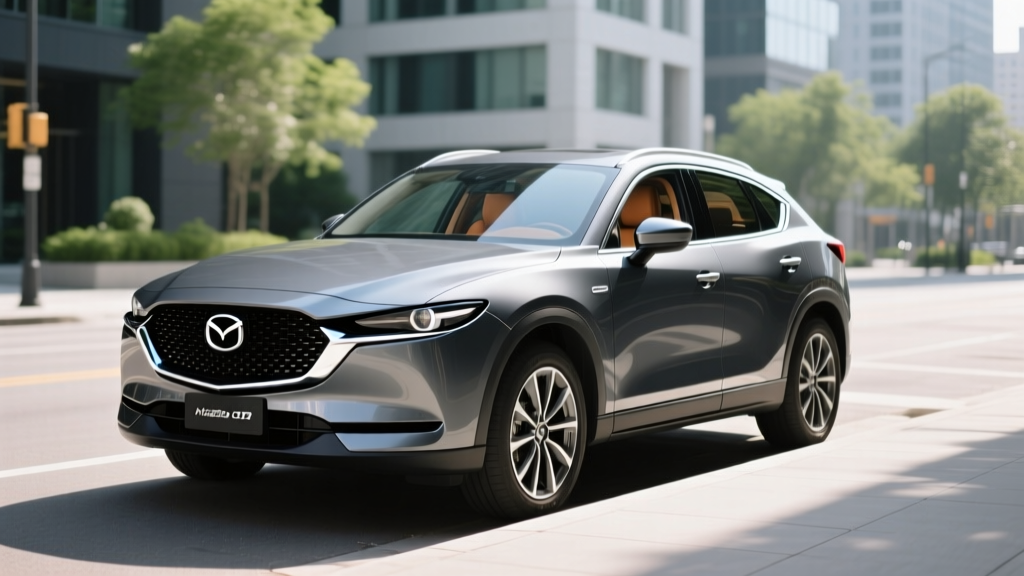
The 2026 Mazda CX-50 Hybrid pairs Mazda's rugged crossover design with Toyota's proven hybrid powertrain — a partnership that yields one of the most fuel-efficient compact SUVs in its class without requiring a plug. For buyers who want hybrid efficiency without the charging logistics of a PHEV or the range considerations of a full EV, the CX-50 Hybrid occupies a practical middle ground.
This guide breaks down the real-world fuel economy, powertrain specs, pricing, reliability outlook, and tax-credit situation so you can decide whether the CX-50 Hybrid fits your next purchase — or whether a PHEV or full BEV makes more sense for your driving pattern.
2026 Mazda CX-50 Hybrid: Powertrain and Performance Specs
The CX-50 Hybrid uses a Toyota-sourced 2.5-liter four-cylinder engine mated to Toyota's hybrid synergy drive system with three electric motors (two drive motors, one generator). This is the same architecture found in the Toyota RAV4 Hybrid and Highlander Hybrid, tuned for Mazda's chassis. All-wheel drive is standard across all trims — there is no front-wheel-drive option.
| Specification | Value |
|---|---|
| Powertrain | 2.5L 4-cyl hybrid (Toyota-sourced) |
| Combined Horsepower | 219 hp |
| Drivetrain | AWD (electronic rear motor) |
| Transmission | eCVT (planetary gearset) |
| Battery Type | Nickel-metal hydride (NiMH), ~1.6 kWh |
| EPA Fuel Economy (City / Hwy / Combined) | 41 / 36 / 39 MPG |
| Fuel Tank Capacity | 14.5 gallons |
| Estimated Total Range | ~565 miles |
| 0–60 mph | ~7.2 seconds |
| Towing Capacity | 1,500 lbs |
| Plug-in Required? | No — self-charging hybrid (HEV) |
Unlike a plug-in hybrid (PHEV), the CX-50 Hybrid's small battery recharges entirely through regenerative braking and the gasoline engine. You never plug it in. The electric motors assist during acceleration and enable low-speed electric-only driving for short bursts — typically under 1 mile at parking-lot speeds — but this is not a vehicle designed for meaningful electric-only range.
EPA Fuel Economy vs. Real-World MPG
The EPA rates the 2026 CX-50 Hybrid at 39 MPG combined (41 city / 36 highway). These figures are sourced from fueleconomy.gov, the official EPA database.
- City driving: Many owners report 40–44 MPG in stop-and-go traffic. Hybrids excel here because regenerative braking recaptures energy and the engine shuts off at stops.
- Highway driving (70+ mph): Expect 32–35 MPG. At sustained high speeds, the electric motor contributes less and aerodynamic drag dominates.
- Cold weather (below 30°F): Plan for a 5–10% reduction (roughly 35–37 MPG combined). The engine runs more often to provide cabin heat and maintain operating temperature.
- Mountainous terrain: Regenerative braking on descents partially offsets the extra load on climbs, but expect 34–37 MPG in hilly regions.
The city-biased EPA rating is a hallmark of conventional hybrids. If most of your driving is urban or suburban with frequent stops, the CX-50 Hybrid will likely meet or exceed its sticker number. If you primarily drive long highway stretches, a diesel or a full EV may deliver better real-world efficiency.
Hybrid (HEV) vs. Plug-In Hybrid (PHEV) vs. Full EV: Which Fits You?
The CX-50 Hybrid is a conventional hybrid (HEV). It is not a plug-in hybrid, and Mazda does not currently offer a PHEV version of the CX-50 for the 2026 model year. Here is how these three powertrain types compare for a typical buyer:
| Factor | HEV (CX-50 Hybrid) | PHEV (e.g., RAV4 Prime) | Full EV (e.g., Ioniq 5) |
|---|---|---|---|
| Plug-in Required? | No | Yes (for EV range) | Yes |
| Electric-Only Range | ~0.5 mi (low speed) | 35–42 mi typical | 250–320 mi |
| Total Range | ~565 mi | ~550+ mi combined | 250–320 mi |
| Home Charging Needed? | No | Recommended (Level 2) | Essential |
| Federal Tax Credit | None (not eligible) | Up to $7,500 (if eligible) | Up to $7,500 (if eligible) |
| Best For | No home charging, mixed driving | Short commutes + road trips | Home charging, daily driving under 250 mi |
| Maintenance | Oil changes, standard | Oil changes + EV systems | Minimal (no oil, fewer fluids) |
- Choose the CX-50 Hybrid (HEV) if: You lack access to home or workplace charging, you want maximum range flexibility, or you drive in rural areas with sparse charging infrastructure.
- Choose a PHEV if: You have a garage with a 120V or 240V outlet, your daily commute is under 40 miles, and you still want gas-engine range for road trips.
- Choose a full EV if: You can install a Level 2 home charger, your daily driving is predictable, and you want the lowest per-mile fuel cost and minimal maintenance.
Pricing, Trims, and Tax Credit Eligibility
The 2026 Mazda CX-50 Hybrid is available in Select, Preferred, and Premium trims. Pricing starts at approximately $35,395 (including destination) for the Select trim and climbs to roughly $42,000 for a fully equipped Premium model.
| Trim | Est. MSRP | Key Features |
|---|---|---|
| Select Hybrid | $35,395 | AWD, 18" wheels, 10.25" display, wireless CarPlay/Android Auto |
| Preferred Hybrid | $38,195 | Power liftgate, heated front seats, leatherette, blind-spot monitoring |
| Premium Hybrid | $42,095 | Panoramic sunroof, Bose audio, ventilated seats, 20" wheels, HUD |
Because the CX-50 Hybrid is a conventional hybrid (HEV) — not a plug-in vehicle — it does not qualify for the IRS §30D Clean Vehicle Credit. That credit applies only to plug-in electric vehicles (BEVs and PHEVs) with battery capacities of at least 7 kWh and meeting MSRP, income, and critical-mineral sourcing requirements. See IRS §30D guidelines for full eligibility rules. Some states may offer minor incentives for hybrid purchases, but these vary by jurisdiction — check your state's energy office for current programs.
Reliability, Battery Warranty, and Long-Term Costs
The CX-50 Hybrid's Toyota-sourced hybrid system has one of the longest reliability track records in the industry. The Toyota Hybrid Synergy Drive has been in production since 1997 (Prius), with millions of units on the road. The NiMH battery pack in this system has proven particularly durable, with many Toyota hybrids exceeding 200,000 miles on the original battery.
- Hybrid Battery: 10 years / 150,000 miles (whichever comes first) — covers capacity loss below a defined threshold and defects
- Hybrid System Components: 8 years / 100,000 miles (inverter, motors, control module)
- Powertrain (engine, transmission): 5 years / 60,000 miles
- Bumper-to-Bumper: 3 years / 36,000 miles
Note: Warranty terms may vary by state (California and states adopting CARB standards sometimes have extended hybrid battery coverage). Confirm with your dealer.
Hybrid Battery Replacement Cost
If the hybrid battery fails outside warranty, replacement cost for a Toyota-sourced NiMH pack typically ranges from $2,500 to $4,000 (parts and labor). Refurbished or aftermarket options can reduce this to $1,500–$2,500. Given the proven longevity of these packs, most owners will never face this expense — but it is a known cost ceiling that full EV battery replacements far exceed.
Long-Term Maintenance Advantage
Compared to the turbocharged gas-only CX-50 (2.5T), the hybrid variant eliminates the turbocharger and its associated heat and complexity. There is no turbo oil-line degradation, no wastegate rattle, and regenerative braking extends brake pad life significantly — many hybrid owners report original brake pads past 80,000 miles. Oil changes are still required at standard intervals (~10,000 miles), but overall maintenance costs trend lower than the turbo gas model.
Driving Dynamics and Practical Ownership
The CX-50 Hybrid trades some of the turbo model's punch for efficiency. At 219 combined horsepower, it delivers adequate acceleration (roughly 7.2 seconds to 60 mph) but won't feel sporty by Mazda's standards. The eCVT operates smoothly without the rubber-band effect of traditional CVTs, thanks to Toyota's planetary gearset design that creates fixed-ratio feel under most conditions.
Ride quality is firmer than a RAV4 Hybrid, consistent with Mazda's tuning philosophy. The CX-50's wider track and lower roofline give it a more planted feel on pavement, though ground clearance (8.3 inches) and the standard AWD system handle light off-road duty and snow competently.
Cargo space measures approximately 31.4 cubic feet behind the rear seats and 56.3 cubic feet with the rear seats folded — competitive for the segment, though slightly less than the RAV4 Hybrid due to the CX-50's more coupe-like roofline.
Pros and Cons at a Glance
- 39 MPG combined — among the best in the compact SUV class
- Standard AWD at every trim level
- Toyota hybrid reliability with 10-year/150k-mile battery warranty
- No charging infrastructure required
- Premium interior materials for the price point
- ~565 miles total range on a single tank
- No federal tax credit eligibility (HEV, not PHEV/BEV)
- Less powerful than the 2.5T gas model (256 hp)
- Towing limited to 1,500 lbs (gas model: up to 3,500 lbs)
- Slightly less cargo room than RAV4 Hybrid
- No PHEV variant available for 2026
- Infotainment uses rotary dial, not touchscreen (except via CarPlay/Android Auto)
Frequently Asked Questions
How many MPG does the 2026 Mazda CX-50 Hybrid get?
The EPA rates it at 41 city / 36 highway / 39 combined MPG. In real-world city driving, many owners achieve 40–44 MPG. Highway-only driving at 70+ mph typically yields 32–35 MPG. Cold weather reduces efficiency by roughly 5–10%.
Is the CX-50 Hybrid a plug-in vehicle?
No. The CX-50 Hybrid is a conventional hybrid (HEV). It charges its own small battery through regenerative braking and the gasoline engine. You never plug it in. If you want plug-in electric range, you would need to look at a PHEV like the Toyota RAV4 Prime or a full EV.
Does the 2026 CX-50 Hybrid qualify for any tax credit?
It does not qualify for the federal §30D Clean Vehicle Credit, which is limited to plug-in electric vehicles (BEVs and PHEVs). Some states or local utilities may offer minor rebates for hybrid purchases, but these vary widely. Check IRS guidelines and your state energy office for specifics.
Is the hybrid battery reliable and what does replacement cost?
The Toyota-sourced NiMH hybrid battery has an exceptional reliability record, with millions of units in service worldwide. Mazda covers it for 10 years / 150,000 miles. Out-of-warranty replacement typically costs $2,500–$4,000, though refurbished options are available for less. Most owners never replace the battery.
How does the CX-50 Hybrid compare to the RAV4 Hybrid?
They share the same powertrain (219 hp, 2.5L hybrid, AWD), so fuel economy and performance are nearly identical. The CX-50 Hybrid offers a more premium interior, firmer ride, and lower roofline. The RAV4 Hybrid provides more cargo space, a PHEV option (RAV4 Prime), and a longer track record under the Toyota badge. Both are strong choices — the decision comes down to styling preference, interior feel, and whether you want a PHEV option.
Should I buy the CX-50 Hybrid or the turbo gas model?
If fuel economy is your priority, the hybrid wins decisively (39 MPG vs. roughly 25 MPG combined for the 2.5T). If you need maximum towing capacity (3,500 lbs) or prefer the stronger acceleration of the turbo engine (256 hp, ~6.3 seconds to 60), the gas model is the better fit. The hybrid tows only 1,500 lbs.
Is the CX-50 Hybrid good in snow and winter conditions?
Yes. Standard electronic AWD with a dedicated rear motor provides confident traction in snow and ice. The hybrid system's instant electric torque at low speeds aids in slippery starts. Ground clearance of 8.3 inches handles moderate snow depth. Expect a 5–10% MPG reduction in sustained cold weather below 30°F.