Quick Verdict: A Proven Hybrid Workhorse on the Used Market
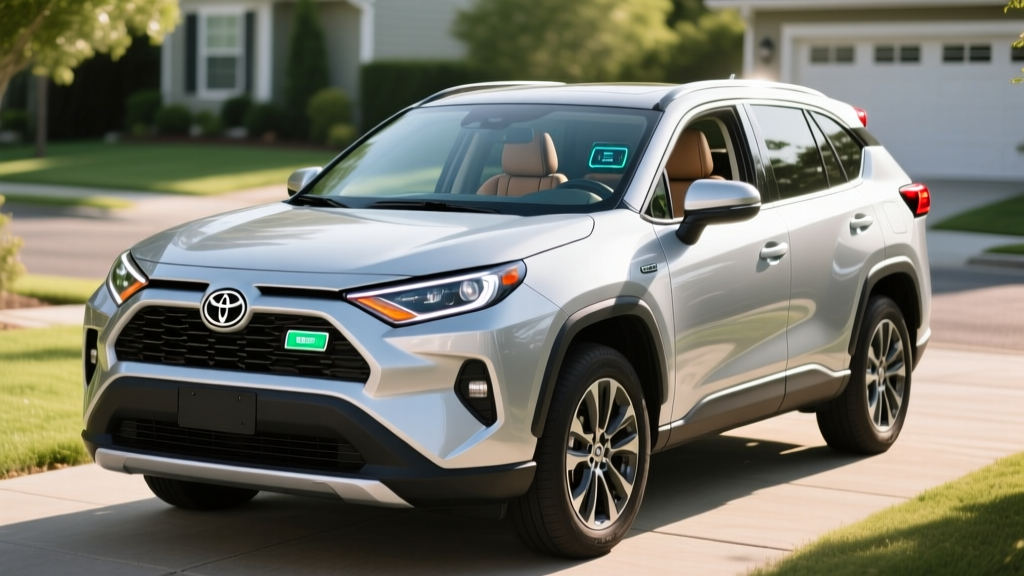
The 2018 Toyota RAV4 Hybrid XLE remains one of the most sensible used compact SUV purchases in 2026. With an EPA-rated 32 MPG combined, standard all-wheel drive, and Toyota's long-proven hybrid synergy drive system, it delivers real-world fuel economy that routinely exceeds its sticker numbers in city driving. As a conventional hybrid (HEV), it requires no plug, no charging infrastructure, and no behavior change from a gas-car owner — just fill up and drive.
This generation (2016–2018) was the final year of the third-gen RAV4 Hybrid before Toyota's redesigned 2019 model moved to the TNGA platform. That means the 2018 XLE is a known quantity: parts are abundant, reliability data is mature, and battery replacement costs have stabilized. For buyers weighing a used hybrid against a new EV or PHEV, this RAV4 occupies a practical middle ground.
| Spec | Value |
|---|---|
| Powertrain | 2.5L 4-cyl + 2 electric motors (AWD) |
| Combined Horsepower | 194 HP (net system) |
| EPA MPG (City / Hwy / Combined) | 34 / 30 / 32 |
| Fuel Tank | 14.8 gallons |
| Total Driving Range | ~474 miles (EPA combined) |
| Hybrid Battery | 1.6 kWh NiMH (sealed, not plug-in) |
| Drivetrain | Electronic on-demand AWD (AWD-i) |
| 0–60 mph | ~7.8 seconds |
| Cargo Volume | 35.6 cu ft (rear seats up) / 73.4 cu ft (folded) |
| Towing Capacity | 1,750 lbs |
| Original MSRP (XLE AWD) | ~$30,735 (2018) |
| Typical Used Price (2026) | $16,000–$22,000 depending on mileage |
HEV vs. PHEV vs. EV: Where Does the RAV4 Hybrid Fit?
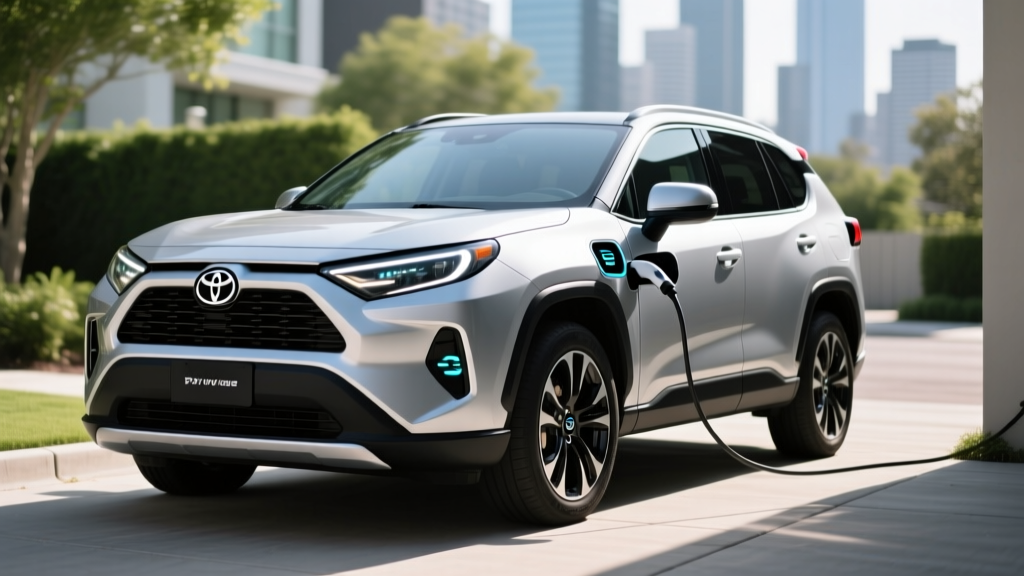
A common source of confusion for shoppers is the difference between a conventional hybrid (HEV) and a plug-in hybrid (PHEV). The 2018 RAV4 Hybrid is strictly an HEV — it cannot be plugged in and has no meaningful electric-only driving range. Its small 1.6 kWh nickel-metal hydride (NiMH) battery is charged entirely by the gasoline engine and regenerative braking.
| Feature | HEV (this RAV4) | PHEV (e.g., RAV4 Prime) | BEV (e.g., bZ4X) |
|---|---|---|---|
| Plug-in Charging? | No | Yes | Yes |
| Electric-Only Range | ~0.5 mi at low speed | 42 mi (RAV4 Prime EPA) | 222–252 mi (bZ4X EPA) |
| Battery Size | 1.6 kWh NiMH | 18.1 kWh Li-ion | 71.4 kWh Li-ion |
| DC Fast Charge? | No | No (AC only) | Yes, up to 150 kW |
| Federal Tax Credit (new) | None | Up to $7,500 (§30D) | Up to $7,500 (§30D) |
| Fuel/Charging Needed | Gasoline only | Gasoline + optional plug | Electricity only |
| Best For | No home charging access | Short commute + road trips | Home charging + low running cost |
If you have access to home or workplace Level 2 charging and a commute under 40 miles, a PHEV like the RAV4 Prime (introduced in 2021) or a full BEV will deliver lower operating costs. But if you live in an apartment, street-park, or frequently drive in areas with sparse charging infrastructure, the 2018 RAV4 Hybrid XLE eliminates range anxiety entirely — there is no plug to hunt for, no charging app to manage, and no cold-weather range cliff to fear.
Fuel Economy: EPA Numbers vs. Real-World MPG
| Driving Cycle | EPA Rating |
|---|---|
| City | 34 MPG |
| Highway | 30 MPG |
| Combined | 32 MPG |
Source: EPA fueleconomy.gov
The city-highway split is typical of Toyota's hybrid system: the electric motor handles low-speed acceleration where gasoline engines are least efficient, so city MPG actually exceeds highway MPG. In real-world ownership, this advantage is even more pronounced.
Real-World MPG Expectations
- City / suburban driving: 33–38 MPG is common. Many owners report exceeding the EPA city rating by 2–4 MPG in stop-and-go traffic where regenerative braking recaptures energy continuously.
- Highway cruising (70–75 mph): Expect 28–31 MPG. Aerodynamic drag and the engine running at sustained RPM reduce the hybrid advantage at speed.
- Cold weather (below 30°F): Plan for 26–30 MPG combined. The engine runs more frequently to provide cabin heat and warm the catalytic converter, and battery efficiency drops in cold temperatures.
- Mixed driving (annual average): Most owners report 31–34 MPG combined over a full tank, closely tracking the EPA figure.
Compared to the gas-only 2018 RAV4 LE AWD (rated at 22 city / 28 highway / 25 combined per EPA data), the Hybrid XLE saves roughly 7 MPG combined — about 22% less fuel consumed per mile. At $3.40/gallon and 12,000 miles/year, that translates to approximately $430 in annual fuel savings over the gas model.
Powertrain and Performance: How It Drives
The 2018 RAV4 Hybrid XLE pairs a 2.5-liter Atkinson-cycle four-cylinder engine (150 HP, 152 lb-ft) with a front electric motor (105 kW / 141 HP) and a rear electric motor (50 kW / 67 HP) that provides electronic on-demand all-wheel drive. Net system output is 194 HP, routed through Toyota's e-CVT (planetary gearset, not a belt-driven CVT).
The AWD-i system is worth noting: the rear axle has no mechanical connection to the engine. The rear motor engages automatically during acceleration from a stop, in low-traction conditions, and under heavy throttle. It's not a rock-crawling system, but it handles rain, snow, and gravel roads competently. The trade-off is a modest 1,750-lb towing capacity — adequate for a small utility trailer but not for a boat or camper.
The 0–60 mph time of approximately 7.8 seconds feels adequate for merging and passing. Throttle response off the line is brisk thanks to instant electric motor torque, though the engine drone under hard acceleration (a CVT characteristic) reminds you this isn't a performance SUV. The XLE trim includes a sport driving mode that sharpens throttle mapping slightly, but the gains are marginal.
Hybrid Battery: Lifespan, Warranty, and Replacement Cost
The single biggest concern for used hybrid buyers is the traction battery. The 2018 RAV4 Hybrid uses a 1.6 kWh sealed NiMH battery pack mounted under the rear seat. Unlike the larger lithium-ion packs in PHEVs and BEVs, this small battery experiences relatively shallow charge-discharge cycles, which contributes to its longevity.
Toyota Hybrid Battery Warranty
- Original warranty: 8 years / 100,000 miles (10 years / 150,000 miles in California and states adopting CARB emissions standards)
- What it covers: Battery capacity below a defined threshold, defects in the hybrid control module, inverter, and related components
- For a 2018 model in 2026: The 8-year/100k federal warranty has expired for most vehicles. CARB-state 10-year/150k coverage may still apply if the vehicle was first sold in 2018 and has under 150,000 miles.
Real-World Battery Longevity
Toyota's NiMH hybrid batteries have an excellent track record. Data from owner surveys and fleet usage (notably Toyota Prius taxis) consistently shows these packs lasting 150,000–200,000+ miles before significant degradation. Complete failure before 120,000 miles is uncommon.
Replacement Cost
- New OEM battery from Toyota: $2,500–$3,500 installed at a dealership
- Refurbished / reconditioned pack: $1,200–$2,000 installed at an independent hybrid specialist
- Individual module replacement: Some hybrid-specialty shops can replace only the degraded cells within the pack for $600–$1,000, though this is less common for the RAV4 than the Prius due to lower aftermarket volume.
For context, a 2018 RAV4 Hybrid with 100,000 miles and no battery issues likely has 80,000–120,000+ miles of remaining battery life under normal use. The risk of a costly replacement in the near term is relatively low, but buyers should budget $1,500–$3,000 as a long-term contingency.
What the XLE Trim Gets You (and What It Doesn't)
The XLE was the mid-tier trim for the 2018 RAV4 Hybrid, sitting above the base LE and below the Limited. Here's what's included and what you'll miss:
XLE Standard Equipment
- Toyota Safety Sense P (pre-collision system, lane departure alert, automatic high beams, dynamic radar cruise control)
- Blind Spot Monitor with Rear Cross-Traffic Alert
- Smart Key with push-button start
- Dual-zone automatic climate control
- Entune Audio Plus with 7-inch touchscreen, navigation app integration
- Power moonroof
- 17-inch alloy wheels
- LED headlights and daytime running lights
What You Give Up vs. the Limited Trim
- SofTex synthetic leather seats (XLE uses cloth)
- Heated front seats and steering wheel
- JBL premium audio with 11 speakers
- Bird's Eye View Camera (360° surround)
- Memory settings for driver seat and mirrors
The XLE hits the value sweet spot: you get Toyota Safety Sense P (which includes adaptive cruise control — a feature still not standard on many 2026 compact SUVs) and the Blind Spot Monitor, without paying the Limited's premium for luxury-adjacent features that don't affect fuel economy or reliability.
Pricing and Tax Credit Eligibility in 2026
As of early 2026, used 2018 RAV4 Hybrid XLE pricing breaks down roughly as follows:
| Mileage Range | Typical Price | Condition Notes |
|---|---|---|
| Under 60,000 mi | $20,000–$22,000 | Excellent; often one-owner, dealer-certified |
| 60,000–100,000 mi | $17,500–$20,000 | Good; typical for well-maintained examples |
| 100,000–140,000 mi | $14,500–$17,500 | Fair; verify hybrid battery health report |
| 140,000+ mi | $12,000–$15,000 | Budget tier; budget for potential battery service |
Tax Credit Eligibility
The 2018 RAV4 Hybrid XLE does not qualify for the federal §30D new clean vehicle credit — that credit applies only to new plug-in vehicles (PHEVs and BEVs) meeting battery sourcing and MSRP requirements under current IRS rules. Conventional hybrids like this RAV4 have never been eligible for §30D.
However, if you purchase this vehicle as a used clean vehicle, the §25E used clean vehicle credit (up to $4,000 or 30% of sale price, whichever is less) could apply — but only if the vehicle is a PHEV or BEV. Since the RAV4 Hybrid is an HEV, it does not qualify for §25E either. State-level incentives vary by jurisdiction; some states offer rebates for any electrified vehicle, but most follow the federal plug-in requirement. Check your state energy office or DMV for current local programs.
2018 RAV4 Hybrid XLE — Tax Credit Summary
- §30D New Clean Vehicle Credit: Not eligible (HEV, not plug-in; also not new)
- §25E Used Clean Vehicle Credit: Not eligible (HEV, not plug-in)
- State incentives: Varies — most states require plug-in capability; check local rules
- Bottom line: Expect to pay full purchase price with no federal tax incentive
Who Should Buy This Hybrid — and Who Should Look Elsewhere
Pros
- Proven 32+ MPG combined with no plug required
- Standard AWD at no fuel-economy penalty vs. FWD
- Toyota Safety Sense P included (adaptive cruise, pre-collision)
- Strong reliability record; abundant parts and service network
- Reasonable battery replacement cost ($1,500–$3,500)
- Good cargo space (35.6 cu ft) with no battery intrusion
Cons
- No electric-only driving range; not eligible for any federal tax credit
- Modest 1,750-lb towing capacity
- Dated infotainment (7-inch screen, no wireless CarPlay/Android Auto)
- Engine drone under hard acceleration (e-CVT characteristic)
- Rear seats don't fold completely flat
- Cloth seats on XLE; leather only on Limited
Decision Framework: Is This the Right Vehicle for You?
Choose the 2018 RAV4 Hybrid XLE if:
- You lack access to home or workplace charging (apartment, street parking)
- You want lower fuel costs without changing your driving or fueling habits
- You drive 10,000–15,000 miles/year in mixed city/highway conditions
- You want AWD for snow/rain but don't need serious off-road or towing capability
- You prioritize long-term reliability and low maintenance costs over tech features
Look at a PHEV (like the 2021+ RAV4 Prime) if:
- You have home Level 2 charging and a commute under 42 miles
- You want electric-only daily driving with gas backup for road trips
- You want to access HOV lane stickers (available in some states for PHEVs)
Look at a full BEV (like the Hyundai Ioniq 5 or Tesla Model Y) if:
- You have reliable home charging and want the lowest per-mile energy cost
- You want to eliminate oil changes and engine maintenance entirely
- You qualify for the §30D tax credit (income and sourcing requirements apply)
Pre-Purchase Checklist for Used Buyers
Before committing to a specific 2018 RAV4 Hybrid XLE, request or verify the following:
- Hybrid battery health check: Ask a Toyota dealer to pull the battery State of Health (SoH) report via Techstream diagnostic software. A healthy pack should show minimal block voltage variance.
- Hybrid system warranty status: Verify the in-service date and current mileage against the 8-year/100,000-mile (or 10-year/150,000-mile CARB-state) warranty window.
- Maintenance records: Look for regular oil changes (0W-20 synthetic, every 10,000 miles), cabin air filter, and brake fluid service. Hybrids are easy on brakes (regenerative braking reduces pad wear), but brake fluid still absorbs moisture over time.
- Recall status: Check the VIN at NHTSA.gov/recalls for any open campaigns. The 2018 RAV4 Hybrid had a small number of recalls related to the fuel pump and airbag ECU.
- Tire condition: The AWD-i system depends on matched tire diameters. Verify all four tires are the same brand, model, and wear level — mismatched tires can stress the hybrid drivetrain.
Frequently Asked Questions
How many MPG does the 2018 Toyota RAV4 Hybrid XLE get?
The EPA rates it at 34 city / 30 highway / 32 combined MPG. In real-world driving, city mileage often exceeds the EPA rating (33–38 MPG), while sustained highway driving at 70+ mph typically returns 28–31 MPG. Cold weather reduces combined economy to roughly 26–30 MPG.
Does the 2018 RAV4 Hybrid need to be plugged in?
No. This is a conventional hybrid (HEV), not a plug-in hybrid. The battery charges through regenerative braking and the gasoline engine. There is no charging port, no plug, and no electric-only driving mode of any meaningful distance.
How far can it go on electric only?
Effectively zero miles in practical terms. The hybrid system can creep at very low speeds (under ~15 mph) on electric power for short distances — roughly half a mile on a full battery charge in ideal conditions — but the engine will start almost immediately under any meaningful acceleration or load. This is not a vehicle for electric-only commuting.
Is the hybrid battery reliable, and what does replacement cost?
Toyota's NiMH hybrid batteries are among the most durable in the industry, routinely lasting 150,000–200,000+ miles. A new OEM replacement costs $2,500–$3,500 installed; refurbished packs run $1,200–$2,000. For a 2018 model with under 120,000 miles, the risk of near-term battery failure is low.
Does the 2018 RAV4 Hybrid qualify for any tax credit?
No federal tax credit applies. The §30D new vehicle credit and §25E used vehicle credit both require plug-in capability (PHEV or BEV). As a conventional HEV, the RAV4 Hybrid is ineligible for both. Some state programs may offer minor incentives for hybrid purchases, but these vary widely — consult your state energy office.
How does this compare to the newer RAV4 Hybrid (2019+)?
The 2019+ RAV4 Hybrid moved to Toyota's TNGA platform with a more powerful 219 HP hybrid system, improved EPA ratings (41 city / 38 highway / 40 combined for most trims), and updated infotainment. It's meaningfully more efficient and refined, but used prices are $8,000–$15,000 higher. The 2018 model is the value play if you can accept 8 MPG less in combined driving and older interior tech.
Is the AWD system always on?
The AWD-i system is on-demand, not full-time. The rear electric motor engages during initial acceleration, when front-wheel slip is detected, and under heavy throttle. During steady-state cruising, the vehicle operates primarily in front-wheel drive to maximize efficiency. There is no driver-selectable AWD lock mode.