Quick Verdict: The Lexus NX 450h+ Bridges Two Worlds
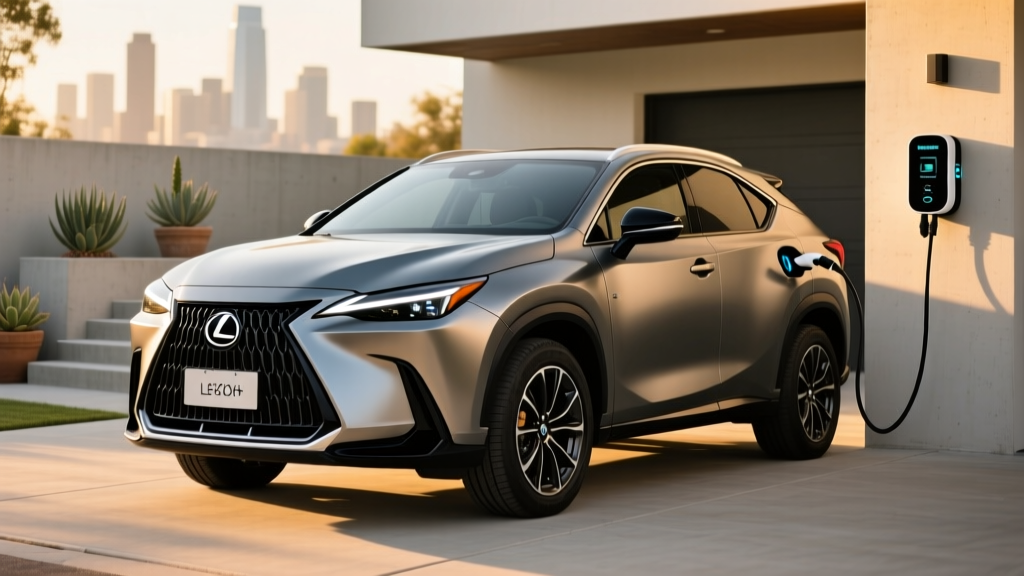
The 2026 Lexus NX 450h+ plug-in hybrid SUV occupies a narrow but increasingly popular lane: it delivers genuine electric-only commuting range for daily use, then seamlessly transitions to a proven hybrid powertrain for road trips without range anxiety. With an EPA-rated 37 miles of electric-only driving, a combined 304 horsepower, and the build-quality reputation Lexus has cultivated over decades, the NX 450h+ targets buyers who want electrification benefits today without committing fully to battery-electric infrastructure.
But does it justify its premium pricing over the conventional NX 350h hybrid? And how does the real-world electric range hold up in cold weather or at highway speeds? This guide breaks down every spec, cost, and ownership factor you need before deciding.
HEV vs PHEV: What's the Difference in the NX Lineup?
Lexus NX 350h (Conventional Hybrid / HEV): Uses a smaller battery recharged entirely by the engine and regenerative braking. You never plug it in. It achieves strong MPG at all times but offers zero electric-only highway miles.
Lexus NX 450h+ (Plug-In Hybrid / PHEV): Carries a much larger 18.1 kWh lithium-ion battery that you charge via a plug. This enables 37 miles of pure electric driving before the gasoline engine activates. After the battery depletes, it operates as a conventional hybrid.
The practical implication: if your daily round-trip commute is under 37 miles and you charge at home each night, you could drive the NX 450h+ for weeks without buying gasoline. The NX 350h, by contrast, always burns some fuel — but it costs roughly $8,000 less upfront and never requires charging infrastructure.
EPA Fuel Economy, Electric Range, and Real-World Expectations
| Metric | EPA Rating | Real-World Expectation |
|---|---|---|
| Combined MPGe (electric + gas) | 84 MPGe | 78–86 MPGe with regular home charging |
| Gas-only combined MPG (after battery depletes) | 36 MPG combined | 33–38 MPG (better in city, worse on highway) |
| City MPG (gas-only mode) | 38 MPG | 36–40 MPG — hybrids excel in stop-and-go |
| Highway MPG (gas-only mode) | 34 MPG | 30–34 MPG at 70+ mph |
| Electric-only range | 37 miles | 30–37 miles (shorter in cold, at highway speed, or with HVAC load) |
| Total combined range (EV + gas) | ~520 miles | ~450–520 miles depending on conditions |
Source: fueleconomy.gov
Cold-weather reality check: At 25°F, expect the NX 450h+'s electric-only range to drop to approximately 25–28 miles. The cabin heater draws significant power from the traction battery. Lexus includes a battery preconditioning system, but unlike full BEVs, the NX 450h+ does not precondition for DC fast charging because it lacks DC fast-charge capability entirely.
One advantage of the PHEV architecture: in city driving with a depleted battery, the hybrid system's regenerative braking and engine-stop-start behavior often push real-world gas-only MPG slightly above the EPA city estimate. On long highway stretches, aerodynamic drag and sustained engine load reduce it.
Powertrain Specs: Engine, Motors, and Horsepower
| Specification | 2026 Lexus NX 450h+ |
|---|---|
| Engine | 2.5L inline-4 Atkinson-cycle |
| Electric motors | Front + rear (e-AWD) |
| Combined system horsepower | 304 hp |
| 0–60 mph | 6.0 seconds |
| Drivetrain | Electronic all-wheel drive (e-AWD) |
| Transmission | eCVT (electronically controlled continuously variable) |
| Battery capacity (gross / usable) | 18.1 kWh gross / ~14.5 kWh usable |
| Battery chemistry | Lithium-ion (NMC) |
| Onboard charger | 3.3 kW (Level 2 AC only) |
| DC fast charging | Not supported |
| Level 1 charge time (120V, 1.4 kW) | ~12 hours (0–100%) |
| Level 2 charge time (240V, 3.3 kW) | ~5.5 hours (0–100%) |
| Charge connector | J1772 (AC only) |
| Towing capacity | 2,000 lbs |
| Cargo volume (rear seats up / folded) | 22.7 / 61.0 cu ft |
The NX 450h+ shares its powertrain architecture with the Toyota RAV4 Prime — a 2.5-liter Atkinson-cycle four-cylinder paired with front and rear electric motors. The key difference: Lexus tunes the system for 304 combined horsepower, delivering a 6.0-second 0–60 mph time that makes it the quickest NX variant. The e-AWD system uses the rear motor for traction rather than a mechanical driveshaft, which improves packaging and response.
Charging is AC-only via a J1772 connector. The 3.3 kW onboard charger means even a full Level 2 session takes about 5.5 hours — plan to charge overnight. This is standard for the PHEV segment; rivals like the BMW X3 xDrive30e and Volvo XC60 Recharge also lack DC fast charging.
Pricing, Trims, and Federal Tax Credit Eligibility
The 2026 Lexus NX 450h+ is offered in two trims:
- NX 450h+ Luxury: Starting at approximately $60,090 (including destination)
- NX 450h+ F SPORT Handling: Starting at approximately $61,190 (including destination)
Both trims include the Lexus Safety System+ 3.0 suite, a 14-inch touchscreen, wireless Apple CarPlay and Android Auto, heated front seats, and a power liftgate. The F SPORT Handling trim adds adaptive variable suspension, a sport-tuned chassis, and F SPORT exterior and interior styling.
Does the NX 450h+ Qualify for the Federal §30D Tax Credit?
- Vehicle MSRP cap: SUVs must be under $80,000 — the NX 450h+ qualifies ✓
- Buyer income cap: AGI must not exceed $150,000 (single), $225,000 (head of household), or $300,000 (joint) ✓ (buyer dependent)
- Battery sourcing / critical minerals: Must meet escalating domestic-content thresholds under the Inflation Reduction Act — check the latest IRS eligible vehicle list before purchasing, as sourcing requirements tighten annually
- Point-of-sale transfer: If eligible, you can transfer the credit to the dealer at purchase for an immediate price reduction rather than waiting for tax filing
- Maximum credit: Up to $3,750–$7,500 depending on whether the battery meets critical-minerals and component-sourcing thresholds for the current tax year
Important caveat: Lexus PHEVs have faced variable eligibility as battery-sourcing rules tighten each year under §30D. Always verify the NX 450h+ on the IRS eligible-vehicle list in your purchase month. State incentives (such as California's CVRP or New York's Charge Ready) may offer additional rebates — check your state energy office for current programs.
Reliability, Battery Warranty, and Replacement Cost
Hybrid battery warranty: 10 years / 150,000 miles (whichever comes first) for the high-voltage traction battery, per Toyota/Lexus standard hybrid warranty coverage. This applies in all 50 states.
Powertrain warranty: 6 years / 70,000 miles
Basic vehicle warranty: 4 years / 50,000 miles
Lexus, as Toyota's luxury division, benefits from one of the strongest reliability track records in the industry. The 2.5L Atkinson-cycle engine and eCVT powertrain in the NX 450h+ are derived from millions of units deployed across the Toyota hybrid fleet, including the RAV4 Prime and Camry Hybrid. These components have demonstrated minimal failure rates in long-term ownership data.
The high-voltage lithium-ion battery is warranted to retain at least 70% of its original capacity for 10 years or 150,000 miles. In practice, Toyota/Lexus PHEV and HEV batteries have shown degradation rates of roughly 1–2% per year in moderate climates, meaning most owners will retain 85–90% capacity at the 10-year mark.
Battery replacement cost: If the traction battery requires replacement outside of warranty, expect a cost between $4,500 and $7,000 for parts and labor at a Lexus dealership. Third-party hybrid battery refurbishers may offer replacements for $3,000–$4,500. Given the 10-year/150,000-mile warranty and historically low failure rates, this is a low-probability expense for most owners.
Who Should Buy the NX 450h+ — and Who Shouldn't?
Choose the Lexus NX 450h+ if:
- Your daily commute is under 35 miles round-trip and you can charge at home
- You want electric commuting without committing to a full BEV for long road trips
- You value Lexus build quality, dealership network, and long-term reliability data
- You live in a cold climate where BEV range loss is a concern
- You want a luxury compact SUV with genuine AWD capability
Choose the Lexus NX 350h (conventional hybrid) instead if:
- You cannot charge at home or at work
- You want to save $8,000+ on purchase price
- You don't want to manage plugging in
Choose a full BEV (like the Tesla Model Y or BMW iX) instead if:
- You have reliable home Level 2 charging and access to DC fast-charging networks
- Your road trips are infrequent or under 300 miles between charge stops
- You want zero tailpipe emissions and lower per-mile fuel costs
Pros
- 37-mile electric range covers most daily commutes
- 304 hp and 6.0s 0–60 make it the quickest NX
- Standard e-AWD with no mechanical complexity
- 10-year/150,000-mile hybrid battery warranty
- No range anxiety on road trips — runs on gas when needed
- Strong Lexus reliability and resale value
Cons
- No DC fast charging — AC-only at 3.3 kW
- ~$8,000 premium over the NX 350h hybrid
- Federal tax credit eligibility uncertain under tightening sourcing rules
- Electric range drops to ~25 miles in freezing weather
- CVT drone under hard acceleration (no traditional gears)
- Smaller battery means less electric range than rivals like the RAV4 Prime
Hybrid vs PHEV vs EV: Which Powertrain Fits Your Life?
The NX lineup illustrates the broader powertrain decision many buyers face in 2026:
| Factor | HEV (NX 350h) | PHEV (NX 450h+) | BEV (e.g., Tesla Model Y) |
|---|---|---|---|
| Plug-in required? | No | Yes (for EV benefits) | Yes (mandatory) |
| Electric-only range | 0 miles | 37 miles | 260–330 miles |
| Gasoline use | Always | After battery depletes | Never |
| Road-trip convenience | Excellent | Excellent | Requires planning |
| Home charging needed? | No | Recommended | Essential |
| Maintenance cost | Low | Low-moderate | Lowest |
| Upfront cost (NX lineup) | ~$43,000 | ~$60,000 | N/A (different vehicles) |
The NX 450h+ makes the most sense as a transitional vehicle: you get meaningful electric driving today, retain full gas flexibility, and avoid the charging-infrastructure gamble. If your next vehicle (5–8 years from now) is likely to be a full BEV, the NX 450h+ lets you build charging habits and reduce emissions now without a full leap.
Frequently Asked Questions
How many MPG does the Lexus NX 450h+ get?
The EPA rates the NX 450h+ at 84 MPGe combined when operating with a charged battery (blending electric and gas). Once the battery depletes, it achieves 36 MPG combined as a conventional hybrid — 38 city / 34 highway. In real-world city driving, many owners report gas-only MPG in the 37–40 range thanks to frequent regenerative braking.
How far can the NX 450h+ drive on electric only?
The EPA rates it at 37 miles of electric-only range. In mild weather at moderate speeds, you may achieve the full 37 miles. In freezing temperatures, at sustained highway speeds above 65 mph, or with heavy HVAC use, expect 25–32 miles before the gasoline engine engages.
Does the NX 450h+ qualify for the $7,500 federal tax credit?
Eligibility depends on current-year IRS §30D rules, including battery critical-mineral sourcing thresholds, buyer income caps, and the $80,000 SUV MSRP cap. The NX 450h+ meets the MSRP requirement, but battery sourcing compliance changes annually. Check the IRS eligible vehicle list at the time of purchase. If eligible, you can transfer the credit to the dealer for an immediate price reduction.
Is the Lexus NX 450h+ reliable, and what does a battery replacement cost?
Lexus consistently ranks at or near the top of J.D. Power and Consumer Reports reliability surveys. The hybrid powertrain uses proven Toyota components with millions of units in service. The traction battery is warranted for 10 years/150,000 miles. Out-of-warranty replacement costs approximately $4,500–$7,000, though failures within the first decade are rare based on historical data.
Can the NX 450h+ DC fast charge?
No. The NX 450h+ supports AC charging only, via a J1772 connector at a maximum rate of 3.3 kW. A full charge on a Level 2 (240V) home charger takes approximately 5.5 hours. This is typical for PHEVs in this class — the smaller battery makes DC fast charging less practical from an engineering standpoint.
How does the NX 450h+ compare to the Toyota RAV4 Prime?
The RAV4 Prime shares the same powertrain architecture but offers 42 miles of electric range (vs. 37), a slightly larger usable battery, and a lower starting price (~$44,000 vs. ~$60,000). The NX 450h+ delivers a more refined interior, a smoother ride, a longer warranty network, and the Lexus brand experience. If luxury and quietness matter, the NX wins. If value and maximum electric range are priorities, the RAV4 Prime is the stronger pick.
Should I buy the NX 450h+ or the NX 350h?
If you can charge at home and your commute is under 35 miles, the 450h+ will run mostly on electricity, saving fuel and reducing emissions. The ~$8,000 price premium may be partially offset by fuel savings and potential tax credits. If you cannot charge at home, the NX 350h delivers 39 MPG combined without any plug-in requirement and costs significantly less.
Specs and pricing reflect 2026 model-year data available at time of publication. Always verify current figures with your local Lexus dealer and the EPA fueleconomy.gov database. Tax credit eligibility is subject to change — consult a tax professional and the IRS for your specific situation.