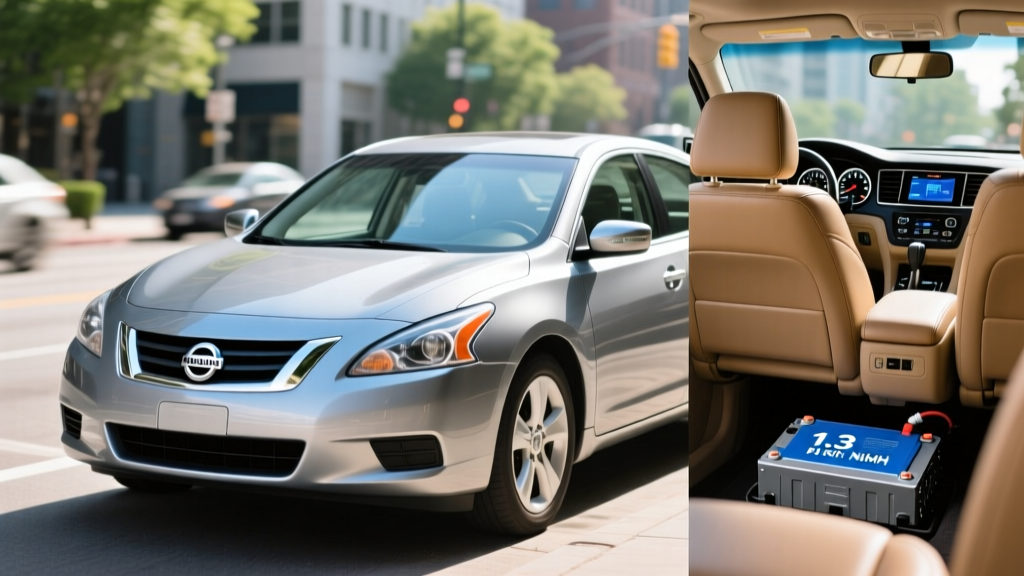
The 2009 Nissan Altima Hybrid occupies an unusual space in the electrified-vehicle landscape. Built during Toyota's early dominance of the hybrid sedan market, Nissan licensed Toyota's Hybrid Synergy Drive system and bolted it to the Altima's chassis and 2.5-liter four-cylinder engine. The result was a midsize sedan that delivered competitive fuel economy without the Prius's polarizing silhouette. Nissan discontinued the Altima Hybrid after the 2011 model year, making every surviving example at least 15 years old. For 2026 used-car shoppers searching specifically for a "2009 Nissan Altima Hybrid," the key questions center on real-world MPG, high-mileage battery health, replacement costs, and whether this aging HEV still holds up against modern hybrids, PHEVs, and entry-level EVs.
What the 2009 Altima Hybrid Actually Is: A Conventional HEV, Not a Plug-In
Before diving into specs, it's essential to establish what this car is — and isn't. The 2009 Nissan Altima Hybrid is a conventional hybrid electric vehicle (HEV). It does not have a plug, cannot be charged from a wall outlet, and has no electric-only driving range to speak of. The small nickel-metal hydride (NiMH) battery pack recharges exclusively through regenerative braking and the gasoline engine.
HEV vs. PHEV vs. BEV — Where the Altima Hybrid Fits
| Feature | HEV (2009 Altima Hybrid) | PHEV (e.g., 2026 Toyota Prius Prime) | BEV (e.g., 2026 Tesla Model 3) |
|---|---|---|---|
| Plug-in charging | No | Yes (Level 1/2) | Yes (Level 1/2/DC) |
| Electric-only range | ~0 miles (motor assists only) | 40-45 miles EPA | 250-350+ miles EPA |
| Battery size | ~1.6 kWh (NiMH) | ~13.6 kWh (Li-ion) | 60-82 kWh (Li-ion) |
| Gasoline engine | Yes (primary) | Yes (backup) | None |
| Federal tax credit (§30D) | No (expired/never eligible) | Up to $7,500 if eligible | Up to $7,500 if eligible |
If you're looking for a vehicle you can plug in and drive 30+ miles on electricity alone, this is not it. The Altima Hybrid's value proposition is simpler: it sips less gas than a conventional Altima, particularly in stop-and-go city driving, with zero change to your refueling habits.
Fuel Economy: EPA Ratings and Real-World MPG
According to fueleconomy.gov, the 2009 Nissan Altima Hybrid carries the following EPA ratings:
| Cycle | EPA MPG |
|---|---|
| City | 35 MPG |
| Highway | 33 MPG |
| Combined | 34 MPG |
For context, the conventional 2009 Altima with the 2.5-liter four-cylinder and CVT was rated at 23 city / 31 highway / 26 combined. The hybrid's advantage is substantial in city driving — a 52% improvement — thanks to the electric motor handling low-speed propulsion and the engine shutting off at stops.
Real-World MPG: What Owners Actually Report
Like most conventional hybrids, the Altima Hybrid tends to deliver real-world fuel economy close to its EPA estimates, with some owners reporting 32-36 MPG in mixed driving. City-heavy commutes push the number higher; sustained highway driving at 75+ MPH can pull it slightly below the EPA highway figure because the electric motor contributes less at high, steady speeds. A degraded hybrid battery — a real concern on a 17-year-old vehicle — can knock 2-4 MPG off these figures as the system relies more heavily on the gasoline engine.
Powertrain and Performance Specifications
| Specification | 2009 Nissan Altima Hybrid |
|---|---|
| Engine | 2.5L inline-4 (QR25DE) |
| Engine horsepower | 158 hp @ 5,600 rpm |
| Electric motor output | 40 hp (30 kW) |
| Combined system output | 198 hp |
| Transmission | eCVT (Toyota Hybrid Synergy Drive) |
| Battery type | Nickel-Metal Hydride (NiMH) |
| Battery capacity | ~1.6 kWh (gross) |
| Drivetrain | Front-wheel drive |
| 0-60 mph (est.) | ~7.6 seconds |
| Curb weight | ~3,514 lbs |
Nissan sourced the hybrid transaxle and control electronics directly from Toyota, meaning the eCVT and hybrid synergy logic are essentially the same system found in the 2007-2011 Toyota Camry Hybrid. The 2.5L QR25DE engine, however, is Nissan's own — a proven if unremarkable four-cylinder that has been in production in various forms since 2001.
The 198 combined horsepower gives the Altima Hybrid adequate passing power, and the instant torque from the electric motor makes it feel quicker off the line than its 0-60 time suggests. The eCVT is smooth but can produce the characteristic "rubber-band" drone under hard acceleration that early hybrid drivers will recognize.
Battery Health, Replacement Cost, and Warranty Status
Original Battery Warranty (Now Expired)
Nissan covered the 2009 Altima Hybrid's battery pack for 8 years / 100,000 miles (10 years / 150,000 miles in CARB states including California, New York, Massachusetts, and others that adopted California emissions standards). As of 2026, every original warranty has expired — even in CARB states, the 10-year window closed in 2019.
How Long Do These Batteries Actually Last?
NiMH hybrid batteries from this era typically last 150,000-200,000 miles before significant degradation, though calendar age is also a factor. A 2009 model in 2026 is 17 years old. Heat is the primary enemy of NiMH cells — vehicles in Arizona, Texas, or Florida climates tend to see earlier battery failure than those in cooler northern states.
Signs of a failing hybrid battery include: noticeably reduced fuel economy (dropping below 28-30 MPG), the battery gauge rarely reaching full or empty, the engine running more frequently at stops, and a dashboard warning light. A scan tool that reads hybrid battery module voltages can identify weak individual cells before complete failure.
Battery Replacement Cost
Replacement options for the 2009 Altima Hybrid battery include:
- New OEM battery (Nissan dealer): $2,000-$2,800 installed — rarely cost-effective on a vehicle with a market value of $3,000-$5,500.
- Refurbished/remanufactured battery: $1,000-$1,600 installed from specialty hybrid shops (e.g., Green Bean Battery, Re-Involt). These typically carry a 1-3 year warranty.
- Used salvage-yard battery: $400-$800 plus installation. High risk — you're inheriting someone else's degradation curve.
- Individual module replacement: $200-$500 if only 1-2 of the 30 NiMH modules have failed. Requires a technician experienced with hybrid battery diagnostics.
For most buyers, a refurbished pack from a reputable hybrid specialist offers the best value. The Toyota-sourced hybrid components also mean that Camry Hybrid batteries from the same era are physically compatible, which expands the parts supply.
Reliability and Common Issues Beyond the Battery
The 2009 Altima Hybrid benefits from the proven reliability of the Toyota hybrid transaxle, which is widely regarded as one of the most durable automatic transmissions ever produced. The eCVT has no traditional bands, clutches, or torque converter to wear out. Many examples have exceeded 250,000 miles with only fluid changes.
Non-hybrid reliability concerns specific to this generation Altima include:
- CVT whine and bearing wear — less common on the hybrid's Toyota eCVT than on conventional Altima CVTs, but still reported at high mileage.
- Power steering rack leaks — the Altima uses an electric power steering system; failures of the rack or control module can cost $800-$1,200.
- Brake actuator recalls — NHTSA issued recalls for certain 2007-2011 Altima models related to brake system components. Verify recall completion by entering the VIN at nhtsa.gov/recalls.
- Interior materials — dashboard cracking and peeling soft-touch surfaces are common complaints on 2007-2012 Altimas.
The hybrid-specific components (inverter, DC-DC converter, motor-generator) have proven robust. Failures are rare and typically associated with coolant system neglect — the hybrid system has its own inverter coolant loop that should be serviced per the maintenance schedule.
Pricing in 2026: What You'll Actually Pay
As of early 2026, the 2009 Nissan Altima Hybrid trades in the used market at roughly:
- Private party (fair condition, 140K+ miles): $2,500-$3,500
- Private party (good condition, under 120K miles, fresh battery): $4,000-$5,500
- Dealer retail: $4,500-$6,500 (limited availability)
Tax Credit Eligibility
The 2009 Altima Hybrid does not qualify for any current federal tax credit. The IRS §30D credit applies only to new plug-in electric vehicles (BEVs and PHEVs) meeting battery sourcing, MSRP cap, and buyer income requirements. Conventional hybrids have never been eligible for §30D. The now-expired Alternative Motor Vehicle Credit for hybrids ended for Nissan vehicles in 2010 due to the manufacturer sales cap. No state currently offers a purchase incentive for a 17-year-old conventional hybrid.
Who Should Buy the 2009 Altima Hybrid — and Who Shouldn't
Reasons to Buy
- Extremely low purchase price for a hybrid sedan
- 35 MPG city still competitive with many 2026 non-hybrid sedans
- Toyota-sourced hybrid drivetrain is proven and serviceable
- No charging infrastructure needed — just fill up with gas
- Adequate power (198 hp) for highway merging and passing
- Comfortable midsize cabin with decent trunk space (15.3 cu ft)
Reasons to Skip
- 17 years old — all examples are high-mileage or calendar-aged
- Hybrid battery likely replaced or near end of life
- No federal or state tax incentives available
- Safety tech is 2009-era: no automatic emergency braking, lane-keep, or blind-spot monitoring
- Modern hybrids (2026 Prius, Camry Hybrid) deliver 50+ MPG combined
- Limited parts availability for hybrid-specific trim and badging
The Decision Framework
Choose the 2009 Altima Hybrid if: You need the cheapest possible hybrid sedan for city commuting, you have access to a hybrid-knowledgeable mechanic, and you're comfortable budgeting $1,000-$1,600 for a potential battery replacement. It works as a budget commuter or a second car for someone who wants hybrid efficiency without a plug.
Choose a modern used hybrid (2018-2023 Camry Hybrid, Accord Hybrid, Prius) if: You want current safety features, a battery with remaining warranty life, and 45-52 MPG combined. Expect to spend $14,000-$22,000 — significantly more upfront, but with far lower near-term repair risk.
Choose a PHEV (2024-2026 Prius Prime, RAV4 Prime, Wrangler 4xe) if: You have home charging access and a short commute. A PHEV lets you drive 25-45 miles on electricity daily while retaining a gas engine for road trips. Eligible new PHEVs can qualify for up to $7,500 under IRS §30D, subject to MSRP caps, income limits, and battery sourcing requirements.
Choose a BEV (2024-2026 Bolt, Model 3, Ioniq 6) if: You have reliable home Level 2 charging, want zero tailpipe emissions, and your daily driving is under 200 miles. Total cost of ownership can undercut any hybrid over 5 years when factoring fuel savings, reduced maintenance, and available tax credits.
Ownership Costs: 5-Year Projection
Assuming a $4,000 purchase price, 12,000 miles/year, $3.40/gallon regular unleaded, and a mid-life refurbished battery replacement:
| Cost Category | 5-Year Total (Est.) |
|---|---|
| Purchase price | $4,000 |
| Fuel (34 MPG avg, 60,000 miles) | $6,000 |
| Insurance (avg. $900/yr) | $4,500 |
| Maintenance & repairs (incl. battery) | $3,500-$5,000 |
| Registration & taxes | $600-$1,200 |
| Estimated 5-year total | $18,600-$20,700 |
For comparison, a 2026 Toyota Prius (57 MPG combined, ~$29,000 MSRP) would cost roughly $25,000-$28,000 over five years including purchase, fuel, insurance, and maintenance — more in absolute terms, but with modern safety tech, full warranty coverage, and dramatically lower repair risk.
Frequently Asked Questions
How many MPG does the 2009 Nissan Altima Hybrid get?
The EPA rates it at 35 city / 33 highway / 34 combined MPG. Real-world reports cluster between 32-36 MPG in mixed driving. City-heavy routes favor the hybrid system and can push above 35 MPG; sustained highway speeds above 70 MPH may reduce efficiency to 30-31 MPG. A degraded battery will lower these figures.
Does the 2009 Altima Hybrid need to be plugged in?
No. It is a conventional hybrid (HEV), not a plug-in hybrid (PHEV). The battery recharges through regenerative braking and the gasoline engine. There is no charging port and no electric-only driving range.
How much does it cost to replace the hybrid battery?
Expect $1,000-$1,600 for a refurbished battery installed by a hybrid specialist, $2,000-$2,800 for a new OEM battery at a Nissan dealer, or $200-$500 for individual module replacement if only a few cells have failed. Given the car's $3,000-$5,500 market value, a refurbished pack is the most financially rational option.
Is the 2009 Altima Hybrid reliable?
The Toyota-sourced hybrid transaxle and power electronics are among the most reliable components in any vehicle from this era. The Nissan 2.5L engine is adequate but not exceptional. The primary reliability risk is the aging NiMH battery pack — at 17 years old, any original battery is near or past its expected lifespan. Budget for a replacement if service records don't confirm one was already performed.
Does the 2009 Altima Hybrid qualify for any tax credit?
No. Federal §30D credits apply only to new plug-in vehicles (BEVs and PHEVs). The original hybrid tax credit for this vehicle expired when Nissan hit its manufacturer cap in 2010. No current federal or state incentive applies to the purchase of a used 2009 conventional hybrid.
Hybrid vs. PHEV vs. EV — which should I buy in 2026?
If you lack home charging and drive in a region with limited public charging infrastructure, a conventional hybrid like this Altima remains practical. If you can charge at home and commute under 40 miles, a PHEV eliminates most gasoline use while retaining road-trip flexibility. If you have reliable Level 2 home charging and want the lowest operating cost, a modern BEV with 250+ miles of range is the strongest long-term financial play, especially with available tax credits on new and used plug-in vehicles.
Can I still get parts for the 2009 Altima Hybrid?
Mechanical parts for the 2.5L engine and chassis are widely available — the Altima was a high-volume seller. Hybrid-specific components (inverter, battery modules) benefit from sharing the Toyota Hybrid Synergy Drive architecture with the Camry Hybrid of the same era, which keeps aftermarket and salvage supply viable. Body and trim parts are getting harder to source new but are available through salvage networks.