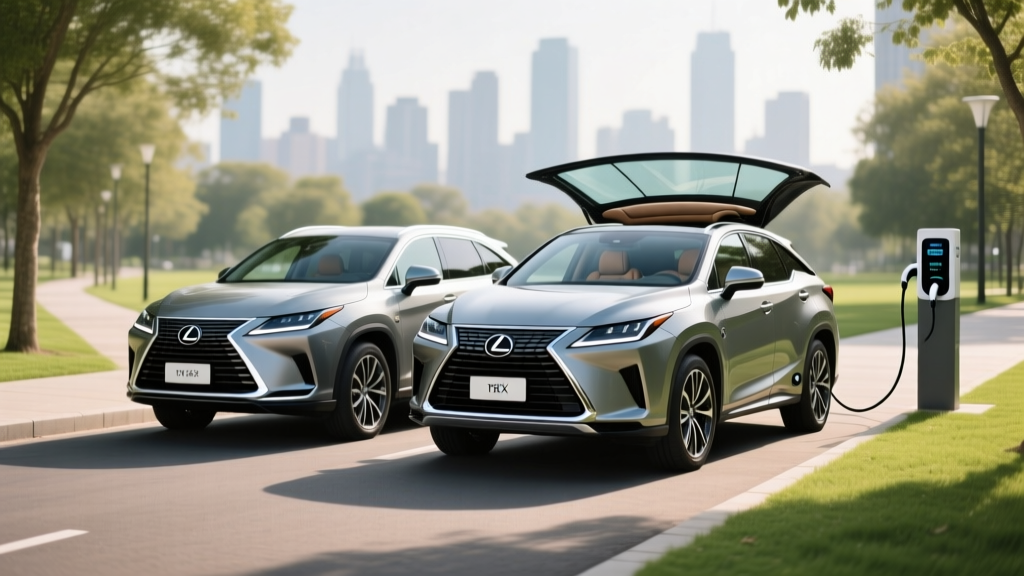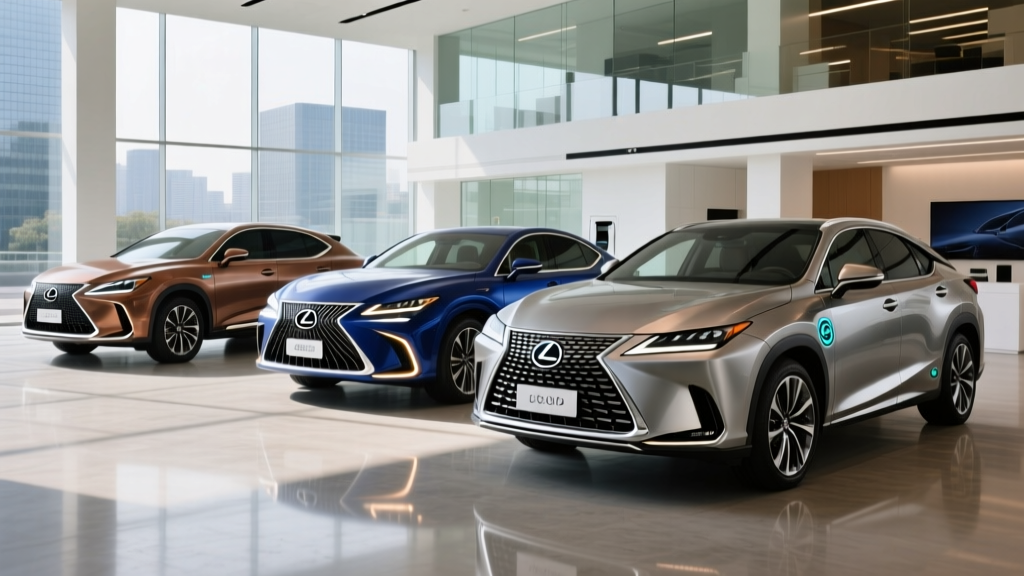
If you've been asking does Lexus make a hybrid, the answer is a definitive yes — and the lineup is broader than most luxury buyers realize. For 2026, Lexus offers hybrid powertrains across nearly every model it sells, from the compact UX to the full-size LX. The brand has also expanded into plug-in hybrid (PHEV) territory, giving buyers a bridge between conventional hybrids and full battery-electric vehicles.
This guide breaks down every current Lexus hybrid and PHEV, with exact EPA MPG figures, electric-only range, powertrain specs, pricing, and tax credit eligibility — so you can decide which electrified Lexus fits your driving life.
HEV vs. PHEV: How Lexus Hybrids Actually Work
Before diving into specific models, it's critical to understand the two hybrid types Lexus sells. They operate very differently day to day.
| Feature | Conventional Hybrid (HEV) | Plug-In Hybrid (PHEV) |
|---|---|---|
| Plug in to charge? | No — charges via regenerative braking and engine | Yes — plug in for full EV range |
| Electric-only driving | Very short bursts (under 1 mile at low speed) | 20–40+ miles on battery alone |
| Battery size | ~1–2 kWh | ~14–18 kWh usable |
| Fuel economy when battery depleted | High MPG at all times | Operates as a conventional hybrid |
| Federal tax credit | None | Up to $7,500 (subject to §30D rules) |
| Best for | Drivers without home charging access | Drivers with home/workplace charging who want some EV miles |
Lexus conventional hybrids use a series-parallel system where a gasoline engine and one or more electric motors work together. You never plug them in — the battery recharges through regenerative braking and the engine. Lexus PHEVs have a larger battery you can charge from a wall outlet or public charger, giving you a meaningful electric-only range for daily commutes before the gas engine kicks in.
Full 2026 Lexus Hybrid Lineup: MPG, Range, and Power
Here's every hybrid and PHEV Lexus currently sells, with EPA figures sourced from fueleconomy.gov and manufacturer specifications.
| Model | Type | EPA Combined MPG | City / Hwy MPG | Combined HP | PHEV EV Range | Base MSRP |
|---|---|---|---|---|---|---|
| UX 300h | HEV | 42 MPG | 43 / 41 | 196 hp | — | $39,990 |
| NX 350h | HEV | 39 MPG | 41 / 37 | 240 hp | — | $44,950 |
| NX 450h+ | PHEV | 36 MPG (hybrid mode) / 84 MPGe | 38 / 33 | 304 hp | 37 miles | $60,950 |
| TX 500h | HEV | 27 MPG | 27 / 28 | 371 hp | — | $66,450 |
| RX 350h | HEV | 36 MPG | 37 / 34 | 250 hp | — | $54,300 |
| RX 450h+ | PHEV | 35 MPG (hybrid) / 83 MPGe | 37 / 33 | 304 hp | 37 miles | $66,450 |
| RZ (BEV note) | BEV | — | — | 308 hp | 220 mi range | $55,850 |
| ES 300h | HEV | 44 MPG | 43 / 44 | 215 hp | — | $46,200 |
| LC 500h | HEV | 30 MPG | 26 / 33 | 354 hp | — | $103,000 |
| LS 500h | HEV | 25 MPG | 25 / 25 | 354 hp | — | $83,000 |
| LX 700h | HEV | 21 MPG | 20 / 22 | 457 hp | — | $99,900 |
Note: The RZ is Lexus's only fully electric vehicle (BEV), included for context. PHEV MPGe figures reflect combined gas-electric operation per EPA methodology.
Real-World MPG: What Owners Actually See
One of the most pleasant surprises with Lexus hybrids — especially the HEV models — is that real-world fuel economy often matches or exceeds the EPA city rating. This is because conventional hybrids lean heavily on electric motor assist in stop-and-go traffic, where regenerative braking constantly recaptures energy.
Here's what to expect based on owner reports and independent testing:
- UX 300h: Expect 40–44 MPG combined. City-heavy drivers frequently report hitting 45 MPG in warm weather. Highway cruising at 75+ mph drops this to around 38 MPG.
- ES 300h: The efficiency champion. Many owners log 45–48 MPG in mixed suburban driving. Highway-only trips yield 40–43 MPG.
- NX 350h: Real-world combined typically 37–40 MPG. Cold weather (below 30°F) drops this by roughly 3–5 MPG as the engine runs more to heat the cabin.
- RX 350h: Expect 34–37 MPG real-world. The heavier curb weight shows on sustained highway grades.
- NX 450h+ / RX 450h+ (PHEV): The 37-mile EV range is realistic for mild weather on flat terrain. In cold conditions (below 35°F), expect 28–32 miles on battery alone due to reduced lithium-ion efficiency and cabin heating demands. Once the battery depletes, both PHEVs operate as efficient hybrids at roughly 33–36 MPG combined.
Lexus PHEVs: Electric Range, Charging, and Battery Specs
The NX 450h+ and RX 450h+ are Lexus's two plug-in hybrids. Both share a similar architecture: an 18.1 kWh lithium-ion battery (NMC chemistry), a 2.5-liter four-cylinder engine, and front plus rear electric motors for standard all-wheel drive.
| Spec | NX 450h+ / RX 450h+ |
|---|---|
| Battery capacity | 18.1 kWh (total) / ~14.4 kWh usable |
| Battery chemistry | NMC (Nickel Manganese Cobalt) |
| Electric-only range (EPA) | 37 miles |
| Level 1 charging (120V, 1.4 kW) | ~10–11 hours (0–100%) |
| Level 2 charging (240V, 6.6 kW) | ~2.5–3 hours (0–100%) |
| DC fast charging | Not supported |
| Charge port | J1772 (Level 1/2) |
Critical note: Lexus PHEVs do not support DC fast charging. You cannot use public CCS or NACS fast chargers on these vehicles. Charging is limited to Level 1 (standard 120V outlet) and Level 2 (240V home or public AC charger). For most PHEV owners who charge overnight at home, this is perfectly adequate — a Level 2 home charger tops up the battery in under 3 hours.
MPGe explained: The EPA rates PHEVs in MPGe (miles per gallon equivalent) during blended gas-electric operation. The NX 450h+'s 84 MPGe reflects efficiency when the battery is charged and you're driving in mixed EV/hybrid mode. Once the battery is depleted, treat it as a 36 MPG hybrid — which is still excellent for a 304-hp luxury SUV.
Battery Warranty, Lifespan, and Replacement Cost
Battery longevity is the single most common concern among hybrid buyers. Here's the reality based on two decades of Toyota/Lexus hybrid data:
Lexus Hybrid Battery Warranty: 10 years / 150,000 miles (whichever comes first) for all 2020 and newer models. This covers the high-voltage traction battery against defects and excessive capacity loss.
PHEV Battery Warranty: Same — 10 years / 150,000 miles for the NX 450h+ and RX 450h+.
12V auxiliary battery: Covered under the standard 4-year/50,000-mile new vehicle warranty.
How long do Lexus hybrid batteries actually last? Data from fleet operators and long-term owners shows that Lexus/Toyota hybrid batteries routinely last 150,000–250,000+ miles before needing replacement. The nickel-metal hydride (NiMH) batteries in older HEVs and the NMC lithium-ion packs in newer models and PHEVs are conservatively engineered with a large state-of-charge buffer — the system never fully charges or fully depletes the pack, which dramatically slows degradation.
Replacement cost if out of warranty:
- HEV battery (UX 300h, NX 350h, ES 300h, RX 350h): $3,000–$5,500 depending on model, including labor
- PHEV battery (NX 450h+, RX 450h+): $8,000–$12,000 due to the larger capacity
- Refurbished/remanufactured options are increasingly available at 40–60% of new OEM pricing
For context, a Lexus hybrid battery replacement at 200,000 miles costs roughly what a conventional car owner spends on two transmission replacements over the same mileage.
Tax Credits and Incentives: What You Can Claim
Under IRS §30D rules for 2026, only the Lexus PHEV models (NX 450h+ and RX 450h+) are eligible for the federal plug-in hybrid tax credit. Conventional HEVs do not qualify for any federal credit.
- Maximum credit: Up to $7,500 for qualifying PHEVs (depends on battery capacity and critical mineral sourcing)
- MSRP cap: SUVs must be under $80,000 MSRP; sedans under $55,000. Both the NX 450h+ and RX 450h+ qualify at base price; loaded trims may exceed the cap
- Buyer income cap: $150,000 single / $225,000 head of household / $300,000 joint (modified AGI)
- Battery sourcing: Critical minerals and battery components must meet escalating domestic-content percentages for full credit — check IRS.gov §30D guidance for current-year sourcing rules
- Point-of-sale transfer: You can transfer the credit to the dealer at purchase to reduce your out-of-pocket cost, rather than waiting to claim it on your tax return
Important: Tax credit eligibility changes as sourcing rules tighten and manufacturer caps apply. Consult a tax professional and verify on irs.gov before purchasing. State incentives may also apply — check your state's energy office for local rebates on PHEVs and home charger installations.
Hybrid vs. PHEV vs. Full EV: Which Lexus Fits You?
Lexus now sells all three electrified options. Here's a decision framework based on your actual driving situation:
Choose a Lexus HEV (UX 300h, NX 350h, ES 300h, RX 350h) if:
- You don't have access to home or workplace charging
- You want zero behavior change — just fill up with gas less often
- You regularly drive in heavy city traffic where hybrids shine (40+ MPG)
- You want the lowest purchase price in the Lexus lineup
Choose a Lexus PHEV (NX 450h+, RX 450h+) if:
- You can install a Level 2 home charger (240V) and your daily commute is under 35 miles
- You want EV-like daily driving but need gas flexibility for road trips
- You want to capture the federal tax credit (up to $7,500)
- You're not ready to commit to a full EV but want to reduce gas consumption
Choose a Lexus BEV (RZ 450e) if:
- You have reliable home charging and your daily driving is under 200 miles
- You want zero tailpipe emissions and the lowest per-mile fuel cost
- You're comfortable with public DC fast charging on road trips
- You want the smoothest, quietest driving experience
Pros and Cons: Lexus Hybrids at a Glance
Pros
- Class-leading reliability — Lexus consistently tops J.D. Power and Consumer Reports dependability rankings
- HEVs require zero charging infrastructure — works anywhere gas is sold
- ES 300h and UX 300h deliver 42–44 MPG, rivaling small economy cars
- 10-year/150,000-mile hybrid battery warranty across the lineup
- PHEVs offer 37 miles EV range — enough for most commutes gas-free
- Strong resale value — Lexus hybrids hold value better than most competitors
- Smooth, quiet powertrain operation with seamless engine/motor transitions
Cons
- PHEV pricing starts $15,000+ above equivalent HEV trims
- No DC fast charging on PHEVs — public charging limited to Level 2 AC
- CVT transmission in most models can drone under hard acceleration
- Highway MPG drops noticeably at 75+ mph (aerodynamic and weight penalties)
- PHEV cargo space slightly reduced due to larger battery placement
- Only one full EV (RZ) in the lineup — limited BEV choice vs. competitors
Frequently Asked Questions
How many MPG does a Lexus hybrid get?
It depends on the model. The ES 300h sedan leads at 44 MPG combined (43 city / 44 highway). The UX 300h compact SUV delivers 42 MPG combined. The NX 350h achieves 39 MPG combined, and the three-row TX 500h returns 27 MPG combined. Real-world city driving often yields 2–4 MPG above the EPA city rating thanks to regenerative braking.
How far can the Lexus PHEV go on electric only?
Both the NX 450h+ and RX 450h+ have an EPA-rated 37 miles of electric-only range. In mild weather with moderate driving, expect 34–38 miles. In cold weather (below 35°F) or with aggressive acceleration, expect 28–32 miles before the gasoline engine activates.
Does a Lexus hybrid qualify for a tax credit?
Only the plug-in hybrid models (NX 450h+ and RX 450h+) qualify for the federal §30D tax credit, which can be up to $7,500 depending on battery sourcing requirements, buyer income, and MSRP caps. Conventional hybrids (HEVs) do not qualify for any federal tax credit. Check IRS §30D rules for current eligibility.
Is a Lexus hybrid reliable, and what does battery replacement cost?
Lexus hybrids are among the most reliable vehicles on the road, benefiting from Toyota's two decades of hybrid engineering. The hybrid battery is warranted for 10 years / 150,000 miles. Real-world data shows these batteries typically last 150,000–250,000+ miles. Out-of-warranty replacement costs $3,000–$5,500 for HEVs and $8,000–$12,000 for PHEVs, with refurbished options available at lower cost.
Do I need to plug in a Lexus hybrid?
No — conventional Lexus hybrids (badged 300h, 350h, 500h) never need to be plugged in. They charge their small battery through regenerative braking and the gasoline engine. Only the PHEV models (badged 450h+) benefit from being plugged in, and even they can operate as regular hybrids if you skip charging.
Hybrid vs. PHEV vs. EV — which should I choose?
If you lack home charging, choose an HEV for effortless efficiency. If you have home charging and a short commute, a PHEV gives you EV-like daily driving with gas-engine backup for road trips. If you have home charging and want the lowest operating cost and zero tailpipe emissions, consider the fully electric Lexus RZ. The right choice depends entirely on your charging access and daily mileage.