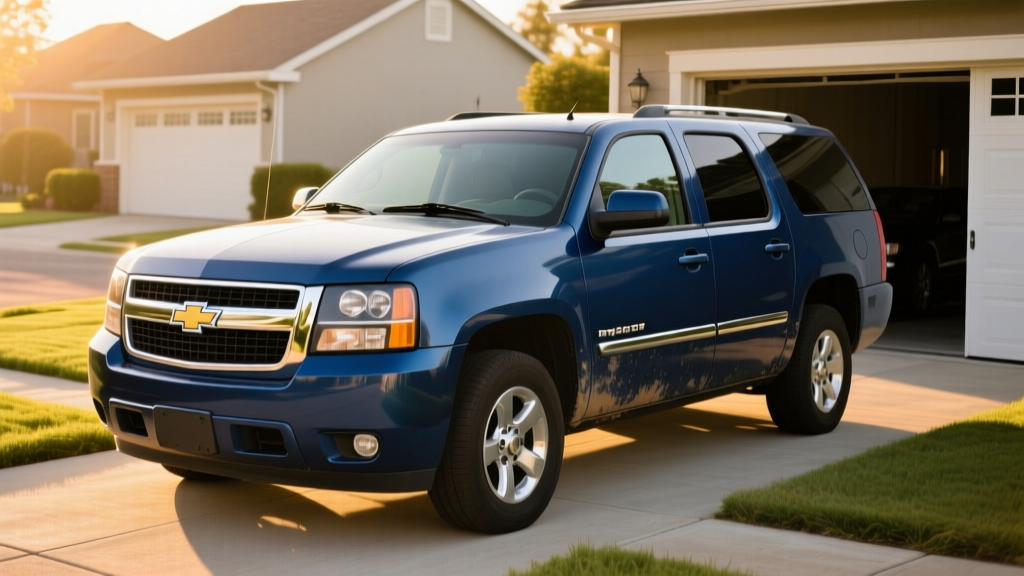
The 2008 Chevrolet Tahoe Hybrid was a bold experiment: a full-size, three-row SUV with body-on-frame construction that promised V6 fuel economy from a V8-powered rig. As the first full-size hybrid SUV to reach the U.S. market (alongside its GMC Yukon Hybrid twin), it used GM's innovative two-mode hybrid system to deliver meaningful efficiency gains without sacrificing towing or passenger space. Nearly two decades later, it remains a curiosity on the used market — and a cautionary tale about early hybrid battery ownership.
If you're considering a used 08 Chevy Tahoe Hybrid in 2026, this guide covers everything you need to know: real-world MPG, the two-mode hybrid powertrain, battery replacement costs, reliability data, and how it stacks up against modern hybrids, PHEVs, and full EVs.
2008 Chevy Tahoe Hybrid: Key Specs at a Glance
| Specification | Value |
|---|---|
| Powertrain | 6.0L V8 + Two-Mode Hybrid System (2 electric motors) |
| Combined Horsepower | 332 hp (net system) |
| Transmission | Electrically Variable Transmission (EVT), 2 modes |
| EPA City MPG | 21 mpg |
| EPA Highway MPG | 22 mpg |
| EPA Combined MPG | 21 mpg |
| Hybrid Battery | ~1.8 kWh, Nickel-Metal Hydride (NiMH), 300V |
| Towing Capacity | 5,800 lbs (2WD) |
| Seating | Up to 7 passengers |
| 0-60 mph | ~8.2 seconds |
| Original MSRP | ~$50,490 (base, 2008) |
| Typical 2026 Used Price | $4,500 – $9,000 |
Fuel Economy: EPA Numbers vs. Real-World MPG
The headline figure for the 2008 Tahoe Hybrid was always its city MPG. The EPA rated it at 21 city / 22 highway / 21 combined for the 2WD model, and 20/20/20 for 4WD. For context, the gas-only 2008 Tahoe with the 5.3L V8 was rated at 14 city / 20 highway / 16 combined — meaning the hybrid delivered roughly a 50% improvement in city driving.
Owners consistently report real-world combined fuel economy between 18–21 MPG, depending on driving mix, vehicle condition, and battery health. City-heavy driving favors the hybrid system, where electric-only low-speed operation and regenerative braking shine. Highway-only driving at 75+ mph yields closer to 19–20 MPG, as the two-mode system's second mode (optimized for highway cruising) provides a more modest efficiency gain. A degraded hybrid battery will push real-world figures toward the lower end of that range.
The two-mode hybrid system is the reason the city number looks so good. At low speeds (under ~30 mph), the Tahoe Hybrid can operate on electric motors alone for short distances, and the engine shuts off at stops. In stop-and-go traffic, the electric motors do substantial work, reducing fuel consumption dramatically compared to the gas-only version. This is a conventional hybrid (HEV) — it does not plug in, and all energy comes from gasoline.
| Vehicle | City MPG | Highway MPG | Combined MPG |
|---|---|---|---|
| 2008 Tahoe Hybrid (2WD) | 21 | 22 | 21 |
| 2008 Tahoe 5.3L V8 (2WD) | 14 | 20 | 16 |
| 2026 Toyota Sequoia Hybrid (2WD) | 21 | 24 | 22 |
| 2026 Ford Expedition (3.5L EcoBoost) | 17 | 23 | 19 |
Source: fueleconomy.gov
The Two-Mode Hybrid Powertrain Explained
GM's two-mode hybrid system (co-developed with BMW and DaimlerChrysler as part of the "Global Hybrid Cooperation") was engineering-heavy and genuinely novel. Here's how it works:
- Mode 1 (Low-speed / City): Functions like a conventional series-parallel hybrid. The 6.0L V8 can shut down entirely, and the two electric motors (each rated at approximately 60 kW) propel the vehicle at low speeds. Regenerative braking recaptures energy into the NiMH battery pack. This mode delivers the dramatic city MPG improvement.
- Mode 2 (Highway / Towing): Engages at higher speeds or under heavy load. The system acts more like a parallel hybrid, with the engine and motors working together through fixed gear ratios. This provides full V8 towing capability while still offering modest efficiency gains over the gas-only Tahoe.
The 6.0L Vortec V8 features Active Fuel Management (cylinder deactivation), allowing it to run on four cylinders under light load. Combined with the electric assist, this gives the Tahoe Hybrid its surprisingly flat city/highway MPG split — unusual for a vehicle this size.
Combined system output is 332 horsepower, competitive with the gas V8 models of the era. The electric motors provide instant torque at low RPM, which helps the heavy Tahoe (curb weight ~5,800 lbs) feel responsive from a stop.
Hybrid Battery: Size, Chemistry, and Lifespan
The 2008 Tahoe Hybrid uses a Nickel-Metal Hydride (NiMH) battery pack rated at approximately 1.8 kWh and operating at 300 volts. This is a small battery by modern standards — for comparison, a 2026 Toyota Prius Prime PHEV carries an 13.6 kWh lithium-ion pack — but it's proportionate to the Tahoe Hybrid's role as a conventional HEV that doesn't plug in.
Original warranty: GM covered the hybrid battery and related components for 8 years / 100,000 miles (extended to 10 years / 150,000 miles in California and states adopting CARB emissions standards). For a 2008 model, this factory warranty has expired in all cases as of 2026.
Expected lifespan: NiMH batteries in GM two-mode hybrids typically last 120,000–180,000 miles before significant degradation, though some have failed earlier and others have exceeded 200,000 miles. Heat is the primary enemy — vehicles in hot climates (Arizona, Texas, Southern California) tend to see earlier battery failures.
Battery replacement cost: A refurbished/remanufactured hybrid battery pack for the Tahoe Hybrid runs $2,500–$4,500 installed as of 2026. A new OEM pack (if available) can exceed $6,000. Given that a clean used 2008 Tahoe Hybrid sells for $4,500–$9,000, a battery replacement can represent a significant percentage of the vehicle's value.
Is the 08 Chevy Tahoe Hybrid Reliable?
The two-mode hybrid system is mechanically complex — it integrates two electric motors, a multi-clutch EVT, and sophisticated power electronics into a heavy, body-on-frame SUV. Reliability is a mixed picture:
Strengths: The 6.0L Vortec V8 is a proven, durable engine. The transmission, while complex, has proven more robust than some early hybrid systems from other manufacturers. Many examples have crossed 200,000 miles with proper maintenance.
Concerns: The hybrid battery pack is the primary liability on any surviving 2008 example. The power electronics (inverter, DC-DC converter) can also fail and are expensive to replace. The electrically driven A/C compressor and power steering pump add repair complexity compared to belt-driven equivalents. Parts availability is declining as the model ages, and not every independent shop is comfortable diagnosing high-voltage hybrid faults.
According to owner forums and NHTSA complaint data, the most common issues reported include hybrid battery degradation (reduced MPG and performance), transmission-related shuddering during mode transitions, and occasional power steering failures. NHTSA complaint records show a moderate number of powertrain-related complaints for the model year.
Pros
- 50% city MPG improvement over gas Tahoe
- Full towing capacity (5,800 lbs)
- Spacious 3-row seating for 7
- Proven 6.0L V8 engine durability
- Very low used purchase price
Cons
- Expired battery warranty on all examples
- $2,500–$6,000 battery replacement cost
- Complex powertrain — expensive diagnostics
- Declining parts availability
- No EV-only range; not a plug-in hybrid
- Dated interior and safety tech vs. modern SUVs
Hybrid vs. PHEV vs. EV: Which Fits Your Needs?
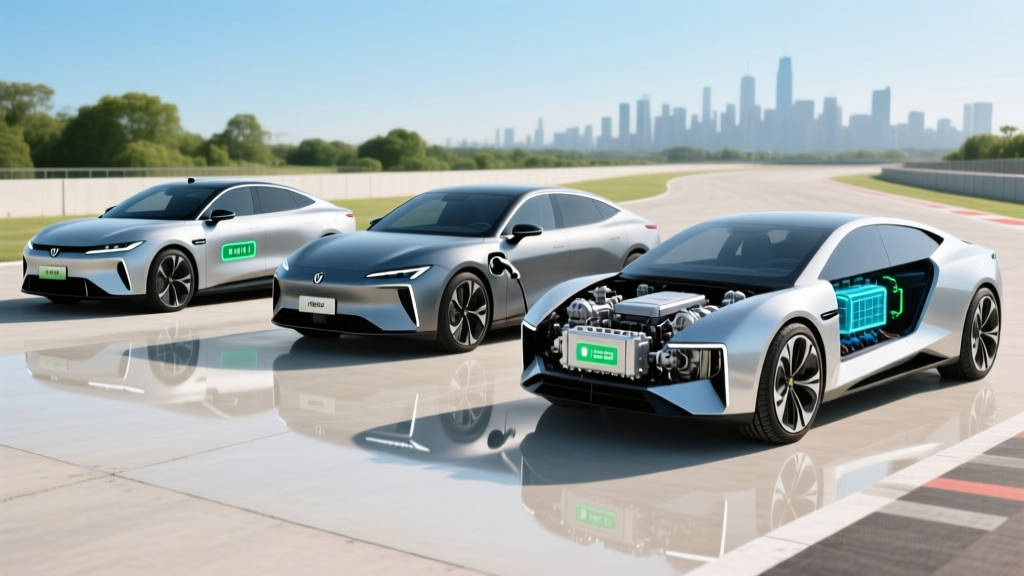
The 2008 Tahoe Hybrid is a conventional hybrid (HEV) — it never plugs in, carries a small battery, and gets all its energy from gasoline. Understanding the distinction matters for used buyers comparing it against modern alternatives:
| Feature | HEV (like this Tahoe) | PHEV (e.g., 2026 RAV4 Prime) | BEV (e.g., 2026 Rivian R1S) |
|---|---|---|---|
| Plugs in? | No | Yes | Yes |
| Battery Size | ~1–2 kWh | ~15–20 kWh | ~100–150 kWh |
| Electric-Only Range | None (short low-speed assist) | 30–45 miles | 300–400+ miles |
| Gas Engine? | Yes (primary power) | Yes (backup/extended range) | No |
| Home Charging Needed? | No | Recommended (Level 2) | Essential (Level 2) |
| Federal Tax Credit | None (expired) | Up to $7,500 (§30D, if eligible) | Up to $7,500 (§30D, if eligible) |
| Best For | No charging access; want simple MPG gains | Short commutes + road trip flexibility | Home charging + lowest running costs |
The Tahoe Hybrid makes sense only if you need a large, affordable, three-row SUV with better city MPG and you have no ability to charge at home. If you can install a Level 2 charger, a modern PHEV like the Toyota RAV4 Prime or a three-row BEV will deliver dramatically lower operating costs and modern safety tech — though at a significantly higher purchase price.
Tax Credits and Incentives: What Applies in 2026?
Here's the straightforward answer: the 2008 Chevy Tahoe Hybrid does not qualify for any federal tax credit.
The federal §30D clean vehicle credit applies only to new plug-in electric vehicles (PHEVs and BEVs) meeting current battery sourcing, MSRP, and buyer income requirements. Conventional hybrids (HEVs) like the Tahoe Hybrid have not qualified for federal purchase credits since the original hybrid credit program expired for GM vehicles in 2010. The IRS §30D guidelines confirm that HEVs are excluded entirely.
Some states offer modest incentives for used vehicle purchases or for hybrid ownership, but these vary widely by jurisdiction and are typically aimed at plug-in vehicles. Check your state's energy office or DMV for current programs.
Who Should Buy the 2008 Chevy Tahoe Hybrid?
Choose the 08 Tahoe Hybrid If:
- You need a three-row, body-on-frame SUV on a tight budget (under $10,000)
- Your driving is predominantly city/suburban where the hybrid system delivers its best MPG gains
- You tow occasionally and need the 5,800-lb capacity
- You have no home charging access and don't want a plug-in vehicle
- You're comfortable budgeting $2,500–$4,500 for a potential battery replacement
Skip It and Consider Alternatives If:
- You want modern safety features (AEB, blind-spot monitoring, lane-keep assist) — the 2008 Tahoe has none of these
- You can charge at home — a used PHEV or a modern HEV like the Toyota Sequoia Hybrid offers far better tech and efficiency
- You plan to keep the vehicle 5+ years — the aging hybrid system is a financial risk
- You want any federal or state EV/PHEV tax credits
Frequently Asked Questions
How many MPG does the 2008 Chevy Tahoe Hybrid get?
The EPA rates the 2WD model at 21 city / 22 highway / 21 combined. Real-world owners report 18–21 MPG combined depending on driving mix and battery health. The city figure is where the hybrid system delivers its biggest advantage — expect 20–22 MPG in stop-and-go driving, dropping to 18–20 MPG on sustained highway trips.
Is the 2008 Tahoe Hybrid a plug-in hybrid?
No. The 2008 Tahoe Hybrid is a conventional hybrid (HEV). It does not plug in and has no meaningful electric-only range. The battery recharges solely through regenerative braking and the gasoline engine.
How much does it cost to replace the hybrid battery?
As of 2026, expect to pay $2,500–$4,500 for a refurbished/remanufactured NiMH battery pack installed, or $6,000+ for a new OEM unit (if available). Given the vehicle's $4,500–$9,000 used market value, a battery failure is a significant economic decision.
Is the two-mode hybrid system reliable?
The system is complex but generally durable when maintained. The primary risk is hybrid battery degradation — most 2008 examples are now 18 years old, and many original batteries have been replaced or are nearing end-of-life. The 6.0L V8 engine itself is robust. Budget for hybrid-specific diagnostics at a qualified shop.
Does the 2008 Tahoe Hybrid qualify for any tax credit?
No. Federal §30D tax credits apply only to new plug-in vehicles (PHEVs and BEVs). The original hybrid tax credit for GM vehicles was exhausted in 2010. No federal incentive applies to this vehicle in 2026.
How does it compare to a modern hybrid SUV?
The 2026 Toyota Sequoia Hybrid (21/24/22 MPG, starting ~$62,000) delivers similar combined MPG with modern safety tech, a far superior interior, and a full factory warranty — but at 6–10x the used price of the Tahoe Hybrid. The value proposition of the 08 Tahoe Hybrid rests entirely on its ultra-low entry cost.