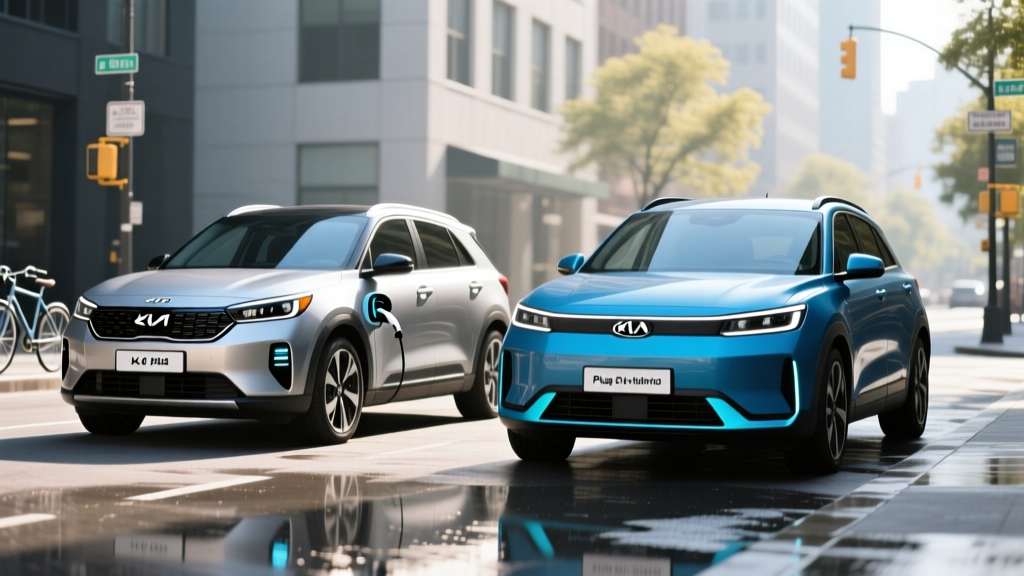
The Kia Niro occupies a rare sweet spot in the electrified-vehicle market: it's one of the few nameplates sold simultaneously as a conventional hybrid (HEV) and a plug-in hybrid (PHEV), giving buyers a genuine choice between two distinct ownership models without switching brands or body styles. If you've been searching for a Kia Niro hybrid plugin comparison, you're likely weighing whether the plug-in variant's electric-only commuting capability justifies its higher sticker price — or whether the standard hybrid's simplicity and lower cost make more sense for your driving pattern.
This guide breaks down the 2026 Kia Niro HEV and PHEV side by side, with exact EPA figures, real-world efficiency expectations, battery and warranty details, and a clear decision framework so you can pick the right powertrain for your commute, your charger access, and your budget.
HEV vs PHEV: What's the Actual Difference in the Niro?
Before comparing specs, it's critical to understand the mechanical distinction, because it dictates everything from daily fuel use to whether you need a home charger.
Kia Niro Hybrid (HEV)
The conventional hybrid pairs a 1.6-liter four-cylinder engine with a small electric motor and a compact battery (typically ~1.56 kWh). You never plug it in. The battery recharges through regenerative braking and engine power. It assists the gas engine during acceleration and allows brief electric-only movement at low speeds, but it cannot sustain electric-only driving for meaningful distances.
Kia Niro Plug-In Hybrid (PHEV)
The plug-in variant uses a larger 11.1 kWh lithium-ion polymer battery paired with a more powerful electric motor. You plug it in to charge (Level 1 or Level 2). When the battery is full, it can drive approximately 33 miles on electricity alone before the gas engine engages, functioning as a conventional hybrid afterward.
The key takeaway: the HEV is a gas car that uses electricity to improve MPG. The PHEV is an electric car for short trips that carries a gas engine as a backup for longer ones.
Fuel Economy and Electric Range: The Numbers That Matter
Efficiency is the primary reason buyers choose the Niro. Here's how both powertrains stack up according to EPA data on fueleconomy.gov:
| Metric | Niro Hybrid (HEV) | Niro Plug-In Hybrid (PHEV) |
|---|---|---|
| EPA Combined MPG | 53 MPG | 48 MPG (charge-sustaining / gas mode) |
| EPA City MPG | 53 MPG | 46 MPG (gas mode) |
| EPA Highway MPG | 54 MPG | 50 MPG (gas mode) |
| MPGe (Electric Mode) | N/A | 108 MPGe combined |
| Electric-Only Range | N/A | 33 miles (EPA) |
| Total Combined Range | ~590 miles | ~560 miles (gas + electric) |
| Fuel Tank Capacity | 11.1 gallons | 10.5 gallons |
Real-World MPG vs. EPA Sticker
Niro HEV: The EPA combined rating of 53 MPG is strong, and in real-world city driving with frequent stops, many owners report meeting or slightly exceeding this figure — hybrids thrive in stop-and-go traffic where regenerative braking constantly replenishes the battery. On sustained highway trips at 70-75 mph, expect 47-50 MPG. In cold weather (below 30°F), anticipate a 5-10% efficiency drop due to increased engine warm-up cycles and cabin heating demands.
Niro PHEV: The 33-mile electric-only range is achievable in mild weather with moderate speeds. In practice, expect 28-31 miles in warm conditions and 22-26 miles in freezing temperatures, where battery chemistry and cabin heating reduce usable capacity. Once the battery depletes, the PHEV operates as a conventional hybrid at roughly 46-48 MPG combined — slightly less than the HEV due to the extra weight of the larger battery and motor.
Powertrain, Battery, and Charging Specs
| Specification | Niro Hybrid (HEV) | Niro Plug-In Hybrid (PHEV) |
|---|---|---|
| Engine | 1.6L GDI 4-cylinder | 1.6L GDI 4-cylinder |
| Engine Horsepower | 104 hp | 104 hp |
| Electric Motor | 32 kW (43 hp) | 62 kW (83 hp) |
| Combined System Output | 139 hp / 195 lb-ft torque | 180 hp / 195 lb-ft torque |
| Transmission | 6-speed dual-clutch automatic | 6-speed dual-clutch automatic |
| Battery Capacity | 1.56 kWh (lithium-ion polymer) | 11.1 kWh (lithium-ion polymer) |
| Drivetrain | Front-wheel drive | Front-wheel drive |
| 0-60 mph (est.) | ~9.5 seconds | ~7.6 seconds |
| Level 1 Charging (120V) | N/A | ~10 hours (0-100%) |
| Level 2 Charging (240V) | N/A | ~2 hours 45 min (0-100%) |
| DC Fast Charging | N/A | Not supported |
An important detail for PHEV shoppers: the Niro Plug-In Hybrid does not support DC fast charging. This is typical for PHEVs — the 11.1 kWh battery is small enough that Level 2 charging fills it relatively quickly, and adding DC fast-charge hardware would increase cost and weight for marginal benefit. If your routine involves frequent long road trips where you'd want to rapidly recharge the battery at highway rest stops, a full battery-electric vehicle (BEV) with DC fast charging is a better fit.
For daily use, most PHEV owners charge overnight on a standard 120V household outlet (Level 1), which adds roughly 3-4 miles of range per hour of charging. Since the battery is only 11.1 kWh, a full overnight charge easily replenishes the entire pack. A Level 2 home charger (240V) reduces charge time to under three hours — useful if you want to top up between an evening commute and a morning departure.
Pricing, Trims, and Tax Credit Eligibility
The Niro lineup is positioned as one of the most accessible electrified vehicles on the market. Here's the approximate 2026 MSRP breakdown:
- Niro Hybrid LX: ~$28,415 (including destination)
- Niro Hybrid EX: ~$31,015
- Niro Hybrid SX Touring: ~$35,715
- Niro Plug-In Hybrid EX: ~$35,715
- Niro Plug-In Hybrid SX / SX Touring: ~$37,715 - $39,415
Does the Kia Niro Plug-In Hybrid Qualify for a Federal Tax Credit?
Under current IRS §30D Clean Vehicle Credit rules, PHEVs may qualify for up to $7,500 — but eligibility depends on several strict requirements:
- Battery capacity: Must be at least 7 kWh (Niro PHEV's 11.1 kWh qualifies)
- MSRP cap: Vans/SUVs capped at $80,000; sedans at $55,000 (Niro qualifies)
- Buyer income limits: $150,000 single / $225,000 head of household / $300,000 joint filers
- Critical minerals and battery component sourcing: Must meet annually escalating domestic-content thresholds — this is where many PHEVs face disqualification
- Point-of-sale transfer: Eligible buyers can apply the credit as a down-payment reduction at the dealership
Important: The conventional Niro Hybrid (HEV) does not qualify for the §30D credit — it applies only to plug-in vehicles with ≥7 kWh batteries. Always verify current-year eligibility on irs.gov and consult a tax professional, as battery sourcing requirements tighten annually.
Some states and utilities offer additional rebates for PHEVs — California's CVRP, Colorado's state credit, and various utility-company incentives can stack on top of federal credits. Check your state energy office and local utility for current programs.
Reliability, Battery Warranty, and Long-Term Costs
Hybrid and PHEV buyers consistently rank battery longevity as a top concern. Kia addresses this with one of the strongest warranties in the segment:
Kia Hybrid/PHEV Battery Warranty
- Hybrid/EV battery: 10 years / 100,000 miles (whichever comes first)
- Hybrid system components: 10 years / 100,000 miles (inverter, motor, onboard charger)
- Basic vehicle warranty: 5 years / 60,000 miles
- Powertrain warranty: 10 years / 100,000 miles
Kia covers the hybrid battery if its capacity drops below approximately 70% of original capacity within the warranty period. This applies to both the HEV and PHEV variants.
Real-world battery degradation: Lithium-ion polymer batteries in modern hybrids and PHEVs have proven remarkably durable. Toyota and Hyundai/Kia hybrid batteries routinely exceed 150,000-200,000 miles before significant capacity loss. The Niro's battery management system maintains a buffer (never fully charging or fully depleting the cells), which extends cycle life. The PHEV's larger battery experiences shallower daily cycles if you charge regularly, further reducing stress.
Battery replacement cost (out of warranty): Based on current parts pricing, a Niro HEV battery replacement runs approximately $2,000-$3,000 (parts + labor). The PHEV's larger 11.1 kWh pack is more expensive — expect $4,000-$6,000 for a replacement. However, given the 10-year/100,000-mile warranty and typical battery longevity, most original owners will never face this cost.
Overall reliability: Kia's hybrid powertrain, shared across the Niro, Sorento Hybrid, and Sportage Hybrid lineups, has demonstrated solid reliability since its introduction. The 6-speed dual-clutch transmission avoids the rubber-band feel of CVTs found in competing hybrids (Toyota Prius, Honda Accord Hybrid). According to IIHS, the Niro carries strong crash-test ratings, though you should verify the current model year's specific results.
Who Should Choose the Niro HEV, PHEV, or a Full EV?
Choose the Niro Hybrid (HEV) If:
- You don't have access to home or workplace charging (apartment, street parking, no garage outlet)
- You want maximum MPG with zero behavior change — just fill up with gas
- Your budget is tighter and you want the lowest upfront cost (~$28,415 starting)
- You drive mostly highway miles where the HEV's 53-54 MPG highway shines
- You plan to keep the car 8+ years and value warranty simplicity
Choose the Niro Plug-In Hybrid (PHEV) If:
- You have reliable Level 1 or Level 2 charging at home or work
- Your daily round-trip commute is under ~30 miles (the electric-only sweet spot)
- You want to drive mostly on electricity for daily errands but need gas-engine flexibility for weekend road trips
- You qualify for the federal §30D tax credit, which can narrow the price gap with the HEV significantly
- You value the stronger acceleration (180 hp combined vs. 139 hp)
Choose a Full Battery-Electric Vehicle (BEV) Instead If:
- Your daily driving exceeds 33 miles and you want to eliminate gas entirely
- You have home Level 2 charging AND access to DC fast charging for road trips
- You want zero tailpipe emissions and lower per-mile "fuel" costs
- You're ready to commit to EV-only ownership and don't need a gas-engine safety net
The PHEV's economic advantage is most pronounced when your commute falls within the electric-only range. If you drive 25 miles round-trip and charge nightly, you may use only 2-3 tanks of gas per year. But if your commute is 60+ miles each way, the PHEV spends most of its time in gas mode — and the HEV's lighter weight and slightly better gas-mode MPG make it the smarter financial choice.
Pros and Cons at a Glance
Pros
- Class-leading EPA MPG (53 combined HEV / 108 MPGe PHEV)
- PHEV offers genuine 33-mile electric commute capability
- Strong 10-year/100,000-mile hybrid battery warranty
- Practical crossover cargo space (22.8 cu ft behind rear seats)
- PHEV may qualify for up to $7,500 federal tax credit
- Dual-clutch transmission avoids CVT drone
- Competitive pricing vs. Toyota Prius Prime and RAV4 Prime
Cons
- PHEV does not support DC fast charging
- FWD only — no all-wheel-drive option (unlike Prius AWD)
- PHEV gas-mode MPG slightly trails the HEV due to added weight
- Modest acceleration (0-60 in 7.6s PHEV / 9.5s HEV) — adequate but not quick
- Higher PHEV trims approach $40K, entering BEV territory
- Federal tax credit eligibility depends on battery sourcing rules that change annually
- Interior materials and infotainment lag behind some competitors at this price point
Frequently Asked Questions
How many MPG does the Kia Niro Hybrid get in real-world driving?
The EPA rates the Niro HEV at 53 MPG combined (53 city / 54 highway). In real-world use, city drivers frequently match or slightly exceed the EPA figure thanks to regenerative braking. Highway cruising at 75 mph typically yields 47-50 MPG. Cold weather reduces efficiency by roughly 5-10%.
How far can the Kia Niro Plug-In Hybrid go on electric only?
The EPA rates the Niro PHEV at 33 miles of electric-only range. Real-world results vary: expect 28-31 miles in mild weather with moderate speeds, and 22-26 miles in freezing temperatures. Once the battery depletes, the gas engine takes over and the car operates as a conventional hybrid at approximately 46-48 MPG combined.
Does the Kia Niro Hybrid need to be plugged in?
No. The conventional Niro Hybrid (HEV) never needs to be plugged in — it charges its small battery through regenerative braking and the gas engine. Only the Niro Plug-In Hybrid (PHEV) requires plugging in to access its 33-mile electric-only range. If you never plug in the PHEV, it will still function as a regular hybrid, but you'll miss its primary advantage.
Is the Kia Niro hybrid reliable and what does battery replacement cost?
Kia's hybrid powertrain has demonstrated solid reliability since its introduction, and the 10-year/100,000-mile hybrid battery warranty is among the best in the industry. Out-of-warranty battery replacement costs approximately $2,000-$3,000 for the HEV and $4,000-$6,000 for the PHEV, though most batteries last well beyond 150,000 miles with normal use.
Does the Kia Niro Plug-In Hybrid qualify for a federal tax credit?
The Niro PHEV may qualify for up to $7,500 under the IRS §30D Clean Vehicle Credit, depending on your income, the vehicle's MSRP, and current battery sourcing requirements. The conventional HEV does not qualify. Eligibility rules change annually — verify on irs.gov and consult a tax professional before purchasing.
How long does it take to charge the Niro Plug-In Hybrid?
On a standard 120V household outlet (Level 1), the 11.1 kWh battery charges from empty to full in approximately 10 hours — easily done overnight. On a 240V Level 2 charger, it takes about 2 hours and 45 minutes. The PHEV does not support DC fast charging.
Should I buy the Niro HEV, PHEV, or a full electric vehicle?
Choose the HEV if you lack home charging access or want the simplest, most affordable hybrid experience. Choose the PHEV if you can charge at home and your daily commute is under 30 miles — you'll drive mostly on electricity with a gas backup for longer trips. Choose a full BEV (like the Kia EV6 or Hyundai Ioniq 5) if you want to eliminate gas entirely and have reliable charging infrastructure.