Why "Hybrid Plane" Searches Are Surging — and What It Means for Car Buyers
If you've typed "hybrid plane" into a search engine lately, you're not alone. Google Trends data shows a steady climb in curiosity about electrified aircraft, driven by startup announcements from companies like Heart Aerospace, Airbus's E-Fan X legacy, and hybrid-electric demonstrator projects from NASA. The idea of a plane that pairs a gas turbine with an electric motor echoes the exact same engineering philosophy behind the hybrid car in your driveway.
But here's the reality check: no certified hybrid passenger plane is available for commercial travel as of 2026. What is available — and what can save you thousands in fuel costs right now — is a mature lineup of hybrid (HEV) and plug-in hybrid (PHEV) vehicles with proven powertrains, 8-to-10-year battery warranties, and EPA-tested efficiency numbers.
This guide breaks down the hybrid plane concept, explains why the same engineering principles matter on the ground, and gives you the exact specs, MPG figures, and pricing you need to choose between an HEV, a PHEV, or a full battery-electric vehicle (BEV).
What Is a Hybrid Plane? The Engineering Parallel to Hybrid Cars
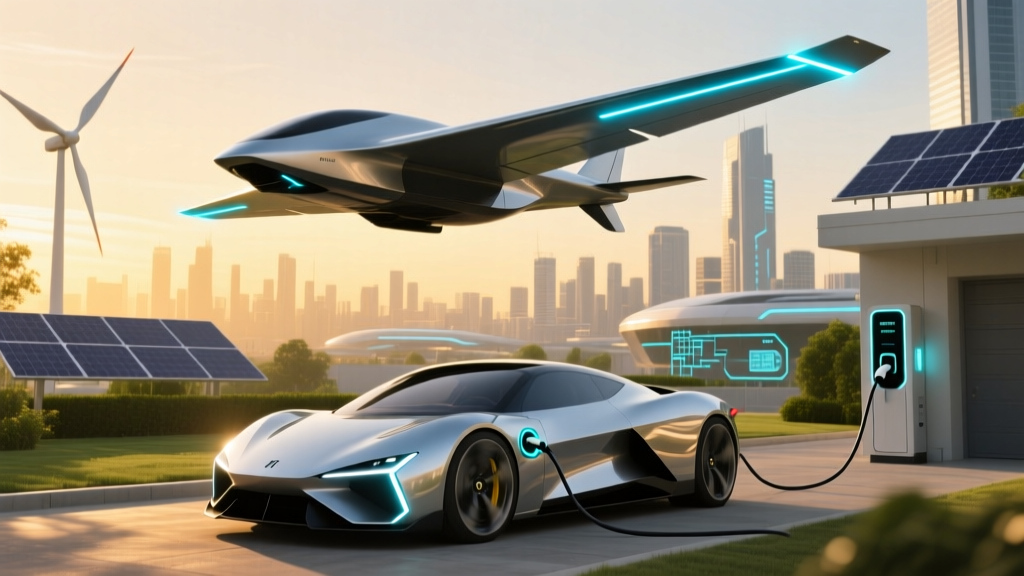
A hybrid plane — more formally called a hybrid-electric aircraft — uses a combination of a conventional combustion engine (typically a gas turbine or piston engine) and one or more electric motors powered by a battery pack. The architecture mirrors what Toyota, Hyundai, and Ford have been refining in cars for over two decades.
HEV vs. PHEV — and How Aviation Maps to Both
Conventional Hybrid (HEV): A small battery recharges via regenerative braking and the engine. No plug required. Think of this like a series-hybrid aircraft concept where the turbine generates electricity for electric propellers — the battery buffers energy but never plugs in.
Plug-in Hybrid (PHEV): A larger battery (typically 12–25 kWh in cars) that charges from the grid and provides 25–45 miles of electric-only driving before the engine engages. Aviation analogs include experimental aircraft that can taxi and take off on electric power before switching to turbine cruise.
Several hybrid-electric aircraft demonstrators have flown — NASA's X-57 Maxwell (an all-electric experimental, not hybrid, but part of the same electrified aviation push) and various eVTOL (electric vertical takeoff and landing) prototypes from Joby Aviation and Archer. But certification timelines for commercial hybrid planes stretch well into the late 2020s or 2030s. Meanwhile, hybrid cars are in dealer lots today with decades of reliability data.
Real Hybrid Vehicles You Can Buy Now: HEV and PHEV Specs Compared
Since you can't book a ticket on a hybrid plane yet, let's look at the electrified vehicles that use identical engineering principles and are available in 2026. Below is a spec comparison of three popular models spanning HEV, PHEV, and BEV architectures.
| Spec | 2026 Toyota Prius (HEV) | 2026 Toyota RAV4 Prime (PHEV) | 2026 Hyundai Ioniq 5 (BEV) |
|---|---|---|---|
| Powertrain | 2.0L 4-cyl + electric motor | 2.5L 4-cyl + F/R electric motors | Single or dual electric motor(s) |
| Combined Horsepower | 196 hp | 302 hp | 168–320 hp |
| EPA Fuel Economy | 57 city / 56 hwy / 57 combined MPG | 94 MPGe (EV mode) / 38 MPG (gas) | 114–134 MPGe |
| Electric-Only Range | N/A (HEV) | 42 miles (EPA) | 290–361 miles (EPA) |
| Total Range | ~580 miles | ~440 miles (EV + gas) | 290–361 miles |
| Battery | ~1.0 kWh (NiMH/Li-ion) | 18.1 kWh (Li-ion) | 63–84 kWh (NMC) |
| Plug-In Charging? | No | Yes — Level 2 (~2.5 hrs) | Yes — L2 + DC fast |
| DC Fast Charge | N/A | No | Peak 240 kW, 10–80% ~18 min |
| 0–60 mph | 7.0 sec | 6.8 sec | 5.0–7.4 sec |
| Base MSRP | $29,445 | $44,515 | $42,600 |
| Federal Tax Credit (§30D) | None (HEV) | Up to $3,750* | Up to $7,500* |
*Federal tax credit eligibility depends on MSRP caps, buyer income limits, and battery critical-mineral sourcing requirements under IRS §30D. Verify current rules at IRS.gov. PHEVs must meet the same battery-sourcing and MSRP/income criteria as BEVs.
How Many MPG Does a Hybrid Actually Get? EPA vs. Real World
The 2026 Toyota Prius carries an EPA rating of 57 MPG combined. In real-world testing, conventional hybrids often exceed their EPA city estimates because regenerative braking recovers more energy in stop-and-go traffic than the test cycle captures. Expect 55–62 MPG in mixed city driving and closer to 50–54 MPG on sustained highway runs at 70+ mph, where the engine runs more often without regen assistance.
| Vehicle | EPA City | EPA Highway | EPA Combined | Real-World Expectation |
|---|---|---|---|---|
| 2026 Toyota Prius (HEV) | 57 | 56 | 57 | 50–62 MPG depending on driving mix |
| 2026 Toyota RAV4 Prime (PHEV, gas mode) | 40 | 36 | 38 | 34–42 MPG after battery depleted |
| 2026 Honda Accord Hybrid (HEV) | 51 | 44 | 48 | 43–53 MPG depending on driving mix |
| 2026 Hyundai Tucson PHEV | 80 MPGe (EV) | 35 MPG (gas) | 80 MPGe / 35 MPG | 33–38 MPG after 33-mi EV range used |
Source: fueleconomy.gov (EPA). Real-world figures based on aggregated owner reports and independent testing.
The RAV4 Prime's EPA-rated 42 miles of electric range assumes moderate temperatures and mixed driving. In winter (below 30°F), expect 30–35 miles of EV range due to cabin heating demands and reduced battery efficiency. In summer with light city driving, owners regularly report 44–48 miles before the engine kicks on. Always precondition your PHEV while plugged in to maximize EV range.
Hybrid vs. PHEV vs. Full EV: Which Powertrain Fits Your Life?
The same question facing aerospace engineers — how much electrification is practical? — applies to your next car purchase. Here's a decision framework based on real ownership patterns:
Choose a Conventional Hybrid (HEV) If:
- You lack access to home or workplace charging (apartment, street parking)
- You want maximum MPG with zero behavior change — no plugs, no apps
- Your budget is under $35,000 and you want proven reliability
- You drive 15,000+ miles/year in mixed city/highway conditions
Choose a Plug-in Hybrid (PHEV) If:
- You can install a Level 2 charger at home (240V, ~$500–$1,500 installed)
- Your daily commute is under 40 miles round-trip (you'll rarely burn gas)
- You take road trips where charging infrastructure is sparse
- You want EV-like daily driving without range anxiety on long trips
Choose a Full EV (BEV) If:
- You have reliable home Level 2 charging
- Your typical trips are under 250 miles, or you're comfortable planning DC fast-charge stops
- You want the lowest per-mile fuel cost (~$0.04–$0.06/mile on home electricity vs. $0.12–$0.15/mile for a 35-MPG hybrid at $3.50/gal)
- You want to maximize federal tax credit benefits (up to $7,500 for qualifying BEVs)
Hybrid Battery Reliability, Warranty, and Replacement Costs
Battery longevity is the number-one concern for hybrid shoppers. Here's what the data shows:
Hybrid Battery Warranty Coverage
Federal mandate: All hybrid and PHEV batteries sold in the US carry a minimum warranty of 8 years / 100,000 miles (10 years / 150,000 miles in CARB states including California, New York, Massachusetts, and others).
Toyota: 10 years / 150,000 miles on all hybrid batteries (2020+ models).
Hyundai/Kia: 10 years / 100,000 miles on hybrid and PHEV batteries.
Capacity threshold: Most warranties guarantee the battery will retain at least 60–70% of original capacity during the warranty period.
Real-world degradation data is encouraging. Toyota Prius taxis have logged 300,000+ miles on original hybrid batteries. The smaller batteries in HEVs (typically 1.0–1.8 kWh) experience shallow charge cycles — they never fully deplete or fully charge — which dramatically extends cycle life compared to BEV batteries.
If replacement is needed out of warranty:
- HEV battery (Prius, Accord Hybrid): $2,000–$4,000 for a new OEM pack; refurbished options available for $1,000–$2,000
- PHEV battery (RAV4 Prime, Tucson PHEV): $6,000–$9,000 for OEM replacement
- BEV battery: $12,000–$22,000+ depending on pack size (rarely needed under warranty)
Federal Tax Credits: What Hybrids and PHEVs Qualify For?
Under the current IRS §30D rules, conventional hybrids (HEVs) like the standard Prius do not qualify for any federal purchase tax credit. The credit is reserved for plug-in vehicles — BEVs and PHEVs — that meet specific requirements:
- Vehicle type: Must be a plug-in EV or PHEV with ≥7 kWh battery capacity
- MSRP caps: Vans/SUVs/pickups ≤ $80,000; sedans ≤ $55,000
- Buyer income caps: AGI ≤ $150,000 (single), $225,000 (head of household), $300,000 (joint)
- Battery sourcing: Critical minerals and battery components must meet phased-in domestic/free-trade sourcing thresholds (increasing annually through 2026+)
- Point-of-sale transfer: As of 2024+, eligible buyers can transfer the credit to the dealer for an upfront price reduction
- Assembly: Vehicle must undergo final assembly in North America
The RAV4 Prime (PHEV) may qualify for up to $3,750 depending on current critical-mineral sourcing compliance, while the Ioniq 5 (BEV) may qualify for the full $7,500 — but these figures shift as sourcing rules tighten. Always verify at fueleconomy.gov and consult a tax professional before purchase.
Hybrid Planes vs. Hybrid Cars: When Will Electrified Aviation Catch Up?
The engineering challenges for hybrid planes are orders of magnitude harder than for cars. Aviation demands extreme energy density — jet fuel packs roughly 12,000 Wh/kg, while the best lithium-ion cells in 2026 hover around 300–350 Wh/kg. That's a 35x gap. Hybrid-electric aircraft concepts aim to use electric motors for takeoff (the most fuel-intensive phase) and turbine cruise for efficiency, but certification by the FAA and EASA requires thousands of test hours and redundant safety systems.
Companies to watch:
- Heart Aerospace (Sweden): Developing the ES-30, a 30-seat hybrid-electric regional airliner targeting 2028 entry into service
- Joby Aviation: All-electric eVTOL air taxi (not hybrid, but part of the electrified aviation ecosystem), targeting limited commercial service
- Airbus: Exploring hybrid-electric concepts for narrowbody aircraft post-2035
For now, the most impactful way to reduce your personal transportation emissions and fuel costs is a hybrid or PHEV car — technology that's refined, warrantied, and available today.
✅ Advantages of Current Hybrid/PHEV Cars
- Proven 20+ year track record of reliability
- No charging needed (HEV) or optional plug-in (PHEV)
- 40–57 MPG real-world, cutting fuel costs 40–60% vs. gas-only
- 8–10 year battery warranties standard
- Lower upfront cost than BEVs ($29K–$45K range)
- No range anxiety on long trips
⚠️ Limitations to Consider
- HEVs don't qualify for federal tax credits
- PHEV electric range (30–45 mi) covers commutes but not road trips
- Two powertrains = more components that could need service long-term
- PHEVs carry a fuel-cost penalty if you never plug in
- Hybrid planes remain years from commercial reality
- Insurance premiums can be 10–15% higher than gas equivalents
Frequently Asked Questions
Are there any hybrid planes flying commercially today?
No. As of 2026, no hybrid-electric aircraft is certified for commercial passenger service. Several demonstrators and startups (Heart Aerospace, various eVTOL companies) are in development, but FAA/EASA certification for hybrid commercial planes is not expected before 2028–2030 at the earliest. For now, hybrid technology for personal transportation means cars, not planes.
How many MPG does a hybrid car get compared to a gas car?
Current HEVs like the 2026 Toyota Prius achieve 57 MPG combined — roughly double the 28–30 MPG of a comparable gas-only compact sedan. In city driving, hybrids shine brightest: regenerative braking and electric-only low-speed operation push city MPG above highway numbers, the opposite of gas cars. Source: fueleconomy.gov.
How far can a PHEV go on electric-only power?
Most 2026 PHEVs deliver 25–45 miles of EPA-rated electric-only range. The Toyota RAV4 Prime leads at 42 miles; the Hyundai Tucson PHEV offers 33 miles. Real-world range varies: cold weather can reduce EV range by 20–30%, while mild city driving can extend it 5–10% beyond the EPA sticker. Once the battery depletes, the gas engine takes over seamlessly.
Is a hybrid car reliable? What does battery replacement cost?
Hybrids from Toyota, Honda, and Hyundai have excellent long-term reliability records. Toyota's hybrid synergy drive has been in production since 1997 with millions of units on the road. Battery warranties cover 8–10 years / 100,000–150,000 miles. Out-of-warranty HEV battery replacement costs $2,000–$4,000 (refurbished options from $1,000). Many Prius batteries last 200,000+ miles without replacement.
Do hybrid cars qualify for any tax credit?
Conventional hybrids (HEVs) do not qualify for the federal §30D tax credit. Only plug-in vehicles (PHEVs and BEVs) with ≥7 kWh batteries are eligible, subject to MSRP caps, buyer income limits, and battery-sourcing requirements. Some PHEVs qualify for up to $3,750; qualifying BEVs may receive up to $7,500. Check IRS.gov for current eligibility rules, and note that some states offer additional rebates for hybrids and PHEVs.
Should I wait for hybrid plane technology or buy a hybrid car now?
Buy the car. Hybrid-electric aviation is a promising field, but commercial hybrid planes are at least 3–5 years from certification and many more years from widespread route availability. Hybrid and PHEV cars are mature, affordable, and deliver immediate fuel savings of 40–60% compared to gas-only vehicles. The engineering principles are the same — you're just applying them to the vehicle you can actually use every day.