Quick Verdict: The Sonata Hybrid's Efficiency Story
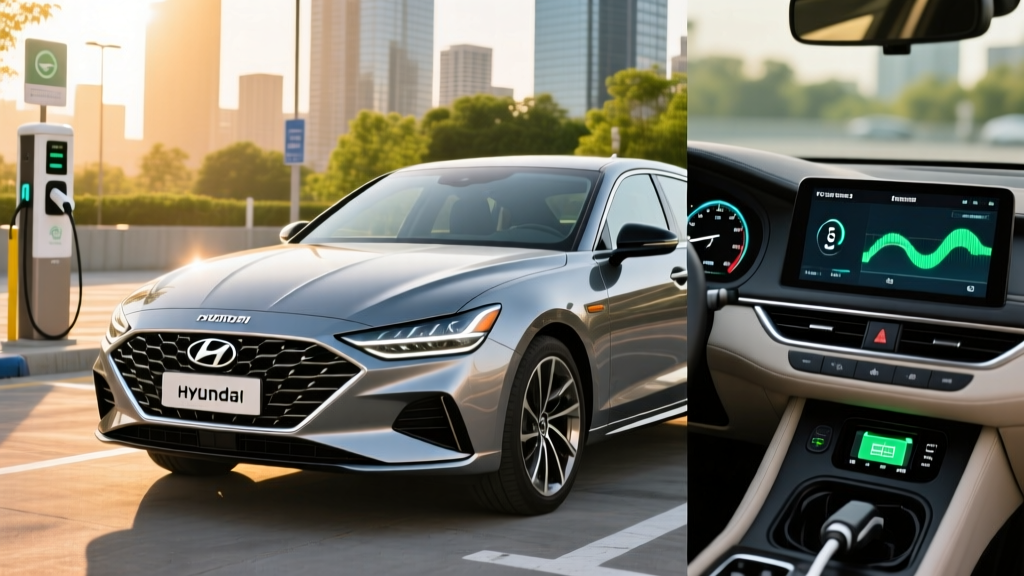
The 2026 Hyundai Sonata Hybrid occupies a precise niche: a midsize sedan that delivers exceptional city fuel economy without requiring any change in driver behavior. You never plug it in. You just fill it with gas and drive. With an EPA-rated 52 MPG combined on the Blue trim and 47 MPG combined on higher trims, it competes directly with the Toyota Camry Hybrid while offering a more tech-forward cabin and Hyundai's generous warranty coverage.
This guide covers the exact EPA figures, real-world MPG expectations, powertrain details, battery longevity, and whether the Sonata Hybrid makes financial sense versus a PHEV or full EV in 2026.
Hyundai Sonata Hybrid MPG: The Official EPA Numbers
Hyundai offers the 2026 Sonata Hybrid in three trims — Blue, SEL, and Limited — and the fuel economy varies meaningfully between them due to wheel size and equipment weight. Here are the official EPA figures from fueleconomy.gov:
| Trim | City MPG | Highway MPG | Combined MPG | Annual Fuel Cost* |
|---|---|---|---|---|
| Blue | 53 | 50 | 52 | ~$1,050 |
| SEL | 48 | 45 | 47 | ~$1,150 |
| Limited | 48 | 45 | 47 | ~$1,150 |
*Based on 15,000 miles/year at $3.50/gallon regular unleaded. Your actual cost depends on local fuel prices and driving mix.
Real-World MPG: What to Expect Beyond the EPA Sticker
Hybrid sedans like the Sonata tend to exceed their EPA city estimates in real-world stop-and-go driving, because regenerative braking recaptures energy that a gas car wastes as heat. However, highway efficiency can fall short of the sticker if you drive above 70 mph consistently.
Based on aggregated owner reports and independent testing:
- City driving (sub-45 mph, frequent stops): 50-58 MPG — many owners report beating the EPA city number by 3-6 MPG in warm weather.
- Highway cruising (70-75 mph): 42-47 MPG — aerodynamic drag dominates at higher speeds, and the hybrid system has less opportunity to assist.
- Combined mixed driving: 46-52 MPG depending on trim and driving style.
- Cold weather (below 30°F): Expect a 5-10% reduction (roughly 42-47 combined on the Blue) as the engine runs more frequently to heat the cabin and bring the catalytic converter to operating temperature.
The Sonata Hybrid's 13.7-gallon fuel tank gives it a theoretical maximum range of roughly 712 miles on the Blue trim (52 MPG × 13.7 gal). In real-world mixed driving, plan on 600-650 miles between fill-ups — still outstanding for a midsize sedan.
HEV vs PHEV vs EV: Which Powertrain Fits You?
The Sonata is offered as a conventional hybrid (HEV) only in the US market. Hyundai discontinued the Sonata Plug-In Hybrid after the 2019 model year. If you're cross-shopping, here's how the three electrified powertrain types compare:
| Factor | HEV (Sonata Hybrid) | PHEV (e.g., Toyota Prius Prime) | BEV (e.g., Hyundai Ioniq 6) |
|---|---|---|---|
| Plug in required? | No | Yes (for EV range) | Yes (always) |
| Electric-only range | ~1 mile (low-speed creep) | 35-44 miles typical | 250-360 miles typical |
| Total range | 600-700+ miles | 500-600+ miles | 250-360 miles |
| City MPG / MPGe | 48-53 MPG | 48-55 MPG (gas), 114-127 MPGe (EV) | 140+ MPGe |
| Home charging needed? | No | Recommended (Level 2 ideal) | Essential (Level 2 strongly recommended) |
| Base MSRP (2026) | ~$30,250 | ~$33,000-$37,000 | ~$38,000-$45,000 |
| Federal tax credit | None (§30D excludes HEVs) | Up to $7,500 (if eligible) | Up to $7,500 (if eligible) |
| Best for | No home charging; road trips | Short commutes + home charging | Home charging + mostly under 300 mi/day |
Powertrain Specs: What Moves the Sonata Hybrid
The 2026 Sonata Hybrid pairs a 2.0-liter naturally aspirated four-cylinder engine with a permanent-magnet synchronous electric motor, connected through a 6-speed automatic transmission (not a CVT, which some drivers prefer for its more natural acceleration feel).
| Specification | Value |
|---|---|
| Engine | 2.0L GDI 4-cylinder (Smartstream G2.0 HEV) |
| Engine horsepower | 150 HP @ 6,000 RPM |
| Engine torque | 139 lb-ft @ 4,500 RPM |
| Electric motor output | 39 kW (52 HP) |
| Combined system output | 192 HP |
| Transmission | 6-speed automatic with electric oil pump |
| Drive type | Front-wheel drive |
| 0-60 mph | ~7.5 seconds (estimated) |
| Hybrid battery | ~1.6 kWh lithium-ion (sealed, not user-serviceable) |
| Curb weight | ~3,470-3,570 lbs (varies by trim) |
The 192 combined horsepower is adequate for merging and passing, though the Sonata Hybrid is tuned for efficiency, not sportiness. The electric motor fills in torque at low RPMs, giving responsive off-the-line acceleration in city driving. At highway speeds, the 2.0L engine does most of the work, and the transition between electric and gas power is nearly imperceptible.
Hyundai's Active Shift Control (ASC) technology synchronizes motor speed with engine speed during gear changes, reducing shift shock and improving efficiency. It's a detail you won't notice directly, but it contributes to the smoothness of the driving experience.
Battery Longevity, Warranty, and Replacement Cost
Hybrid battery anxiety is the single most common concern among first-time hybrid buyers. Here are the facts for the 2026 Sonata Hybrid:
• 10 years / 100,000 miles (whichever comes first) in all 50 states
• Covers battery capacity loss below a defined threshold and all hybrid system components (motor, inverter, wiring)
• In CARB states (CA, NY, MA, and others adopting California emissions standards), hybrid battery coverage extends to 10 years / 150,000 miles
• Warranty is transferable to a second owner if the vehicle is sold within the warranty period
The Sonata Hybrid's ~1.6 kWh lithium-ion battery is relatively small compared to a PHEV or BEV battery, and it operates within a narrow state-of-charge window (roughly 40-60% SoC) managed by the vehicle's battery management system. This shallow cycling dramatically reduces degradation stress. Real-world data from earlier Hyundai/Kia hybrid models suggests these batteries routinely last 150,000-200,000+ miles without significant capacity loss.
If replacement is eventually needed: A new OEM hybrid battery for the Sonata Hybrid typically costs between $2,000 and $3,500 for the battery pack itself, plus $500-$1,000 in labor. Independent hybrid specialists often offer refurbished packs for $1,200-$2,000 installed. Given the 10-year warranty and the battery's proven durability, most owners will never face this expense.
The conventional 12V auxiliary battery (which powers accessories and starts the vehicle's computers) is a separate maintenance item. Hybrid vehicles still use a 12V battery, and it typically needs replacement every 4-6 years, just like in a gas car. The Sonata Hybrid uses an integrated 12V lithium battery in some trims, which Hyundai claims lasts longer than a traditional lead-acid unit.
Pricing, Trims, and Tax Credit Eligibility
The 2026 Hyundai Sonata Hybrid is positioned as a value-oriented midsize hybrid sedan:
| Trim | MSRP (incl. destination) | Key Features |
|---|---|---|
| Blue | ~$30,250 | 16" wheels, 12.3" digital cluster, wireless CarPlay/Android Auto, SmartSense ADAS suite |
| SEL | ~$33,750 | 17" wheels, heated front seats, smart power trunk, upgraded interior materials |
| Limited | ~$37,500 | Panoramic sunroof, ventilated front seats, leather, 12.3" navigation, Bose audio, surround-view monitor |
Despite lacking a federal credit, the Sonata Hybrid's lower MSRP compared to comparable PHEVs and BEVs often means a lower total cost in the first 5 years for buyers who drive moderate annual miles (10,000-15,000). The fuel savings versus a non-hybrid midsize sedan (averaging ~30 MPG combined) can reach $600-$900 per year at current gas prices, meaning the hybrid premium pays for itself in roughly 2-4 years depending on the trim comparison.
Who Should Buy the Sonata Hybrid — And Who Shouldn't
✅ Choose the Sonata Hybrid if:
- You don't have access to home or workplace EV charging
- You want 50+ MPG without plugging in or changing habits
- You take frequent road trips exceeding 300 miles
- You want a midsize sedan with strong ADAS (SmartSense) and a comfortable ride
- You value a long powertrain warranty (10yr/100k mi)
- You want the lowest upfront cost among electrified sedans
❌ Look elsewhere if:
- You have a short commute and home charging — a PHEV will save more on fuel
- You want to eliminate gasoline entirely — consider a BEV like the Ioniq 6 or Tesla Model 3
- You want all-wheel drive — the Sonata Hybrid is FWD only (consider the Toyota Camry Hybrid AWD)
- You want sporty handling — the Sonata Hybrid is tuned for comfort, not cornering
- You need a large trunk — the hybrid battery slightly reduces cargo space versus the gas Sonata
Frequently Asked Questions
How many MPG does the Hyundai Sonata Hybrid get?
The 2026 Sonata Hybrid Blue achieves an EPA-rated 53 city / 50 highway / 52 combined MPG. The SEL and Limited trims are rated at 48 city / 45 highway / 47 combined. Real-world city driving often exceeds the EPA estimate by a few MPG, while sustained highway driving above 70 mph may yield slightly less than the sticker number.
Does the Sonata Hybrid need to be plugged in?
No. The Sonata Hybrid is a conventional hybrid (HEV). Its small battery recharges through regenerative braking and the gasoline engine. You simply refuel at any gas station. There is no plug, no charging cable, and no need for home charging infrastructure.
Is the Hyundai Sonata Hybrid reliable?
Hyundai's hybrid powertrain has proven durable in real-world use, and the company backs it with a 10-year/100,000-mile hybrid system warranty — one of the longest in the industry. The Sonata as a platform has earned strong safety ratings from IIHS. Reliability data from prior model years (2020-2025) shows the hybrid system to be robust, with very few reports of battery failure under normal use.
What is the Sonata Hybrid's battery replacement cost?
If the hybrid battery fails outside of warranty, expect to pay $2,000-$3,500 for an OEM replacement pack plus $500-$1,000 in labor. Refurbished batteries from independent shops can reduce this to $1,200-$2,000 installed. Given the 10-year/100,000-mile warranty and the battery's tendency to last 150,000+ miles, most original owners will never need a replacement.
How does the Sonata Hybrid compare to the Toyota Camry Hybrid?
The Camry Hybrid offers an EPA-rated 44-52 MPG combined (depending on trim and FWD vs AWD), which is comparable to the Sonata. The Camry offers available AWD (the Sonata Hybrid is FWD only) and has a longer track record of hybrid reliability. The Sonata counters with a longer warranty, a more modern infotainment system, and slightly more rear-seat legroom. Both are strong choices — the Camry wins on AWD availability and resale value, while the Sonata wins on warranty length and tech features.
Can the Sonata Hybrid run on electric power alone?
Only at very low speeds (typically under 25 mph) and for very short distances (under 1 mile). The hybrid system uses the electric motor to assist during acceleration and to power accessories, but the gasoline engine is the primary propulsion source. If you want meaningful electric-only range, you need a PHEV or BEV.