The State of the Honda Hybrid Van in 2026
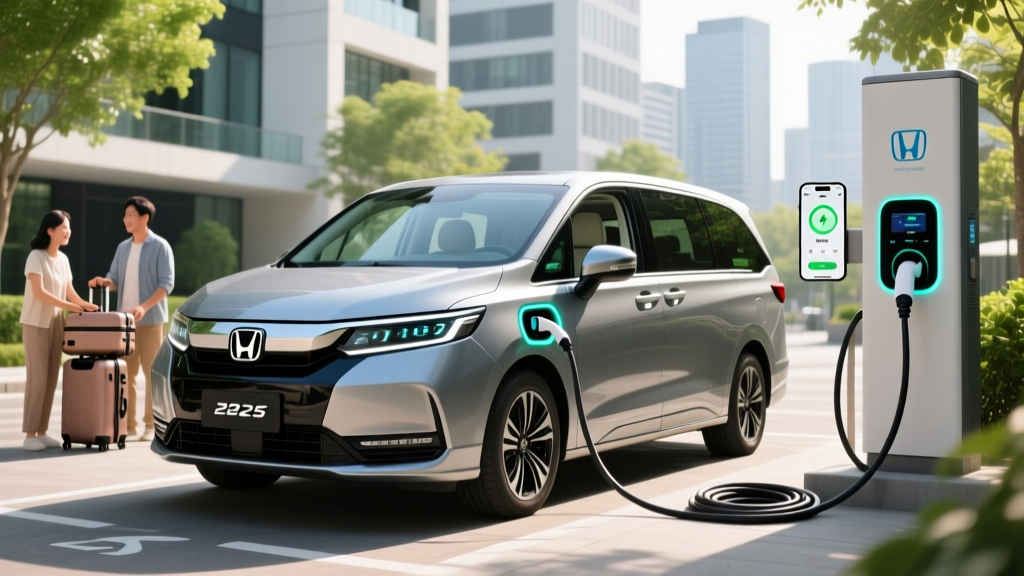
If you've been searching for a Honda hybrid van, you're not alone — family haulers that sip fuel instead of guzzling it are in high demand. The reality for 2026, however, requires some clarity. Honda does not currently sell a dedicated hybrid minivan in the United States. The iconic Honda Odyssey, Honda's sole minivan offering, continues as a conventional gasoline V6 model. But Honda's hybrid powertrain expertise shows up in other three-row vehicles that serve the same family-transport mission, and the global market tells a more nuanced story.
This guide breaks down what Honda actually offers for hybrid-minded van shoppers, the real-world fuel economy you can expect, and how these vehicles stack up against plug-in hybrid and fully electric alternatives for family duty.
Honda's Hybrid Lineup: Where the Van-Like Options Are
Honda's hybrid system — branded as the e:HEV two-motor hybrid setup — is available across several models. For buyers who need minivan-level passenger and cargo space, the closest Honda hybrid options in 2026 are:
- Honda CR-V Hybrid — A compact SUV with up to 76.5 cu ft of cargo space (rear seats folded). EPA-rated at up to 40 MPG combined.
- Honda Accord Hybrid — A midsize sedan, not a van, but a benchmark for Honda's hybrid system efficiency at 48 MPG combined.
- Honda Pilot — Honda's three-row SUV, which as of the 2025 model year introduced a hybrid variant for select markets, though U.S. availability and trims for 2026 should be confirmed with your local dealer.
For the Japanese and European markets, Honda has offered the Honda Stepwgn and Honda Freed with hybrid powertrains — these are true minivan-form-factor vehicles with sliding doors and three rows. Neither is sold in the U.S., and Honda has not announced plans to import them.
HEV vs. PHEV: What Honda Hybrid Buyers Need to Know
Conventional Hybrid (HEV): Uses a small battery (typically 1.0–1.5 kWh) recharged by the engine and regenerative braking. You never plug it in. Honda's e:HEV system falls here — it operates primarily as a series hybrid at low speeds (engine generates electricity, motor drives wheels) and switches to direct engine drive at highway speeds. Expect 35–48 MPG depending on model.
Plug-In Hybrid (PHEV): Has a larger battery (typically 15–20+ kWh) that can be charged from a wall outlet or public charger, giving 25–50 miles of electric-only driving before the gas engine kicks in. Honda currently does not offer a PHEV minivan or three-row SUV in the U.S. market. The Honda Clarity PHEV (discontinued after 2022) was a sedan.
Fuel Economy Breakdown: Honda Hybrid MPG by Model
Here's what fueleconomy.gov reports for Honda's current hybrid models most relevant to van-mission buyers:
| Model (2025–2026) | City MPG | Highway MPG | Combined MPG | Drivetrain |
|---|---|---|---|---|
| Honda CR-V Hybrid (AWD, Sport/L Sport Touring) | 40 | 34 | 37 | AWD |
| Honda CR-V Hybrid (FWD) | 43 | 36 | 40 | FWD |
| Honda Accord Hybrid | 51 | 44 | 48 | FWD |
| Honda Odyssey (Gas V6 — non-hybrid baseline) | 19 | 28 | 22 | FWD |
Real-world vs. EPA: Honda's two-motor e:HEV system tends to deliver city MPG that meets or slightly exceeds the EPA sticker, because the electric motor handles most low-speed driving where gas engines are least efficient. On sustained highway trips at 75+ mph, expect highway MPG to drop 2–4 MPG below the EPA figure due to aerodynamic drag and the engine operating in direct-drive mode without electric assist. In cold weather (below 30°F), hybrid fuel economy typically drops 10–15% across all brands as the engine runs more frequently to provide cabin heat and maintain battery temperature.
Powertrain Deep Dive: Honda's e:HEV Two-Motor System
Honda's hybrid system is fundamentally different from Toyota's planetary-gear power-split design. Here's how it works in the CR-V Hybrid, the closest thing to a Honda hybrid van alternative:
| Specification | CR-V Hybrid (2025–2026) |
|---|---|
| Engine | 2.0L Atkinson-cycle inline-4 |
| Engine Output | 145 hp / 134 lb-ft torque |
| Drive Motor | 181 hp / 247 lb-ft torque |
| Combined System Output | 204 hp / 247 lb-ft torque |
| Hybrid Battery | ~1.06 kWh lithium-ion (not plug-in) |
| Transmission | Direct-drive (single fixed gear ratio for engine, no traditional CVT) |
| 0–60 mph | ~7.6 seconds |
| Towing Capacity | 1,000 lbs |
| Cargo Volume (behind 2nd row / max) | 36.3 / 76.5 cu ft |
The e:HEV system operates in three modes: EV Drive (battery powers the motor alone, used for short low-speed bursts), Hybrid Drive (engine spins a generator that feeds electricity to the drive motor), and Engine Drive (a clutch locks the engine directly to the wheels at highway cruising speeds where internal combustion is most efficient). This means the drive motor propels the wheels the vast majority of the time, giving Honda hybrids a smooth, EV-like acceleration feel around town.
Pricing and Tax Credit Eligibility
Here's where hybrid shoppers need realistic expectations about incentives:
| Model | Starting MSRP (2025–2026) | Federal §30D Tax Credit |
|---|---|---|
| Honda CR-V Hybrid Sport | ~$36,300 | Not eligible (HEV) |
| Honda CR-V Hybrid Sport Touring | ~$40,700 | Not eligible (HEV) |
| Honda Accord Hybrid | ~$34,000 | Not eligible (HEV) |
| Honda Odyssey (gas) | ~$39,600 | Not eligible (gas-only) |
Critical tax credit note: Under current IRS §30D rules, the $7,500 federal clean vehicle credit applies only to plug-in electric vehicles (BEVs and PHEVs with at least 7 kWh of battery capacity). Conventional hybrids like Honda's e:HEV models do not qualify for any federal purchase incentive. Some states offer modest rebates for hybrids, but these vary by jurisdiction — check your state's energy office or DMV for current programs.
If a Honda PHEV three-row vehicle were to become available in the U.S., it would need to meet MSRP caps ($80,000 for SUVs/vans), buyer income limits ($150,000 single / $300,000 joint), and critical-mineral/battery-component sourcing requirements to qualify for the full credit. These rules are subject to change, so always verify with a tax professional before purchase.
Honda Hybrid Battery Warranty & Longevity
Warranty: Honda covers its hybrid battery (the high-voltage traction battery, not the 12V auxiliary battery) for 8 years or 100,000 miles, whichever comes first, in most states. In California Air Resources Board (CARB) states, that extends to 10 years or 150,000 miles.
Real-world lifespan: Honda's hybrid batteries are small (~1 kWh) and conservatively managed, meaning they experience shallow charge/discharge cycles that are gentle on cell longevity. Based on long-term owner data from earlier Honda hybrid models (Insight, Accord Hybrid), most hybrid batteries last well beyond the warranty period — 150,000–200,000+ miles without significant degradation is typical.
Replacement cost: If a hybrid battery does fail out of warranty, replacement typically costs $2,000–$4,000 including labor at a Honda dealer. Third-party remanufactured batteries can reduce this to $1,500–$2,500. This is far less than the $10,000–$20,000+ that large BEV battery packs can cost to replace, because the hybrid battery is much smaller.
Who Should Buy a Honda Hybrid vs. a Full EV or Gas Van?
Honda Hybrid (CR-V Hybrid) Is Right If:
- You need 35–40 MPG for daily family hauling without changing your fueling habits
- You don't have reliable home charging access (apartment, street parking)
- You regularly take road trips over 300+ miles and don't want to plan charging stops
- You want a lower purchase price (~$36K) versus a comparable EV ($45K–$55K+)
- You live in a region with extreme cold, where EV range loss is a concern
A Full EV or PHEV Is Better If:
- You want zero tailpipe emissions and lower per-mile fuel costs (electricity vs. gas)
- You can install a Level 2 home charger and want to "refuel" overnight for ~$0.12/kWh
- You want access to the $7,500 federal tax credit (PHEV/BEV only, subject to eligibility)
- You need true minivan features: sliding doors, 8 seats, 5,000-lb towing (no Honda hybrid offers all of these)
- You want the quietest, smoothest powertrain with instant electric torque
For families specifically needing minivan functionality — power sliding doors, a low step-in height, stowable third-row seating for 7–8 passengers — the Honda Odyssey remains gas-only. Its closest hybrid competitor, the Toyota Sienna, comes exclusively as a hybrid (36 MPG combined) and is the strongest hybrid van on the U.S. market. The Chrysler Pacifica Hybrid is the only plug-in hybrid minivan, offering 32 miles of electric-only range from its 16 kWh battery before the gas engine engages.
If Honda decides to bring a hybrid Odyssey to market — or import a hybrid minivan like the Stepwgn e:HEV — it would immediately become a top contender. Until then, Honda hybrid buyers needing maximum space are best served by the CR-V Hybrid for two-row duty or by watching for updates to the Pilot lineup.
Reliability: What the Data Shows
Honda's e:HEV hybrid system has proven reliable across multiple model generations. The system has fewer moving parts than a conventional automatic transmission (no torque converter, no multi-gear shifting mechanism), and the regenerative braking system reduces wear on the friction brake pads — many hybrid owners report original brake pads lasting 80,000–100,000 miles.
According to IIHS and long-term reliability surveys, Honda's hybrid models score at or above brand average. The primary concern for any hybrid buyer should be ensuring the 12V auxiliary battery (a separate, conventional battery that powers electronics) is in good condition — a dead 12V battery can prevent the hybrid system from starting, even if the high-voltage traction battery is fully charged. This is a common point of confusion for new hybrid owners and is not unique to Honda.
Frequently Asked Questions
Does Honda make a hybrid minivan?
Not in the United States as of 2026. The Honda Odyssey is gasoline-only. Honda sells hybrid minivans like the Stepwgn e:HEV and Freed Hybrid in Japan, but these are not available in the U.S. market. The closest Honda hybrid to a van-like family hauler is the CR-V Hybrid or the three-row Pilot.
How many MPG does the Honda CR-V Hybrid get?
The 2025–2026 Honda CR-V Hybrid with FWD is EPA-rated at 43 city / 36 highway / 40 combined MPG. The AWD version is rated at 40 city / 34 highway / 37 combined MPG. In real-world city driving, many owners report meeting or slightly exceeding these figures thanks to Honda's electric-motor-dominant hybrid system.
Does a Honda hybrid need to be plugged in?
No. Honda's e:HEV conventional hybrids charge their own small battery through the gasoline engine and regenerative braking. You fuel them exactly like a regular gas car. Only plug-in hybrids (PHEVs) and battery-electric vehicles (BEVs) require external charging.
Is a Honda hybrid reliable, and what does battery replacement cost?
Honda hybrids are generally reliable, with the hybrid battery covered for 8 years/100,000 miles (10 years/150,000 miles in CARB states). Out-of-warranty hybrid battery replacement typically costs $2,000–$4,000. Most Honda hybrid batteries last 150,000+ miles without significant issues based on long-term owner data.
Does a Honda hybrid qualify for any tax credit?
No. Conventional hybrids (HEVs) like Honda's e:HEV models do not qualify for the federal §30D clean vehicle tax credit, which is reserved for plug-in vehicles (PHEVs and BEVs) meeting battery capacity, MSRP, income, and sourcing requirements. Check your state's energy office for any local hybrid incentives, which vary by jurisdiction.
What's the best hybrid van I can actually buy?
The Toyota Sienna Hybrid (36 MPG combined, 8 seats, standard hybrid powertrain) is the best conventional hybrid minivan on the U.S. market. The Chrysler Pacifica PHEV offers 32 miles of electric-only range plus 30 MPG combined as a hybrid, making it the only plug-in hybrid minivan. Neither is a Honda, but both serve the hybrid-van mission effectively.