If you've searched "hybrid vehicle means" and landed here, you're likely trying to untangle a web of acronyms—HEV, PHEV, BEV, MPGe—before committing tens of thousands of dollars on your next car. The confusion is understandable: automakers now use the word "hybrid" to describe everything from a Toyota Prius that never plugs in to a Jeep Wrangler 4xe that charges like an EV. The distinction matters enormously for your fuel bill, your charging routine, and whether you qualify for federal tax credits.
This guide breaks down exactly what a hybrid vehicle means in 2026, the critical split between conventional hybrids and plug-in hybrids, and how to decide which electrified powertrain actually fits your life.
What "Hybrid Vehicle" Actually Means
At its core, a hybrid vehicle combines two power sources—almost always a gasoline internal-combustion engine and one or more electric motors—to propel the car. The electric motor recovers energy during braking (regenerative braking) and assists the engine during acceleration, reducing fuel consumption compared to a gas-only equivalent. A small battery pack stores this recovered energy.
The term "hybrid" covers two fundamentally different architectures, and confusing them is the single most common mistake shoppers make:
Conventional Hybrid (HEV) vs Plug-In Hybrid (PHEV)
| Feature | Conventional Hybrid (HEV) | Plug-In Hybrid (PHEV) |
|---|---|---|
| Plugs in? | No — self-charging via engine and regen | Yes — charges from outlet or public charger |
| Battery size | 0.5–2.0 kWh (small) | 13–30+ kWh (substantial) |
| Electric-only driving | None (motor assists only, brief EV creep) | 20–50 miles typically |
| Fuel when battery depleted | Runs as efficient hybrid (high MPG) | Runs as hybrid (moderate MPG, heavier vehicle) |
| Federal tax credit | None | Up to $7,500 (§30D, eligibility varies) |
| Home charging needed | No | Strongly recommended (Level 2 ideal) |
| Example (2026) | Toyota Prius, Honda CR-V Hybrid | Toyota RAV4 Prime, Chrysler Pacifica PHEV |
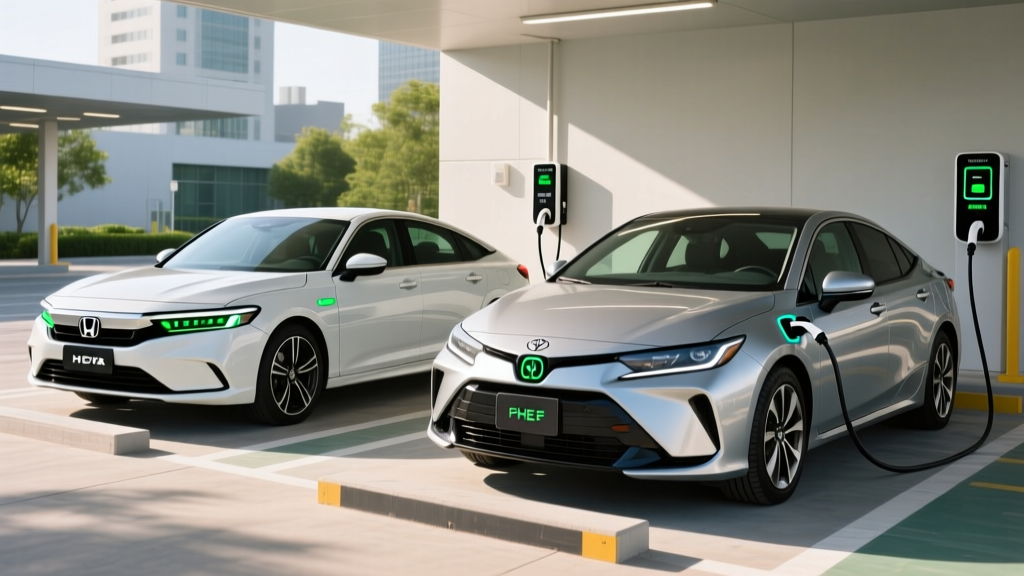
The conventional hybrid (HEV) is the original "Prius formula": a small battery, no plug, and fuel economy that consistently beats comparable gas cars—especially in stop-and-go city driving where regenerative braking thrives. The plug-in hybrid (PHEV) layers a much larger battery and a more powerful electric motor on top, giving you a short electric-only commute window before the gas engine takes over.
Real MPG: How Hybrids Compare to Gas and EVs
Hybrid fuel economy varies widely by model, driving conditions, and whether you're talking HEV or PHEV. Here's how several popular 2026 hybrids stack up using EPA data from fueleconomy.gov:
| Model | Type | City MPG | Hwy MPG | Combined MPG | EV Range (mi) |
|---|---|---|---|---|---|
| Toyota Prius (LE AWD) | HEV | 53 | 54 | 54 | N/A |
| Toyota Prius Prime (SE) | PHEV | 52* | 48* | 50* | 44 |
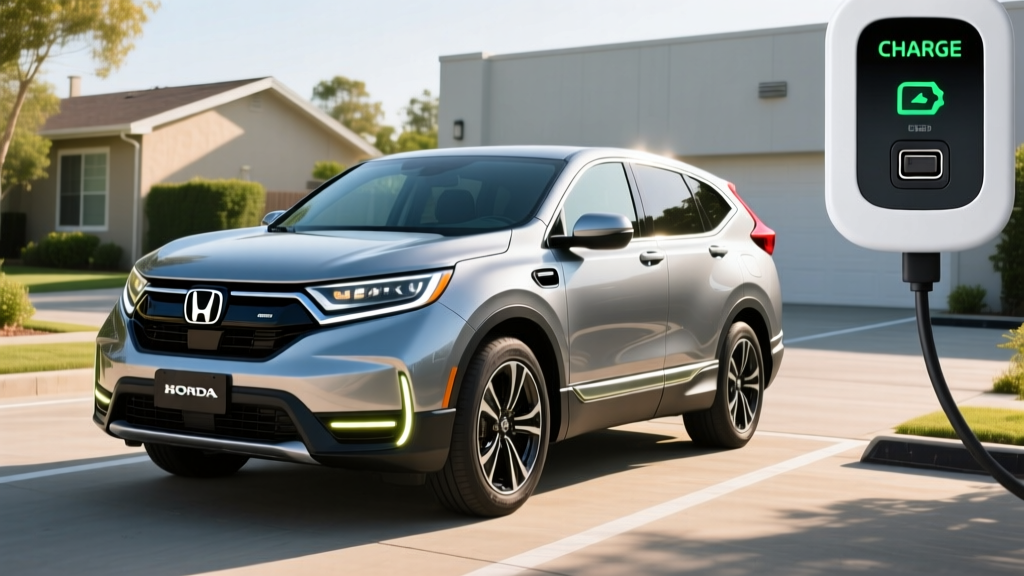
| Honda CR-V Hybrid (Sport Touring) | HEV | 43 | 36 | 40 | N/A |
| Toyota RAV4 Prime (XSE) | PHEV | 40* | 36* | 38* | 42 |
| Hyundai Tucson PHEV (SEL) | PHEV | 38* | 35* | 37* | 33 |
| Ford Maverick Hybrid (FWD) | HEV | 42 | 33 | 37 | N/A |
* PHEV combined MPG applies after electric range is depleted. MPGe (electric+gas combined) ratings are higher; see fueleconomy.gov for MPGe figures.
Real-World MPG vs. EPA Stickers
Hybrids, particularly HEVs, frequently exceed their EPA city estimates in real-world stop-and-go driving—the exact opposite of most gas cars. Regenerative braking recovers energy that conventional brakes waste as heat, so dense urban traffic actually plays to a hybrid's strength. Expect a Toyota Prius to return 55–60 MPG in city driving during mild weather.
Highway driving is where hybrids lose their advantage. At sustained 70+ mph speeds, the electric motor contributes less, and aerodynamic drag dominates. A Prius rated at 54 combined may return 48–50 MPG on a flat highway at 75 mph. Cold weather (below 35°F) reduces hybrid efficiency by roughly 10–15% as the engine runs longer to provide cabin heat and the battery's charge/discharge efficiency drops.
For PHEVs, real-world electric range also varies. The EPA's 44-mile electric estimate for the Prius Prime assumes moderate temperatures and mixed driving. In winter, expect 30–35 miles before the engine fires up, as the battery's usable capacity shrinks and cabin heating draws power.
PHEV Deep Dive: Electric Range, Charging, and Battery Specs
If you're considering a plug-in hybrid, the electric-only range and charging logistics determine whether the PHEV premium pays off. Here are the critical specs for popular 2026 PHEVs:
| Model | Battery (kWh usable) | EV Range (EPA mi) | Level 2 Charge (0–100%) | DC Fast Charge? | Combined HP |
|---|---|---|---|---|---|
| Toyota Prius Prime | 10.9 kWh | 44 | ~4 hr (3.5 kW) | No | 220 hp |
| Toyota RAV4 Prime | 14.9 kWh | 42 | ~2.5 hr (6.6 kW) | No | 302 hp |
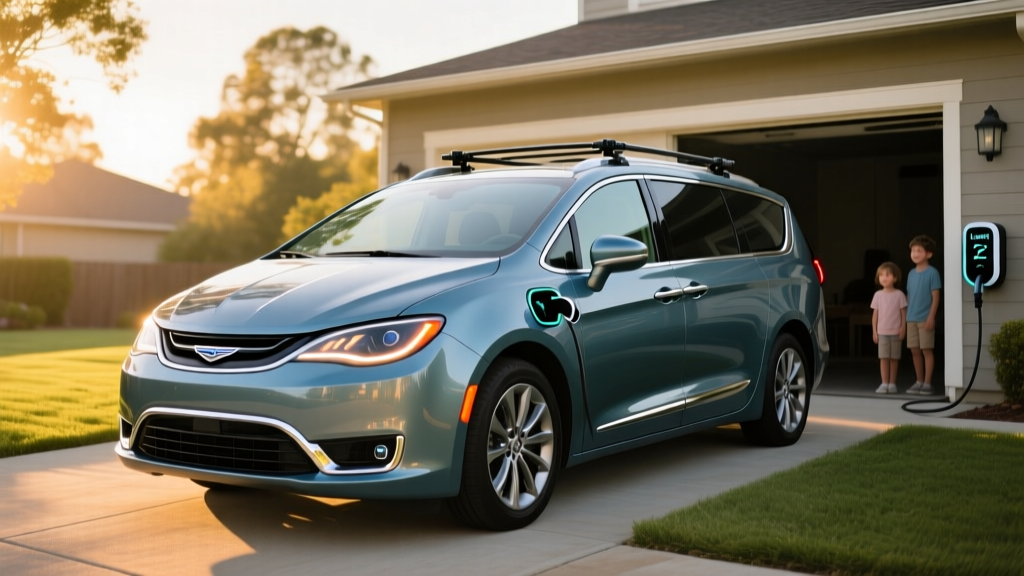
| Chrysler Pacifica PHEV | 16.0 kWh | 32 | ~2 hr (7.2 kW) | No | 260 hp |
| Jeep Wrangler 4xe | 17.3 kWh | 22 | ~2.5 hr (7.2 kW) | No | 375 hp |
| Hyundai Tucson PHEV | 13.8 kWh | 33 | ~2 hr (7.2 kW) | No | 261 hp |
Two things jump out from this data. First, no mainstream 2026 PHEV offers DC fast charging. All charge exclusively via Level 1 (120V household outlet, ~1 kW, painfully slow) or Level 2 (240V, 3.5–7.2 kW). A 120V outlet will take 8–14 hours to fully recharge a PHEV battery—fine for overnight, but it means you cannot meaningfully top up during a quick stop.
Second, PHEV battery sizes (10–17 kWh usable) are roughly one-sixth the capacity of a full EV battery. This keeps weight and cost down, but it also means electric range tops out around 40–45 miles for the most efficient models. If your round-trip commute exceeds that, you'll burn gas daily.
The kW vs. kWh Distinction (Critical for PHEV Buyers)
kWh (kilowatt-hours) measures energy capacity—how much electricity the battery stores. A 14 kWh battery is like a 14-gallon fuel tank.
kW (kilowatts) measures power—the rate at which energy flows. A 6.6 kW Level 2 charger delivers 6.6 kWh of energy per hour.
Simple math: a 14 kWh battery charging at 6.6 kW takes roughly 14 ÷ 6.6 = ~2.1 hours from empty to full (accounting for charging losses, add ~15–20%).
Pricing, Tax Credits, and Total Cost of Ownership
Hybrids and PHEVs carry a price premium over gas-only equivalents, but the gap has narrowed significantly. Here's where 2026 pricing stands:
- Toyota Prius (HEV): $29,445 base MSRP — no federal tax credit, but fuel savings of ~$800–$1,100/year vs. a 30 MPG gas compact
- Toyota Prius Prime (PHEV): $34,345 base MSRP — eligible for up to $3,750 federal credit under IRS §30D clean vehicle rules, subject to income caps, battery sourcing requirements, and MSRP limits
- Toyota RAV4 Prime (PHEV): $44,590 base MSRP — federal credit eligibility varies by model year and battery sourcing; check fueleconomy.gov tax credit listings for current status
- Honda CR-V Hybrid: $36,395 base MSRP — no federal credit (conventional HEV)
§30D Federal Tax Credit Rules for PHEVs (2026)
- Credit amount: Up to $7,500 (split into $3,750 for critical minerals + $3,750 for battery components — many PHEVs only qualify for one half)
- Income caps: AGI must not exceed $150,000 (single), $225,000 (head of household), or $300,000 (joint)
- MSRP caps: Vans/SUVs/pickups ≤ $80,000; sedans ≤ $55,000
- Battery sourcing: Critical minerals and battery components must meet increasing domestic-content thresholds — this disqualifies some PHEVs
- Point-of-sale transfer: Eligible buyers can apply the credit at purchase, reducing the sale price directly
Rules change frequently. Consult a tax professional and verify current eligibility on irs.gov before purchasing.
Conventional hybrids (HEVs) do not qualify for the §30D new clean vehicle credit. However, some states offer rebates for PHEVs that stack with federal incentives—check your state's energy office or AFDC state incentive database.
Battery Reliability, Warranty, and Replacement Costs
Battery longevity is the number-one concern for hybrid shoppers, and the data is reassuring. Toyota, Honda, and Hyundai have deployed millions of hybrid batteries over two decades, and failure rates are low. The key numbers:
Hybrid Battery Warranty & Lifespan (2026 Models)
| Manufacturer | Hybrid Battery Warranty | Expected Lifespan | Replacement Cost (est.) |
|---|---|---|---|
| Toyota (HEV & PHEV) | 10 yr / 150,000 mi | 15–20 years | $2,000–$4,000 (HEV) $6,000–$9,000 (PHEV) |
| Honda (HEV) | 8 yr / 100,000 mi (10/150k in CARB states) | 12–18 years | $2,000–$4,000 |
| Hyundai/Kia (HEV & PHEV) | 10 yr / 100,000 mi | 12–18 years | $2,500–$5,000 (HEV) $5,000–$8,000 (PHEV) |
| Stellantis (Pacifica/Jeep PHEV) | 8 yr / 100,000 mi | 10–15 years | $6,000–$10,000 |
Warranty covers battery capacity falling below ~60–70% of original. Replacement costs are out-of-warranty estimates including labor; actual costs vary by model and region. Refurbished/reconditioned batteries can reduce cost by 30–50%.
Toyota's hybrid batteries have proven exceptionally durable. It's common for Prius batteries to exceed 200,000 miles with minimal degradation, partly because Toyota's hybrid system never deeply cycles the battery—it operates in a narrow state-of-charge window (roughly 40–80%) to minimize stress. PHEV batteries, being larger and more deeply cycled, face somewhat more degradation, but warranty coverage is comparable.
If you plan to own the vehicle for 10+ years, the battery warranty essentially covers you through the period of highest risk. Post-warranty replacement, while not cheap, is far less expensive than a full EV battery replacement ($10,000–$20,000+) because hybrid batteries are much smaller.
Hybrid vs. PHEV vs. Full EV: Which Powertrain Fits You?
Choose a Conventional Hybrid (HEV) If:
- You have no access to home or workplace charging
- You want maximum MPG with zero behavior change
- Your budget is under $40,000
- You drive a mix of city and highway with no short-commute pattern
- You plan to own the car 10+ years and value proven reliability
Choose a Plug-In Hybrid (PHEV) If:
- You can install a Level 2 charger at home (240V outlet)
- Your daily round-trip commute is under 40 miles
- You take occasional road trips where EV range would stress you
- You want electric driving now but aren't ready to commit to full EV
- You qualify for the §30D federal tax credit
Choose a Full EV (BEV) If:
- You have reliable home Level 2 charging
- You want the lowest per-mile fuel cost (~$0.04–0.06/mi vs $0.10–0.14/mi hybrid)
- You drive under 300 miles daily or can plan DC fast-charge stops
- You want zero tailpipe emissions and minimal maintenance
- You can absorb higher upfront cost ($38,000–$60,000+) offset by tax credits
The honest middle ground: if you can charge at home and your commute is under 35 miles round-trip, a PHEV lets you drive on electricity 80% of your miles while keeping a gas tank for weekend trips. You'll change oil less often (the engine runs less), rarely visit a gas station, and never worry about charging-desert road trips. But if you can't charge at home, a PHEV is just a heavier, more expensive conventional hybrid—buy the HEV instead.
Frequently Asked Questions
How many MPG does a hybrid vehicle get?
Conventional hybrids (HEVs) in 2026 range from 37 MPG combined (Ford Maverick Hybrid) to 54 MPG combined (Toyota Prius LE). Real-world city MPG often exceeds EPA estimates by 5–10% due to regenerative braking, while highway MPG may fall 5–10% below the sticker. PHEVs return 35–50 MPG combined after their electric range is depleted, but their total fuel consumption depends heavily on how often you charge.
How far can a PHEV go on electric only?
2026 PHEVs offer 22–44 miles of EPA-rated electric-only range. The Toyota Prius Prime leads at 44 miles; the RAV4 Prime delivers 42 miles; the Hyundai Tucson PHEV manages 33 miles. Real-world electric range drops to roughly 70–80% of the EPA figure in cold weather (below 35°F) due to reduced battery efficiency and cabin heating demands.
Does a hybrid need to be plugged in?
No. Conventional hybrids (HEVs) never plug in—they generate all their electricity from the gas engine and regenerative braking. Plug-in hybrids (PHEVs) should be plugged in to realize their fuel-economy advantage, but they function as regular hybrids if you never charge them (just with worse MPG due to carrying dead battery weight).
Are hybrid vehicles reliable long-term?
Yes. Toyota and Honda hybrids have two decades of proven reliability data. Hybrid battery failure within the warranty period is uncommon, and many original Prius batteries exceed 200,000 miles. Hybrid powertrains actually experience less engine wear than gas-only cars because the electric motor handles low-speed driving and the engine operates in its most efficient RPM range.
What does hybrid battery replacement cost?
Out-of-warranty hybrid battery replacement ranges from $2,000–$4,000 for conventional HEVs and $5,000–$10,000 for PHEVs (larger batteries). Refurbished batteries can cut costs by 30–50%. Given 10-year/100,000–150,000-mile warranties and typical 15+ year battery lifespans, most owners never pay for a replacement.
Do hybrid vehicles qualify for tax credits?
Conventional hybrids (HEVs) do not qualify for the federal §30D clean vehicle credit. Plug-in hybrids (PHEVs) may qualify for up to $7,500, but eligibility depends on your income (AGI caps apply), the vehicle's MSRP (sedans ≤ $55,000; SUVs ≤ $80,000), and battery sourcing requirements that change annually. Check current eligibility on irs.gov before purchasing. Some states offer additional PHEV rebates.
Is a hybrid better than a full electric vehicle?
It depends entirely on your charging access and driving patterns. A full EV has lower operating costs (~$0.05/mile electricity vs. ~$0.08/mile hybrid fuel), zero tailpipe emissions, and less maintenance. But if you lack home charging, regularly drive 300+ miles in a day, or live in an area with sparse public charging infrastructure, a hybrid or PHEV eliminates range anxiety while still cutting fuel consumption 30–60% versus a gas car.