Why the 2026 Honda CR-V Hybrid Dominates the Compact SUV Conversation
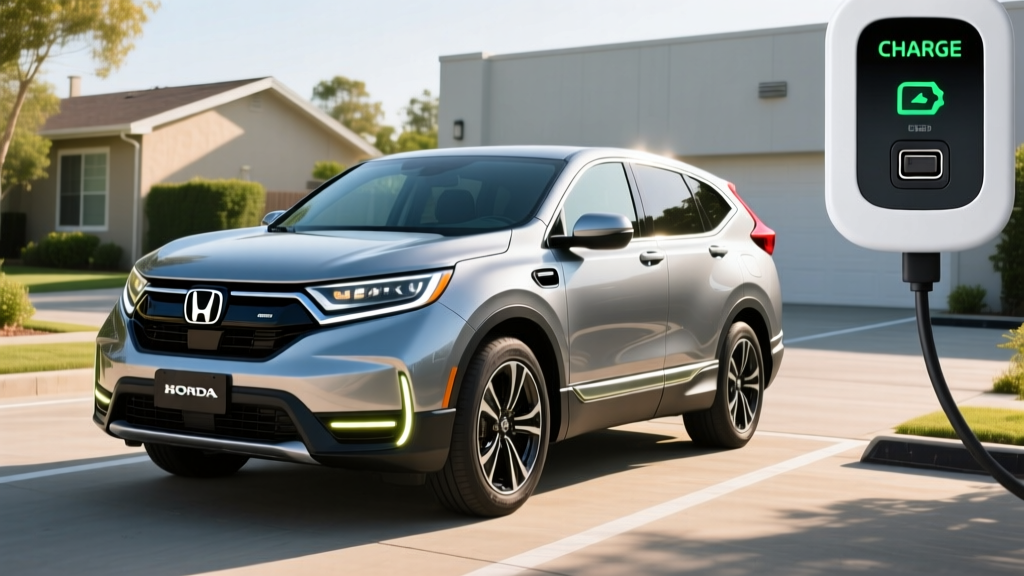
The Honda CR-V Hybrid has cemented itself as one of the most compelling electrified compact SUVs on the market — not because it plugs in, but because it doesn't need to. For 2026, Honda continues its two-motor hybrid system across the CR-V lineup, pairing a 2.0-liter Atkinson-cycle engine with dual electric motors for a combined 204 horsepower and an EPA-estimated 40 MPG city. If you're searching for Honda CR-V Hybrid deals, understanding what each trim offers, where pricing lands, and how real-world fuel economy stacks up against the EPA sticker is essential before you step into a dealership.
This guide breaks down every number that matters — from MSRP to battery warranty — so you can negotiate with confidence and choose the right CR-V Hybrid configuration for your driving needs.
HEV vs. PHEV: The CR-V Hybrid Is a Conventional Hybrid
Before evaluating deals, it's critical to understand what the CR-V Hybrid is — and what it isn't. The CR-V Hybrid is a conventional hybrid electric vehicle (HEV). It does not have a plug, does not offer electric-only driving, and does not qualify for the federal §30D EV tax credit. Instead, it uses regenerative braking and its gasoline engine to charge a small lithium-ion battery pack, which powers the electric motors during acceleration and low-speed driving.
HEV vs. PHEV — What's the Difference?
| Feature | HEV (CR-V Hybrid) | PHEV (e.g., Toyota RAV4 Prime) |
|---|---|---|
| Plugs in? | No | Yes |
| Electric-only range | N/A (EV assist only) | 25–42 miles typical |
| Battery size | ~1.06 kWh | 14–18 kWh |
| Federal tax credit | Not eligible | Up to $7,500 (if eligible) |
| Upfront cost premium | $1,200–$1,800 over gas | $5,000–$8,000 over gas |
| Home charger needed? | No | Recommended (Level 2) |
The CR-V Hybrid is ideal for drivers who want better fuel economy without changing their refueling habits or installing home charging equipment.
Fuel Economy: EPA Ratings and Real-World MPG
The headline number for the 2026 CR-V Hybrid is its EPA-estimated fuel economy. With standard all-wheel drive (AWD), the CR-V Hybrid achieves:
| Metric | CR-V Hybrid AWD | Gas CR-V AWD (1.5T) |
|---|---|---|
| EPA City | 40 MPG | 27 MPG |
| EPA Highway | 34 MPG | 32 MPG |
| EPA Combined | 37 MPG | 29 MPG |
| Annual fuel cost* | ~$1,550 | ~$1,970 |
*Based on 15,000 miles/year and $3.50/gallon regular unleaded. Source: fueleconomy.gov
Real-World MPG: What Owners Actually See
Honda's two-motor hybrid system excels in stop-and-go city driving, where the electric motors handle most low-speed propulsion. Many owners report exceeding the EPA city estimate of 40 MPG in moderate-temperature urban commuting, with some seeing 42–45 MPG on mixed suburban routes.
However, highway-heavy driving at 75+ MPH tends to pull the CR-V Hybrid closer to 30–33 MPG, where the gasoline engine operates under sustained load. Cold-weather driving (below 30°F) can reduce city MPG by 3–5 MPG due to increased engine runtime for cabin heating and battery thermal management. Expect a realistic combined average of 35–39 MPG for most drivers across seasons.
Powertrain Specs: What's Under the Hood
| Specification | 2026 CR-V Hybrid |
|---|---|
| Engine | 2.0L DOHC Atkinson-cycle 4-cylinder |
| Engine output | 145 HP @ 6,100 RPM |
| Electric motors | Dual-motor (propulsion + generator) |
| Combined system output | 204 HP / 247 lb-ft torque |
| Drivetrain | AWD (standard on all Hybrid trims) |
| Transmission | e-CVT (direct-drive, no traditional gears) |
| Hybrid battery | ~1.06 kWh lithium-ion |
| 0–60 MPH | ~7.6 seconds |
| Towing capacity | 1,000 lbs |
| Cargo volume | 39.3 cu ft (rear up) / 76.5 cu ft (rear folded) |
The CR-V Hybrid's e-CVT is not a traditional continuously variable transmission with a belt and pulleys. Instead, Honda's system uses a direct-drive arrangement where the propulsion motor drives the wheels, the generator motor manages engine speed and battery charging, and a lock-up clutch engages at highway speeds for a direct mechanical connection. This eliminates the "rubber-band" feel common in older CVTs and provides linear, responsive acceleration.
2026 CR-V Hybrid Trim Pricing and Where to Find Deals
Honda offers the CR-V Hybrid across three trims for 2026, all with standard AWD. Here's the MSRP breakdown before destination charges:
| Trim | MSRP (excl. destination) | Key Features |
|---|---|---|
| Sport Hybrid | $36,300 | 18" wheels, 9" touchscreen, wireless CarPlay/Android Auto, heated front seats |
| Sport-L Hybrid | $39,000 | Leather-trimmed seats, power liftgate, wireless charging pad, heated steering wheel |
| Sport Touring Hybrid | $42,700 | Bose 12-speaker audio, panoramic moonroof, heated rear seats, Honda Sensing 360+ |
Destination charge: ~$1,350. Prices per Honda's official 2026 CR-V Hybrid page.
Strategies for Finding the Best Honda CR-V Hybrid Deals
The CR-V Hybrid is one of Honda's highest-demand models, which means aggressive discounting is uncommon. However, there are proven strategies:
- End-of-month and end-of-quarter timing: Dealerships are more likely to negotiate on the Sport and Sport-L trims when closing monthly sales targets. Late December and late March are historically strong negotiation windows.
- Honda Loyalty and Conquest incentives: Honda periodically offers $500–$1,000 loyalty bonuses for current Honda owners or conquest incentives for buyers switching from competing brands. Check Honda's current offers page or ask your dealer directly.
- Dealer-installed accessory negotiation: Many CR-V Hybrids arrive with $1,500–$3,000 in dealer-installed accessories (roof rails, cargo covers, paint protection). These carry high markup — negotiate them down or refuse them entirely.
- Expand your search radius: Pricing can vary $1,000–$2,500 between dealerships in different metro areas. Use Honda's dealer locator to request quotes from 3–5 dealers within a 100-mile radius.
- Consider the prior model year: If 2025 CR-V Hybrids remain in inventory alongside 2026 models, dealers are motivated to clear them. The mechanical differences between consecutive years are typically minimal.
Tax Credits and Incentives: What the CR-V Hybrid Qualifies For
Because the CR-V Hybrid is a conventional HEV — not a plug-in vehicle — it does not qualify for the federal §30D Clean Vehicle Credit. That credit (up to $7,500) is reserved for battery electric vehicles (BEVs) and plug-in hybrids (PHEVs) that meet battery sourcing, MSRP, and buyer income requirements under current IRS rules.
However, the CR-V Hybrid may still benefit from:
- State-level hybrid incentives: A handful of states offer rebates or tax credits for conventional hybrids. These vary by jurisdiction and change frequently — check your state's energy or environmental agency website for current programs.
- Insurance discounts: Some insurers (Geico, Liberty Mutual, Farmers) offer 5–10% discounts for hybrid vehicles due to their lower-risk driver profiles and reduced idling emissions in garages.
- HOV lane access: A few states grant hybrid vehicles access to carpool lanes, though most have restricted this benefit to PHEVs and BEVs in recent years.
- Employer commuter benefits: Some corporate sustainability programs offer bonuses or preferred parking for hybrid vehicle owners.
Battery Warranty, Reliability, and Replacement Cost
Honda Hybrid Battery Warranty
Duration: 8 years / 100,000 miles (10 years / 150,000 miles in CARB states including CA, NY, MA, WA, OR, and others)
Coverage: Defects and capacity loss below a specified threshold (typically 60–70% of original capacity)
Transferable: Yes — the hybrid battery warranty transfers to subsequent owners, which supports resale value
How Long Do CR-V Hybrid Batteries Actually Last?
Honda's hybrid battery packs are designed for the life of the vehicle. Real-world data from earlier Honda hybrid models (Insight, Accord Hybrid) shows battery packs routinely lasting 150,000–200,000+ miles before significant degradation. The CR-V Hybrid's ~1.06 kWh battery operates within a narrow state-of-charge window (roughly 40–80%), which dramatically reduces stress on the cells compared to a full EV battery that cycles between 10% and 90%+.
If replacement is needed out of warranty, a refurbished or new Honda hybrid battery pack typically costs $2,000–$4,000 including labor — a fraction of the $10,000–$20,000+ that full EV battery replacements can command. Independent hybrid specialists in most metro areas can perform the swap in 2–3 hours.
Overall Reliability
Honda's two-motor hybrid system has been in production since 2014 (Accord Hybrid) and has proven highly reliable. The e-CVT has no belts, no traditional clutch packs, and fewer moving parts than a conventional automatic transmission. The CR-V as a platform consistently earns top marks from IIHS and strong reliability scores from long-term ownership surveys. Common maintenance items remain standard: brake pads (which last longer thanks to regenerative braking), tires, and cabin air filters.
CR-V Hybrid vs. Competitors: Quick Comparison
| Vehicle | Combined MPG | HP | Starting MSRP | AWD? |
|---|---|---|---|---|
| Honda CR-V Hybrid | 37 | 204 | $36,300 | Standard |
| Toyota RAV4 Hybrid | 39 | 219 | $33,575 | Standard |
| Hyundai Tucson Hybrid | 38 | 226 | $34,485 | Standard |
| Ford Escape Hybrid | 39 | 210 | $34,750 | Optional |
The CR-V Hybrid trades a slight MPG deficit to the RAV4 Hybrid for a more refined interior, superior cargo space (39.3 vs. 37.5 cu ft), and Honda's reputation for long-term drivetrain reliability. The Tucson Hybrid offers more horsepower but has historically trailed in predicted reliability.
Who Should Buy the CR-V Hybrid — and Who Should Look Elsewhere?
Decision Framework
Choose the CR-V Hybrid if:
- You drive 12,000–20,000 miles/year and want to cut fuel costs by $400–$600 annually vs. a gas CR-V
- You want AWD as standard without a fuel economy penalty
- You don't have access to home charging (apartment, street parking, no garage outlet)
- You want an electrified vehicle with zero behavioral change — no plugging in, no range planning
- You value strong resale value and Honda's long-term reliability track record
Look at a PHEV or full EV instead if:
- You have home charging and a short commute (a PHEV like the RAV4 Prime covers 42 miles electric-only)
- You want federal tax credit eligibility (up to $7,500 for qualifying BEVs/PHEVs)
- You drive mostly in the city and want to maximize electric-only, zero-emission miles
- You're ready for a full EV and want 250+ miles of range with no gasoline dependency
✓ Pros
- Standard AWD on every trim
- 40 MPG city — excellent for a compact SUV
- Smooth, linear acceleration from dual-motor system
- Spacious cargo area (39.3 cu ft)
- No plug-in charging required
- Strong IIHS safety ratings
- 8–10 year hybrid battery warranty
✗ Cons
- Highway MPG drops to 34 (city-biased system)
- No federal tax credit eligibility
- Only 1,000-lb towing capacity
- Higher starting price than gas CR-V ($36,300 vs. ~$31,450)
- High demand can limit dealer negotiation room
- Infotainment can feel dated vs. competitors
Frequently Asked Questions
How many MPG does the Honda CR-V Hybrid get?
The 2026 Honda CR-V Hybrid AWD is EPA-rated at 40 MPG city, 34 MPG highway, and 37 MPG combined. Real-world results vary: city drivers often see 40–45 MPG, while sustained highway driving at 75+ MPH tends to yield 30–33 MPG. Cold weather reduces efficiency by roughly 5–10%.
Does the Honda CR-V Hybrid plug in?
No. The CR-V Hybrid is a conventional hybrid (HEV). It charges its battery through regenerative braking and the gasoline engine. You never plug it in — you simply fill up at a gas station as you would with any conventional vehicle.
Does the CR-V Hybrid qualify for any tax credit?
The CR-V Hybrid does not qualify for the federal §30D Clean Vehicle Credit, which is limited to plug-in vehicles (BEVs and PHEVs). Some states may offer hybrid-specific incentives, and certain insurers provide hybrid discounts. Check your state's energy agency and your insurance provider for details.
Is the CR-V Hybrid reliable, and what does battery replacement cost?
Honda's two-motor hybrid system has been in production since 2014 and has an excellent reliability record. The hybrid battery is warrantied for 8 years/100,000 miles (10 years/150,000 miles in CARB states). Out-of-warranty replacement costs $2,000–$4,000 including labor. Most packs last 150,000–200,000+ miles before significant degradation.
Should I buy the CR-V Hybrid or a full EV?
If you have reliable home charging, a predictable commute, and want to eliminate gasoline costs entirely, a full EV (like the Hyundai Ioniq 5 or Tesla Model Y) offers lower operating costs and federal tax credit eligibility. If you lack home charging access, frequently take long road trips, or simply want better fuel economy with zero lifestyle change, the CR-V Hybrid is the pragmatic choice.
What is the best Honda CR-V Hybrid trim for the money?
The Sport Hybrid ($36,300) offers the best value — you get the full hybrid powertrain, standard AWD, a 9-inch touchscreen with wireless smartphone integration, and Honda Sensing safety suite. The Sport-L ($39,000) adds leather and convenience features that justify the $2,700 premium for many buyers. The Sport Touring ($42,700) is best for those who want premium audio and advanced driver-assistance features.