Quick Verdict: The Only Plug-In Hybrid Minivan That Still Matters
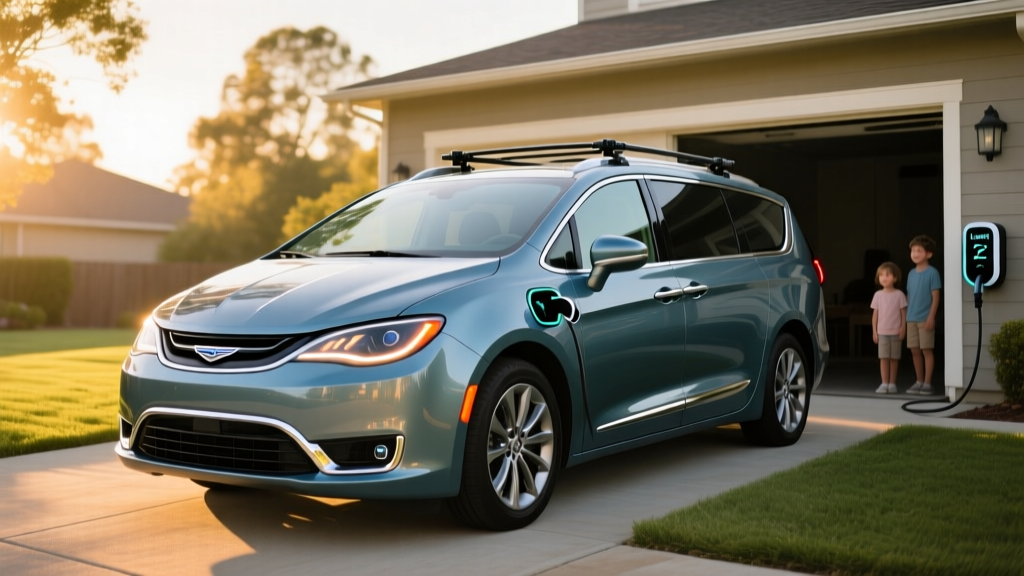
If you need three rows, a sliding door, and the ability to do school runs on electricity alone, the 2020 Chrysler Pacifica Hybrid occupies a segment of one. No other automaker has ever sold a plug-in hybrid minivan in the United States, and as of 2026, that remains true. The Pacifica Hybrid pairs a 16 kWh lithium-ion battery with a 3.6-liter V6 and two electric motors to deliver an EPA-rated 32 miles of electric-only driving and 82 MPGe when the battery is charged. Once that battery depletes, it operates as a conventional hybrid returning 30 MPG combined.
For used-car shoppers in 2026, the 2020 model year represents a value sweet spot: it's depreciated enough to be accessible (typically $22,000–$30,000 on the used market depending on mileage and condition) while still carrying the bulk of its 8-year/100,000-mile hybrid battery warranty. But before you sign the papers, you need to understand exactly what this powertrain delivers — and where it falls short.
HEV vs. PHEV: What the Pacifica Hybrid Actually Is
The Chrysler Pacifica also came in a conventional gas-only version for 2020 (rated at 19/28/22 MPG city/highway/combined). The Pacifica Hybrid is a plug-in hybrid electric vehicle (PHEV), meaning it has a larger battery than a standard hybrid, can be plugged into a wall outlet or Level 2 charger, and can drive on electricity alone for a meaningful distance before the gas engine kicks in.
Conventional Hybrid (HEV) vs. Plug-In Hybrid (PHEV)
| Feature | HEV (e.g., Toyota Sienna Hybrid) | PHEV (2020 Pacifica Hybrid) |
|---|---|---|
| Plugs in? | No — charges via regen and engine | Yes — Level 1 or Level 2 |
| Electric-only range | ~1 mile or less at low speed | 32 miles (EPA) |
| Battery size | ~1–2 kWh | 16 kWh (gross) |
| After battery depletes | Runs as standard hybrid | Runs as standard hybrid (30 MPG) |
| Home charging needed? | Never | Recommended for max benefit |
If you never plug in the Pacifica Hybrid, you're simply driving a 30 MPG hybrid minivan — still efficient, but you're leaving the 32 miles of free electric range on the table every day.
Powertrain Specs: 260 Combined Horsepower, Two Motors, One V6
The 2020 Pacifica Hybrid uses a dedicated electrified powertrain that Chrysler calls the eFlite dual-motor system. Here's exactly what's under the hood and floor:
| Specification | 2020 Chrysler Pacifica Hybrid |
|---|---|
| Engine | 3.6L V6 Atkinson-cycle, 245 hp (engine alone) |
| Electric Motors | Two integrated motors inside eFlite transmission |
| Combined System Output | 260 horsepower |
| Battery Pack | 16 kWh lithium-ion (NMC chemistry), liquid-cooled |
| Usable Battery Capacity | ~13 kWh (buffer protects longevity) |
| Transmission | eFlite dual-motor eCVT (single-speed planetary) |
| Drivetrain | Front-wheel drive (no AWD on Hybrid trim) |
| 0–60 mph | ~7.1 seconds |
| Fuel Tank | 14.0 gallons |
| Total Combined Range | ~450 miles (32 EV + ~420 gas) |
One important note: the gas-only 2020 Pacifica offers available all-wheel drive, but the Hybrid does not. The battery pack occupies the space where the rear driveshaft would route. If AWD is non-negotiable for your climate, you'll need to look at the gas Pacifica AWD or the Toyota Sienna Hybrid AWD instead.
Fuel Economy: EPA Ratings and Real-World MPG
The Pacifica Hybrid operates in two distinct modes, and the EPA rates each separately:
| Mode | City | Highway | Combined |
|---|---|---|---|
| Charge-Depleting (EV + Hybrid blend) | — | — | 82 MPGe |
| Charge-Sustaining (gas-only hybrid) | 29 MPG | 30 MPG | 30 MPG |
Source: EPA / fueleconomy.gov
Real-World MPG vs. EPA Sticker
In practice, the Pacifica Hybrid's real-world efficiency depends heavily on your driving pattern and whether you charge daily:
- Short commutes under 30 miles with daily charging: You may burn almost zero gasoline for weeks at a time. Owners who plug in nightly and drive less than 32 miles daily report effectively infinite MPGe for local driving.
- Mixed driving with regular charging: Expect 50–70 MPGe overall when you blend electric and gas miles.
- Road trips / never plugging in: Expect 28–31 MPG combined, closely matching the EPA's 30 MPG charge-sustaining figure. Highway driving at 75+ mph can drop this to 26–28 MPG — the minivan's aerodynamic profile works against it at speed.
- Cold weather (below 30°F): Electric range drops 20–30% due to cabin heating demands and battery chemistry limitations. Expect ~22–26 miles of EV range in winter, and the engine fires up sooner to provide heat.
Compared to the gas-only 2020 Pacifica (22 MPG combined), the Hybrid saves roughly 3–4 gallons per 100 miles in charge-sustaining mode alone — and far more when you factor in daily electric driving.
Electric-Only Range, Charging Times, and the No-DC-Fast-Charge Limitation
The EPA rates the 2020 Pacifica Hybrid at 32 miles of electric-only range. This is enough to cover the average American's daily one-way commute and the school-run loop without burning a drop of gas — provided you charge at home.
| Charging Level | Power (kW) | 0–100% Time | Notes |
|---|---|---|---|
| Level 1 (120V household outlet) | ~1.4 kW | ~14 hours | Included cord; overnight for most owners |
| Level 2 (240V, 32A) | ~6.6 kW | ~2 hours | Requires J1772 connector; home or public L2 |
| DC Fast Charging | N/A | N/A | Not supported — no DCFC port |
The Pacifica Hybrid uses a standard J1772 connector for AC charging. The onboard charger maxes out at 6.6 kW, which is adequate for overnight replenishment but means you cannot use DC fast chargers (CCS, NACS, or CHAdeMO). This is typical for PHEVs in this era — the battery is small enough that Level 2 fully replenishes it in about two hours, and the cost of adding DCFC hardware to a 16 kWh pack wasn't justified.
For most PHEV owners, this isn't a practical limitation. You charge at home overnight and start every morning with a full 32-mile electric buffer. Public Level 2 chargers at grocery stores, workplaces, and shopping centers can top you up during errands.
Charging Cost: What Does a Full Battery Actually Cost?
With roughly 13 kWh of usable capacity, a full charge costs approximately:
- $1.56–$2.08 at the national average residential electricity rate of $0.12–$0.16/kWh
- $0.05–$0.07 per electric mile — compared to roughly $0.13–$0.15 per mile on gasoline at $3.50/gallon and 30 MPG
Over a year of 12,000 miles, if you charge daily and drive 30 of those miles on electricity, you could save $800–$1,200 in fuel costs compared to the gas-only Pacifica. The math improves further if your utility offers off-peak EV charging rates.
Battery Warranty, Degradation, and Replacement Cost
2020 Pacifica Hybrid Battery Warranty
| Hybrid Battery Warranty: | 8 years / 100,000 miles (10 years / 150,000 miles in CARB states including CA, NY, MA, and others) |
| Capacity Retention Threshold: | Chrysler warrants the battery against failure and excessive capacity loss — generally below 70% of original capacity |
| Hybrid Component Warranty: | 8 years / 100,000 miles (eFlite transmission, power inverter, electric motors) |
| Basic Bumper-to-Bumper: | 3 years / 36,000 miles |
| Powertrain (gas engine): | 5 years / 60,000 miles |
As of 2026, a 2020 model is roughly six years old. If purchased new, it still carries approximately two years (or up to 40,000+ miles) of hybrid battery warranty coverage. If the vehicle was titled in a CARB state, the extended 10-year/150,000-mile warranty means you're likely still fully covered.
Real-world degradation: Pacifica Hybrid batteries have shown modest degradation in owner reports — typically 5–10% capacity loss over the first 5 years / 60,000 miles. This translates to losing perhaps 2–3 miles of electric range, which is manageable. The liquid-cooled thermal management system helps protect the NMC cells from heat-related wear.
Battery replacement cost: If the battery fails out of warranty, a new OEM replacement pack runs approximately $7,000–$9,000 including parts and labor. Third-party refurbished packs are becoming available in the $4,000–$6,000 range as the earliest Pacifica Hybrids (2017–2018 models) age out. This is a significant expense, but the low failure rate and generous warranty mean most owners will never face it.
Pricing and Tax Credit Eligibility
The 2020 Chrysler Pacifica Hybrid was originally sold in three trims:
| Trim | Original MSRP | Typical Used Price (2026) |
|---|---|---|
| Touring L | $41,490 | $22,000–$26,000 |
| Limited | $46,190 | $25,000–$29,000 |
| Pinnacle (Hybrid) | $47,290 | $27,000–$31,000 |
Used prices vary by mileage, condition, and region. Source: market data aggregators.
Federal Tax Credit: New vs. Used
When sold new, the 2020 Pacifica Hybrid qualified for the full $7,500 federal tax credit under the previous §30D rules. That credit was available to original purchasers who had sufficient tax liability.
For 2026 buyers purchasing a used Pacifica Hybrid, the relevant incentive is the Used Clean Vehicle Credit (§25E), which offers up to $4,000 (or 30% of the sale price, whichever is lower) if you meet income requirements:
- Modified adjusted gross income must not exceed $75,000 (single), $112,500 (head of household), or $150,000 (joint filers)
- The vehicle must be purchased from a licensed dealer for $25,000 or less
- The vehicle must be at least two model years old (2020 qualifies)
- The credit can be transferred to the dealer at point of sale as an immediate price reduction
At typical used prices of $22,000–$30,000, many Pacifica Hybrids will fall at or near the $25,000 dealer-sale-price cap. If you find one priced at $25,000 or below from a qualifying dealer, the full $4,000 credit applies — bringing your effective price to roughly $21,000. Verify current rules at IRS.gov and consult a tax professional, as incentive structures can shift.
Many states also offer additional PHEV rebates or HOV lane access. California's CVRP program, for instance, has historically offered rebates for PHEVs, though funding and eligibility change annually — check your state's energy office for current programs.
Who Should Buy the Pacifica Hybrid — And Who Shouldn't
Decision Framework: Is This the Right Electrified Vehicle for You?
Choose the 2020 Pacifica Hybrid if:
- You need three rows and sliding doors for family duty
- Your daily driving is under 35 miles and you can charge at home
- You take road trips where pure EV range would be limiting
- You want to reduce fuel costs without range anxiety
- You find one within battery warranty coverage
Choose a full EV (e.g., Kia EV9, Tesla Model X) if:
- You want zero gasoline and zero oil changes permanently
- Your daily driving exceeds 32 miles but stays under 250
- You have reliable home Level 2 charging and access to DC fast chargers for trips
- You want the lowest per-mile fuel cost and minimal drivetrain maintenance
Choose a conventional HEV (e.g., Toyota Sienna Hybrid) if:
- You cannot charge at home (apartment, street parking, no garage)
- You want hybrid efficiency without any plug-in behavior
- You need AWD (available on Sienna Hybrid, not on Pacifica Hybrid)
- You prefer Toyota's long-standing hybrid reliability track record
Choose the gas-only Pacifica if:
- You need AWD for snow-belt driving
- Your budget is tighter and you drive fewer than 8,000 miles/year (fuel savings won't offset the Hybrid's price premium)
- You want the Stow 'n Go second-row seats (the Hybrid's battery eliminates second-row seat folding into the floor — a major trade-off for some families)
That last point deserves emphasis: the Pacifica Hybrid's battery pack is mounted under the floor where the second-row Stow 'n Go compartment would be on the gas model. The Hybrid's second-row seats are captain's chairs that do not fold into the floor. They can be removed manually, but it's a two-person job. If you regularly need a flat cargo floor with the second row stowed, the Hybrid will frustrate you.
Reliability and Known Issues
The Pacifica Hybrid's powertrain has been generally reliable, but it's not without known concerns:
- 2019–2020 battery recall: Chrysler issued a recall for certain 2017–2020 Pacifica Hybrids related to a potential battery cell defect that could cause a fire risk while parked. Verify that any used example you consider has had recall repairs completed (check the VIN at NHTSA.gov/recalls).
- eFlite transmission: The dual-motor eCVT has proven durable, but repairs outside warranty are costly ($3,000–$5,000) due to the integrated motor-inverter design.
- 12V auxiliary battery: Like many PHEVs and EVs, the Pacifica Hybrid has had complaints about the 12V battery dying prematurely, which can prevent the vehicle from starting even with a full high-voltage battery. Budget $200–$300 for a replacement if it hasn't been done.
- Infotainment and electronics: Uconnect 4 is generally well-regarded, but some owners report intermittent touchscreen freezes. Software updates address most issues.
Overall, the Pacifica Hybrid's reliability is average for the segment. It doesn't match the Toyota Sienna Hybrid's reputation for bulletproof longevity, but its powertrain warranty coverage is robust, and the V6 engine itself is a proven, well-understood design.
Pros and Cons at a Glance
✓ Pros
- Only PHEV minivan available — no direct competitor
- 32 miles of EV range covers most daily family driving
- 82 MPGe when charged; 30 MPG even when not
- Smooth, quiet electric driving experience around town
- Strong hybrid battery warranty (8 yr/100k mi)
- Used §25E credit can reduce purchase price by up to $4,000
- Comfortable ride, spacious cabin, excellent Uconnect infotainment
✗ Cons
- No DC fast charging capability
- No AWD available on Hybrid trim
- Second-row seats don't Stow 'n Go (battery in the way)
- Battery recall history — verify VIN for completed repairs
- Electric range drops significantly in cold weather
- Replacement battery cost is $7,000–$9,000 out of warranty
- Only 6.6 kW Level 2 charging (adequate but slow vs. modern EVs)
Frequently Asked Questions
How many MPG does the 2020 Chrysler Pacifica Hybrid get?
The EPA rates it at 82 MPGe when operating on a full charge (blending electric and gas), and 30 MPG combined (29 city / 30 highway) once the battery is depleted and it operates as a conventional hybrid. Real-world results cluster around 28–31 MPG on road trips and significantly higher MPGe when you charge daily and drive short distances.
How far can the 2020 Pacifica Hybrid go on electric only?
The EPA rates it at 32 miles of electric-only range. In mild weather with gentle driving, some owners report 34–36 miles. In cold weather (below 30°F) or aggressive highway driving, expect 22–26 miles before the V6 engine engages.
Does the 2020 Pacifica Hybrid qualify for any tax credit in 2026?
As a used vehicle, it can qualify for the federal Used Clean Vehicle Credit (§25E) of up to $4,000, provided the sale price is $25,000 or less, you buy from a licensed dealer, and your income falls within the caps ($75K single / $150K joint). The original $7,500 new-vehicle credit is no longer available for this model year. Always verify current rules at IRS.gov.
Is the 2020 Pacifica Hybrid reliable? What about battery replacement cost?
Reliability is average. The V6 and eFlite transmission are generally durable, but check for completed recall repairs (battery fire-risk recall) before purchasing. The hybrid battery is warranted for 8 years/100,000 miles, and many 2020 models still carry coverage in 2026. Out-of-warranty replacement costs $7,000–$9,000 for an OEM pack. Real-world degradation has been modest at 5–10% over 5 years.
Can I charge the Pacifica Hybrid at a Tesla Supercharger or DC fast charger?
No. The 2020 Pacifica Hybrid only supports AC charging via a J1772 connector at Level 1 (120V) or Level 2 (240V, up to 6.6 kW). It has no DC fast-charging port. This is standard for PHEVs of this generation — the 16 kWh battery charges fully in about 2 hours on Level 2, which is sufficient for overnight home charging.
Does the Pacifica Hybrid have Stow 'n Go seats?
No. The hybrid battery pack is mounted under the floor in the area used by the gas model's second-row Stow 'n Go compartment. The Hybrid comes with removable second-row captain's chairs, but they must be physically lifted out of the vehicle (they're heavy — about 60 lbs each) to create a flat cargo floor. Third-row seats still fold flat as normal.
Hybrid vs PHEV vs EV — which fits a family that drives 25 miles a day?
If your daily driving is 25 miles and you can install a Level 2 charger at home, the Pacifica Hybrid (PHEV) lets you complete nearly all daily driving on electricity while retaining gas flexibility for road trips. A full EV would also work if you're comfortable with DC fast charging on longer trips. A conventional HEV like the Sienna Hybrid is the right choice only if you cannot charge at home — you'd sacrifice the electric-only driving benefit but still get strong MPG without plugging in.