Quick Verdict: Which Hybrid Lexus NX Fits Your Garage?
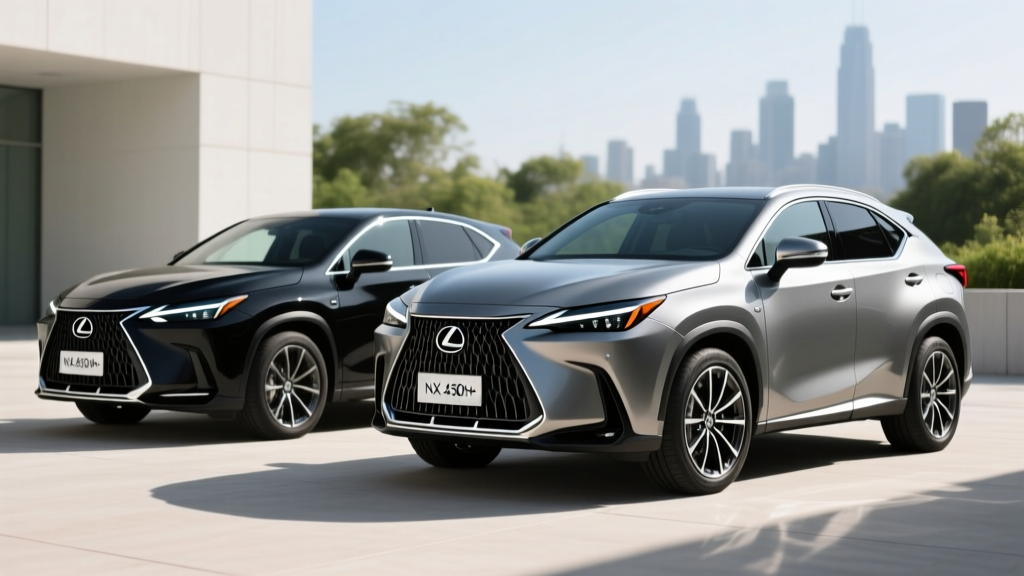
The Lexus NX lineup offers two distinct electrified paths. The NX 350h is a conventional hybrid (HEV) that never needs plugging in, delivering a reliable 39 MPG combined with zero lifestyle change. The NX 450h+ is a plug-in hybrid (PHEV) offering 37 miles of electric-only driving before its gas engine kicks in — ideal for commuters who can charge at home but still want gas-car freedom for road trips.
Both share a 2.5-liter four-cylinder engine paired with electric motors and all-wheel drive, but their batteries, efficiency profiles, and pricing differ significantly. Here's exactly what the numbers look like for 2026.
HEV vs PHEV: Understanding the Two Hybrid Lexus NX Models
Before diving into specs, it's critical to understand the fundamental difference between these two powertrains:
NX 350h — Conventional Hybrid (HEV)
- No plug required. The small battery recharges via regenerative braking and the gas engine.
- Electric assist only. The motor supplements the engine; you cannot drive on electricity alone for meaningful distances.
- Lower upfront cost. Starts thousands less than the PHEV variant.
- Best for: Drivers who want better fuel economy without changing any habits.
NX 450h+ — Plug-In Hybrid (PHEV)
- Plug-in capable. Charges via Level 1 (120V) or Level 2 (240V) — no DC fast charging.
- 37 miles electric-only. Handles most commutes without burning a drop of gas.
- Larger 18.1 kWh battery. Significantly heavier and more expensive, but unlocks electric driving.
- Best for: Home-charging commuters who take occasional long road trips.
Fuel Economy & Electric Range: The Numbers That Matter
Fuel economy is the primary reason most buyers consider a hybrid Lexus NX. Here's what the EPA says, alongside what you can expect in real-world driving.
| Metric | NX 350h (HEV) | NX 450h+ (PHEV) |
|---|---|---|
| EPA City MPG | 41 MPG | 38 MPG (charge-depleted) |
| EPA Highway MPG | 37 MPG | 35 MPG (charge-depleted) |
| EPA Combined MPG | 39 MPG | 36 MPG (charge-depleted) |
| MPGe (electric mode, PHEV only) | N/A | 84 MPGe combined |
| Electric-Only Range | N/A | 37 miles |
| Total Range (gas + electric) | ~560 miles | ~530 miles |
| Fuel Tank Capacity | 14.5 gallons | 14.5 gallons |
Source: fueleconomy.gov — EPA estimates. Your actual mileage will vary.
Real-World MPG: What Owners Actually Report
The NX 350h's 41 MPG city rating is no marketing gimmick — Toyota's hybrid system excels in stop-and-go traffic where regenerative braking recaptures energy continuously. In real-world city driving, many owners report matching or even slightly exceeding the EPA city figure, especially in mild weather. Highway driving is a different story: at sustained 75+ MPH speeds, expect closer to 34-35 MPG as aerodynamic drag dominates and the electric motor contributes less.
For the NX 450h+, the 37-mile electric-only range assumes moderate temperatures and mixed driving. In cold weather (below 30°F), expect that range to drop to roughly 28-30 miles as the battery's usable capacity shrinks and cabin heating draws power. Once the battery depletes, the NX 450h+ operates as a conventional hybrid, though its extra weight from the larger battery means real-world fuel economy typically lands around 33-34 MPG combined — a couple of ticks below the lighter NX 350h.
Powertrain, Battery & Charging Specs
| Specification | NX 350h (HEV) | NX 450h+ (PHEV) |
|---|---|---|
| Engine | 2.5L 4-cylinder + 2 electric motors | 2.5L 4-cylinder + 2 electric motors (higher output) |
| Combined Horsepower | 240 hp | 304 hp |
| 0-60 MPH | 7.2 seconds | 6.0 seconds |
| Drivetrain | AWD (e-motor rear axle) | AWD (e-motor rear axle) |
| Battery Capacity | ~1.6 kWh (NiMH) | 18.1 kWh (lithium-ion) |
| Level 1 Charging (120V) | N/A (self-charging) | ~12 hours (0-100%) |
| Level 2 Charging (240V) | N/A (self-charging) | ~3.5 hours (0-100%) |
| DC Fast Charging | No | No |
| Charge Port | None | J1772 (Level 2) |
A few notes on the NX 450h+'s charging profile: The lack of DC fast charging is typical for PHEVs — the battery simply isn't large enough to justify the hardware cost. At 3.3 kW onboard charging, a full Level 2 session takes about 3.5 hours, which is easily manageable overnight or during a workday. If you're relying on a standard 120V household outlet (Level 1), plan for roughly 12 hours for a full charge — still feasible overnight for most commuters who don't fully deplete the battery daily.
Pricing, Trims & Tax Credit Eligibility
| Trim / Model | 2026 MSRP (est.) | Federal Tax Credit |
|---|---|---|
| NX 350h Premium | ~$43,500 | None (HEV — not eligible under §30D) |
| NX 350h Luxury | ~$49,000 | None |
| NX 450h+ Premium | ~$59,500 | Up to $7,500 (subject to eligibility) |
| NX 450h+ Luxury | ~$64,000 | Up to $7,500 (subject to eligibility) |
Federal Tax Credit: The §30D Details
The NX 350h, as a conventional hybrid, does not qualify for the federal §30D Clean Vehicle Credit. That credit is reserved for plug-in vehicles — BEVs and PHEVs with sufficient battery capacity.
The NX 450h+ may qualify for up to $7,500 under current IRS rules, but eligibility is not automatic. Key requirements include:
- MSRP cap: SUVs must be priced at or below $80,000 (both NX 450h+ trims clear this).
- Buyer income cap: Modified AGI must not exceed $150,000 (single), $225,000 (head of household), or $300,000 (joint).
- Battery sourcing: Critical minerals and battery components must meet phased-in domestic sourcing thresholds that tighten each year. Verify current-year compliance on the IRS Clean Vehicle Credit page.
- Point-of-sale transfer: You can transfer the credit to the dealer at purchase to reduce your out-of-pocket cost, rather than waiting to claim it on your tax return.
Tax rules change frequently. Consult a tax professional and verify eligibility at irs.gov before purchasing.
Battery Warranty, Reliability & Replacement Cost
Lexus Hybrid Battery Warranty
Both models: 10 years / 150,000 miles (whichever comes first) on the hybrid battery and all hybrid-system components, including the inverter and electric motors.
This warranty covers defects and capacity loss that impairs functionality — Lexus guarantees the battery will retain sufficient capacity for normal hybrid operation throughout the warranty period.
Toyota/Lexus hybrid systems have an exceptional long-term reliability track record. The Prius, now in its fifth generation, has demonstrated hybrid battery lifespans routinely exceeding 200,000 miles with minimal degradation. The NX 350h's smaller NiMH battery is a proven, conservative chemistry that degrades slowly and predictably. The NX 450h+'s larger lithium-ion pack follows Toyota's stringent thermal management protocols, which prioritize longevity over maximum performance.
What Does Hybrid Battery Replacement Cost?
Should a battery replacement be needed out of warranty:
- NX 350h (HEV): Approximately $3,000-$5,000 for the hybrid battery pack, plus labor.
- NX 450h+ (PHEV): Approximately $8,000-$12,000 for the larger lithium-ion pack, plus labor.
These are ballpark figures based on current Toyota/Lexus hybrid replacement pricing. In practice, widespread hybrid battery failures are rare — most owners will trade the vehicle long before the battery needs attention, and Lexus's 10-year/150,000-mile warranty provides substantial coverage.
Hybrid Lexus NX vs. Full EV vs. Gas: Which Should You Choose?
Choose the NX 350h (HEV) if:
- You don't have access to home or workplace charging.
- You want a simple ownership experience — no plugs, no apps, no charging planning.
- Your budget is under $50,000 and you prioritize fuel savings over electric-only driving.
- You drive mostly in the city, where the hybrid system shines (41 MPG city).
Choose the NX 450h+ (PHEV) if:
- You can install a Level 2 charger at home or have reliable workplace charging.
- Your daily commute is under 35 miles round-trip — you'll rarely use gas on weekdays.
- You want EV-like daily driving but need gas-engine flexibility for road trips.
- You qualify for the $7,500 federal tax credit, which narrows the price gap significantly.
Consider a Full EV (e.g., Tesla Model Y, Genesis GV60) instead if:
- You have reliable home charging and your trips rarely exceed 250 miles.
- You want the lowest per-mile fuel cost and minimal maintenance (no oil changes, no gas engine).
- You're ready to commit to EV charging infrastructure and route planning for longer trips.
Pros & Cons at a Glance
NX 350h Pros
- 41 MPG city — among the best in the luxury compact SUV segment
- No charging infrastructure needed
- Lower MSRP than the PHEV variant
- Proven Toyota hybrid reliability
- Quiet, refined ride quality
NX 350h Cons
- No electric-only driving capability
- No federal tax credit eligibility
- Highway MPG drops to ~34 in real-world driving
- 240 hp feels adequate, not quick, for the price point
NX 450h+ Pros
- 37 miles electric-only covers most commutes
- 304 hp — genuinely quick for a luxury compact SUV
- Up to $7,500 federal tax credit (if eligible)
- Seamless transition between EV and hybrid modes
- No range anxiety for road trips
NX 450h+ Cons
- $15,000+ price premium over the NX 350h
- No DC fast charging
- Heavier — slightly worse fuel economy when battery is depleted
- Cold weather reduces EV range to ~28-30 miles
Frequently Asked Questions
How many MPG does the hybrid Lexus NX get?
The NX 350h achieves an EPA-estimated 41 city / 37 highway / 39 combined MPG. The NX 450h+ PHEV gets 84 MPGe in electric mode and 36 MPG combined once the battery is depleted. In real-world city driving, the NX 350h often matches or slightly exceeds its EPA city rating thanks to Toyota's regenerative braking system.
How far can the NX 450h+ go on electric only?
The EPA rates the NX 450h+ at 37 miles of electric-only range. In cold weather (below 30°F) or at sustained highway speeds, expect 28-32 miles. For most commuters with a sub-35-mile round trip, this means zero gas consumption on weekdays when charging overnight.
Does the NX 350h need to be plugged in?
No. The NX 350h is a conventional hybrid (HEV) that charges its small battery entirely through regenerative braking and the gas engine. There is no plug, no charging port, and no change to your fueling routine — you simply visit gas stations less often.
Is the hybrid Lexus NX reliable?
Toyota and Lexus hybrid powertrains are among the most reliable in the industry. The hybrid battery and all hybrid-system components are covered by a 10-year/150,000-mile warranty. Real-world data from millions of Toyota hybrids on the road shows battery longevity routinely exceeding 200,000 miles. Lexus consistently ranks at or near the top in IIHS safety ratings and J.D. Power dependability studies.
How much does it cost to replace the hybrid battery?
Out-of-warranty replacement runs approximately $3,000-$5,000 for the NX 350h and $8,000-$12,000 for the NX 450h+. However, hybrid battery failures are uncommon, and the 10-year/150,000-mile warranty covers the vast majority of ownership periods.
Does the hybrid Lexus NX qualify for any tax credit?
The NX 350h (conventional hybrid) does not qualify for the federal §30D Clean Vehicle Credit. The NX 450h+ (plug-in hybrid) may qualify for up to $7,500, depending on your income, the vehicle's battery sourcing compliance, and current-year IRS rules. Always verify eligibility at irs.gov and consult a tax professional before purchasing.
Can the NX 450h+ DC fast charge?
No. Like most PHEVs, the NX 450h+ only supports Level 1 (120V) and Level 2 (240V) AC charging. A full Level 2 charge takes approximately 3.5 hours, which is standard for the PHEV segment. DC fast charging hardware is not included — the 18.1 kWh battery is too small to justify the added cost and weight.