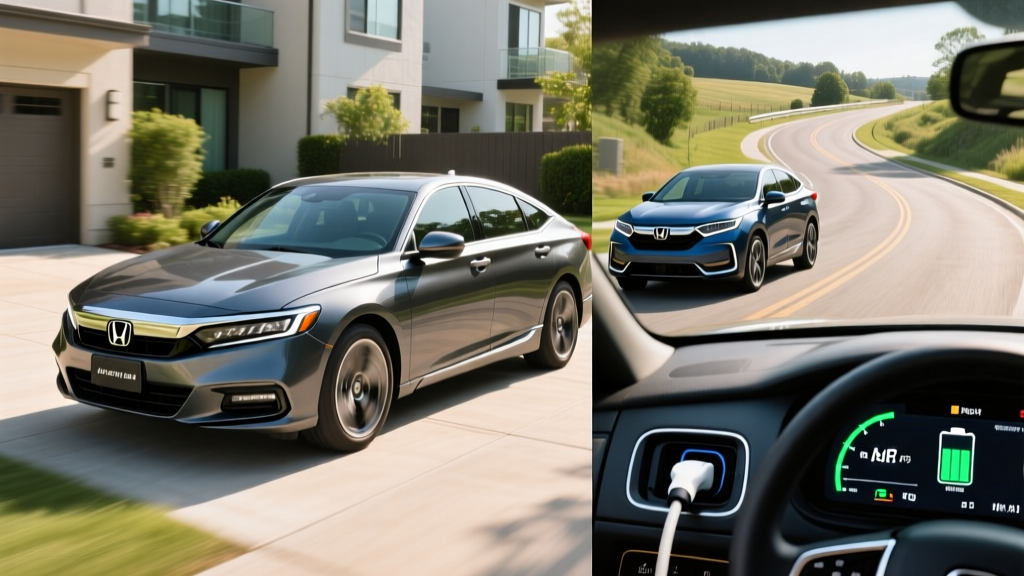
If you're searching for a Honda V6 hybrid, you've likely noticed something important: Honda's current hybrid lineup has shifted away from traditional V6 engines. The automaker's latest two-motor hybrid system pairs a turbocharged four-cylinder engine with electric motors to deliver V6-rivaling power while achieving significantly better fuel economy. For 2026, Honda's hybrid strategy centers on the Accord Hybrid sedan and the CR-V Hybrid compact SUV — both offering the smooth, torque-rich driving experience buyers associate with V6 power, but at a fraction of the fuel cost.
This guide breaks down every hybrid Honda currently sells in the U.S., explains the difference between conventional hybrid (HEV) and plug-in hybrid (PHEV) configurations, and provides the exact EPA numbers, real-world expectations, and ownership data you need to make an informed purchase.
Which Honda Models Offer a Hybrid Powertrain in 2026?
Honda's 2026 hybrid lineup includes two primary models, both using the brand's fourth-generation two-motor hybrid system. Neither uses a V6 — instead, Honda pairs a 2.0-liter Atkinson-cycle four-cylinder engine with two electric motors to produce combined output that matches or exceeds the V6 engines these models once offered.
| Model | Engine | Combined HP | Combined Torque | Drivetrain | EPA Combined MPG |
|---|---|---|---|---|---|
| 2026 Accord Hybrid | 2.0L 4-cyl + 2 motors | 204 hp | 247 lb-ft | FWD | 48 MPG |
| 2026 CR-V Hybrid (Sport trims) | 2.0L 4-cyl + 2 motors | 204 hp | 247 lb-ft | FWD / AWD | 43 MPG (FWD) / 40 MPG (AWD) |
For context, the last Honda Accord with a V6 (the 2017 model's 3.5L V6) produced 278 hp but returned just 26 MPG combined. The 2026 Accord Hybrid delivers 77% better fuel economy while offering competitive acceleration — 0-60 mph in approximately 7.0 seconds, compared to 5.6 seconds for that old V6. The torque delivery is where the hybrid shines: electric motors provide peak torque from 0 RPM, making the Accord Hybrid feel responsive and effortless in city driving.
Hybrid (HEV) vs. Plug-In Hybrid (PHEV): What Honda Offers
Understanding the difference between a conventional hybrid and a plug-in hybrid is essential before choosing your Honda.
Conventional Hybrid (HEV)
- How it works: The gasoline engine and regenerative braking charge a small battery (typically 1.0–1.5 kWh). You never plug it in.
- Electric-only driving: Brief, low-speed EV mode (usually under 1 mile at parking-lot speeds).
- Refueling: Gas station only — identical to a conventional car.
- Honda models: 2026 Accord Hybrid, 2026 CR-V Hybrid (Sport, Sport-L, Sport Touring trims).
Plug-In Hybrid (PHEV)
- How it works: A larger battery (typically 15–20 kWh) provides meaningful electric-only range. You plug it in to charge, and the gas engine serves as a backup for longer trips.
- Electric-only driving: Typically 25–50 miles on battery alone before the engine engages.
- Refueling: Plug in at home or public charger + gas station as needed.
- Honda models: Honda discontinued the Clarity PHEV after 2021. As of 2026, Honda does not sell a PHEV in the U.S. market.
Key takeaway: Every current Honda hybrid is a conventional HEV. You do not plug it in. The hybrid system charges itself through regenerative braking and the gasoline engine. This means zero lifestyle change from a gas car — you simply visit the gas station less often.
EPA MPG vs. Real-World Fuel Economy: What to Expect
Honda's fourth-generation two-motor hybrid system is one of the most efficient on the market. But EPA ratings and real-world results can diverge, especially depending on driving style, climate, and route type.
| Model | EPA City | EPA Highway | EPA Combined | Real-World Expectation |
|---|---|---|---|---|
| Accord Hybrid (EX-L, Sport-L, Touring) | 51 MPG | 44 MPG | 48 MPG | 46–52 MPG (city); 40–44 MPG (highway) |
| Accord Hybrid (Sport, base) | 50 MPG | 45 MPG | 48 MPG | 45–51 MPG (city); 41–45 MPG (highway) |
| CR-V Hybrid Sport (FWD) | 43 MPG | 36 MPG | 40 MPG | 40–46 MPG (city); 33–36 MPG (highway) |
| CR-V Hybrid Sport (AWD) | 40 MPG | 34 MPG | 37 MPG | 37–43 MPG (city); 31–34 MPG (highway) |
According to data from fueleconomy.gov, the 2026 Accord Hybrid's 48 MPG combined places it among the most efficient midsize sedans available, trailing only the Toyota Camry Hybrid (52 MPG combined) while offering more cargo space and a more premium interior.
Powertrain Deep Dive: How Honda's Two-Motor Hybrid System Works
Honda's hybrid system operates differently from Toyota's planetary-gear design. Here's how the two-motor setup functions across driving scenarios:
- EV Drive (low speed, light load): The battery powers the propulsion motor directly. The engine is off. This is the mode that gives Honda hybrids their exceptional city MPG.
- Hybrid Drive (moderate acceleration): The engine runs as a generator, producing electricity that feeds the propulsion motor. The engine is not mechanically connected to the wheels — it operates at its most efficient RPM regardless of vehicle speed.
- Engine Drive (highway cruising): A lock-up clutch mechanically connects the engine to the front wheels at steady highway speeds (typically above 45 mph), where direct mechanical drive is more efficient than converting to electricity and back.
The combined system output of 204 hp and 247 lb-ft of torque means the Accord Hybrid accelerates with authority. The CR-V Hybrid, being heavier and taller, posts a 0-60 mph time of approximately 7.8 seconds — adequate for merging and passing, if not sporty. Both models use a lithium-ion hybrid battery pack, though Honda does not publish the exact kWh capacity for its HEV batteries (they are small, typically around 1.0–1.5 kWh usable, because they don't need to store energy for electric-only range).
Pricing and Tax Credit Eligibility
Honda's hybrid trims carry a price premium over their gasoline counterparts, but the fuel savings typically offset the difference within 2–4 years of average driving.
| Model & Trim | 2026 MSRP | Hybrid Premium vs. Gas | Federal Tax Credit |
|---|---|---|---|
| Accord Hybrid Sport | $33,990 | +$1,500 | Not eligible (§30D applies to PHEVs/BEVs only) |
| Accord Hybrid EX-L | $35,290 | +$1,500 | Not eligible |
| Accord Hybrid Sport-L | $36,290 | +$1,500 | Not eligible |
| Accord Hybrid Touring | $39,890 | +$1,500 | Not eligible |
| CR-V Hybrid Sport (FWD) | $36,395 | +$1,800 | Not eligible |
| CR-V Hybrid Sport Touring (AWD) | $41,895 | +$1,800 | Not eligible |
Battery Warranty, Reliability, and Replacement Cost
Hybrid battery longevity is the single most common concern among first-time hybrid buyers. Here's what Honda provides and what real-world data shows.
• Coverage: 8 years / 100,000 miles (10 years / 150,000 miles in CARB states including CA, CO, CT, ME, MA, NJ, NY, OR, RI, VT, WA)
• What's covered: Hybrid battery pack, electric motors, power control unit, and related hybrid-system components
• Threshold: Honda warrants the battery against defects and abnormal capacity loss
In practice, Honda's hybrid batteries have proven exceptionally durable. The two-motor system's relatively small battery undergoes shallow charge-discharge cycles (it rarely drops below 40% or charges above 80% state of charge), which significantly extends cell life. Real-world reports from high-mileage Accord Hybrid and CR-V Hybrid owners, as well as data from earlier-generation Insight and Accord Hybrid models, show batteries routinely lasting 150,000–200,000+ miles without significant degradation.
If replacement is eventually needed, a Honda hybrid battery pack costs approximately $2,000–$4,000 for the part, plus $500–$1,000 for labor, depending on the model and whether you choose a new OEM pack or a refurbished unit. This is substantially less than a full EV battery replacement because the HEV battery is much smaller. Honda's official warranty page provides full terms by state.
Pros
- Class-leading city MPG (up to 51 MPG city)
- No plug-in charging required — zero lifestyle change
- Smooth, quiet electric-motor torque at low speeds
- Strong 8-year/100,000-mile hybrid warranty
- Excellent Honda reliability track record
- Spacious interior and cargo room (both models)
Cons
- Highway MPG drops more noticeably than city (aerodynamic drag)
- Engine drone under hard acceleration (CVT-like behavior)
- No PHEV option for electric-only commuting
- No federal tax credit for conventional hybrids
- AWD availability limited to CR-V Hybrid (not Accord)
- Cold-weather MPG reduction (5–10%)
Who Should Choose a Honda Hybrid vs. a Full EV or Gas Car?
The decision between a Honda hybrid, a full battery-electric vehicle (BEV), and a conventional gas car depends on your driving patterns, charging access, and budget.
Choose the Honda Hybrid (HEV) If:
- You don't have reliable access to home or workplace charging
- You take frequent road trips exceeding 300+ miles
- You want maximum fuel savings with zero behavioral change
- You live in an apartment or condo where installing a charger is impractical
- You want lower upfront cost than a comparable EV
Choose a Full EV (BEV) If:
- You can install a Level 2 charger at home
- Your daily commute is under 250 miles (most EVs' real-world range)
- You want to eliminate gas station visits entirely
- You qualify for the $7,500 federal §30D tax credit
- You prioritize lowest per-mile "fuel" cost (home charging at $0.12/kWh costs roughly $0.04/mile)
Stick With a Gas Car If:
- You drive fewer than 8,000 miles per year (the hybrid premium takes longer to recoup)
- You're buying a used vehicle and the hybrid premium outweighs projected fuel savings
- You need maximum towing capacity (hybrids generally aren't optimized for heavy towing)
For most drivers covering 12,000–15,000 miles annually, the Accord Hybrid's 48 MPG combined saves approximately $800–$1,100 per year in fuel costs compared to a 30 MPG gas midsize sedan (assuming $3.50/gallon). That means the $1,500 hybrid trim premium pays for itself in roughly 1.5 to 2 years — after which every fill-up is pure savings.
Frequently Asked Questions
Does Honda make a V6 hybrid in 2026?
No. Honda discontinued its V6 engines across the lineup. The current Accord Hybrid and CR-V Hybrid use a 2.0-liter four-cylinder engine paired with two electric motors to produce 204 hp and 247 lb-ft of combined torque — output comparable to Honda's older V6 engines but with dramatically better fuel economy (40–48 MPG combined vs. 22–26 MPG).
How many MPG does the Honda Accord Hybrid get?
The 2026 Honda Accord Hybrid achieves an EPA-estimated 51 city / 44 highway / 48 combined MPG on EX-L, Sport-L, and Touring trims. In real-world driving, owners report 46–52 MPG in city conditions (hybrids excel in stop-and-go traffic) and 40–44 MPG on the highway. Cold weather and sustained high-speed driving reduce these figures by 5–10%.
Do Honda hybrids need to be plugged in?
No. The 2026 Accord Hybrid and CR-V Hybrid are conventional hybrids (HEVs). The battery charges through regenerative braking and the gasoline engine. You fuel them exactly like a regular gas car — just less often.
Is the Honda hybrid system reliable?
Yes. Honda's hybrid powertrains have demonstrated strong reliability across multiple generations. The hybrid battery is covered by an 8-year/100,000-mile warranty (10 years/150,000 miles in CARB states). Real-world data shows Honda hybrid batteries routinely lasting 150,000–200,000+ miles. The system's shallow charge cycles (battery rarely operates below 40% or above 80% state of charge) minimize cell degradation.
How much does it cost to replace a Honda hybrid battery?
A replacement Honda hybrid battery pack costs approximately $2,000–$4,000 for the part plus $500–$1,000 in labor. Refurbished or aftermarket options can reduce this cost. Because the HEV battery is small (around 1.0–1.5 kWh), replacement is far less expensive than a full EV battery swap.
Does the Honda hybrid qualify for a federal tax credit?
No. The federal §30D Clean Vehicle Credit requires a minimum 7 kWh battery and plug-in capability, which applies only to BEVs and PHEVs. Honda's conventional hybrids do not qualify. Check your state and local utility for possible hybrid-specific rebates.
How far can a Honda hybrid drive on electric power alone?
Honda's conventional hybrids can operate in EV mode for very short distances — typically under 1 mile at low speeds (parking lots, residential streets under 25 mph). This is not designed for meaningful electric-only commuting. If you need 25+ miles of electric-only range, you'll need a plug-in hybrid (PHEV) from another brand, as Honda does not currently offer a PHEV in the U.S.
Is the CR-V Hybrid available with AWD?
Yes. The 2026 CR-V Hybrid is available with all-wheel drive on Sport, Sport-L, and Sport Touring trims. AWD adds a rear electric motor and reduces combined fuel economy from 43 MPG (FWD) to 40 MPG (AWD) — a modest 3 MPG penalty for the added traction.
Honda's decision to replace its V6 engines with two-motor hybrid powertrains was the right call for buyers who want V6-class refinement without V6-class fuel bills. Whether you choose the Accord Hybrid for its sedan practicality and 48 MPG combined, or the CR-V Hybrid for its SUV versatility and available AWD, you're getting one of the most proven and efficient hybrid systems on the road today — with no plug, no range anxiety, and no compromise on daily usability.