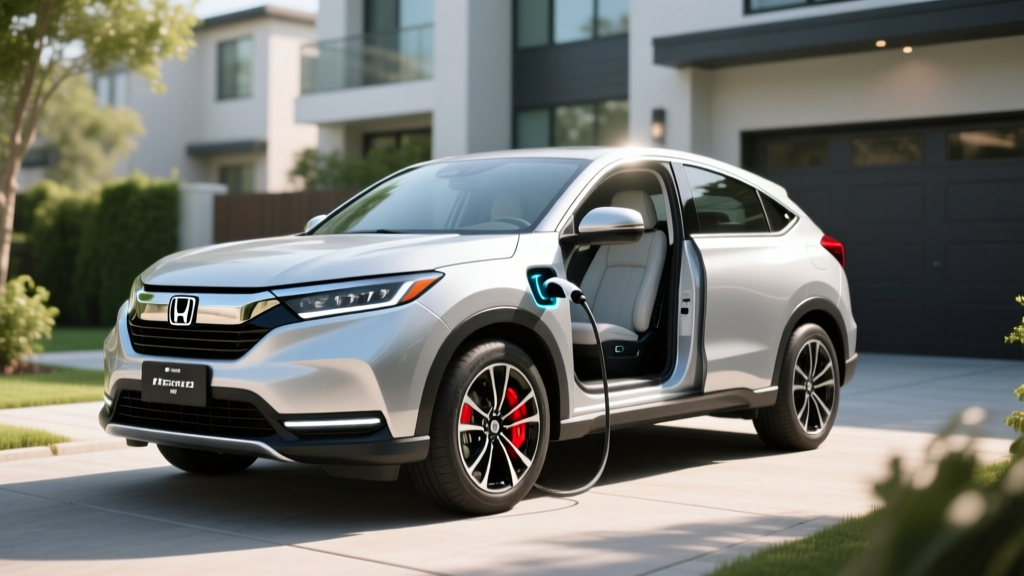
Honda's smallest crossover has earned a loyal following for its practicality and car-like manners, but one question keeps surfacing in forums and search bars: does a Honda HR-V Hybrid exist? For the 2026 model year, Honda continues to sell the HR-V exclusively as a conventional gasoline vehicle in the United States. There is no factory hybrid or plug-in hybrid HR-V currently offered stateside.
That doesn't mean the search for a "Honda HR-V Hybrid" is misguided — it means buyers are looking for the fuel-sipping, electrified small crossover Honda should make, and there are practical paths to get there. This guide breaks down exactly what Honda offers in 2026, how the HR-V's real-world MPG stacks up, which Honda hybrids fill the gap, and whether a conventional hybrid (HEV) or plug-in hybrid (PHEV) from a competitor makes more sense for your budget and commute.
Does a Honda HR-V Hybrid Exist for 2026?
As of the 2026 model year, the Honda HR-V is sold in the US with a single powertrain: a 2.0-liter naturally aspirated inline-4 paired with a continuously variable transmission (CVT), producing 158 horsepower. Front-wheel drive is standard; all-wheel drive is available. There is no hybrid, plug-in hybrid, or mild-hybrid variant offered by Honda in the American market.
Internationally, Honda has sold hybrid versions of the HR-V (badged as the Vezel in Japan) using the e:HEV system — a series-parallel hybrid setup similar to what powers the CR-V Hybrid. However, Honda has not brought this powertrain to the US HR-V, likely due to pricing pressures in the subcompact crossover segment and the company's strategy of steering hybrid buyers toward the CR-V Hybrid and Accord Hybrid.
2026 Honda HR-V Gas MPG: EPA Ratings and Real-World Numbers
Even without a hybrid badge, the HR-V's 2.0L engine and CVT deliver respectable efficiency for a gasoline crossover. Here are the official EPA figures from fueleconomy.gov:
| Drivetrain | City MPG | Highway MPG | Combined MPG |
|---|---|---|---|
| FWD | 28 | 34 | 30 |
| AWD | 27 | 32 | 29 |
Real-world expectations: The HR-V's CVT and relatively light curb weight (~3,150 lbs FWD) mean it performs close to its EPA sticker in mixed suburban driving. In predominantly city driving, expect 27–29 MPG with FWD — slightly below the EPA city figure because the HR-V lacks the regenerative braking advantage of a hybrid. On long highway trips at 70–75 mph, AWD models typically return 30–31 MPG. In cold weather (below freezing), expect a 10–15% drop across the board due to richer fuel mixtures and increased drivetrain friction.
HEV vs PHEV vs EV: Which Electrified Powertrain Fits You?
Since the HR-V Hybrid doesn't exist in the US, buyers searching for one are really asking: how can I get HR-V-level practicality with better fuel economy? The answer depends on which electrified powertrain type matches your lifestyle.
Conventional Hybrid (HEV)
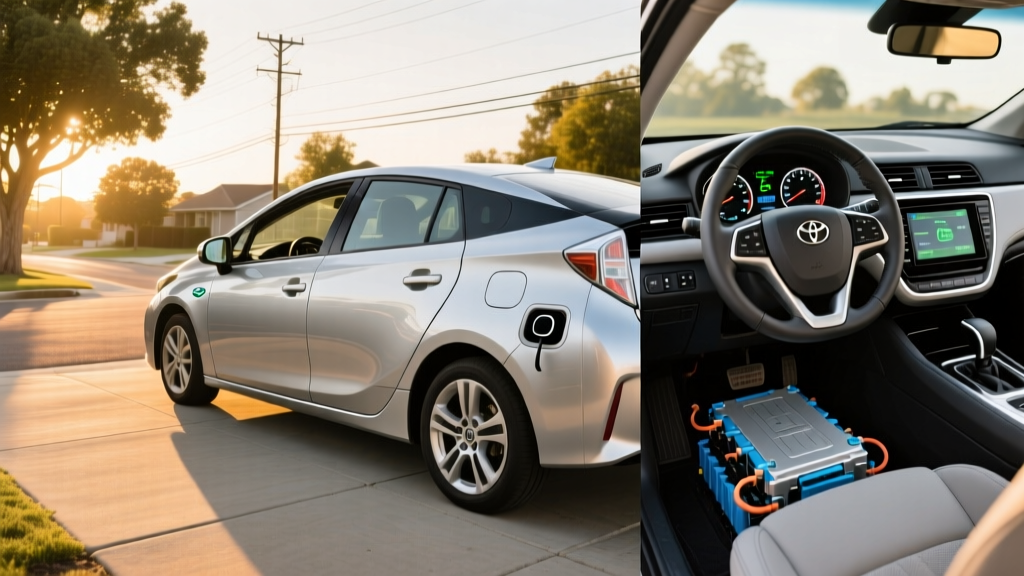
How it works: A small battery (1–2 kWh) and electric motor assist a gas engine. The battery recharges through regenerative braking and the engine — you never plug it in.
Best for: Drivers without home charging access who want 40–50 MPG in city driving with zero behavior change.
Examples: Toyota Corolla Cross Hybrid (42 MPG combined), Honda CR-V Hybrid (40 MPG combined).
Plug-In Hybrid (PHEV)
How it works: A larger battery (12–20 kWh) provides 25–50 miles of electric-only driving. Once depleted, it operates as a conventional hybrid. You can plug in to recharge, typically on Level 1 (120V) or Level 2 (240V).
Best for: Drivers with home charging and short commutes who want EV-like daily driving with gas-engine road-trip flexibility.
Examples: Toyota RAV4 Prime (42 mi electric range), Hyundai Tucson PHEV (33 mi electric range).
Battery Electric (BEV)
How it works: A large battery (60–100+ kWh) powers electric motors only. No gas engine. Requires home or public charging infrastructure.
Best for: Drivers with reliable home charging, predictable commutes, and willingness to plan road-trip charging stops.
Examples: Hyundai Kona Electric (261 mi range), Volvo EX30 (265 mi range).
Honda Hybrids You Can Actually Buy in 2026
If you're loyal to Honda and want hybrid efficiency, here's what the brand currently offers in the US market, along with EPA data from fueleconomy.gov:
| Model | Type | City MPG | Hwy MPG | Combined | Combined HP | Starting MSRP |
|---|---|---|---|---|---|---|
| CR-V Hybrid (FWD) | HEV | 43 | 36 | 40 | 204 | ~$36,300 |
| CR-V Hybrid (AWD) | HEV | 40 | 34 | 37 | 204 | ~$37,800 |
| Accord Hybrid | HEV | 51 | 44 | 48 | 204 | ~$34,000 |
| Civic Hybrid | HEV | 50 | 47 | 49 | 200 | ~$30,000 |
The closest substitute: The CR-V Hybrid Sport trim starts around $36,300 — roughly $8,000–$10,000 more than a base HR-V — but delivers 40 MPG combined (FWD) versus the HR-V's 30 MPG combined. That's a 33% improvement in fuel economy, plus 204 hp versus the HR-V's 158 hp. For a buyer who searched "Honda HR-V Hybrid" hoping for a more efficient small Honda crossover, stepping up to the CR-V Hybrid is the most practical path.
Small Hybrid Crossovers That Compete Where the HR-V Hybrid Would
If brand loyalty isn't a dealbreaker, several competitors offer the subcompact/compact hybrid crossover experience that Honda doesn't:
| Model | Type | Combined MPG | HP | Cargo (cu ft) | Base MSRP |
|---|---|---|---|---|---|
| Toyota Corolla Cross Hybrid | HEV | 42 | 196 | 25.5 | ~$30,500 |
| Kia Niro HEV | HEV | 53 | 139 | 22.8 | ~$28,500 |
| Kia Niro PHEV | PHEV | 48 (hybrid) / 108 MPGe | 180 | 19.4 | ~$35,500 |
| Hyundai Kona Hybrid | HEV | ~43 | 140 | 25.8 | ~$29,000 |
The Toyota Corolla Cross Hybrid is the most direct answer to "what if Honda made an HR-V Hybrid." It's AWD standard, returns 42 MPG combined, and starts near $30,500 — pricing that overlaps with higher-trim gas HR-V models. The Kia Niro HEV leads the segment at 53 MPG combined, though it sacrifices some cargo volume and horsepower.
Hybrid Battery Longevity, Warranty, and Replacement Costs
Battery lifespan is consistently the top concern among first-time hybrid buyers. Here's what the data shows for current-generation Honda and Toyota hybrid systems:
Hybrid Battery Warranty & Lifespan
- Federal mandate: All hybrid and EV batteries must carry a minimum warranty of 8 years / 100,000 miles (10 years / 150,000 miles in CARB states including CA, NY, MA, and others).
- Honda hybrid battery warranty (2026): 8 years / 100,000 miles nationwide; 10 years / 150,000 miles in CARB states.
- Toyota hybrid battery warranty (2026): 10 years / 150,000 miles nationwide — an industry-leading term.
- Real-world lifespan: Modern nickel-metal hydride (NiMH) and lithium-ion hybrid batteries routinely last 150,000–200,000+ miles before significant capacity loss. Taxi fleet data on Toyota hybrids shows batteries lasting 300,000+ miles with gradual degradation.
- Replacement cost (out of warranty): $2,000–$4,000 for a hybrid battery pack, depending on the model. This is far less than a full EV battery replacement ($5,000–$20,000+) because hybrid packs are much smaller (1–2 kWh vs 60–100+ kWh).
For context, a hybrid battery stores roughly 1–2 kWh of energy — about 1/40th the capacity of a typical EV battery. The smaller chemistry means lower replacement costs and less degradation anxiety. The battery's primary job is to buffer regenerative braking energy and assist acceleration, not to provide standalone range. Most hybrid owners will sell or trade the vehicle before the battery needs attention.
Tax Credit Eligibility: Do Hybrids Qualify?
This is where many buyers get confused. Under current IRS §30D rules for 2026:
Federal Tax Credit Eligibility for Hybrids
- Conventional hybrids (HEV): Do NOT qualify for the federal §30D clean vehicle credit. These vehicles don't have a plug and don't meet the battery capacity threshold (≥7 kWh for PHEVs). The Honda CR-V Hybrid, Accord Hybrid, Civic Hybrid, and Toyota Corolla Cross Hybrid are all ineligible.
- Plug-in hybrids (PHEV): May qualify for up to $7,500, but must meet all of the following:
- Battery capacity ≥ 7 kWh
- MSRP caps: $80,000 for SUVs/pickups/vans; $55,000 for sedans
- Buyer income caps: $300,000 joint / $225,000 head of household / $150,000 single (modified AGI)
- Battery components and critical minerals must meet phased-in domestic sourcing thresholds (stricter each year through 2030)
- Final assembly in North America
- Point-of-sale transfer: As of 2024, eligible buyers can transfer the credit to the dealer at purchase, receiving the credit as an immediate price reduction rather than waiting to claim it on their tax return.
Bottom line: If you're considering a Honda hybrid (all currently HEV), there is no federal purchase incentive. The fuel savings alone must justify any price premium over a gas model. For PHEVs like the Toyota RAV4 Prime or Kia Niro PHEV, check the latest fueleconomy.gov tax credit tracker for current eligibility, as critical-mineral sourcing requirements change annually and can disqualify previously eligible models.
Who Should Choose a Hybrid, PHEV, or Full EV?
✓ Choose a Hybrid (HEV) If:
- You don't have access to home or workplace charging
- You want better MPG without changing any habits
- Your annual mileage is moderate (10,000–15,000 mi/yr) and fuel savings should be simple
- You want the lowest upfront cost among electrified options
- You frequently take long road trips and don't want to plan charging stops
✓ Choose a PHEV If:
- You have Level 1 or Level 2 charging at home
- Your daily commute is under 30–40 miles round trip (covers most errands on electric)
- You want EV-like daily driving but need gas-engine flexibility for road trips
- You want to reduce fuel consumption by 60–80% on typical weekdays
- A qualifying model can net you a federal tax credit at point of sale
✓ Choose a Full EV If:
- You have reliable Level 2 home charging (240V, 32–48A circuit)
- Your daily driving is predictable and within the vehicle's real-world range
- You want the lowest per-mile "fuel" cost ($0.03–$0.05/mi on home electricity vs $0.12–$0.18/mi for gas)
- You want minimal maintenance (no oil changes, fewer brake replacements due to regen)
- You're eligible for the full $7,500 federal credit plus any state incentives
Pros and Cons: Chasing the HR-V Hybrid Dream
Pros of the Current HR-V (Gas)
- Low starting price (~$26,400 base LX)
- Strong cargo volume for its class (24.4 cu ft behind rear seats)
- Standard Honda Sensing safety suite
- Proven reliability of Honda's 2.0L + CVT powertrain
- Widely available at dealers — no waitlists
Cons (vs. What a Hybrid Would Offer)
- 30 MPG combined is average — hybrid competitors hit 42–53 MPG
- No hybrid or PHEV option available in the US
- 158 hp feels modest, especially with AWD and a full cabin
- No federal tax credit eligibility
- Higher lifetime fuel cost vs. hybrid alternatives (~$1,200/yr at 12,000 mi vs ~$750/yr at 42 MPG)
Frequently Asked Questions
Will Honda release an HR-V Hybrid in the US?
Honda has not announced a US-market HR-V Hybrid for the 2026 or 2027 model years. The brand's hybrid strategy currently focuses on the CR-V Hybrid, Accord Hybrid, and Civic Hybrid. Given Honda's commitment to expanding its hybrid lineup and the success of the Toyota Corolla Cross Hybrid, an HR-V Hybrid remains plausible for future model years, but nothing is confirmed.
How many MPG does the 2026 Honda HR-V get?
The 2026 Honda HR-V with FWD is EPA-rated at 28 city / 34 highway / 30 combined MPG. AWD models are rated at 27 city / 32 highway / 29 combined. Real-world testing shows these figures are achievable in mixed driving, though highway-heavy trips at 75+ mph and cold-weather conditions will reduce returns by 10–15%.
Is the Honda HR-V Hybrid reliable?
Since no US-spec HR-V Hybrid exists, there is no reliability data for that specific powertrain. However, Honda's two-motor hybrid system (used in the CR-V Hybrid and Accord Hybrid) has proven highly reliable since its introduction. Honda hybrid batteries carry an 8-year/100,000-mile warranty (10 years/150,000 miles in CARB states), and out-of-warranty replacement costs run $2,000–$4,000 — significantly less than EV battery replacement.
Does any Honda hybrid qualify for a tax credit?
No. All current Honda hybrids in the US (CR-V Hybrid, Accord Hybrid, Civic Hybrid) are conventional hybrids (HEV) and do not qualify for the federal §30D clean vehicle credit. Only plug-in hybrids (PHEV) and battery electric vehicles (BEV) with ≥7 kWh batteries are eligible, subject to MSRP caps, buyer income limits, and battery-sourcing requirements. Honda currently does not sell a PHEV in the US market.
What's the best hybrid alternative to the Honda HR-V?
The closest alternatives are the Toyota Corolla Cross Hybrid (42 MPG combined, AWD standard, ~$30,500) and the Kia Niro HEV (53 MPG combined, FWD, ~$28,500). If you want to stay within Honda, the CR-V Hybrid (40 MPG combined, ~$36,300) is the brand's most efficient crossover, though it's larger and more expensive than the HR-V.
How much would I save in fuel with a hybrid vs. the gas HR-V?
At 12,000 miles per year and $3.50/gallon: the gas HR-V (30 MPG combined) costs roughly $1,400/year in fuel. A 42-MPG hybrid like the Corolla Cross Hybrid costs about $1,000/year — saving ~$400 annually. A 53-MPG hybrid like the Kia Niro costs about $792/year — saving ~$608 annually. Over a 5-year ownership period, that's $2,000–$3,000 in fuel savings, which typically offsets the hybrid price premium.