Quick Verdict: The Adventure Hybrid That Actually Saves Gas
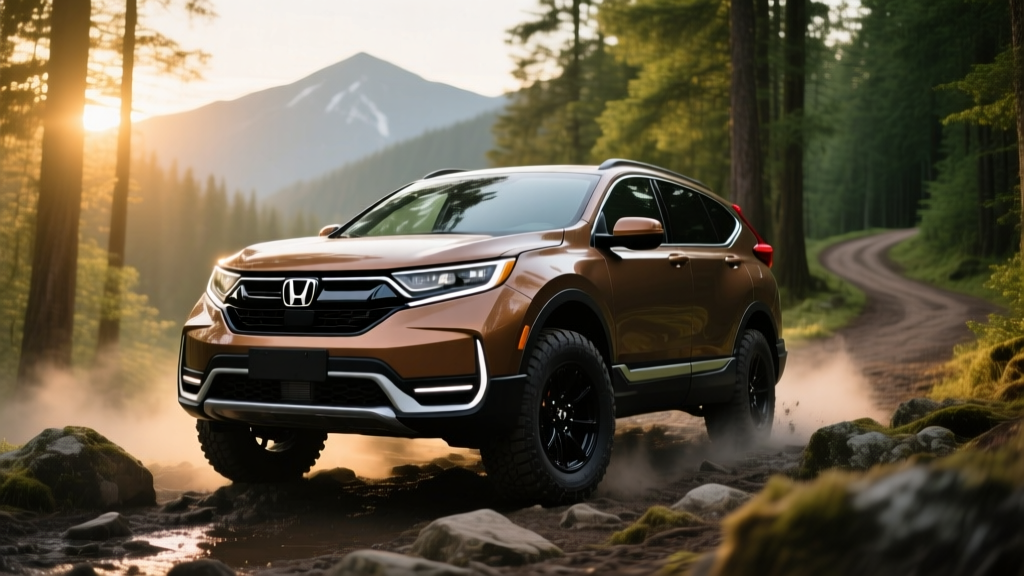
The 2026 Honda CR-V TrailSport Hybrid occupies a narrow but compelling lane: a rugged-styled compact SUV with genuine all-wheel-drive capability and hybrid efficiency that undercuts most gas-only competitors. Built on Honda's sixth-generation CR-V platform, the TrailSport Hybrid pairs a 2.0-liter Atkinson-cycle four-cylinder with a two-motor hybrid system for a combined 204 horsepower and an EPA-estimated 40 MPG combined.
Unlike a plug-in hybrid (PHEV), the CR-V TrailSport Hybrid is a conventional hybrid electric vehicle (HEV). It never needs to be plugged in — the battery recharges through regenerative braking and the gasoline engine. This makes it ideal for buyers who want better fuel economy without changing their fueling habits or installing home charging equipment.
Starting at approximately $39,845 (including destination), the TrailSport Hybrid sits in the upper-middle of the CR-V lineup. It competes directly with the Toyota RAV4 TRD Off-Road Hybrid and the Subaru Outback Wilderness, though neither matches its combination of trail-oriented hardware and sub-40-MPG efficiency.
HEV vs PHEV: What the CR-V TrailSport Hybrid Actually Is
Before diving into specs, it's worth clarifying what you're getting — and what you're not.
| Feature | CR-V TrailSport Hybrid (HEV) | Plug-In Hybrid (PHEV) Example |
|---|---|---|
| Plug-in charging required? | No — self-charging via regen & engine | Yes — plug in for electric-only miles |
| Electric-only range | None (motor assists engine only) | Typically 25–45 miles |
| Battery size | ~1.1 kWh (small buffer) | 15–20+ kWh |
| Federal tax credit (§30D) | Not eligible | Up to $7,500 if eligible |
| Best for | Drivers without home charging access | Drivers with home/work charging who commute <40 mi |
The CR-V TrailSport Hybrid is strictly an HEV. Honda does not currently offer a plug-in hybrid version of the CR-V in the US market. If you want electric-only commuting, you'd need to look at the Toyota RAV4 Prime (PHEV) or a full battery-electric vehicle like the Hyundai Ioniq 5.
Fuel Economy: EPA Ratings and Real-World MPG
The EPA rates the 2026 CR-V TrailSport Hybrid at 40 MPG combined, with a 40 city / 39 highway split. This is a slight reduction compared to the Sport Touring Hybrid trim (43/36/40 city/highway/combined on FWD models), due to the TrailSport's all-terrain tires, standard AWD, and slightly raised ride height.
| Driving Condition | EPA Estimate | Real-World Expectation |
|---|---|---|
| City | 40 MPG | 41–44 MPG (hybrids excel in stop-and-go) |
| Highway (70 mph) | 39 MPG | 35–38 MPG (aero drag, less regen benefit) |
| Combined | 40 MPG | 37–41 MPG depending on driving mix |
| Cold weather (below 30°F) | — | 33–37 MPG (engine runs more for cabin heat) |
Real-world note: Like most Honda hybrids, the CR-V TrailSport Hybrid tends to exceed its EPA city rating in actual urban driving, where regenerative braking captures energy at every stop. Highway driving is the opposite story — above 65 mph, the gasoline engine does most of the work, and the all-terrain tires add rolling resistance. On a 300-mile highway road trip at 75 mph, expect closer to 35 MPG. Source: fueleconomy.gov.
With the 14.0-gallon fuel tank, total range works out to approximately 560 miles under mixed driving conditions — enough for most road trips without a fuel stop.
Powertrain Specs: 204 HP and Standard AWD
The TrailSport Hybrid uses Honda's fourth-generation two-motor hybrid system, which is fundamentally different from a traditional transmission-based hybrid. Here's what's under the hood:
| Specification | 2026 CR-V TrailSport Hybrid |
|---|---|
| Engine | 2.0L DOHC Atkinson-cycle 4-cylinder |
| Engine output | 145 hp @ 6,100 rpm / 134 lb-ft torque |
| Drive motors | Two electric motors (one drive, one generator) |
| Electric motor output | 184 hp / 247 lb-ft torque |
| Combined system output | 204 hp / 247 lb-ft torque |
| Drivetrain | Real Time AWD™ (standard) |
| Transmission | e-CVT (no traditional gears) |
| 0–60 mph | ~7.6 seconds (est.) |
| Towing capacity | 1,000 lbs |
| Ground clearance | 8.3 inches |
| Fuel tank | 14.0 gallons |
| Cargo volume (rear seats up) | 36.3 cu ft |
| Cargo volume (rear seats folded) | 76.5 cu ft |
The two-motor system operates primarily as a series hybrid at low speeds — the gasoline engine spins a generator that powers the drive motor, which turns the wheels. At highway speeds, a lock-up clutch connects the engine directly to the wheels for efficiency. This means most city driving feels like an EV: smooth, linear torque with no shift shock. The transition between modes is nearly imperceptible.
The TrailSport's Real Time AWD system sends torque to the rear wheels when front-wheel slip is detected, and it includes a dedicated Snow drive mode. The 8.3 inches of ground clearance and all-terrain tires give it genuine light-trail capability, though it's not a body-on-frame off-roader. Think fire roads and gravel campsites, not rock crawling.
Pricing, Trims, and Tax Credit Eligibility
The 2026 CR-V TrailSport Hybrid comes in a single, well-equipped trim:
- MSRP: $39,845 (includes $1,345 destination charge)
- Standard features: 9-inch touchscreen, wireless Apple CarPlay/Android Auto, heated front seats, heated steering wheel, power moonroof, Honda Sensing suite (adaptive cruise, lane-keeping, auto emergency braking), 18-inch Berlina Black wheels with all-terrain tires, orange recovery hooks, TrailSport badging
- No additional packages — Honda keeps it simple with color choices only
Does the CR-V TrailSport Hybrid Qualify for a Federal Tax Credit?
No. The federal §30D Clean Vehicle Credit applies only to plug-in electric vehicles (BEVs and PHEVs) with battery packs meeting specific capacity, sourcing, and assembly requirements. Because the CR-V TrailSport Hybrid is a conventional HEV with a small self-charging battery, it does not qualify for the $7,500 federal credit or the up-to-$4,000 used-EV credit.
Some states offer their own hybrid incentives — for example, certain utility companies provide rebates for any electrified vehicle purchase. Check your state energy office and local utility for current programs. For federal rules, refer to the IRS §30D guidance.
Battery Warranty & Longevity
Honda covers the CR-V TrailSport Hybrid's battery pack and hybrid system components for 8 years / 100,000 miles (whichever comes first) under the federal emissions warranty. In California Air Resources Board (CARB) states, hybrid component coverage extends to 10 years / 150,000 miles.
Based on data from previous-generation Honda hybrid systems (Accord Hybrid, Insight), battery degradation is minimal. Honda's lithium-ion hybrid packs are designed for shallow cycling — they never fully charge or fully discharge — which dramatically extends cell life. Real-world reports from 150,000+ mile Honda hybrids show negligible capacity loss.
Estimated battery replacement cost (out of warranty): $2,000–$3,500 for the hybrid battery pack, plus ~$500–$800 labor. This is significantly cheaper than a full EV battery replacement because the pack is small (~1.1 kWh).
TrailSport-Specific Features: What You Get for the Premium
The TrailSport Hybrid commands roughly a $2,500 premium over the Sport Touring Hybrid. Here's what justifies it:
- All-terrain tires: 18-inch Continental CrossContact A/T tires for gravel, mud, and snow traction (trade-off: slightly more road noise and lower highway MPG vs. touring tires)
- Retuned AWD: Enhanced rear-torque distribution for low-grip surfaces
- Underbody protection: Steel skid plates covering the engine and fuel tank
- Orange recovery hooks: Front and rear, rated for light recovery
- Unique interior: Orange contrast stitching, TrailSport logo embroidery, all-season rubber floor mats
- Suspension tuning: Revised damper valving for improved compliance on rough roads
If your "adventure" consists of paved bike trails and campground gravel, the Sport Touring Hybrid at ~$37,345 is the smarter buy. The TrailSport makes sense if you regularly drive on unpaved roads, deal with heavy snow, or simply want the rugged aesthetic with the hardware to back it up.
Hybrid vs PHEV vs Full EV: Which Is Right for You?
| Your Situation | Best Choice |
|---|---|
| No home charging; want lower fuel costs without behavior change | CR-V TrailSport Hybrid (HEV) — plug-and-play efficiency |
| Home/work charging available; daily commute under 40 miles | PHEV (e.g., Toyota RAV4 Prime) — drive electric most days, gas for road trips |
| Home charging available; mostly daily driving under 250 miles | Full EV (e.g., Hyundai Ioniq 5, Tesla Model Y) — lowest operating cost, $7,500 credit eligible |
| Frequent long road trips, rural area, no reliable charging | HEV (this vehicle) — 560-mile range, fill up anywhere |
| Want maximum off-road capability | Neither — consider a body-on-frame SUV (hybrid/EV options still limited here) |
The CR-V TrailSport Hybrid's biggest advantage over a PHEV or EV is infrastructure independence. You never need to plan around charging stations, install a Level 2 home charger, or worry about cold-weather range loss. You simply drive it like a gas car and it rewards you with 40 MPG instead of 28.
Pros and Cons at a Glance
Pros
- 40 MPG combined with standard AWD — best-in-class for adventure-oriented SUVs
- Smooth, EV-like city driving feel from the two-motor hybrid system
- Genuine light-off-road capability with skid plates, A/T tires, and 8.3" clearance
- No plug-in required — works for apartment dwellers and street parkers
- Honda Sensing safety suite standard (IIHS Top Safety Pick expected)
- Strong cargo capacity (36.3 cu ft) and practical interior
- 8-year/100,000-mile hybrid battery warranty (10/150k in CARB states)
Cons
- No federal tax credit eligibility (HEV, not PHEV/BEV)
- 1,000-lb towing capacity is low for the segment
- All-terrain tires generate more road noise than touring tires on highway
- Single trim with no options — take it or leave it at ~$39,845
- Highway MPG drops to ~35 at sustained 75+ mph speeds
- TrailSport premium over Sport Touring Hybrid hard to justify for pavement-only drivers
Frequently Asked Questions
How many MPG does the CR-V TrailSport Hybrid get?
The EPA rates it at 40 MPG city, 39 MPG highway, and 40 MPG combined. In real-world city driving, owners typically see 41–44 MPG thanks to aggressive regenerative braking. Highway driving at 70+ mph drops to 35–38 MPG due to aerodynamic drag and the all-terrain tire rolling resistance.
Does the CR-V TrailSport Hybrid need to be plugged in?
No. It's a conventional hybrid (HEV), not a plug-in hybrid. The small lithium-ion battery recharges automatically through regenerative braking and the gasoline engine. You fuel it exclusively at gas stations, just like a traditional car.
How far can the CR-V TrailSport Hybrid drive on electric power alone?
It cannot drive on electric power alone for any meaningful distance. The electric motor assists the gasoline engine and can propel the car at very low speeds for brief moments (such as creeping in traffic), but the engine is always running or ready to engage. This is different from a PHEV, which can drive 25–45 miles on electricity alone before the engine starts.
Is the CR-V TrailSport Hybrid reliable?
Honda's hybrid systems have an excellent reliability track record. The fourth-generation two-motor system used in the current CR-V has been in production since 2023 with no widespread failure reports. The hybrid battery is warrantied for 8 years/100,000 miles (10 years/150,000 miles in CARB states). Based on historical data from the Accord Hybrid and Insight, battery replacement is rarely needed before 200,000 miles. Out-of-warranty replacement costs approximately $2,000–$3,500.
Does the CR-V TrailSport Hybrid qualify for any tax credit?
It does not qualify for the federal §30D Clean Vehicle Credit, which is limited to plug-in vehicles (BEVs and PHEVs). Some state or local utility programs may offer smaller rebates for hybrid purchases — check your state energy office. For federal rules, see the IRS clean vehicle credit page.
How does it compare to the Toyota RAV4 Hybrid?
The RAV4 Woodland Edition (Toyota's trail-oriented hybrid) is rated at 39 MPG combined — nearly identical. The CR-V TrailSport Hybrid edges ahead with a more refined interior, slightly more cargo space, and a smoother hybrid powertrain feel. The RAV4 Hybrid offers more trim variety and a lower starting price. Neither offers a plug-in option in its off-road trim — for that, you'd need the RAV4 Prime (PHEV), which starts around $44,000 and qualifies for the $7,500 federal credit.
What is the total cost of ownership vs. a gas-only CR-V?
The gas-only CR-V AWD (1.5L turbo) gets about 30 MPG combined. At 15,000 miles/year and $3.50/gallon gas, the TrailSport Hybrid saves approximately $438 per year in fuel ($1,313 vs. $1,750). Over 5 years, that's roughly $2,190 in fuel savings, which partially offsets the ~$2,500 premium over a similarly equipped gas model. The hybrid also benefits from less brake wear (regenerative braking extends pad life) and potentially higher resale value.