Quick Verdict: A Sport Hybrid Out of Time
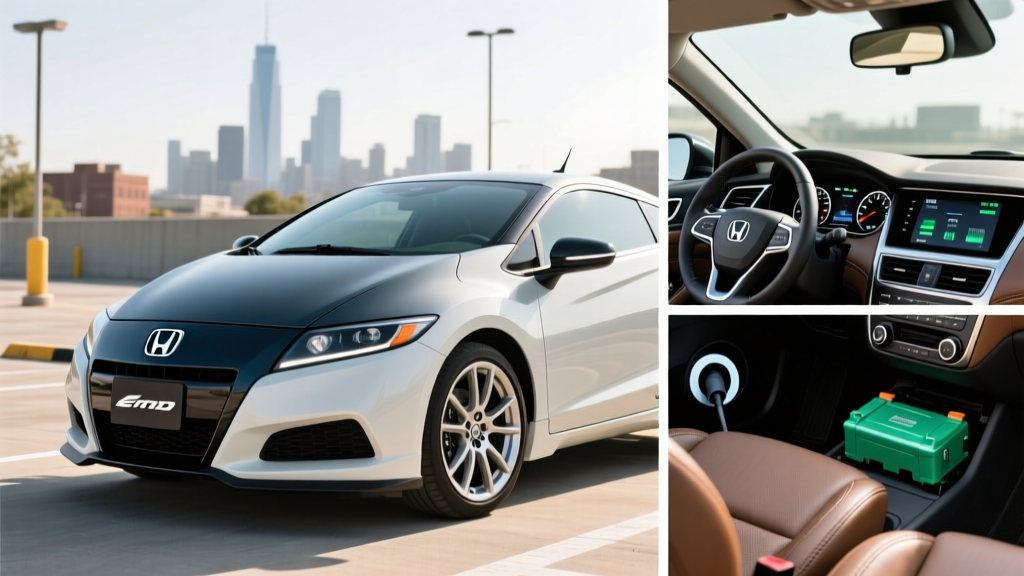
The 2013 Honda CR-Z hybrid occupies a strange corner of the used-car market: a two-seat sport coupe with a manual transmission option and a mild hybrid system that prioritizes driving engagement over maximum efficiency. Honda discontinued the CR-Z after the 2016 model year, so every example on the road today is at least a decade old. For buyers researching the 2013 Honda CR-Z hybrid as a used purchase, the critical questions are fuel economy, Integrated Motor Assist (IMA) battery longevity, and whether this aging hybrid still makes financial sense against modern alternatives.
The short answer: the CR-Z delivers around 36 MPG combined in EPA testing, offers a genuinely fun driving experience rare in the hybrid segment, and benefits from Honda's proven IMA reliability. But its mild hybrid system is fundamentally different from the full hybrids and plug-in hybrids available in 2026 — and understanding those differences is essential before you buy.
HEV vs PHEV vs EV: Where the CR-Z Fits
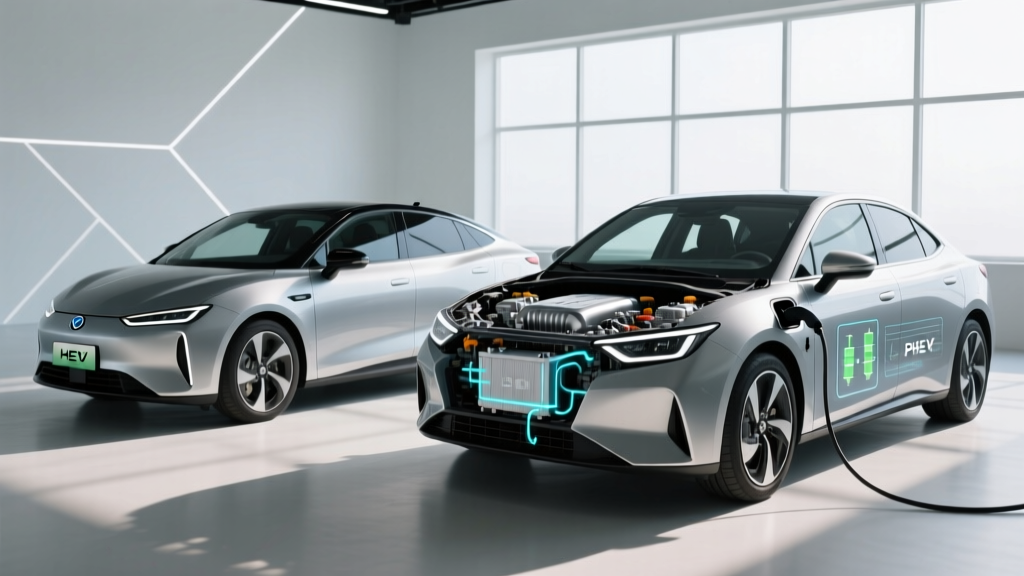
The 2013 Honda CR-Z is a conventional hybrid electric vehicle (HEV). It cannot be plugged in. Its small electric motor assists the gasoline engine during acceleration and captures energy during braking, but it cannot drive on electric power alone for any meaningful distance. This is a critical distinction that many used-car shoppers miss.
| Feature | HEV (CR-Z) | PHEV (e.g., Toyota RAV4 Prime) | BEV (e.g., Tesla Model 3) |
|---|---|---|---|
| Plug-in charging? | No | Yes (Level 1/2) | Yes (Level 1/2/DC) |
| Electric-only range | ~0 miles | 25-42 miles typical | 250-350+ miles |
| Gas engine? | Yes (primary) | Yes (backup) | No |
| Battery size | 0.5 kWh (NiMH) | 13-20 kWh (Li-ion) | 50-100 kWh (Li-ion) |
| Federal tax credit (new) | None | Up to $7,500 (§30D) | Up to $7,500 (§30D) |
| Used EV credit (§25E) | Not eligible | Up to $4,000 | Up to $4,000 |
The CR-Z's Integrated Motor Assist (IMA) system uses a 0.5 kWh nickel-metal hydride (NiMH) battery pack — roughly 1/100th the capacity of a modern BEV. The 10 kW electric motor sandwiched between the 1.5L engine and transmission provides torque fill during acceleration but never propels the car independently at meaningful speeds. Think of it as an electric turbocharger, not an electric drivetrain.
Fuel Economy: EPA Numbers and Real-World MPG
The 2013 Honda CR-Z was offered with either a 6-speed manual or a continuously variable transmission (CVT). Fuel economy varies by transmission, and the EPA data from fueleconomy.gov breaks it down clearly:
| Transmission | City MPG | Highway MPG | Combined MPG |
|---|---|---|---|
| CVT Automatic | 36 | 39 | 37 |
| 6-Speed Manual | 31 | 38 | 34 |
Real-World MPG vs. EPA Sticker
Owner-reported data on fueleconomy.gov shows the CVT-equipped CR-Z averaging 37-40 MPG combined in real-world driving, with some hypermilers reporting 42+ MPG on flat commuter routes. The manual transmission typically delivers 33-36 MPG in practice.
Hybrids generally exceed their EPA city estimates because regenerative braking recovers energy in stop-and-go traffic. The CR-Z follows this pattern: city MPG often runs 38-41 in moderate traffic, while sustained highway driving at 75+ MPH can drop efficiency to 34-36 MPG as aerodynamic drag overwhelms the small engine. Cold weather reduces fuel economy by roughly 5-8%, primarily from increased engine warm-up time and reduced battery assist contribution from the NiMH pack.
How Many MPG Does This Hybrid Get?
Expect 34-40 MPG combined depending on transmission choice, driving style, and climate. The CVT is the efficiency pick; the manual trades 2-4 MPG for driving engagement. For a 12,000-mile/year driver at $3.50/gallon, that translates to roughly $1,050-$1,235 in annual fuel costs — competitive with many 2026 non-hybrid compacts but well behind the 50+ MPG of a current Toyota Prius.
Powertrain: Engine, Motor, and Performance
The CR-Z pairs a 1.5-liter i-VTEC inline-four engine with Honda's IMA electric motor system. Here are the exact specs:
| Engine | 1.5L i-VTEC I4 |
| Engine horsepower | 130 HP @ 6,000 RPM |
| IMA electric motor | 10 kW (13 HP) |
| Combined system output | 130 HP / 140 lb-ft torque (CVT); 130 HP / 140 lb-ft (manual) |
| Hybrid battery | 0.5 kWh NiMH (nickel-metal hydride) |
| Transmission options | 6-speed manual or CVT |
| 0-60 MPH | ~9.1 seconds (CVT), ~8.8 seconds (manual) |
| Curb weight | ~2,690 lbs (CVT), ~2,646 lbs (manual) |
| Drivetrain | Front-wheel drive |
The CR-Z's 130 HP combined output and sub-2,700-lb curb weight give it a peppy character around town, though 0-60 in roughly 9 seconds won't embarrass any modern hot hatch. The IMA system's real contribution is torque fill at low RPM — the electric motor adds up to 58 lb-ft of torque below 1,000 RPM, smoothing out the 1.5L engine's low-end response and enabling the tall gearing that boosts highway efficiency.
Honda's Sport mode (activated via a button on the dash) sharpens throttle response, increases steering weight, and alters the IMA system's assist profile to prioritize acceleration over regeneration. It's a meaningful change in character, not just a marketing gimmick.
Hybrid Battery: Longevity, Warranty, and Replacement Cost
2013 Honda CR-Z IMA Battery Warranty
Original coverage: 8 years / 80,000 miles (10 years / 150,000 miles in CARB states: CA, CT, ME, MD, MA, NJ, NY, OR, RI, VT, WA)
Current status (2026): All 2013 models are now outside original warranty coverage in non-CARB states. CARB-state vehicles may still have residual coverage if under 150,000 miles, though the 10-year window expired in 2023 for all 2013 models.
Is This Hybrid Reliable and What Is Battery Replacement Cost?
The Honda IMA system has proven to be one of the most reliable hybrid architectures on the road. Unlike Toyota's more complex Hybrid Synergy Drive, the IMA uses a single thin electric motor between the engine and transmission with fewer failure points. The 0.5 kWh NiMH battery pack is small, operates within conservative state-of-charge windows, and generates less heat than larger packs — all factors that extend cell life.
That said, a 2013 CR-Z battery pack is now 13 years old. NiMH chemistry degrades more gracefully than early lithium-ion, typically losing 20-30% capacity over 150,000-200,000 miles rather than failing catastrophically. Symptoms of a degraded IMA battery include:
- Reduced electric assist during acceleration (car feels sluggish off the line)
- More frequent engine starts at stops (auto-stop feature disables)
- Lower fuel economy (2-5 MPG drop from baseline)
- IMA warning light on dash (indicates specific cell failure)
Battery replacement costs (2026 estimates):
- OEM Honda IMA battery pack: $2,000-$3,000 installed at a dealership
- Aftermarket/remanufactured pack: $1,200-$1,800 installed at an independent hybrid specialist
- Individual cell replacement: $400-$800 (requires specialized hybrid service shop; not all mechanics offer this)
The good news: because the CR-Z's battery is so small, replacement costs are a fraction of what you'd pay for a modern PHEV or BEV pack. A $1,500 remanufactured battery on a $6,000-$9,000 used CR-Z is a reasonable ownership expense that can extend the car's life by another 5-8 years.
Pricing, Tax Credits, and Used Market Value
The 2013 Honda CR-Z originally carried an MSRP of approximately $19,995 (base manual) to $23,815 (EX-L with navigation and CVT). In the 2026 used market, clean-title examples typically trade between $6,000 and $10,000 depending on mileage, condition, and transmission. Manual-equipped cars often command a $500-$1,000 premium among enthusiasts.
Does It Qualify for Any Tax Credit?
No. The 2013 Honda CR-Z does not qualify for any current federal tax credit:
- §30D New Clean Vehicle Credit ($7,500): Only applies to new vehicle purchases. The CR-Z is discontinued and unavailable new.
- §25E Previously-Owned Clean Vehicle Credit (up to $4,000): This credit applies to used BEVs and PHEVs with at least 4 kWh of battery capacity that are plugged in to charge. The CR-Z is a conventional HEV with a 0.5 kWh battery and no plug-in capability. It is not eligible for the used EV credit.
For the full rules on clean vehicle credits, consult the IRS guidance on clean vehicle credits. Some states offer their own incentives for used hybrids or high-efficiency vehicles, but these vary widely by jurisdiction — check your state's DMV or energy office for current programs.
Who Should Buy the 2013 CR-Z Hybrid?
Choose the 2013 Honda CR-Z Hybrid If:
- You want an affordable, fuel-efficient two-seat coupe with a manual transmission
- You prioritize driving engagement over maximum MPG (34-37 combined vs. 50+ for a Prius)
- You have a short-to-moderate commute and don't need rear seats or significant cargo space
- You want Honda reliability with low hybrid-system maintenance risk
- You lack home charging access and need a vehicle that never requires plugging in
Look at a Modern Hybrid, PHEV, or BEV Instead If:
- You need four seats, substantial cargo room, or modern safety tech (AEB, lane-keeping, adaptive cruise)
- You want 50+ MPG combined (current Toyota Prius: 57 MPG EPA)
- You want electric-only driving for daily commuting (consider a used PHEV like the Toyota RAV4 Prime or a BEV like the Chevrolet Bolt EUV)
- You want federal tax credit eligibility — used BEVs and PHEVs may qualify for up to $4,000 under §25E
- You want current-generation ADAS features (the 2013 CR-Z has no forward collision warning, lane departure alert, or automatic emergency braking)
Hybrid vs PHEV vs EV — Which Fits You?
The CR-Z makes sense as a budget-conscious enthusiast's daily driver. But the hybrid landscape has shifted dramatically since 2013. If your priority is maximum fuel savings, a used Toyota Prius (50+ MPG, four seats, proven reliability) or a used PHEV with 25-40 miles of electric range will deliver lower operating costs. If you have home charging and a sub-40-mile commute, a used BEV like the Nissan Leaf or Chevrolet Bolt eliminates fuel costs entirely and may qualify for the $4,000 federal used-EV credit. The CR-Z's appeal is emotional, not economic — it's the only hybrid from its era that genuinely rewards the driver.
Pros and Cons at a Glance
Pros
- Available 6-speed manual — rare in any hybrid, any era
- Light weight (2,646-2,690 lbs) gives nimble handling
- Honda IMA reliability track record is strong
- Small battery = low replacement cost ($1,200-$3,000)
- 34-40 real-world MPG without plugging in
- Sport mode meaningfully changes driving character
- Distinctive design stands out in the used market
Cons
- Two seats only — zero practicality for families
- Minimal cargo space (20.9 cu ft behind seats, no hatch)
- No modern ADAS (no AEB, lane-keeping, or blind-spot monitoring)
- Outdated infotainment (no Apple CarPlay/Android Auto, small screen)
- 34-37 MPG combined trails current hybrids by 15-20 MPG
- No federal tax credit eligibility (new or used)
- NiMH battery is 13+ years old — budget for replacement
- Discontinued since 2016 — parts availability declining for body/interior
Frequently Asked Questions
How many MPG does the 2013 Honda CR-Z hybrid get?
The EPA rates the CVT-equipped 2013 CR-Z at 36 city / 39 highway / 37 combined MPG. The 6-speed manual is rated at 31/38/34. Real-world owner averages typically fall between 34 and 40 MPG combined, with city driving often exceeding the EPA estimate thanks to regenerative braking.
Can I plug in the 2013 Honda CR-Z to charge?
No. The CR-Z is a conventional hybrid (HEV), not a plug-in hybrid (PHEV). It charges its small 0.5 kWh battery exclusively through regenerative braking and the gasoline engine. There is no charging port and no electric-only driving mode.
How long does the CR-Z hybrid battery last?
Honda IMA NiMH batteries typically last 150,000-200,000 miles before significant degradation. Many CR-Z owners report original batteries still functioning at 130,000+ miles with reduced but acceptable assist levels. A 2013 model's battery is now 13 years old — budget $1,200-$3,000 for replacement if the IMA system shows warning signs.
Is the 2013 CR-Z hybrid reliable?
Yes, with caveats. The IMA hybrid system is mechanically simple and proven reliable. The 1.5L engine is a known Honda design with a strong longevity record. The main reliability concern for a 2013 model is age-related: rubber components, suspension bushings, and the hybrid battery are all past their design life. A pre-purchase inspection by a hybrid-qualified mechanic is essential.
Does the 2013 Honda CR-Z qualify for a tax credit?
No. The CR-Z does not qualify for the §30D new vehicle credit (it's discontinued) or the §25E used clean vehicle credit (it's a conventional hybrid, not a plug-in vehicle, and its battery is below the 4 kWh threshold). Check your state's incentive programs, as a few states offer rebates for high-MPG used vehicles, but these are uncommon.
How does the CR-Z compare to a Toyota Prius for fuel economy?
The 2013 CR-Z (37 MPG combined CVT) trails the current-generation Toyota Prius (57 MPG combined EPA) by roughly 20 MPG. Even compared to the 2013 Prius (50 MPG combined), the CR-Z gives up 13 MPG. The CR-Z trades efficiency for driving dynamics — it's a sport coupe first, a fuel-sipper second.
What should I check before buying a used 2013 CR-Z?
Prioritize a hybrid-system diagnostic scan (checking individual IMA cell voltages), a compression test on the 1.5L engine, and inspection of the idle-stop system function. Verify that the auto-stop feature engages at red lights — if it doesn't, the IMA battery may be degraded. Check for timing chain rattle on cold start (a known issue on high-mileage 1.5L Honda engines) and inspect suspension components for age-related wear.
Sources: EPA fuel economy data from fueleconomy.gov; federal tax credit rules from IRS.gov; safety ratings from NHTSA.