Quick Verdict: The Honda CR-V Hybrid Touring at a Glance
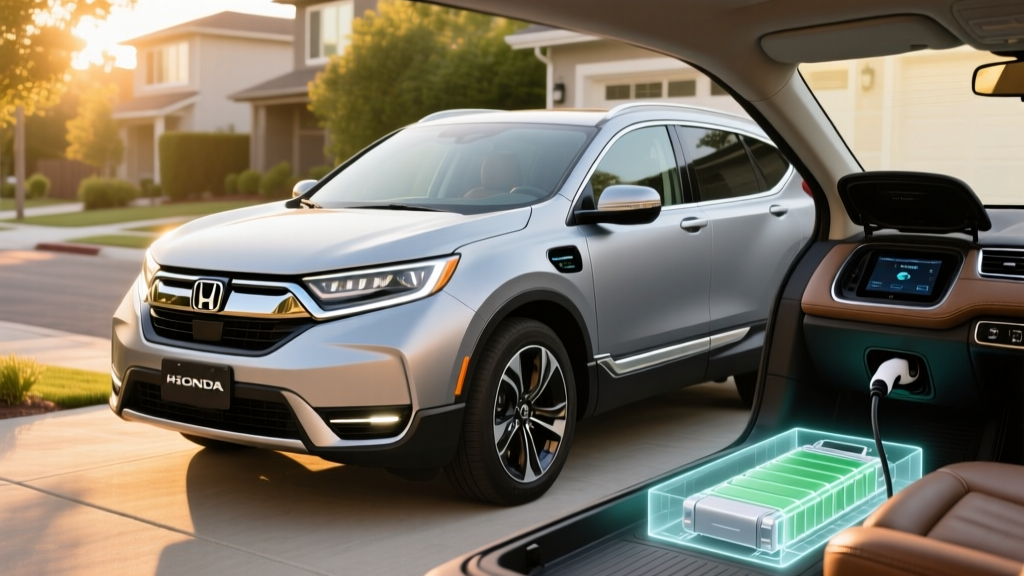
The Honda CR-V Hybrid Touring remains the top-trim anchor of Honda's best-selling compact SUV lineup, pairing a 2.0-liter Atkinson-cycle four-cylinder with a two-motor hybrid system for 204 combined horsepower. For the 2026 model year, it delivers an EPA-estimated 40 MPG combined with standard all-wheel drive — a compelling package for buyers who want electric-like efficiency without ever plugging in.
This is a conventional hybrid electric vehicle (HEV), not a plug-in hybrid (PHEV). You fuel it with gasoline, and the hybrid system handles energy recapture and electric assist automatically. There is no plug, no electric-only driving mode to manage, and no range anxiety beyond what you'd experience with any gas car.
| Spec | Value |
|---|---|
| Powertrain | 2.0L Atkinson I-4 + two-motor hybrid (AWD) |
| Combined Horsepower | 204 hp |
| Combined Torque | 247 lb-ft (electric motor) |
| EPA MPG (City / Hwy / Combined) | 40 / 34 / 37 MPG (AWD) |
| Fuel Tank | 14.0 gallons |
| Total Driving Range | ~518 miles (EPA est.) |
| 0–60 mph | ~7.8 seconds |
| Cargo Volume (behind rear seats) | 36.3 cu ft |
| MSRP (Touring AWD) | $40,850 |
| Federal Tax Credit | Not eligible (§30D is for PHEVs/BEVs only) |
| Hybrid Battery Warranty | 8 years / 100,000 miles |
HEV vs PHEV: What the CR-V Hybrid Actually Is
Honda's CR-V lineup offers only a conventional hybrid — there is no plug-in variant for the US market. Understanding this distinction matters before you shop:
| Feature | HEV (CR-V Hybrid) | PHEV (e.g., Toyota RAV4 Prime) |
|---|---|---|
| Plug-in charging? | No — gas only | Yes — plug in for electric-only miles |
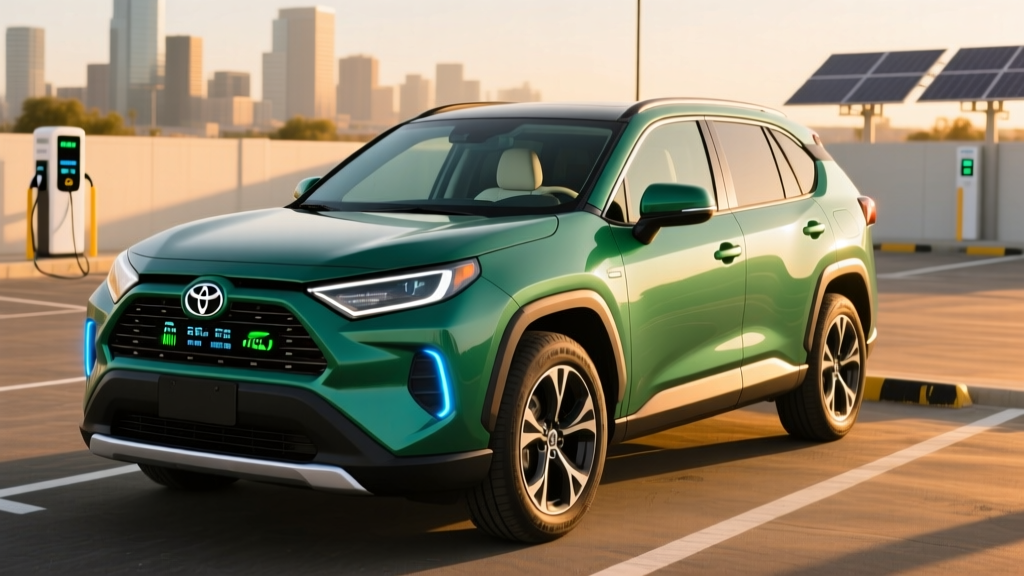
| Electric-only range | None (EV assist only) | Typically 30–42 miles |
| Battery size | ~1.1 kWh (small buffer) | ~18–20 kWh usable |
| Federal tax credit | No | Up to $7,500 (if eligible) |
| Home charging needed? | No | Recommended for full benefit |
| Complexity | Low — drive like a gas car | Moderate — manage charge/blend |
The CR-V Hybrid's lithium-ion battery pack is small — roughly 1.1 kWh — and exists to buffer energy recaptured from regenerative braking and engine surplus. It powers the electric motors during low-speed driving, acceleration assist, and idle stop-start, but you cannot plug it in and you cannot drive meaningful distances on electric power alone. Honda's two-motor system operates primarily in series-hybrid mode at lower speeds (engine generates electricity, motors drive wheels) and switches to direct engine drive at highway cruising.
Fuel Economy: EPA Ratings and Real-World MPG
The EPA rates the 2026 CR-V Hybrid AWD at 40 city / 34 highway / 37 combined MPG. Front-wheel-drive trims (not available on Touring) bump highway slightly to 36 MPG for a 40 combined rating. These figures come from fueleconomy.gov.
| Drivetrain | City | Highway | Combined |
|---|---|---|---|
| AWD (Touring, Sport Touring) | 40 MPG | 34 MPG | 37 MPG |
| FWD (Sport, Sport-L) | 43 MPG | 36 MPG | 40 MPG |
Real-World MPG: What Owners Actually See
Honda's two-motor hybrid system excels in city driving, where regenerative braking and frequent idle stops maximize electric assist. In mixed suburban driving, owners consistently report 36–41 MPG — often meeting or slightly exceeding the EPA combined estimate. Highway driving at 75+ mph drops efficiency to roughly 30–33 MPG, as the engine shoulders more of the load and aerodynamic drag increases.
In cold weather (below 30°F), expect a 5–10% reduction in fuel economy as the engine runs more frequently for cabin heat and the battery operates less efficiently. This is far less dramatic than the 20–30% range loss a full EV experiences in winter, but it's measurable.
Real-world tip: The CR-V Hybrid's trip computer tends to read 1–2 MPG optimistic compared to hand-calculated fill-up data. Use the pump method for true accuracy over several tanks.
Powertrain and Driving Dynamics
The CR-V Hybrid uses Honda's fourth-generation two-motor hybrid system. The 2.0-liter Atkinson-cycle inline-four produces 145 hp on its own, but the drive motor contributes up to 181 hp and 247 lb-ft of torque. Combined system output is rated at 204 hp.
The driving experience is smooth and largely seamless. At low speeds, the SUV launches on electric torque with quiet responsiveness. The engine engages as a generator rather than driving the wheels directly until roughly 45–55 mph, at which point a lock-up clutch connects the engine to the front axle for efficient highway cruising. The transition between modes is nearly imperceptible from the driver's seat.
Acceleration is adequate rather than quick — the 0–60 mph time of approximately 7.8 seconds trails the turbocharged gas CR-V (1.5T at ~7.5 seconds) and significantly trails PHEV competitors like the RAV4 Prime (5.7 seconds with 302 hp). For daily commuting and highway merging, the hybrid has plenty of torque off the line, but passing maneuvers at speed require planning.
The Touring trim includes Honda's torque-vectoring AWD system, which can send up to 50% of power to the rear axle and brake individual wheels to redirect torque through corners. It's a competent system for rain and light snow, though ground clearance (8.2 inches) limits serious off-road use.
Touring Trim: What You Get for $40,850
The Touring sits at the top of the CR-V Hybrid range. Key standard equipment includes:
- 9-inch touchscreen with wireless Apple CarPlay and Android Auto
- 12-speaker Bose premium audio system
- Wireless phone charging pad
- Heated and ventilated front seats, heated rear seats
- Heated steering wheel
- Hands-free power liftgate
- Honda Sensing suite (adaptive cruise, lane-keeping, collision mitigation)
- Low-speed braking control and traffic jam assist
- 19-inch alloy wheels
- Panoramic moonroof
The $40,850 MSRP includes destination. Compared to the Sport Touring Hybrid ($39,850), the Touring adds the Bose audio, ventilated front seats, heated rear seats, and the panoramic moonroof. Both share the identical hybrid powertrain and EPA ratings.
Tax Credits and Incentives
Because the CR-V Hybrid is a conventional HEV — not a plug-in — it does not qualify for the federal §30D clean vehicle tax credit. That credit, worth up to $7,500, applies only to battery electric vehicles (BEVs) and plug-in hybrids (PHEVs) that meet battery sourcing, MSRP caps, and buyer income limits, per IRS guidelines.
Some states and utilities offer small rebates for conventional hybrids, but these are increasingly rare as incentive programs shift toward plug-in vehicles. Check your local utility and state energy office for any current offers.
Battery Warranty, Lifespan, and Replacement Cost
Honda Hybrid Battery Warranty: 8 years / 100,000 miles (whichever comes first). In California Air Resources Board (CARB) states, the warranty extends to 10 years / 150,000 miles for the hybrid battery and related emissions components.
The CR-V Hybrid's lithium-ion battery pack is small and operates within a conservative state-of-charge window — Honda never fully charges or fully depletes it, which significantly extends cycle life. Most Honda hybrid batteries from the Accord and CR-V lineages have demonstrated strong longevity, with many exceeding 150,000 miles before any measurable capacity loss triggers a warranty claim.
Should the hybrid battery require replacement out of warranty, expect a cost between $2,000 and $4,000 for a new OEM pack installed at a Honda dealer. Refurbished or aftermarket packs may be available for $1,200–$2,000. This is substantially less than a full EV battery replacement ($8,000–$20,000+) because the pack is small.
The electric drive motors and power control unit are covered under the same hybrid system warranty. These components have proven extremely reliable in Honda's fleet — motor failures are exceedingly rare.
Long-Term Reliability
Honda's hybrid system has a strong reliability track record. The two-motor architecture eliminates the traditional transmission — there is no planetary gearset or conventional CVT to fail. The engine runs fewer hours than in a non-hybrid because it shuts off at stops and during low-speed electric driving, reducing wear. Consumer Reports and IIHS have consistently rated the CR-V well; the 2026 model carries an IIHS Top Safety Pick designation when equipped with specific headlights.
CR-V Hybrid Touring vs the Alternatives
Pros
- Strong city MPG (40) with smooth, quiet hybrid operation
- No plug required — zero lifestyle change from a gas car
- Spacious cargo area (36.3 cu ft) and rear seat
- Standard AWD on Touring trim
- Conservative battery management = proven longevity
- Comprehensive Honda Sensing safety suite standard
Cons
- Highway MPG (34) trails some competitors
- No plug-in option in the CR-V lineup
- Modest 204 hp — slower than turbo gas and PHEV rivals
- Touring trim pushes past $40K with no tax credit offset
- Infotainment still lacks a volume knob (touch-sensitive)
- No DC fast charging capability (not applicable as an HEV)
How It Compares
| Model | Combined MPG | HP | AWD MSRP (Top) | PHEV Option? |
|---|---|---|---|---|
| Honda CR-V Hybrid Touring | 37 | 204 | $40,850 | No |
| Toyota RAV4 Hybrid Limited | 39 | 219 | $40,345 | Yes (Prime) |
| Hyundai Tucson Hybrid Limited | 35 | 226 | $40,250 | Yes (PHEV) |
| Kia Sportage Hybrid SX-Prestige | 38 | 227 | $39,490 | Yes (PHEV) |
The RAV4 Hybrid edges the CR-V on combined MPG and offers the RAV4 Prime PHEV variant with 42 miles of electric-only range for buyers who can charge at home. The Tucson and Sportage hybrids offer more horsepower but slightly lower real-world efficiency. The CR-V Hybrid's advantage is refinement — its series-hybrid operation is smoother and quieter than Toyota's planetary-gear eCVT under hard acceleration.
Who Should Choose the CR-V Hybrid Touring?
Choose the CR-V Hybrid Touring if:
- You drive primarily in city and suburban conditions where hybrid efficiency shines
- You cannot charge at home or at work (apartment, street parking, no garage outlet)
- You want a premium compact SUV with strong safety ratings and a comfortable ride
- You plan to own the vehicle 8+ years and value Honda's reliability reputation
- You want AWD without the fuel-economy penalty of a gas-only AWD SUV
Consider a PHEV instead if:
- You have home Level 2 charging and a commute under 35 miles (a RAV4 Prime or Tucson PHEV can cover most trips on electricity alone)
- You want federal tax credit eligibility (up to $7,500 if income and sourcing rules are met)
Consider a full EV if:
- You have reliable home charging and your daily driving stays under 250 miles
- You want zero tailpipe emissions and the lowest per-mile fuel cost
- You're eligible for the full $7,500 federal credit on a qualifying BEV
The CR-V Hybrid Touring occupies a specific sweet spot: it's the right choice for buyers who want maximum efficiency with minimum lifestyle change. You gas up, you drive, the hybrid system handles the rest. For the roughly 60% of US drivers who lack reliable home charging access, a conventional hybrid like this remains the most practical path to significantly lower fuel consumption.
Frequently Asked Questions
How many MPG does the Honda CR-V Hybrid Touring get?
The EPA rates the 2026 CR-V Hybrid Touring AWD at 40 city / 34 highway / 37 combined MPG. In real-world mixed driving, most owners report 36–41 MPG, with city-heavy driving yielding the best results.
Can I plug in the CR-V Hybrid to charge it?
No. The CR-V Hybrid is a conventional hybrid (HEV), not a plug-in hybrid (PHEV). It charges its small battery through regenerative braking and engine-generated electricity. There is no plug and no electric-only driving range.
Does the Honda CR-V come in a plug-in hybrid version?
Not in the US market. Honda does not currently offer a PHEV version of the CR-V in North America. If you want a Honda plug-in, your closest option is the discontinued Clarity PHEV (used market only) or waiting for future Honda PHEV models. Competitors like the Toyota RAV4 Prime and Hyundai Tucson PHEV fill this gap.
How long will the CR-V Hybrid battery last?
Honda covers the hybrid battery for 8 years / 100,000 miles (10 years / 150,000 miles in CARB states). In practice, Honda's conservative battery management — keeping the pack within a narrow charge window — has resulted in strong longevity, with many Honda hybrid batteries lasting well beyond 150,000 miles without significant degradation.
What does it cost to replace the hybrid battery?
A new OEM hybrid battery replacement at a Honda dealer typically costs $2,000–$4,000 including labor. Refurbished packs are available for $1,200–$2,000. This is far less than an EV battery replacement due to the small pack size (~1.1 kWh).
Does the CR-V Hybrid qualify for any tax credits?
No. The federal §30D clean vehicle credit applies only to plug-in vehicles (BEVs and PHEVs). Conventional hybrids like the CR-V Hybrid do not qualify. Some state or utility programs may offer small rebates, but these are uncommon and vary by location.
Is the CR-V Hybrid slower than the gas CR-V?
Slightly. The hybrid's 204 hp and ~7.8-second 0–60 time trail the 1.5L turbo gas model's ~7.5-second run. However, the hybrid delivers stronger low-end torque (247 lb-ft from the electric motor vs 179 lb-ft from the turbo), so around-town acceleration feels responsive. The difference is most noticeable during highway passing at higher speeds.
Hybrid vs PHEV vs EV — which should I buy?
If you lack home charging: choose a hybrid (HEV) like the CR-V Hybrid. If you have home charging and a short commute: a PHEV gives you electric-only daily driving with gas backup for road trips. If you have home charging, drive under 250 miles daily, and want the lowest running costs: a full EV (BEV) offers the best economics and zero tailpipe emissions. Your charging access is the single biggest factor in this decision.