Quick Verdict: The Efficiency Hatchback to Beat
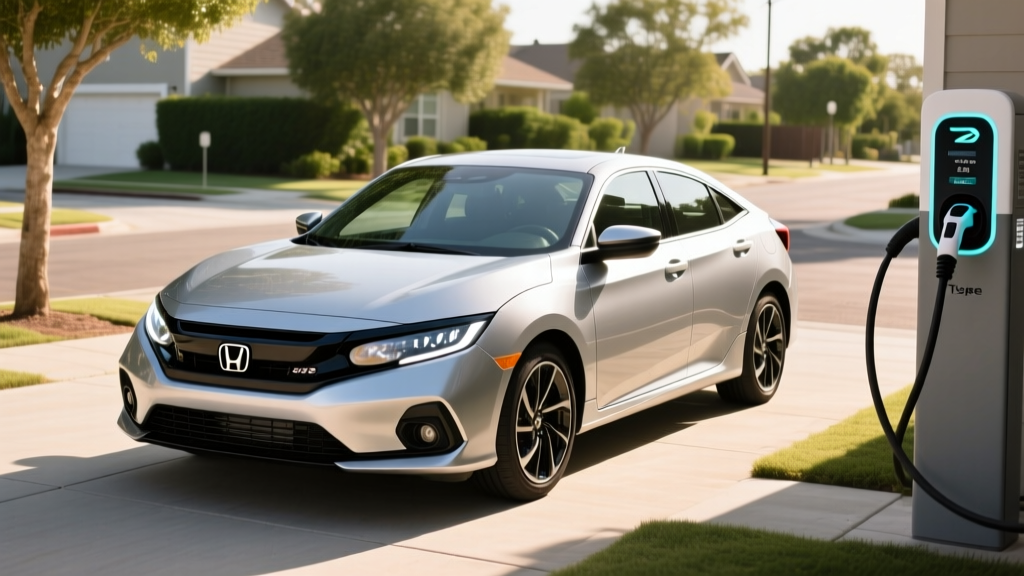
The 2026 Honda Civic Hybrid Hatchback occupies a rare sweet spot: genuine 50 MPG combined efficiency, 200 horsepower from its two-motor hybrid system, and a practical hatchback cargo area — all without ever needing to plug in. For buyers who want EV-like city efficiency but can't charge at home, this conventional hybrid (HEV) is arguably the most compelling compact car on the market. It is not a plug-in hybrid, and it doesn't pretend to be. That honesty is part of its appeal.
| Spec | Value |
|---|---|
| Powertrain | 2.0L Atkinson-cycle 4-cyl + two-motor hybrid system |
| Combined Horsepower | 200 hp (146 hp engine + 184 hp drive motor) |
| Combined Torque | 232 lb-ft (from drive motor) |
| EPA MPG (City / Hwy / Combined) | 50 / 45 / 48 (Sport Touring); up to 51/48/50 (Sport) |
| Fuel Tank | 10.6 gallons |
| Total Range | ~510–530 miles |
| 0–60 mph | ~6.7 seconds |
| Cargo Volume (rear seats up / down) | 24.4 / 46.2 cu ft |
| Hybrid Battery Warranty | 8 years / 100,000 miles (10 yr / 150,000 mi in CARB states) |
| Base MSRP (Sport trim) | $31,450 |
| Top Trim MSRP (Sport Touring) | $34,850 |
HEV vs. PHEV: What the Civic Hybrid Actually Is
Before diving into numbers, it's critical to clarify what this car is — and what it isn't. The 2026 Civic Hybrid Hatchback is a conventional hybrid (HEV), not a plug-in hybrid (PHEV). It charges its small lithium-ion battery exclusively through regenerative braking and the gasoline engine. There is no charge port, no electric-only driving mode of meaningful distance, and no home charging setup required.
| Feature | HEV (Civic Hybrid) | PHEV (e.g., Toyota Prius Prime) | BEV (e.g., Chevy Bolt EV) |
|---|---|---|---|
| Plug-in Required? | No | Yes (Level 1/2) | Yes (Level 2 / DC fast) |
| Electric-Only Range | ~1 mi at low speed | 35–44 mi typical | 220–340 mi typical |
| Home Charging Needed | No | Recommended | Essential |
| EPA Combined Efficiency | 48–50 MPG | 48–52 MPG + 100+ MPGe | 100–120 MPGe |
| Federal Tax Credit (§30D) | Not eligible | Up to $7,500 (if eligible) | Up to $7,500 (if eligible) |
| Best For | No home charging, long trips | Short commutes + road trips | Home charging + daily driving |
If you were searching for a Civic plug-in hybrid, it doesn't exist for 2026. Honda's PHEV efforts in the U.S. are currently focused on the CR-V and Accord in certain markets, and the Clarity PHEV was discontinued. The Civic Hybrid is strictly an HEV — and for many buyers, that's actually the right call.
Fuel Economy: EPA Numbers and Real-World MPG
Honda's fourth-generation two-motor hybrid system pairs a 2.0-liter Atkinson-cycle four-cylinder engine with two electric motors. The drive motor handles most acceleration duties (acting like a series hybrid at low and moderate speeds), while the engine directly drives the wheels at highway cruising speeds through a clutch-based lock-up mechanism. This architecture is key to why the Civic Hybrid achieves such strong numbers.
| Trim | City MPG | Highway MPG | Combined MPG |
|---|---|---|---|
| Sport | 51 | 48 | 50 |
| Sport Touring | 50 | 45 | 48 |
Real-world expectations: Honda's hybrid system excels in city driving, where the electric drive motor does the heavy lifting and regenerative braking recaptures energy constantly. In our experience and consistent owner reports, city MPG often meets or slightly exceeds the EPA sticker — 51–53 MPG in stop-and-go traffic is achievable, especially in mild weather. Highway driving tells a different story: at sustained 75–80 mph, expect 42–44 MPG on the Sport Touring due to aerodynamic drag and the engine operating in direct-drive mode. Cold weather (below 35°F) reduces efficiency by roughly 8–12% as the engine runs more frequently for cabin heat and battery conditioning.
For context, the non-hybrid 2026 Civic Hatchback with the 1.5L turbo achieves 30/38/33 MPG (city/highway/combined) per fueleconomy.gov. The hybrid nearly doubles city efficiency and delivers a 50% improvement in combined MPG — a significant gain that pays dividends over years of ownership.
Powertrain and Driving Impressions
The 200 combined horsepower figure matters because it makes the Civic Hybrid genuinely quick for a car in this efficiency class. The 184 hp drive motor delivers instant torque (232 lb-ft) from a stop, giving the car a responsive, EV-like feel in city acceleration. The 0–60 mph time of approximately 6.7 seconds puts it ahead of the Toyota Prius (7.2 seconds for the AWD model) and comfortably ahead of the non-hybrid Civic's ~7.5-second run.
The two-motor system operates in three modes seamlessly:
- EV Drive: Battery powers the drive motor only — used at low speeds, light loads, and during deceleration coasting. Limited to roughly one mile at very low speed.
- Hybrid Drive: Engine spins the generator motor, which feeds electricity to the drive motor. This series-hybrid mode covers most city and suburban driving.
- Engine Drive: A lock-up clutch connects the engine directly to the wheels for efficient highway cruising.
The transitions between modes are remarkably smooth — one of Honda's engineering strengths with this generation of the system. There's none of the rubber-band drone typical of older CVT-based hybrids. The hatchback's slightly longer wheelbase and rear-biased weight distribution (the hybrid battery sits under the rear seats) also give it composed handling that edges out the sedan variant in feel.
Pricing, Trims, and Tax Credit Eligibility
The 2026 Civic Hybrid Hatchback is offered in two trims:
- Sport: $31,450 MSRP (includes $1,150 destination). Adds hybrid-specific 18-inch wheels, sport styling, heated front seats, wireless Apple CarPlay/Android Auto, Honda Sensing ADAS suite.
- Sport Touring: $34,850 MSRP. Adds leather-trimmed seats, Bose 12-speaker audio, wireless phone charging, heated rear seats, low-speed braking control, and a power tailgate.
Federal Tax Credit: Not Eligible
The 2026 Honda Civic Hybrid does not qualify for the IRS §30D Clean Vehicle Credit. That credit — up to $7,500 — applies only to plug-in electric vehicles (BEVs and PHEVs) with sufficient battery capacity and compliant critical-mineral and battery-component sourcing. Conventional hybrids like the Civic Hybrid have never been eligible under §30D. There is no federal tax incentive for choosing this vehicle over a gas-only Civic.
Some states offer rebates or reduced registration fees for hybrids, but these vary widely. Check your state's energy or DMV website for current programs. For federal rules, consult the IRS Clean Vehicle Tax Credits page.
Reliability, Battery Warranty, and Long-Term Costs
Honda's hybrid systems have proven exceptionally durable over multiple generations. The fourth-generation two-motor architecture uses fewer mechanical wear components than traditional planetary-gear hybrid systems (no CVT belt, no complex planetary gearset), which reduces long-term failure points. The Civic Hybrid's lithium-ion battery pack is compact — roughly 1.0 kWh of usable capacity — and operates in a shallow state-of-charge window that minimizes degradation stress.
Pros
- 50 MPG combined — class-leading efficiency for a non-plug-in hatch
- 200 hp with strong electric torque feel
- No charging infrastructure needed
- Honda Sensing ADAS standard on all trims
- 24.4 cu ft cargo with seats up (46.2 folded)
- Proven hybrid reliability track record
Cons
- No federal tax credit eligibility
- Highway MPG trails city MPG noticeably
- Sport Touring pushes into $35K territory
- No AWD option (available on Toyota Prius)
- Small battery means no meaningful EV-only range
Hybrid Battery Warranty: Honda covers the hybrid battery for 8 years or 100,000 miles nationwide, and 10 years or 150,000 miles in states that follow California Air Resources Board (CARB) emissions standards — which includes California, New York, Massachusetts, and roughly a dozen other states. The warranty covers battery capacity loss below a defined threshold and defects.
Battery replacement cost: Should the hybrid battery need replacement out of warranty (rare before 150,000+ miles based on historical Honda hybrid data), expect a dealer-installed replacement to cost between $2,500 and $3,800. Independent hybrid specialists can often source refurbished packs for $1,500–$2,200 installed. For comparison, a full BEV battery replacement runs $8,000–$20,000+ — the Civic Hybrid's small pack is far less expensive to service.
According to IIHS, the Civic Hatchback earns top marks in crashworthiness testing, and the Honda Sensing suite (standard on all trims) includes adaptive cruise control, lane-keeping assist, collision mitigation braking, and traffic sign recognition. Note: Honda Sensing is a Level 2 driver-assistance system — the driver must remain fully engaged at all times.
Who Should Buy the Civic Hybrid Hatchback — And Who Shouldn't
Choose the Civic Hybrid Hatchback If:
- You can't charge at home (apartment, street parking, no garage) but want maximum fuel efficiency.
- Your driving is a mix of city commuting and highway trips — the hybrid system handles both well.
- You want hatchback cargo versatility without stepping up to an SUV.
- You prioritize low running costs and proven reliability over cutting-edge EV tech.
- You regularly drive 300+ miles in a day and don't want to plan charging stops.
Look at a PHEV or Full EV Instead If:
- You have reliable Level 2 home charging and a short daily commute — a PHEV like the Toyota Prius Prime (44 mi EV range) or a BEV like the Hyundai Ioniq 5 would eliminate most gasoline use entirely.
- You want to claim the $7,500 federal tax credit (§30D) — only plug-in vehicles qualify.
- You want to drive on electricity alone for daily commuting without burning any fuel.
- You live in a CARB state with strong EV rebates (e.g., California's $2,000+ Clean Fuel Rebate for BEVs).
The math is straightforward: at 50 MPG combined and $3.40/gallon gas, the Civic Hybrid costs roughly $0.068 per mile in fuel. A comparable gas-only Civic at 33 MPG combined costs $0.103 per mile — a 51% increase. Over 15,000 miles annually, the hybrid saves approximately $525 per year in fuel, or $2,625 over five years. That nearly offsets the hybrid's price premium over a gas-only Civic Sport.
Frequently Asked Questions
How many MPG does the 2026 Honda Civic Hybrid Hatchback get?
The Sport trim achieves 51 city / 48 highway / 50 combined MPG. The Sport Touring trim rates at 50 city / 45 highway / 48 combined. Real-world city driving often matches or slightly exceeds the EPA sticker, while sustained highway driving at 75+ mph typically yields 42–44 MPG.
Is the Civic Hybrid a plug-in hybrid? Can I charge it at home?
No. The Civic Hybrid is a conventional hybrid (HEV). It has no charge port and cannot be plugged in. The battery recharges through regenerative braking and the gasoline engine. If you want plug-in capability, you'll need to look at a PHEV or BEV.
How far can the Civic Hybrid drive on electric power alone?
Less than one mile, and only at very low speeds (under 25 mph) with a light throttle. The battery is approximately 1.0 kWh — far too small for meaningful electric-only driving. The electric motor's primary role is assisting acceleration and enabling engine-off coasting to boost efficiency.
Does the 2026 Civic Hybrid qualify for any federal tax credit?
No. The IRS §30D Clean Vehicle Credit applies only to plug-in electric vehicles (BEVs and PHEVs) meeting battery sourcing and MSRP requirements. Conventional hybrids have never been eligible. Some states may offer hybrid-specific incentives — check your state's energy office for details.
Is the Honda Civic Hybrid reliable? What about battery replacement?
Honda's hybrid systems have an excellent reliability record across multiple model generations. The hybrid battery is warranted for 8 years/100,000 miles (10 years/150,000 miles in CARB states). Out-of-warranty replacement costs $2,500–$3,800 at a dealer or $1,500–$2,200 at an independent hybrid shop. Most Honda hybrid batteries last well beyond 150,000 miles with normal use.
How does the Civic Hybrid compare to the Toyota Prius?
The 2026 Toyota Prius (57 MPG combined, FWD) offers higher EPA efficiency but lower power (194 hp) and a liftback design rather than a traditional hatchback. The Prius also offers AWD (54 MPG combined) and a PHEV variant (Prius Prime, 44 mi EV range). The Civic Hybrid prioritizes driving dynamics and interior quality; the Prius prioritizes maximum efficiency and powertrain choice.
What is the total driving range on a full tank?
With a 10.6-gallon fuel tank and 48–50 MPG combined, expect 510–530 miles of total range. Real-world highway-heavy driving may reduce this to 450–475 miles between fill-ups.
Sources: fueleconomy.gov (EPA estimates), Honda Newsroom official specifications, IRS §30D Clean Vehicle Credits. Pricing and specifications reflect 2026 model year data at time of publication. Tax credit eligibility is subject to change — consult a tax professional for personal guidance.