Quick Verdict: The 2019 Highlander Hybrid in 2026
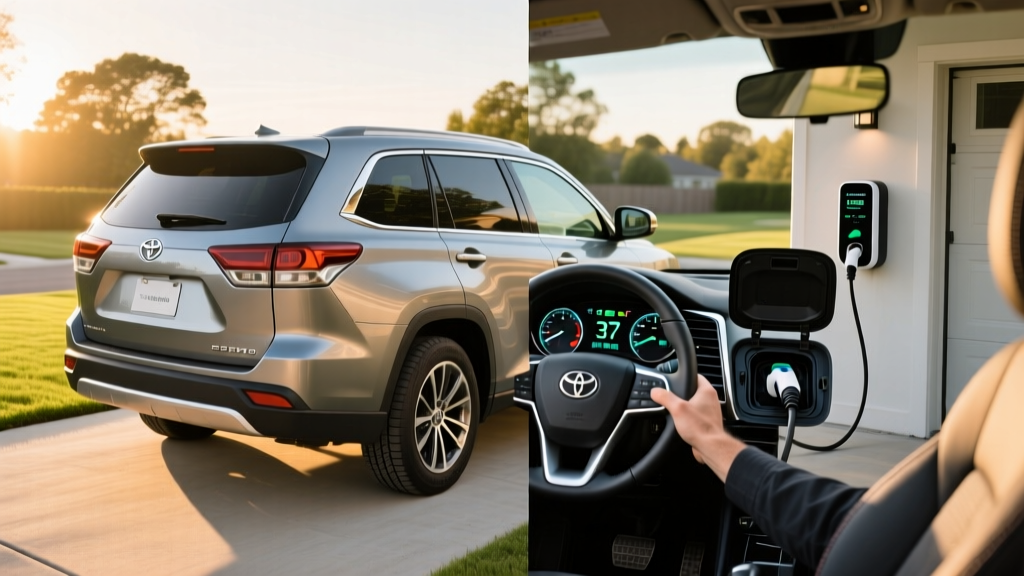
If you're searching for 2019 Highlander Hybrid MPG data before pulling the trigger on a used three-row family hauler, you've found the right breakdown. The 2019 Toyota Highlander Hybrid remains one of the most efficient midsize SUVs Toyota ever built in its generation, delivering an EPA-estimated 29 MPG combined (29 city / 27 highway) from a naturally aspirated V6 paired with Toyota's proven Hybrid Synergy Drive. In 2026, it continues to hold strong resale value and offers buyers a bridge between gas-only SUVs and full battery-electric vehicles — no plug required.
This guide covers exact fuel economy numbers, real-world MPG expectations, the hybrid battery warranty and replacement cost landscape, and how this model stacks up against newer hybrids, PHEVs, and full EVs for today's buyers.
2019 Highlander Hybrid MPG: EPA vs. Real-World Numbers
The 2019 Highlander Hybrid uses a 3.5-liter V6 engine combined with two electric motors (front) and a third motor powering the rear axle for electronic on-demand AWD. Here's the official EPA fuel economy breakdown, sourced from fueleconomy.gov:
| Metric | Value |
|---|---|
| City MPG | 29 MPG |
| Highway MPG | 27 MPG |
| Combined MPG | 29 MPG |
| Annual Fuel Cost (est.) | ~$2,050 (15,000 mi/yr at $3.40/gal) |
| Fuel Tank Capacity | 17.9 gallons |
| Total Driving Range (est.) | ~519 miles |
Toyota's hybrid system excels in stop-and-go city driving, where regenerative braking and electric-motor assist reduce gasoline engine load. Many Highlander Hybrid owners report 30–32 MPG in city and suburban driving, slightly exceeding the EPA city estimate. Highway-only trips at 75+ mph tend to yield 25–27 MPG, as the V6 carries more of the load without regen assistance. In cold weather (below 30°F), expect a 5–10% MPG reduction due to engine warm-up cycles and cabin heating demands. Towing (rated at 3,500 lbs max) will drop efficiency to the low-to-mid 20s depending on trailer weight.
Powertrain: V6 Hybrid Synergy Drive Explained
The 2019 Highlander Hybrid pairs a 3.5-liter V6 (2GR-FXE) with Toyota's Hybrid Synergy Drive system. Unlike turbocharged four-cylinder rivals, this setup uses a naturally aspirated Atkinson-cycle engine optimized for efficiency, supplemented by electric motors for seamless torque fill.
| Specification | Detail |
|---|---|
| Engine | 3.5L V6 Atkinson-cycle (2GR-FXE) |
| Engine Horsepower | 262 hp (engine only) |
| Combined System Horsepower | 306 hp |
| Front Electric Motors | Two (one drive motor, one generator) |
| Rear Electric Motor | One (68 hp, electronic AWD) |
| Transmission | eCVT (electronically controlled continuously variable) |
| Drivetrain | Electronic On-Demand AWD (AWD-i) |
| Hybrid Battery | Nickel-Metal Hydride (NiMH), ~1.9 kWh |
| 0–60 mph | ~7.5 seconds |
| Towing Capacity | 3,500 lbs |
The 306 combined horsepower figure places the Highlander Hybrid well ahead of its non-hybrid V6 sibling (295 hp) and makes highway merging and passing confident even at full passenger load. The eCVT is gearless — no shift shock, just smooth linear acceleration.
HEV vs. PHEV vs. EV: Where the Highlander Hybrid Fits
This is a conventional hybrid (HEV), not a plug-in hybrid (PHEV). That distinction matters enormously for buyers comparing options:
HEV (This Vehicle)
- No plug-in charging required
- Regenerative braking recharges the small battery
- Gasoline is the only energy input
- No electric-only driving range
- Lower upfront cost, no charging infrastructure needed
PHEV (e.g., RAV4 Prime)
- Plugs in for 25–42 miles electric-only range
- Larger battery (18–22 kWh typical)
- Gas engine kicks in after battery depletes
- May qualify for partial §30D tax credit
- Needs home charging access for full benefit
Full EV (e.g., Tesla Model Y)
- No gasoline engine at all
- 250–330+ miles EPA electric range
- Requires home or reliable public charging
- Eligible for up to $7,500 §30D credit (if qualified)
- Lowest per-mile energy cost, highest upfront price
Who should choose the 2019 Highlander Hybrid? Buyers who want three-row SUV practicality, don't have access to home charging, want to avoid range anxiety entirely, and value Toyota's long-term reliability track record. It's the pragmatic choice for apartment dwellers, high-mileage commuters in traffic-heavy cities, and families who take frequent road trips where charging infrastructure is still inconsistent.
Hybrid Battery Warranty, Lifespan & Replacement Cost
The hybrid battery is the number-one concern for used hybrid buyers — and for good reason. Here's what you need to know about the 2019 Highlander Hybrid's NiMH battery pack:
Battery Warranty & Longevity
| Original Warranty | 8 years / 100,000 miles (10 yr / 150,000 mi in CARB states: CA, CT, ME, MA, NJ, NY, OR, RI, VT, WA) |
| Battery Chemistry | Nickel-Metal Hydride (NiMH) |
| Typical Lifespan | 150,000–200,000+ miles with normal use |
| Replacement Cost (OEM) | $3,500–$4,500 (parts + labor at dealer) |
| Refurbished/Aftermarket | $1,500–$2,500 (reconditioned modules) |
| Warranty Capacity Threshold | Toyota covers if capacity drops below ~60% of original |
For a 2019 model in 2026, the vehicle is approximately 7 years old. If purchased new, the federal 8-year/100,000-mile hybrid battery warranty may still have ~1 year of coverage remaining depending on mileage. In CARB states, that extends to 10 years / 150,000 miles, meaning many 2019 examples are still under battery warranty through 2029.
Practical tip for used buyers: Ask for a hybrid battery health check at a Toyota dealer before purchase. The dealership can pull a State of Health (SoH) reading from the battery management system. Any module imbalance or excessive voltage variance between cells is a warning sign. Also check whether the hybrid system cooling fan (located behind the rear seat) is clear of debris — blocked airflow accelerates battery degradation.
2019 Highlander Hybrid Reliability & Ownership Costs
Toyota's hybrid powertrain is among the most proven in the automotive industry, with over 25 years of real-world data since the original Prius. The 2019 Highlander Hybrid specifically carries strong reliability marks:
- IIHS Rating: Top Safety Pick (when equipped with optional front crash prevention and acceptable headlights). See IIHS 2019 Highlander ratings.
- NHTSA Overall Rating: 5 stars. See NHTSA 2019 Highlander.
- Common Issues: Very few systemic problems. Some owners report minor infotainment lag and wind noise at highway speeds — neither related to the hybrid system.
- eCVT Durability: Toyota's planetary-gear eCVT has no belts, clutches, or bands to wear out. Failures are exceedingly rare compared to conventional automatic or belt-driven CVT transmissions.
Five-year ownership cost estimate (2026–2031, buying used):
| Category | Est. Cost |
|---|---|
| Purchase Price (avg. used) | $24,000–$30,000 |
| Fuel (75,000 mi @ 29 MPG, $3.40/gal) | $8,793 |
| Insurance (avg.) | $7,500–$9,500 |
| Maintenance (oil, brakes, tires, fluids) | $2,500–$3,500 |
| Expected Repairs | $500–$1,500 |
| Depreciation (5 yr from used purchase) | $6,000–$9,000 |
Compared to a gas-only 2019 Highlander V6 (EPA 22 MPG combined), the hybrid saves approximately $2,100 in fuel costs over 75,000 miles at $3.40/gallon — enough to offset most of the hybrid's original price premium.
Tax Credits & Incentives for the 2019 Highlander Hybrid
Because the 2019 Highlander Hybrid is a conventional hybrid (HEV) — not a plug-in — it does not qualify for the federal §30D Clean Vehicle Credit. That credit applies only to plug-in electric vehicles (BEVs and PHEVs) meeting battery sourcing, MSRP, and buyer income requirements as defined by the IRS §30D guidelines.
However, consider these financial factors when buying used in 2026:
- Used Clean Vehicle Credit (§25E): If you buy this vehicle from a dealer and it qualifies as a used clean vehicle (which includes certain hybrids under specific criteria), you may be eligible for up to $4,000 or 30% of the sale price (whichever is lower) under §25E. Income caps apply ($75K single / $150K joint), the vehicle must be under $25,000, and it must be purchased from a licensed dealer. Confirm eligibility with a tax professional.
- State incentives: Some states offer rebates or HOV lane access for hybrid vehicles. Check your state's energy office or DMV for current programs — these vary widely and change frequently.
- No charging infrastructure cost: Unlike a PHEV or BEV, the Highlander Hybrid requires zero home electrical upgrades — no Level 2 charger installation ($500–$2,000+), no panel upgrades, no permitting.
Pros & Cons: 2019 Highlander Hybrid in 2026
Pros
- 29 MPG combined — excellent for a 3-row AWD SUV
- 306 hp system output; confident highway passing
- Proven Toyota hybrid reliability (NiMH + eCVT)
- Hybrid battery likely still under CARB warranty (10yr/150k)
- No plug-in charging needed — works anywhere with gas
- 3,500-lb towing capacity
- Strong resale value retention
- Standard Toyota Safety Sense P (pre-collision, lane departure, auto high beams, dynamic radar cruise)
Cons
- Highway MPG (27) lags behind city (29) — highway-heavy commuters see less benefit
- Dated infotainment (no wireless CarPlay/Android Auto on 2019 model)
- Third-row space is tight for adults on long trips
- No electric-only driving mode (HEV, not PHEV)
- No federal §30D tax credit eligibility
- NiMH battery is older tech — heavier and lower energy density than modern lithium-ion
- Rear visibility somewhat limited (no standard rear camera display in mirror on base trims)
Frequently Asked Questions
How many MPG does the 2019 Highlander Hybrid actually get?
The EPA rates it at 29 city / 27 highway / 29 combined MPG. In real-world driving, city and suburban owners frequently see 30–32 MPG thanks to Toyota's hybrid regenerative system. Highway-only driving at higher speeds typically yields 25–27 MPG. Cold weather and towing reduce these figures by 5–15%.
Does the 2019 Highlander Hybrid need to be plugged in?
No. This is a conventional hybrid (HEV). The small NiMH battery recharges through regenerative braking and the gasoline engine. You never plug it in — just fill it with regular unleaded gasoline (87 octane).
Is the 2019 Highlander Hybrid reliable?
Yes. Toyota's Hybrid Synergy Drive is one of the most thoroughly proven hybrid systems on the road, with the eCVT transmission being virtually maintenance-free. The NiMH hybrid battery typically lasts 150,000–200,000+ miles. The 2019 model earned 5 stars from NHTSA and was an IIHS Top Safety Pick.
What does it cost to replace the hybrid battery?
A new OEM replacement runs approximately $3,500–$4,500 at a Toyota dealer (parts and labor). Refurbished or reconditioned battery packs are available for $1,500–$2,500. However, most Highlander Hybrid batteries outlast 200,000 miles, and many 2019 models in CARB states still have warranty coverage through 2029.
Does the 2019 Highlander Hybrid qualify for any tax credit?
It does not qualify for the federal §30D New Clean Vehicle Credit (that applies only to plug-in vehicles). However, if you're buying one used from a dealer for under $25,000, you may qualify for the §25E Used Clean Vehicle Credit of up to $4,000, subject to income limits. Consult a tax professional and review current IRS §25E rules before filing.
Should I buy the 2019 Highlander Hybrid or a newer model?
The 2020+ Highlander Hybrid switched to a 2.5L four-cylinder hybrid system with a lithium-ion battery, achieving 35–36 MPG combined — a significant efficiency jump. If MPG is your top priority and budget allows (~$32,000+ for a used 2020+), the newer generation is more efficient. The 2019 model trades some MPG for the smoother, more powerful V6 (306 hp vs. 243 hp) and typically costs $5,000–$8,000 less on the used market.
How does it compare to a full EV like the Tesla Model Y?
The Model Y delivers 260–330 miles of electric range, zero tailpipe emissions, and lower per-mile energy costs — but requires home charging access, has a higher purchase price (even used), and may cause range stress on long road trips in cold weather or charging-desert regions. The Highlander Hybrid is the right call if you lack reliable charging access, regularly drive 400+ miles between stops, or need a lower upfront cost with zero infrastructure changes.