Quick Verdict: The Highlander Limited Hybrid in 2026
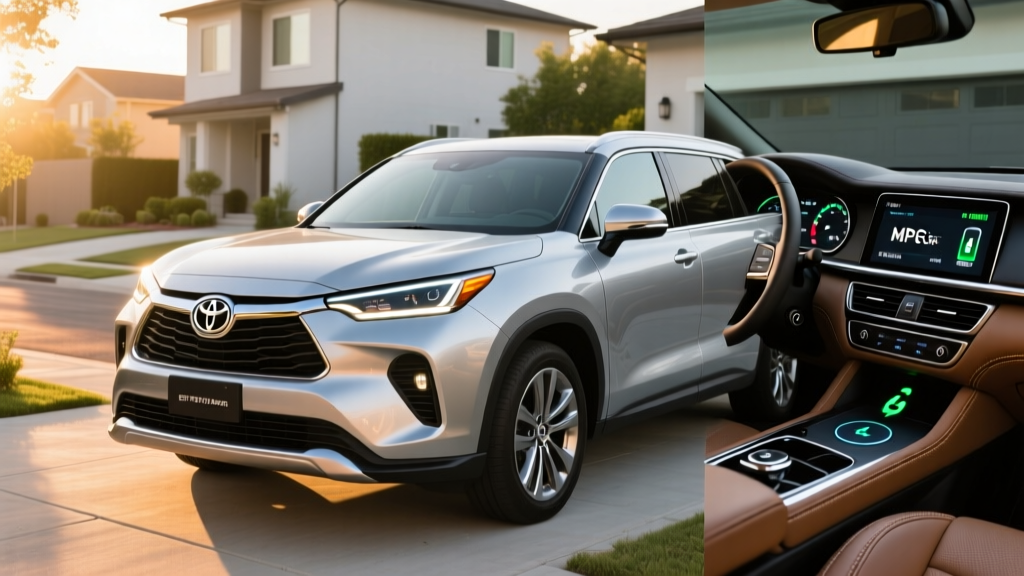
The Toyota Highlander Hybrid remains one of the few three-row midsize SUVs that delivers genuinely low fuel consumption without requiring a plug, a garage charger, or any change in driving habits. For the 2026 model year, the Highlander Limited Hybrid continues with Toyota's fourth-generation hybrid powertrain, pairing a 2.5-liter inline-four with front and rear electric motors for a combined 243 horsepower and an EPA-estimated 35 MPG combined.
This is a conventional hybrid (HEV), not a plug-in hybrid (PHEV). You never plug it in. The battery recharges through regenerative braking and the gasoline engine. That distinction matters enormously for buyers weighing the Highlander against plug-in rivals like the Kia Sorento PHEV or the Toyota RAV4 Prime — or against full battery-electric alternatives like the Kia EV9.
The Limited trim sits near the top of the Highlander Hybrid lineup, adding leather-trimmed seats, a panoramic moonroof, a 12.3-inch touchscreen with wireless Apple CarPlay and Android Auto, a JBL premium audio system, and Toyota Safety Sense 3.0. The 2026 Highlander Limited Hybrid starts at an MSRP of approximately $49,170 including destination.
A conventional hybrid (HEV) like the Highlander Hybrid uses a small battery (roughly 1.6 kWh usable) that charges itself through braking and the engine. You fuel it with gasoline only. A plug-in hybrid (PHEV) has a much larger battery (typically 12–20 kWh) that you plug in to charge, giving 25–40 miles of electric-only driving before the gas engine takes over. The Highlander is an HEV — it has no plug and no electric-only range.
Fuel Economy: EPA Ratings and Real-World MPG
Fuel economy is the Highlander Hybrid's headline advantage over its gasoline-only counterpart. The non-hybrid Highlander's turbocharged 2.4-liter four-cylinder returns an EPA-estimated 24 MPG combined. The hybrid nearly doubles that figure in some driving conditions.
| Metric | AWD-i (Limited) | FWD (LE/XLE) |
|---|---|---|
| City MPG | 35 | 36 |
| Highway MPG | 35 | 35 |
| Combined MPG | 35 | 36 |
| Fuel Tank | 17.1 gal | 17.1 gal |
| Total Range (est.) | ~598 mi | ~615 mi |
Source: fueleconomy.gov — EPA estimates. Your mileage will vary.
Real-World MPG: What Owners Actually See
Toyota's hybrid system excels in stop-and-go city driving, where regenerative braking and low-speed electric assist do the heavy lifting. In real-world suburban commuting with frequent stops, many owners report 36–38 MPG — slightly exceeding the EPA city figure. On long highway trips at 75+ MPH, however, the advantage narrows. Expect 31–33 MPG on sustained interstate driving, as the aerodynamic drag of a three-row SUV and the engine working harder at speed reduce efficiency.
In cold weather (below 30°F), the engine runs more frequently to maintain cabin heat and warm the catalytic converter, dropping observed fuel economy by roughly 2–4 MPG until the powertrain reaches operating temperature. Short winter trips of under 5 miles show the largest penalty.
Powertrain Specs: How the Hybrid System Works
| Specification | Detail |
|---|---|
| Engine | 2.5L DOHC 4-cylinder (186 hp, 186 lb-ft) |
| Front Electric Motor | 134 hp, 199 lb-ft |
| Rear Electric Motor (AWD-i) | 54 hp, 89 lb-ft |
| Net Combined Horsepower | 243 hp |
| Transmission | eCVT (planetary gearset) |
| Hybrid Battery | ~1.6 kWh, Nickel-Metal Hydride (NiMH) |
| Drivetrain | FWD or Electronic On-Demand AWD (AWD-i) |
| 0–60 MPH | ~7.7 seconds |
| Towing Capacity | 3,500 lbs |
| Plug-In Charging? | No — HEV, charges via regen + engine |
The Highlander Hybrid's eCVT is not a belt-driven continuously variable transmission like those in some competitors. It uses Toyota's planetary gearset to seamlessly blend power from the engine and electric motors. The result is smooth, linear acceleration without the rubber-band drone associated with traditional CVTs. The rear motor in AWD-i models provides traction in slippery conditions and during hard cornering but does not enable electric-only all-wheel drive at highway speeds.
The ~1.6 kWh hybrid battery is small by EV standards — that's intentional. It buffers energy for short electric assists at low speed and captures regenerative braking energy. Because it never fully depletes or fully charges (Toyota's battery management system keeps the state of charge in a narrow middle band), degradation is minimal over the vehicle's lifetime.
Battery Warranty, Reliability, and Replacement Costs
Toyota covers the 2026 Highlander Hybrid battery for 10 years or 150,000 miles, whichever comes first. This applies to all 50 states. Hybrid system components (inverter, motor, control module) are also covered under this warranty. (Source: Toyota)
Toyota's hybrid battery track record is among the best in the industry. The Prius, now in its fifth generation, has demonstrated that Toyota's NiMH and lithium-ion hybrid batteries routinely last 150,000–200,000+ miles with minimal capacity loss. The Highlander Hybrid uses a proven NiMH pack that operates in a conservative state-of-charge window, which dramatically extends cycle life.
What If the Battery Fails Out of Warranty?
If a hybrid battery does require replacement after the warranty period — uncommon before 200,000 miles based on fleet data — expect to pay between $2,000 and $4,000 for a new OEM replacement, including labor. Refurbished or reconditioned battery packs are available from third-party suppliers for $1,000–$2,000. Individual cell module replacement (often the actual failure point rather than the entire pack) can cost as little as $300–$600 at a hybrid-specialist shop.
For comparison, a gasoline-only Highlander's timing chain, turbocharger, or transmission replacement can cost a similar amount. The hybrid system eliminates the traditional starter motor, alternator, and accessory drive belt — components that commonly fail on non-hybrid vehicles and add to long-term maintenance costs.
Pricing, Trims, and Tax Credit Eligibility
The 2026 Toyota Highlander Hybrid is offered in LE, XLE, XLE Nightshade, Limited, and Platinum trims. The Limited trim is the most popular among buyers seeking premium features without stepping to the Platinum's higher sticker price.
| Trim | MSRP (incl. destination) |
|---|---|
| LE | ~$42,120 |
| XLE | ~$45,170 |
| Limited | ~$49,170 |
| Platinum | ~$53,070 |
Does the Highlander Hybrid Qualify for a Federal Tax Credit?
No. The federal §30D Clean Vehicle Credit applies only to plug-in electric vehicles — battery-electric vehicles (BEVs) and plug-in hybrids (PHEVs) with a minimum battery capacity of 7 kWh. The Highlander Hybrid is a conventional HEV with a ~1.6 kWh battery and no plug. It does not qualify for the federal EV tax credit.
Some states and municipalities offer incentives for conventional hybrids, though these are increasingly rare as policy focus has shifted to plug-in vehicles. Check your state's energy office or the Alternative Fuels Data Center for any local hybrid incentives. A few states still offer reduced registration fees or HOV lane access for hybrids, but these benefits vary widely by jurisdiction and change frequently.
Highlander Hybrid vs. PHEV vs. Full EV: Which Fits Your Life?
Choosing between a conventional hybrid, a plug-in hybrid, and a battery-electric vehicle depends on your driving patterns, home charging access, and willingness to adapt your routine.
| Factor | HEV (Highlander Hybrid) | PHEV (e.g., Sorento PHEV) | BEV (e.g., Kia EV9) |
|---|---|---|---|
| Plug Required? | No | Yes (for EV range) | Yes |
| Electric-Only Range | ~0.5 mi (low-speed) | 32 mi (EPA) | 270–304 mi (EPA) |
| Combined MPG / MPGe | 35 MPG | 84 MPGe / 35 MPG gas | 85–89 MPGe |
| Fuel Cost per Year* | ~$1,850 | ~$1,200 (if charging daily) | ~$650 (home charging) |
| Home Charger Needed? | No | Recommended (Level 2) | Essential (Level 2) |
| Federal Tax Credit | None | Up to $3,750–$7,500† | Up to $7,500† |
| Road Trip Ease | 5-min gas stop | 5-min gas stop | 20–40 min DC charge |
| Three Rows? | Yes | Yes (Sorento) | Yes (EV9) |
*Based on 15,000 mi/yr, $3.50/gal gas, $0.14/kWh electricity. †Federal §30D credit subject to MSRP caps, buyer income limits, and battery sourcing requirements per IRS rules. Verify eligibility before purchase.
Choose the Highlander Hybrid if: You want three rows, AWD, and low fuel costs with zero changes to your routine. You don't have reliable home charging access. You take frequent long road trips where charging stops would be inconvenient.
Choose a PHEV if: You have a garage or driveway where you can install a Level 2 charger, your daily commute is under 35 miles round-trip, and you want electric-only weekday driving with gas-engine freedom for weekend road trips.
Choose a full BEV if: You have home Level 2 charging, want the lowest per-mile fuel cost, qualify for the full federal tax credit, and your longest regular trip falls within the vehicle's range (or you're willing to plan DC fast-charging stops).
Pros and Cons: The Highlander Limited Hybrid at a Glance
- 35 MPG combined — exceptional for a 3-row AWD SUV
- No plug required; zero lifestyle change vs. a gas car
- 10-year/150,000-mile hybrid battery warranty
- Toyota Safety Sense 3.0 standard (pre-collision, lane tracing, adaptive cruise)
- Proven hybrid powertrain with 20+ years of fleet data
- 3,500-lb towing capacity
- Strong resale value — Toyota hybrids hold premium on the used market
- No federal tax credit — HEVs are ineligible for §30D
- 243 hp feels adequate but not quick for a 4,500-lb SUV (7.7s 0–60)
- Third row is tight for adults on long trips
- Cargo space reduced vs. non-hybrid (battery placement)
- No true electric-only driving mode at highway speeds
- Limited trim at ~$49K is a significant investment
- Infotainment system lags behind some competitors in responsiveness
5-Year Ownership Cost Estimate
To put the Highlander Limited Hybrid's economics in perspective, here's a 5-year cost projection compared to the gasoline-only Highlander Limited (turbo 2.4L, 265 hp) and the Kia EV9 Long Range AWD.
| Category | Highlander Hybrid Ltd. | Highlander Gas Ltd. | Kia EV9 LR AWD |
|---|---|---|---|
| Purchase Price (MSRP) | $49,170 | $48,670 | $59,900 |
| Federal Tax Credit | $0 | $0 | $0* |
| Fuel / Electricity (5 yr) | $9,250 | $13,500 | $3,250 |
| Maintenance (5 yr) | $2,800 | $3,600 | $1,500 |
| Home Charger Install | $0 | $0 | $1,200 |
| Total 5-Yr Cost | $61,220 | $65,770 | $65,850 |
*The 2026 Kia EV9 does not qualify for the §30D credit due to final assembly and battery sourcing rules. Estimates based on $3.50/gal, $0.14/kWh, 15,000 mi/yr. Does not include insurance, depreciation, or state incentives. Consult IRS §30D guidelines for current credit eligibility.
The Highlander Hybrid's advantage is clear: it costs roughly $4,500 less to operate over five years than its gas-only counterpart, with zero infrastructure investment. The EV9 saves more on fuel but carries a higher purchase price and requires a home charger installation. When depreciation is factored in — Toyota Hybrids historically retain value exceptionally well — the Highlander Hybrid's total cost of ownership is among the lowest in the three-row SUV segment.
Frequently Asked Questions
How many MPG does the Highlander Limited Hybrid actually get?
The EPA rates the 2026 Highlander Hybrid AWD-i at 35 MPG city, 35 MPG highway, and 35 MPG combined. In real-world suburban driving with frequent stops, many owners see 36–38 MPG. Sustained highway driving at 75+ MPH typically yields 31–33 MPG. Cold weather reduces efficiency by 2–4 MPG on short trips.
Does the Highlander Hybrid ever need to be plugged in?
No. The Highlander Hybrid is a conventional HEV. Its battery charges exclusively through regenerative braking and the gasoline engine. There is no charging port and no plug. You refuel it at any gas station like a conventional vehicle.
Is the Highlander Hybrid battery reliable, and what does replacement cost?
Toyota's hybrid batteries have an outstanding long-term reliability record. The battery is warranted for 10 years or 150,000 miles. Out-of-warranty replacement costs $2,000–$4,000 for a new OEM pack, though individual cell module repairs can cost as little as $300–$600. Most Toyota hybrid batteries last 150,000–200,000+ miles before significant capacity loss.
Does the 2026 Highlander Hybrid qualify for any tax credit?
The Highlander Hybrid does not qualify for the federal §30D Clean Vehicle Credit, which is limited to plug-in vehicles (BEVs and PHEVs) with at least 7 kWh of battery capacity. Some states may offer minor incentives for conventional hybrids — check the Alternative Fuels Data Center for your jurisdiction. Tax rules change frequently; consult a tax professional for advice specific to your situation.
How does the Highlander Hybrid compare to the Toyota Grand Highlander Hybrid?
The Grand Highlander Hybrid offers significantly more third-row legroom and cargo space (it's roughly 6.5 inches longer) and is available with the Hybrid MAX powertrain producing 362 hp. However, the Grand Highlander Hybrid's fuel economy drops to around 34 MPG combined (AWD) in standard hybrid form and 27 MPG in Hybrid MAX form. If third-row usability is your priority and you don't mind slightly higher fuel consumption, the Grand Highlander is worth the premium. If maximizing MPG and minimizing footprint matter more, the standard Highlander Hybrid is the better choice.
Can the Highlander Hybrid tow, and does towing affect MPG?
The Highlander Hybrid is rated to tow up to 3,500 pounds — sufficient for a small boat, utility trailer, or a pair of personal watercraft. When towing near maximum capacity, expect fuel economy to drop significantly, often into the low-to-mid 20s MPG depending on trailer weight, terrain, and speed. This is typical for all hybrid and non-hybrid SUVs in this class.