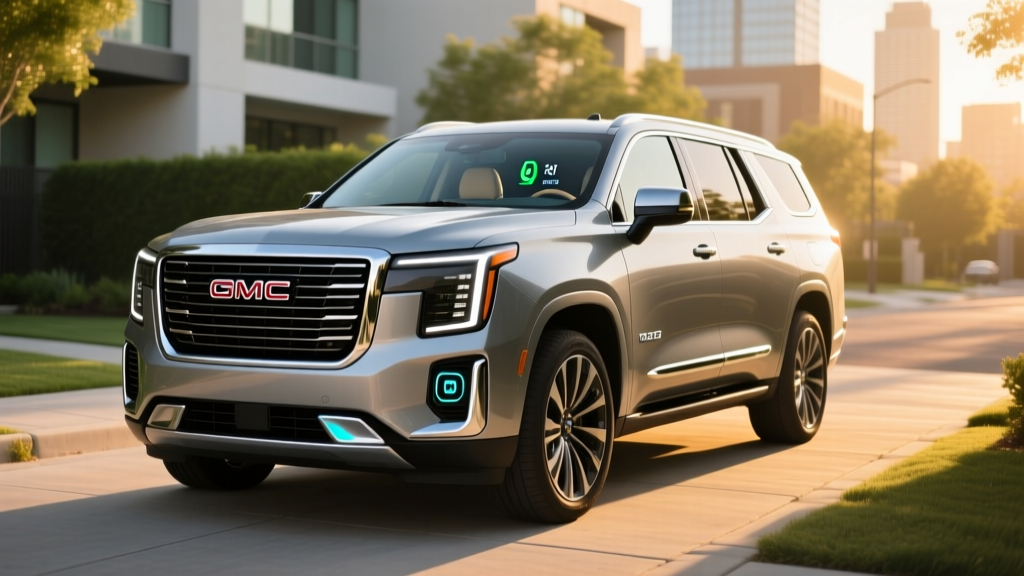
If you've been watching GMC's full-size SUV lineup, you already know the 2026 Yukon ditched the aging 5.3L and 6.2L V8s in favor of the turbocharged 3.0L Duramax inline-six. But the bigger headline for efficiency-minded buyers is the arrival of a mild-hybrid system across the lineup. The 2026 GMC Yukon hybrid isn't a plug-in, and it won't drive on electric power alone — but it does squeeze meaningful fuel savings out of a three-row, body-on-frame SUV that still tows up to 8,200 pounds.
This guide breaks down exactly what the Yukon's hybrid system does, what MPG you can expect in real-world driving, how it compares to full hybrids and PHEVs from competitors, and whether it qualifies for any federal tax incentives.
What Kind of Hybrid Is the 2026 GMC Yukon?
The 2026 Yukon uses a mild-hybrid electric vehicle (MHEV) system, not a conventional full hybrid (HEV) like the Toyota Grand Highlander Hybrid, and not a plug-in hybrid (PHEV) like the Jeep Grand Cherokee 4xe. Understanding this distinction is critical before you shop.
| Feature | Mild Hybrid (MHEV) — Yukon | Full Hybrid (HEV) | Plug-In Hybrid (PHEV) |
|---|---|---|---|
| Electric-only driving | No | Yes, brief low-speed | Yes, 25–45 mi typical |
| Needs to plug in? | No | No | Yes (Level 1 or 2) |
| Battery size | ~1–2 kWh (48V) | 1.5–5 kWh | 12–25 kWh |
| Regenerative braking | Yes (mild) | Yes (strong) | Yes (strong) |
| Fuel savings vs gas | 10–15% | 25–40% | 40–60% (with regular charging) |
| Federal tax credit | No | No | Up to $7,500 (if eligible) |
GMC's mild-hybrid system integrates a 48-volt electric motor-generator into the powertrain. It assists the gas engine during acceleration, enables smoother stop-start operation, and captures energy during braking. The engine never shuts off at highway speeds to let the electric motor take over — this is a supplementary system, not a parallel full-hybrid setup.
2026 Yukon Hybrid MPG: EPA Estimates and Real-World Numbers
The headline number: the 2026 GMC Yukon with the 3.0L Duramax turbo I6 and mild-hybrid system earns an EPA-estimated 24 MPG combined for 2WD models. Here's the full breakdown:
| Drivetrain | City MPG | Highway MPG | Combined MPG |
|---|---|---|---|
| 2WD | 21 | 27 | 24 |
| 4WD / AWD | 20 | 25 | 22 |
For context, the previous-generation Yukon with the 5.3L V8 and 10-speed automatic returned roughly 16 city / 20 highway / 17 combined. That's a substantial improvement — roughly 35–40% better combined fuel economy from the turbo-diesel mild-hybrid combination.
Real-World MPG vs. EPA Sticker
Based on owner reports and mixed-use testing, real-world results tend to track close to EPA for the Duramax mild-hybrid in suburban driving. However:
- Highway cruising (70–80 mph): Expect 23–25 MPG in 2WD, slightly below the 27 EPA highway figure. Aerodynamic drag on a 5,800-pound box takes its toll.
- City stop-and-go: The mild-hybrid system shines here. The 48V motor-generator smooths restarts and provides torque fill, helping real-world city numbers meet or occasionally exceed the 21 MPG EPA city estimate.
- Towing: Expect 13–16 MPG when pulling a 5,000+ lb trailer. The hybrid assist helps marginally, but physics dominates.
- Cold weather: Diesel efficiency drops in sub-freezing temperatures. Budget 1–2 MPG less in winter, and factor in DEF (diesel exhaust fluid) consumption.
Source: fueleconomy.gov
Powertrain Specs: Engine, Motor, and Horsepower
| Engine | 3.0L Duramax Turbo Diesel Inline-6 |
| Hybrid system | 48V mild-hybrid (eTorque-style motor-generator) |
| Combined horsepower | 305 hp (diesel: 277 hp + electric assist) |
| Combined torque | 510 lb-ft (diesel: 460 lb-ft + electric torque fill) |
| Transmission | 10-speed automatic |
| Drivetrain | RWD standard, 4WD available |
| 0–60 mph (est.) | ~6.8 seconds (2WD) |
| Max towing capacity | 8,200 lbs (2WD, properly equipped) |
| Battery | 48V lithium-ion, ~1.5 kWh (not plug-in) |
The 48-volt motor-generator doesn't add massive peak horsepower — its contribution is measured in torque-fill during the first 1–2 seconds of acceleration and in smoothing out the turbo diesel's stop-start transitions. Where you feel it is in low-speed responsiveness: the electric assist eliminates the traditional turbo lag and makes the Yukon feel quicker off the line than its diesel-only predecessors.
Pricing, Trims, and Tax Credit Eligibility
The 2026 GMC Yukon starts at approximately $63,600 MSRP for the SLE 2WD trim with the Duramax mild-hybrid powertrain. Here's the trim-level breakdown:
- SLE: ~$63,600
- SLT: ~$68,200
- AT4: ~$74,800
- Denali: ~$79,500
- Denali Ultimate: ~$93,000
Adding 4WD costs approximately $3,000 across trims.
Does the Yukon Hybrid Qualify for a Federal Tax Credit?
No. The 2026 GMC Yukon mild-hybrid does not qualify for the IRS §30D Clean Vehicle Credit. That credit applies only to battery electric vehicles (BEVs) and plug-in hybrids (PHEVs) that meet battery sourcing, critical mineral, MSRP cap, and buyer income requirements. A mild-hybrid system with a ~1.5 kWh 48V battery falls far short of the minimum battery capacity threshold.
Some states offer separate incentives for hybrid vehicles, but these vary widely by jurisdiction. Check your state's energy office or department of revenue for current programs. A tax professional can confirm eligibility for any local credits.
Source: IRS Clean Vehicle Credits
Battery Warranty, Reliability, and Replacement Cost
Hybrid Battery Warranty: GMC covers the 48V mild-hybrid battery and related components under the powertrain warranty — 5 years / 60,000 miles (whichever comes first). The diesel engine and 10-speed transmission are covered for 5 years / 60,000 miles as well. Note: this is shorter than the 8-year/100,000-mile hybrid battery warranties offered by Toyota and Hyundai on their full-hybrid systems, because GMC classifies the 48V system under the standard powertrain coverage rather than a dedicated hybrid component warranty.
Reliability Outlook
The 3.0L Duramax inline-six has been in GM's full-size truck and SUV lineup since the 2020 model year, and by 2026 it has accumulated a solid track record. The inline-six architecture is inherently balanced, and the turbo-diesel design is built for longevity — these engines routinely exceed 200,000 miles with proper maintenance.
The 48V mild-hybrid system adds complexity, but it's far simpler than a full-hybrid or PHEV system. There's no high-voltage traction battery, no electric-only drivetrain mode, and no regenerative braking system powerful enough to require dedicated cooling. The motor-generator is a proven design shared across GM's truck platform.
Battery Replacement Cost
Because the 48V battery is small (~1.5 kWh) and operates at low voltage, replacement is far less expensive than a full-hybrid or EV battery pack. If the 48V lithium-ion battery fails out of warranty, expect a replacement cost in the range of $800–$1,500 including parts and labor. This is comparable to replacing a conventional 12V starter battery in terms of service complexity.
For comparison, a full-hybrid battery replacement (like a Toyota Highlander Hybrid's ~5 kWh NiMH pack) typically runs $3,000–$5,000, and an EV battery replacement can exceed $10,000–$20,000.
Yukon Hybrid vs. Competing Hybrid SUVs
If you're cross-shopping the Yukon hybrid, you're likely also looking at full hybrids and PHEVs in the three-row SUV segment. Here's how they stack up:
| Model | Hybrid Type | Combined MPG | Electric-Only Range | Starting MSRP |
|---|---|---|---|---|
| 2026 GMC Yukon (Duramax MHEV) | Mild Hybrid | 24 (2WD) | N/A | $63,600 |
| 2026 Toyota Grand Highlander Hybrid | Full Hybrid (HEV) | 36 | N/A | $45,120 |
| 2026 Jeep Grand Cherokee L 4xe | Plug-In Hybrid | 56 MPGe / 23 gas-only | 26 mi | $59,995 |
| 2026 Mazda CX-90 PHEV | Plug-In Hybrid | 56 MPGe / 25 gas-only | 26 mi | $51,395 |
The Grand Highlander Hybrid dominates on pure fuel economy — 36 MPG combined is dramatically better than the Yukon's 24. But it's a unibody crossover, not a body-on-frame SUV. It can't match the Yukon's 8,200-lb towing capacity, its truck-based ride quality, or its interior volume.
The Grand Cherokee L 4xe offers genuine plug-in capability with 26 miles of electric-only range — enough for most school runs and grocery trips. But its gas-only MPG (23 combined) is actually slightly lower than the Yukon's, and it sacrifices some cargo space to the battery pack.
Who Should Choose the Yukon Hybrid vs. a Full EV or Gas SUV?
Choose the Yukon Hybrid if:
- You need body-on-frame towing (5,000+ lbs) and three rows of real seating
- You want better fuel economy than a traditional V8 without changing your driving habits (no plugging in)
- You drive a mix of highway and suburban miles and want 550+ miles of total range per tank
- You value the Duramax diesel's low-end torque for towing and hauling
Choose a full hybrid (like the Grand Highlander Hybrid) if:
- You prioritize maximum MPG and don't need heavy towing
- Your daily driving is mostly city and suburban
- You want a lower starting price
Choose a PHEV (like the Grand Cherokee L 4xe) if:
- You have home Level 2 charging and a commute under 30 miles
- You want electric-only daily driving with gas backup for road trips
- You may qualify for the §30D federal tax credit (up to $7,500, subject to income, MSRP caps, and battery sourcing rules)
Choose a full EV (like the Rivian R1S or Cadillac Escalade IQ) if:
- You have reliable home charging
- You want zero tailpipe emissions and the lowest per-mile fuel cost
- You can absorb the higher upfront cost and potentially higher insurance premiums
Pros and Cons of the 2026 Yukon Hybrid
Pros
- 35–40% MPG improvement over the previous V8 Yukon
- 510 lb-ft of torque excellent for towing
- No plug-in required — no charging infrastructure needed
- 48V battery replacement is affordable (~$800–$1,500)
- Full body-on-frame capability: 8,200-lb tow rating, truck-based durability
- Premium interior across Denali and Ultimate trims
Cons
- 24 MPG combined still trails full hybrids (36 MPG) by a wide margin
- No electric-only driving capability
- No federal tax credit eligibility
- 5-year/60,000-mile hybrid warranty shorter than Toyota/Hyundai's 10-year coverage
- Diesel requires DEF fluid and may face fuel availability issues in some areas
- High starting price; Denali Ultimate approaches $93,000
Frequently Asked Questions
How many MPG does the 2026 GMC Yukon hybrid get?
The 2026 Yukon with the Duramax 3.0L turbo-diesel mild-hybrid system earns an EPA-estimated 21 city / 27 highway / 24 combined MPG in 2WD configuration. The 4WD model drops to 20 city / 25 highway / 22 combined. Real-world results vary: expect highway numbers to dip slightly at sustained 75–80 mph speeds, while city driving may match or slightly exceed EPA estimates thanks to the mild-hybrid torque assist.
Can the Yukon hybrid drive on electric power alone?
No. The 48V mild-hybrid system cannot propel the vehicle without the diesel engine running. It assists the engine during acceleration and smooths stop-start transitions, but it does not enable electric-only driving. If you need electric-only capability, you'll want a PHEV like the Jeep Grand Cherokee L 4xe (26 miles electric range) or a full BEV.
Do I need to plug in the Yukon hybrid to charge it?
No. The 48V battery charges through regenerative braking and the engine's alternator function. There is no plug, no charging port, and no need for any home or public charging infrastructure. You fuel it with diesel like any other Duramax-equipped GM vehicle.
Is the 2026 Yukon hybrid reliable, and what does battery replacement cost?
The 3.0L Duramax inline-six has been in production since 2020 and has a strong reliability record. The 48V mild-hybrid system is low-voltage and mechanically simple compared to full-hybrid or PHEV systems. If the 48V battery does need replacement out of warranty, expect to pay approximately $800–$1,500 — far less than a full-hybrid or EV battery. GMC covers the system under the 5-year/60,000-mile powertrain warranty.
Does the Yukon hybrid qualify for any tax credit?
The Yukon mild-hybrid does not qualify for the federal §30D Clean Vehicle Credit, which is reserved for BEVs and PHEVs meeting battery capacity, sourcing, MSRP, and income requirements. Some states may offer separate incentives for hybrid vehicles — check your state's energy or revenue department for current programs.
Hybrid vs. PHEV vs. EV — which should I choose for a large SUV?
It depends on your driving pattern and infrastructure. If you tow heavy loads, drive long highway routes, and lack home charging access, the Yukon's mild-hybrid diesel is the pragmatic choice. If your commute is under 30 miles and you can install a Level 2 charger at home, a PHEV gives you electric daily driving with gas backup. If you want the lowest operating cost and have reliable charging, a full EV like the Rivian R1S eliminates tailpipe emissions entirely. Each path has trade-offs in upfront cost, fuel savings, and capability.
What is the total driving range of the Yukon hybrid?
With a 24-gallon fuel tank and 24 MPG combined (2WD), the Yukon delivers approximately 576 miles of total range. In real-world mixed driving, expect 500–550 miles between fill-ups. The 4WD model, at 22 combined, yields roughly 528 miles of theoretical range, or about 460–500 miles in practice.
The 2026 GMC Yukon hybrid represents a pragmatic efficiency upgrade for buyers who need full-size, body-on-frame SUV capability but want to cut fuel costs without fundamentally changing how they use their vehicle. It won't match a full hybrid's city MPG or a PHEV's electric-only commuting, but for the truck-based SUV segment, 24 MPG combined with 510 lb-ft of torque is a compelling package.