Quick Verdict: The Hybrid Minivan That Doesn't Ask You to Plug In
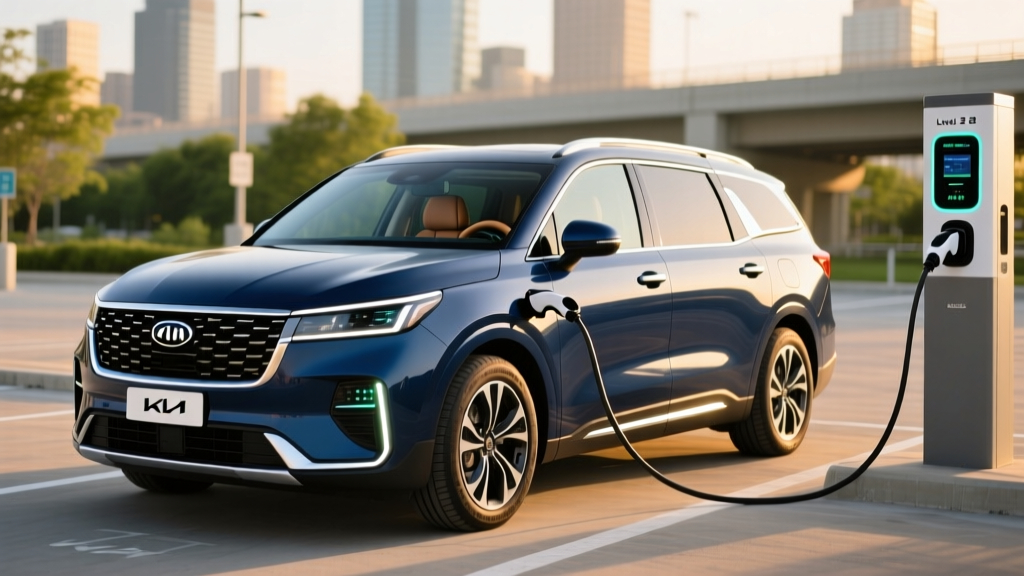
The 2025 Kia Carnival Hybrid EX slots into a narrow but important lane: a three-row family hauler that sips fuel without requiring a garage charger or any change in driving habits. Unlike plug-in hybrids, this is a conventional hybrid (HEV) — it generates and recovers its own electricity through regenerative braking and its turbocharged engine. You fuel it like any other minivan, and it returns up to 33 MPG combined on the EPA cycle, a roughly 40% improvement over the standard gas-only Carnival.
For families who want minivan space (seven or eight seats, massive cargo room) without the $50,000+ price tag of a plug-in hybrid or the charging logistics of a full EV, the Carnival Hybrid EX makes a compelling case. Here's everything you need to know about what it delivers — and where its limits lie.
HEV vs. PHEV: What the Carnival Hybrid Actually Is
Before digging into specs, it's worth clarifying exactly what you're getting, because the hybrid minivan market now spans two very different architectures:
| Feature | 2025 Kia Carnival Hybrid (HEV) | Plug-In Hybrid (e.g., Chrysler Pacifica PHEV) |
|---|---|---|
| Plugs in? | No — self-charging via regen + engine | Yes — requires Level 1 or Level 2 charging |
| Electric-only driving | Short low-speed bursts only (under ~1 mile) | 30+ miles on battery alone |
| Battery size | ~1.49 kWh (small buffer) | ~16 kWh (large, usable pack) |
| Federal tax credit (§30D) | Not eligible | Up to $7,500 if requirements met |
| Ideal buyer | No home charger; wants fuel savings without behavior change | Has home Level 2; commutes <30 mi daily on electric |
The Carnival Hybrid is strictly an HEV. If you're looking for electric-only school runs and a federal tax credit, you'd need to look at a plug-in alternative — but none currently offer the same combination of price, space, and third-row comfort in a non-PHEV format. The Chrysler Pacifica Hybrid (PHEV) is the closest competitor, but it starts significantly higher and requires plug-in infrastructure to realize its efficiency advantage.
Fuel Economy: EPA Ratings and Real-World MPG
The headline number for the 2025 Carnival Hybrid is 33 MPG combined on the EPA cycle. Here's the full breakdown:
| Driving Cycle | EPA Rating | Real-World Expectation |
|---|---|---|
| City | 34 MPG | 35-38 MPG (hybrids excel in stop-and-go) |
| Highway | 31 MPG | 28-30 MPG (sustained 70+ mph reduces regen benefit) |
| Combined | 33 MPG | 30-34 MPG depending on driving mix |
Why real-world city MPG often beats the sticker: Conventional hybrids recapture kinetic energy every time you brake, converting it back to battery charge. In urban driving with frequent stops, the electric motor handles more of the workload, and the engine shuts off at lights. Owners who drive predominantly in city and suburban conditions routinely report 35-38 MPG. Highway driving is the opposite — at sustained speeds, the gasoline engine does most of the work, and aerodynamic drag on a minivan-sized vehicle limits gains.
Cold-weather note: Expect a 5-10% fuel economy drop in sub-freezing temperatures. The engine runs more frequently to provide cabin heat (there's no heat pump on this HEV system), and battery efficiency drops in cold conditions. Source: fueleconomy.gov.
For comparison, the standard gas-only 2025 Kia Carnival (3.5L V6) is rated at 19 city / 26 highway / 22 combined. The hybrid's 50% city improvement is substantial — that's roughly 150 fewer gallons per year for a driver covering 15,000 miles with a 60/40 city/highway split, translating to $450-$600 in annual fuel savings at $3.25/gallon.
Powertrain: 1.6L Turbo Hybrid Specs
| Specification | 2025 Kia Carnival Hybrid EX |
|---|---|
| Engine | 1.6L turbocharged 4-cylinder |
| Engine output | 180 hp / 195 lb-ft torque |
| Electric motor | 47.7 kW (~64 hp) integrated in transmission |
| Combined system output | 245 hp / 271 lb-ft torque |
| Transmission | 6-speed automatic |
| Drivetrain | Front-wheel drive (AWD not available on hybrid) |
| 0-60 mph (est.) | ~7.8 seconds |
| Towing capacity | 3,500 lbs |
| Hybrid battery | ~1.49 kWh lithium-ion |
| Curb weight | ~4,700 lbs |
The 1.6L turbo four replaces the gas model's 3.5L V6, and while the combined 245 hp trails the V6's 290 hp, the hybrid's electric motor fills in torque at low RPMs where you need it most — merging onto highways and accelerating from stoplights. The result feels punchier in daily driving than the horsepower number suggests, though highway passing at 70+ mph doesn't have the same reserve as the V6.
Drivetrain limitation: The 2025 Carnival Hybrid is front-wheel drive only. If you need all-wheel drive for snow or traction, you'll need the standard gas Carnival (AWD available on select trims) or look at the Toyota Sienna (AWD standard on hybrid, but with only 245 hp combined and a CVT).
Pricing: EX Trim Value and Tax Credit Reality
The 2025 Kia Carnival Hybrid is offered in three trims. Here's where the EX lands:
| Trim | MSRP (incl. destination) | Key Additions Over Base |
|---|---|---|
| LX | ~$41,400 | Base hybrid: 8-passenger, 8" display, basic ADAS |
| EX | ~$44,600 | Power sliding doors, power liftgate, heated front seats, leatherette, dual-zone climate, 12.3" display |
| SX Prestige | ~$52,000 | Nappa leather, ventilated seats, dual sunroof, Highway Driving Assist 2, 12-speaker Bose audio |
The EX trim is the volume seller and the sweet spot for most buyers. At roughly $44,600, it adds the convenience features that make a minivan livable — power sliding doors are nearly essential for tight parking lots, and the upgraded infotainment screen is a significant step up from the LX's smaller unit.
Does the Carnival Hybrid Qualify for a Federal Tax Credit?
No. The federal §30D Clean Vehicle Credit applies only to plug-in electric vehicles (BEVs and PHEVs) that meet battery-sourcing, critical-mineral, MSRP, and buyer-income requirements. Because the Carnival Hybrid is a conventional HEV that cannot be plugged in, it does not qualify for the federal credit. Per IRS guidelines, only vehicles with a battery capacity of at least 7 kWh and plug-in capability are eligible.
Some states offer separate incentives for conventional hybrids, but these are uncommon and typically small ($500-$1,000 rebates where available). Check your state's energy office or DMV website for current programs. A few states also offer reduced registration fees or HOV-lane access for hybrids, though these perks have been rolling back in recent years.
Battery Warranty, Reliability, and Replacement Cost
Kia Hybrid Battery Warranty: 10 years / 100,000 miles (whichever comes first) for the hybrid battery pack. This covers defects and capacity loss below a defined threshold. The broader hybrid system components (motor, inverter, control electronics) carry the same 10-year/100,000-mile coverage. Kia's basic vehicle warranty is 5 years / 60,000 miles, and the powertrain warranty is 10 years / 100,000 miles.
How long will the hybrid battery actually last? Kia's 1.49 kWh hybrid battery is small and operates within a narrow state-of-charge window (roughly 40-80%), which significantly reduces stress on the cells. This is fundamentally different from a full EV battery that cycles through deep charge and discharge events daily. Based on data from Hyundai/Kia's hybrid systems (which share architecture across the Sonata Hybrid, Tucson Hybrid, and Sorento Hybrid), there is no widespread pattern of premature battery failure. Most hybrid batteries in modern Kia/Hyundai vehicles are expected to last the life of the vehicle — 150,000 to 200,000+ miles — without replacement.
Replacement cost if needed out of warranty: A hybrid battery replacement for the Carnival would likely fall in the $2,000-$3,500 range (parts and labor) based on comparable Kia/Hyundai hybrid models. This is substantially less than EV battery replacements ($8,000-$20,000+) because the pack is small. Independent hybrid battery repair shops can often replace individual failed cells for $500-$1,200, extending the pack's life at a fraction of full-replacement cost.
Reliability outlook: The 1.6L turbo hybrid powertrain has been in use across the Hyundai/Kia lineup since 2022 (Sorento Hybrid, Tucson Hybrid). Early-model-year reports have been generally positive, with no systemic failures flagged by major reliability trackers. Kia's 10-year warranty provides a strong backstop regardless. Check NHTSA for any active recalls or technical service bulletins.
Who Should Buy the Carnival Hybrid EX — And Who Shouldn't
Pros
- 33 MPG combined — 50% better city economy than gas Carnival
- No plug-in required — zero infrastructure or behavior change
- 10-year/100,000-mile hybrid battery warranty
- EX trim well-equipped at ~$44,600 (power doors, liftgate, heated seats)
- 3,500-lb towing capacity matches gas model
- Quiet, refined hybrid operation — engine shutoff is seamless
- Full three-row seating for 7 or 8 passengers
Cons
- No AWD option (FWD only on hybrid)
- No federal tax credit eligibility
- Highway MPG drops to ~28-30 real-world at sustained speed
- Less power than gas V6 for highway passing (245 hp vs 290 hp)
- Small hybrid battery limits electric-only assist to low speeds
- Pricing ~$3,000-$4,000 premium over equivalent gas Carnival trim
Decision Framework
Choose the Carnival Hybrid EX if: You drive a mix of city and suburban miles, don't have (or want) home charging infrastructure, need three rows of seating, and want to cut fuel costs by $450-$600/year without changing any habits. The EX trim's power doors and liftgate make it the right family value pick.
Choose the gas Carnival instead if: You need AWD for winter conditions, do predominantly highway driving (where the hybrid advantage shrinks), or want the extra passing power of the 290-hp V6. The gas model also starts ~$3,000-$4,000 lower if budget is tight.
Consider a PHEV or full EV if: You have Level 2 home charging, commute under 30 miles daily (a PHEV covers that on electricity alone), or want to access the $7,500 federal tax credit. The Chrysler Pacifica Hybrid (PHEV) offers 32 miles of electric-only range but starts above $50,000 and requires plug-in infrastructure.
How the Carnival Hybrid Compares to Rivals
| Spec | 2025 Kia Carnival Hybrid EX | 2025 Toyota Sienna (Hybrid, AWD) | 2025 Chrysler Pacifica Hybrid (PHEV) |
|---|---|---|---|
| Powertrain type | HEV (no plug) | HEV (no plug) | PHEV (plug-in) |
| Combined MPG | 33 MPG | 35-36 MPG | 30 MPG (gas) / 82 MPGe (electric) |
| Electric-only range | N/A | N/A | 32 miles |
| Combined HP | 245 hp | 245 hp | 260 hp |
| AWD available? | No | Yes (standard) | No |
| Federal tax credit | None | None | Up to $7,500* |
| Starting MSRP (mid trim) | ~$44,600 | ~$46,500 | ~$51,000 |
*Pacifica Hybrid tax credit eligibility depends on battery sourcing, buyer income, and MSRP caps under current §30D rules. Verify at irs.gov.
The Toyota Sienna is the efficiency king at 35-36 MPG combined with standard AWD, but it sacrifices power (245 hp through a CVT feels sluggish) and starts higher. The Pacifica Hybrid is the only plug-in option, offering genuine electric-only commuting, but demands a charger and a premium price. The Carnival Hybrid EX occupies the practical middle ground: strong efficiency, no plug, competitive pricing, and Kia's industry-leading warranty.
Frequently Asked Questions
How many MPG does the 2025 Kia Carnival Hybrid EX get?
The EPA rates it at 34 city / 31 highway / 33 combined. Real-world city driving often yields 35-38 MPG thanks to regenerative braking, while sustained highway driving at 70+ mph typically returns 28-30 MPG. Cold weather reduces these figures by 5-10%.
Does the Carnival Hybrid need to be plugged in?
No. This is a conventional hybrid (HEV), not a plug-in hybrid (PHEV). The small battery charges through regenerative braking and the gasoline engine. You simply fill it at a gas station like any other vehicle.
How far can the Carnival Hybrid drive on electric power alone?
Not far — the 1.49 kWh battery provides electric-only assist at very low speeds (under ~25 mph) for short distances, typically under one mile. It's designed for smooth stop-and-go efficiency, not electric-only commuting. If you need meaningful electric-only range, you need a PHEV like the Chrysler Pacifica Hybrid (32 miles).
Is the Carnival Hybrid reliable? What about battery replacement?
Kia covers the hybrid battery for 10 years / 100,000 miles. The 1.6L turbo hybrid system has been in use across Hyundai/Kia models since 2022 with no widespread failure patterns. The small battery operates in a narrow charge window, reducing degradation. Out-of-warranty replacement is estimated at $2,000-$3,500, though most hybrid batteries last 150,000+ miles.
Does the 2025 Carnival Hybrid qualify for any tax credit?
It does not qualify for the federal §30D Clean Vehicle Credit, which requires plug-in capability and a minimum 7 kWh battery. Some states may offer small hybrid rebates or incentives — check your state energy office. The lack of a federal credit is a trade-off for not needing any charging infrastructure.
Can I get AWD on the Carnival Hybrid?
No. The 2025 Carnival Hybrid is front-wheel drive only across all trims. If AWD is essential, the Toyota Sienna Hybrid offers it as standard equipment, or the gas-only Carnival offers AWD on select trims.
How much does it cost to fuel the Carnival Hybrid vs. the gas version?
At $3.25/gallon and 15,000 miles/year (60% city / 40% highway), the hybrid uses approximately 470 gallons/year (~$1,530) vs. the gas Carnival's 715 gallons/year (~$2,325). That's roughly $795 in annual savings, or about $4,000 over five years — enough to offset most of the hybrid's price premium.