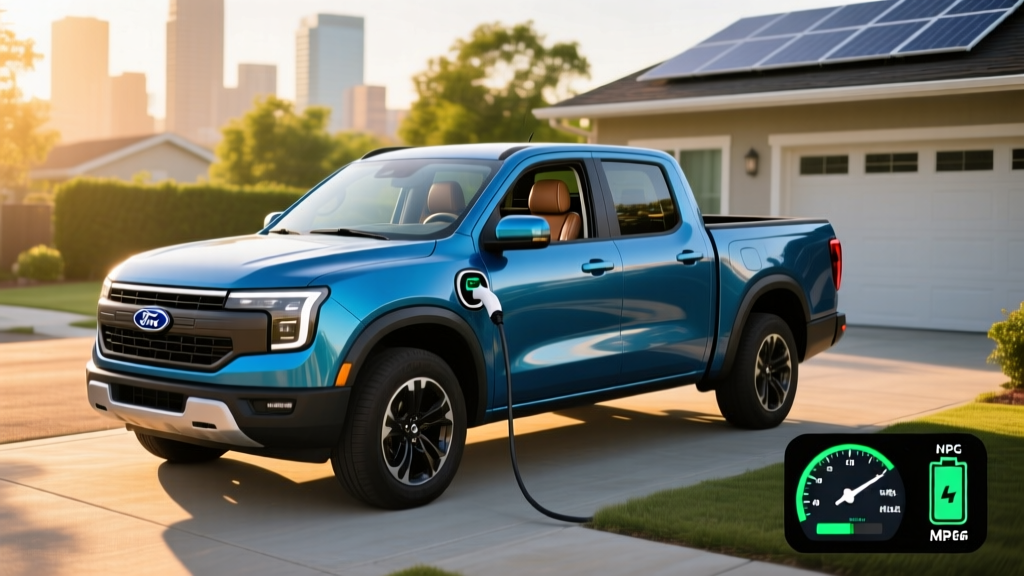
The compact truck segment has exploded, but one model keeps pulling ahead at the pump: the Ford Maverick hybrid. For buyers who need a functional pickup bed without the fuel bills of a full-size truck — and who aren't ready to commit to a full battery-electric vehicle — the Maverick Hybrid occupies a compelling middle ground. This guide covers everything you need to know about the 2026 Ford Maverick hybrid small truck, from EPA fuel economy to real-world ownership costs.
HEV vs PHEV vs EV: Where the Maverick Hybrid Fits
Before diving into specs, it's worth clarifying what the Maverick Hybrid actually is — because the terminology trips up a lot of truck shoppers.
| Powertrain Type | How It Works | Plug In? | Example |
|---|---|---|---|
| HEV (Conventional Hybrid) | Gas engine + small electric motor; battery recharges via regenerative braking and engine | No | Ford Maverick Hybrid |
| PHEV (Plug-In Hybrid) | Gas engine + larger electric motor and battery; can drive on electricity alone for 20-50 miles | Yes | Toyota RAV4 Prime, Jeep Wrangler 4xe |
| BEV (Battery Electric) | Electric motor(s) only; no gas engine | Yes (required) | Ford F-150 Lightning, Rivian R1T |
The Maverick Hybrid is a conventional hybrid (HEV). You never plug it in. The 1.9 kWh battery pack charges itself through regenerative braking and the gasoline engine. This is fundamentally different from a PHEV like the RAV4 Prime, which offers 42 miles of electric-only range but requires plugging in to access that benefit. There is currently no PHEV version of the Maverick, and Ford has not announced one for the 2026 model year.
Fuel Economy: EPA Ratings and Real-World MPG
The headline number is what draws most buyers to the Maverick Hybrid, and it doesn't disappoint on paper.
| Configuration | City MPG | Highway MPG | Combined MPG |
|---|---|---|---|
| FWD Hybrid (2.5L) | 42 | 33 | 38 |
| AWD Hybrid (2.5L) | 38 | 31 | 34 |
| EcoBoost AWD (2.0L Turbo, gas only) | 22 | 29 | 25 |
Source: EPA Fuel Economy
Real-World MPG: What Owners Actually See
Hybrids tend to outperform their EPA estimates in city driving because regenerative braking recaptures energy that conventional vehicles waste. Based on aggregated owner data from Fuelly and long-term fleet tests, FWD Maverick Hybrid owners report:
- City driving: 40-46 MPG (often exceeding the 42 EPA estimate)
- Highway driving: 30-34 MPG (roughly matches or slightly exceeds EPA)
- Mixed/combined real-world: 36-40 MPG
- Cold weather penalty: Expect a 5-10% drop in winter months due to engine running more for cabin heat and reduced battery efficiency
- Loaded bed / towing: Drops to roughly 28-32 MPG combined when hauling near the 1,500-lb payload or 2,000-lb tow capacity
The city-biased EPA rating is the Maverick Hybrid's superpower. If your commute is stop-and-go suburban or urban driving, you'll likely see numbers at or above the sticker. Highway-heavy drivers will see less benefit versus the EcoBoost, though the hybrid still wins on combined fuel economy.
Powertrain Specs: What's Under the Hood
| Specification | 2026 Maverick Hybrid (FWD/AWD) |
|---|---|
| Engine | 2.5L Atkinson-cycle inline-4 |
| Electric Motor | Permanent-magnet synchronous (integrated into transaxle) |
| Combined System Horsepower | 191 hp |
| Transmission | Electronic CVT (eCVT) |
| Battery Capacity | 1.9 kWh (lithium-ion) |
| Drivetrain | FWD standard; AWD available |
| 0-60 mph | ~7.8 seconds (FWD) |
| Max Payload | 1,500 lbs |
| Max Towing | 2,000 lbs (4,000 lbs not available on hybrid) |
| Bed Length | 54.4 inches (4.5 ft) |
| Fuel Tank | 16.5 gallons |
| Total Driving Range | ~500-625 miles (depending on driving mix) |
The 2.5L Atkinson-cycle engine produces 162 hp and 155 lb-ft of torque on its own, supplemented by an electric motor that fills in low-end torque gaps. Combined output is 191 hp — adequate for daily driving and light hauling but noticeably less punchy than the 250-hp EcoBoost turbo. The eCVT is smooth but drones under hard acceleration, a characteristic of the planetary gearset design rather than a traditional belt-driven CVT.
The AWD hybrid variant adds a rear-mounted electric motor that provides torque to the rear wheels when needed. This isn't a mechanical AWD system — there's no driveshaft — so the rear motor engagement is seamless but adds roughly 100 lbs and drops fuel economy by about 4 MPG combined.
Pricing, Trims, and Tax Credit Eligibility
The Maverick Hybrid remains one of the most affordable hybrid vehicles on the market, which is a significant part of its appeal.
| Trim (FWD Hybrid) | 2026 MSRP (estimated) | Hybrid Availability |
|---|---|---|
| XL | ~$27,495 | Available |
| XLT | ~$29,995 | Available |
| Lariat | ~$33,495 | Available |
| Lobo | ~$35,995 | EcoBoost only (no hybrid) |
| Tremor | ~$37,995 | EcoBoost only (no hybrid) |
Note: AWD adds approximately $1,500-$2,000 depending on trim. Pricing is based on Ford's announced MSRP structure and may vary by dealer.
Does the Maverick Hybrid Qualify for a Federal Tax Credit?
No. The Maverick Hybrid is a conventional HEV and does not qualify for the IRS §30D Clean Vehicle Credit. That credit — up to $7,500 — applies only to battery-electric vehicles (BEVs) and plug-in hybrids (PHEVs) that meet battery sourcing, MSRP, and buyer income requirements.
Conventional hybrids like the Maverick are not eligible for any current federal purchase incentive. Some states may offer minor rebates for hybrid purchases, but these vary significantly by jurisdiction. Check your state's energy or environmental agency website for current programs.
The silver lining: at a starting price near $27,500, the Maverick Hybrid doesn't need a tax credit to be compelling. The fuel savings versus the EcoBoost model — roughly $600-$800 per year at 12,000 miles and $3.50/gallon — offset the hybrid premium in approximately 2-3 years for most buyers.
Reliability, Battery Warranty, and Long-Term Costs
Maverick Hybrid Battery & Powertrain Warranty
| Hybrid Battery Warranty | 8 years / 100,000 miles (10 years / 150,000 miles in CARB states) |
| Hybrid Component Warranty | 8 years / 100,000 miles |
| Powertrain Warranty | 5 years / 60,000 miles |
| Bumper-to-Bumper | 3 years / 36,000 miles |
| Battery Replacement Cost (out of warranty) | $2,500-$4,000 estimated |
The 1.9 kWh hybrid battery in the Maverick is small and conservatively managed — Ford doesn't use the full capacity, which extends cycle life. Toyota's hybrid systems (the benchmark in this space) routinely exceed 200,000 miles without battery replacement, and Ford's hybrid architecture follows similar engineering principles. The Atkinson-cycle engine is inherently lower-stress than a turbocharged engine, which should benefit long-term reliability.
If the hybrid battery does fail outside warranty, replacement costs are significantly lower than a full EV battery pack. The small 1.9 kWh unit is estimated at $2,500-$4,000 for parts and labor — a fraction of the $10,000-$20,000 that EV battery replacements can cost. That said, widespread failures have not been a pattern with this generation of Ford hybrid systems.
One maintenance advantage: the hybrid's regenerative braking reduces wear on the friction brake pads. Many hybrid owners report original brake pads lasting 80,000-100,000 miles, compared to 30,000-50,000 miles on conventional trucks. The hybrid system also eliminates the turbocharger found on the EcoBoost, removing a potential failure point.
Who Should Buy the Maverick Hybrid — And Who Shouldn't
Reasons to Choose the Maverick Hybrid
- Best-in-segment city fuel economy (42 MPG EPA)
- Lowest starting price of any hybrid truck (~$27,495)
- No plug-in required — works with any lifestyle
- Strong real-world MPG that often exceeds EPA estimates in city driving
- Lower brake wear and no turbocharger maintenance
- 500+ mile total range between fill-ups
Reasons to Look Elsewhere
- Towing limited to 2,000 lbs (EcoBoost offers 4,000 lbs with tow package)
- No PHEV or EV option for those wanting electric-only driving
- AWD hybrid drops to 34 MPG combined
- eCVT drone under hard acceleration
- Smaller bed (4.5 ft) than midsize trucks like Tacoma or Ranger
- No federal tax credit eligibility
The Decision Framework
Choose the Maverick Hybrid if: Your driving is mostly city and suburban, you need a truck bed occasionally but don't tow heavy loads, and you want to minimize fuel costs without changing your refueling habits. It's the best daily-driver truck for commuters.
Choose the Maverick EcoBoost if: You need the 4,000-lb towing capacity (available with the 4K Tow Package), you want AWD with a more powerful engine, or you regularly drive highway-heavy routes where the hybrid advantage shrinks.
Choose a full EV truck (F-150 Lightning, Rivian R1T) if: You have home charging access, want to eliminate gasoline entirely, need more power and towing capacity, and are willing to pay $50,000+ for the privilege. The §30D tax credit can offset $7,500 of the higher purchase price if you meet income and sourcing requirements.
Choose a PHEV (if available in a truck) if: You want electric-only commuting for 20-40 miles but need gas-engine range for longer trips. Currently, no compact PHEV truck exists in the US market — the closest options are PHEV SUVs like the RAV4 Prime or Tucson PHEV.
Frequently Asked Questions
How many MPG does the Ford Maverick Hybrid get?
The FWD Maverick Hybrid is EPA-rated at 42 city / 33 highway / 38 combined MPG. The AWD Hybrid drops to 38 city / 31 highway / 34 combined. In real-world city driving, many owners report 40-46 MPG, often exceeding the EPA city estimate thanks to regenerative braking.
Do I need to plug in the Maverick Hybrid?
No. The Maverick Hybrid is a conventional HEV, not a plug-in hybrid. The battery charges itself through regenerative braking and the gasoline engine. You refuel it like any other gas vehicle — just less often.
Can the Maverick Hybrid tow a trailer?
Yes, but with limits. The hybrid is rated for 2,000 lbs of towing capacity. The 4,000-lb tow package is only available on the EcoBoost (gas-only) model. If you regularly tow a boat, camper, or heavy utility trailer, the EcoBoost is the better choice.
How long will the hybrid battery last?
Ford covers the hybrid battery for 8 years / 100,000 miles (10 years / 150,000 miles in CARB-emissions states). Based on historical data from similar hybrid systems, the battery should last well beyond 150,000 miles under normal use. Replacement cost, if needed out of warranty, is estimated at $2,500-$4,000.
Does the Ford Maverick Hybrid qualify for any tax credit?
No federal tax credit is available. The IRS §30D Clean Vehicle Credit applies only to plug-in electric vehicles (BEVs and PHEVs), not conventional hybrids. Some states may offer small hybrid incentives — check your state's energy office for current programs.
Is the Maverick Hybrid available with AWD?
Yes. Ford offers the hybrid powertrain with AWD on XLT and Lariat trims. The AWD system uses a rear-mounted electric motor rather than a mechanical driveshaft. Expect fuel economy to drop to 34 MPG combined with AWD.
How does the Maverick Hybrid compare to the Hyundai Santa Cruz?
The Hyundai Santa Cruz is the Maverick's only direct compact-truck competitor, but it does not offer a hybrid powertrain. The Santa Cruz's most efficient configuration achieves roughly 23-26 MPG combined — significantly less than the Maverick Hybrid's 38 MPG combined. The Santa Cruz does offer a more powerful turbo engine option and a slightly longer bed.
The Bottom Line
The 2026 Ford Maverick hybrid small truck remains the efficiency leader in the compact pickup segment by a wide margin. At 42 MPG city and a starting price near $27,500, it offers a value proposition that no competitor — hybrid, gas, or electric — currently matches for urban and suburban truck buyers. It's not a tow rig, it's not an off-roader, and it won't drive on electricity alone. But as a daily-driver truck that sips fuel and costs less than most compact SUVs, the Maverick Hybrid is hard to argue with.