If you've searched for the car hybrid meaning while shopping for a new vehicle, you've likely hit a wall of conflicting information. Dealerships use "hybrid" loosely, marketing materials blur the line between self-charging and plug-in systems, and the tax credit rules add another layer of confusion. This guide cuts through that noise with exact specs, EPA data, and real-world ownership context so you can match the right hybrid type to your driving pattern.
At its core, a hybrid vehicle pairs a gasoline engine with at least one electric motor and a battery pack. But that definition splits into two mechanically distinct categories — conventional hybrids (HEVs) and plug-in hybrids (PHEVs) — and the difference affects everything from your daily fuel bill to whether you qualify for a federal tax credit.
HEV vs PHEV: The Two Meanings Behind "Hybrid Car"
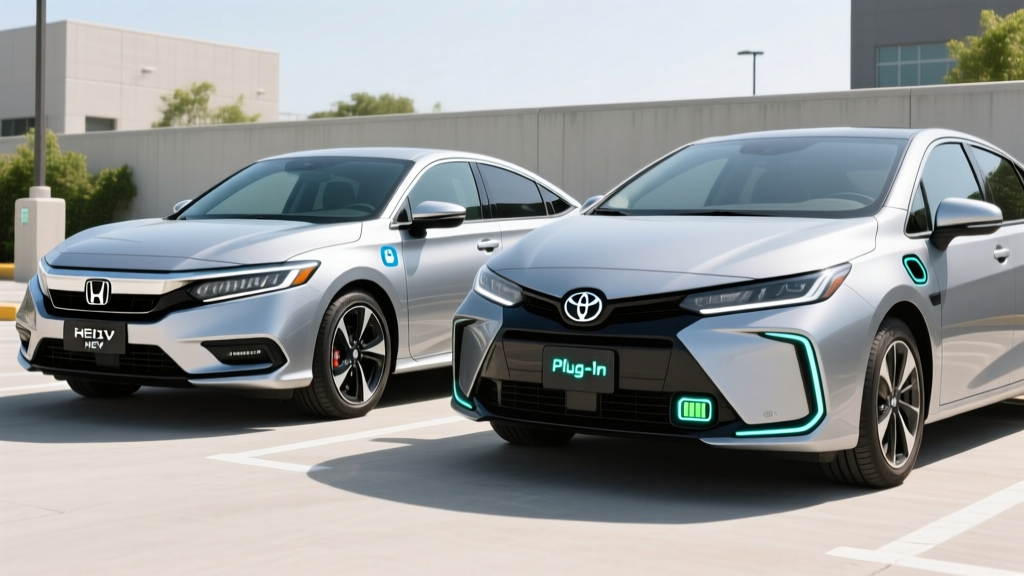
The term "hybrid" technically means any vehicle combining two power sources. In the automotive world, that almost always means an internal combustion engine plus an electric motor. But the car hybrid meaning changes dramatically depending on whether the vehicle can plug in.
| Feature | Conventional Hybrid (HEV) | Plug-In Hybrid (PHEV) |
|---|---|---|
| Plugs in to charge? | No — charges via regenerative braking and engine | Yes — Level 1 (120V) or Level 2 (240V) |
| Battery size | 0.5–2.0 kWh (small buffer) | 10–30 kWh (usable) |
| Electric-only range | None (motor assists engine only) | 20–50+ miles (EPA est.) |
| Fuel when battery depletes | Runs on gasoline continuously | Switches to hybrid mode (gas + regen) |
| Federal tax credit (§30D) | Not eligible | Up to $7,500 if requirements met |
| Typical buyer | No home charging; wants MPG boost | Can charge at home; short commute |
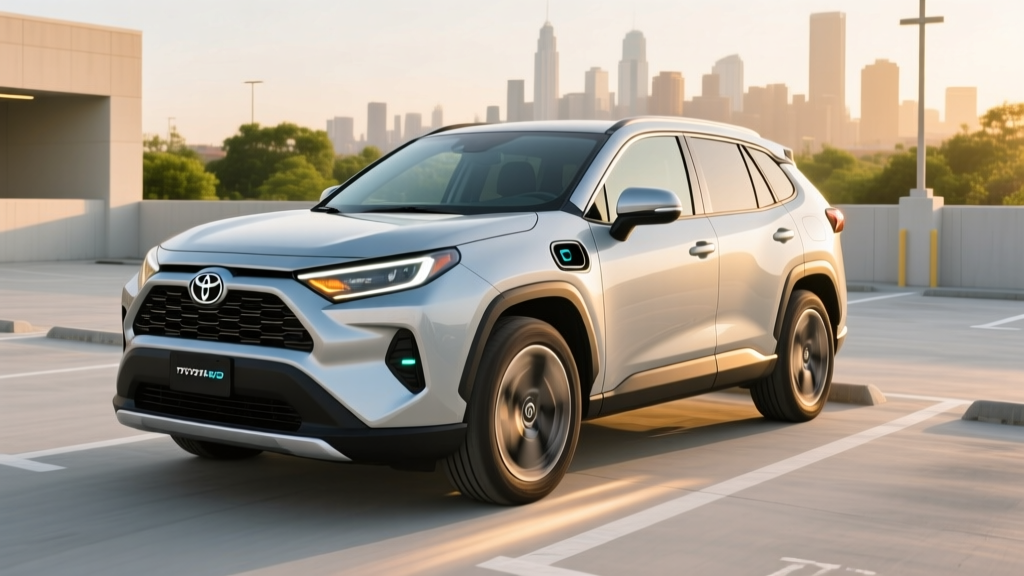
A conventional hybrid like the Toyota RAV4 Hybrid uses its small battery and electric motor to assist the gas engine — smoothing acceleration, enabling brief low-speed electric creep, and recapturing energy during braking. You never plug it in. The engine and regenerative braking handle all charging.
A plug-in hybrid like the Toyota RAV4 Prime carries a much larger battery (18.1 kWh usable) and a more powerful electric motor, enabling genuine electric-only driving at highway speeds. Plug it in overnight on a standard 120V outlet or a 240V Level 2 charger, and you can complete most daily commutes without burning a drop of gasoline. When the battery depletes, it reverts to conventional hybrid operation.
How Many MPG Does a Hybrid Get? EPA vs Real-World Numbers
Hybrids shine in stop-and-go city driving where regenerative braking recovers energy that a gas-only car wastes as heat. That's why many hybrids post higher city MPG than highway MPG — the inverse of a conventional car.
| Vehicle | Type | City MPG | Highway MPG | Combined MPG | PHEV Electric Range | Combined MPGe |
|---|---|---|---|---|---|---|
| Toyota Prius (LE AWD) | HEV | 53 | 54 | 54 | — | — |
| Toyota RAV4 Hybrid | HEV | 41 | 38 | 39 | — | — |
| Honda CR-V Hybrid | HEV | 43 | 36 | 40 | — | — |
| Toyota RAV4 Prime | PHEV | 40 (hybrid mode) | 36 | 38 | 42 mi | 94 MPGe |
| Jeep Wrangler 4xe | PHEV | — | — | 20 (hybrid) | 22 mi | 49 MPGe |
| Hyundai Tucson PHEV | PHEV | 38 (hybrid) | 35 | 37 | 33 mi | 84 MPGe |
Source: fueleconomy.gov, EPA estimates. Real-world results vary by driving style, temperature, and terrain.
Real-world MPG reality check: HEVs frequently exceed their EPA city estimates in mild weather with moderate driving — owners of the current Prius commonly report 55–58 MPG on city routes. Highway MPG tends to run 2–4 MPG below the sticker at sustained 75+ mph speeds. In cold weather (below 30°F), expect a 5–10% MPG drop as the engine runs more frequently for cabin heat and the battery operates less efficiently.
For PHEVs, the MPG number only tells part of the story. If your round-trip commute is under the electric-only range and you charge nightly, you may use zero gasoline on most days. The EPA's MPGe (miles per gallon equivalent) figure converts electricity consumption into a gasoline-equivalent number for comparison. A PHEV with 94 MPGe and a 42-mile electric range effectively operates as a battery-electric car for the majority of daily driving.
PHEV Electric Range, Battery Size, and Charging Times
The electric-only range of a PHEV depends directly on its battery capacity (measured in kilowatt-hours, or kWh — the unit of energy stored) and the vehicle's efficiency. Larger, heavier vehicles like the Wrangler 4xe sacrifice range for off-road capability; compact crossovers like the Tucson PHEV stretch their electrons further.
| Vehicle | Battery (kWh usable) | EPA Electric Range | Total Combined Range | Level 2 Charge Time (0–100%) | DC Fast Charge? |
|---|---|---|---|---|---|
| Toyota RAV4 Prime | 18.1 kWh | 42 mi | ~600 mi | ~2.5 hours (6.6 kW) | No |
| Hyundai Tucson PHEV | 13.8 kWh | 33 mi | ~440 mi | ~2.0 hours (7.2 kW) | No |
| Jeep Wrangler 4xe | 17.3 kWh | 22 mi | ~370 mi | ~2.5 hours (7.2 kW) | No |
| BMW X5 xDrive50e | 25.7 kWh | 38 mi | ~430 mi | ~3.5 hours (7.4 kW) | No |
| Chrysler Pacifica PHEV | 16.0 kWh | 32 mi | ~520 mi | ~2.0 hours (6.6 kW) | No |
Critical note on PHEV charging: Most current PHEVs do not support DC fast charging. They're designed for overnight Level 2 charging at home (240V, typically 6–7 kW). This is intentional — a 2–3 hour charge window aligns with overnight parking, and adding DC fast-charge hardware would increase cost and weight for a battery that rarely needs rapid replenishment. If you need fast public charging, a full BEV is the better tool.
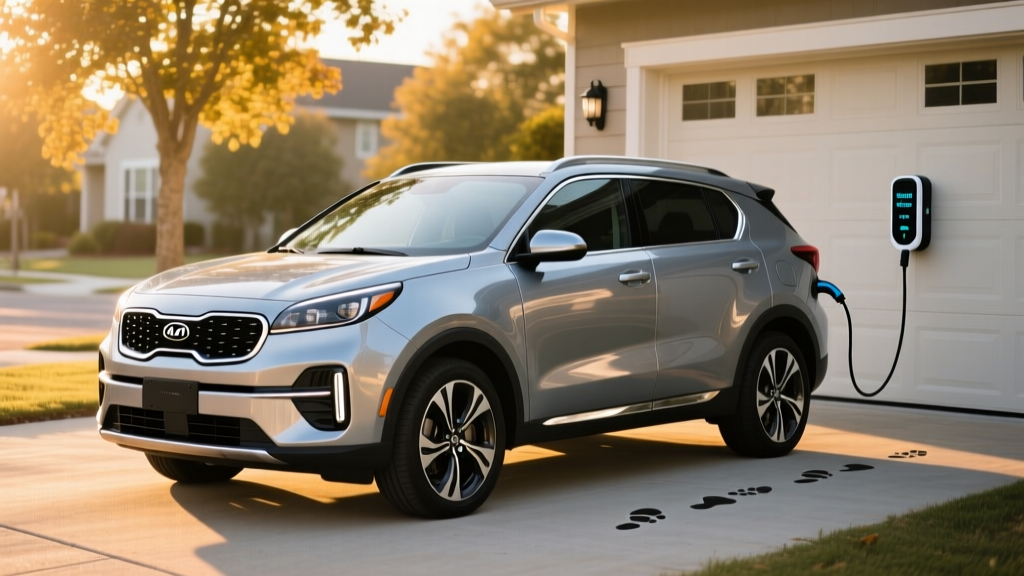
Level 1 charging (a standard 120V household outlet) works for all PHEVs but is slow — expect roughly 4–5 miles of range added per hour. That's adequate for vehicles with smaller batteries and short commutes, but a 240V Level 2 installation is strongly recommended for PHEV owners who want to reliably refill overnight.
Hybrid Powertrains: Combined Horsepower and How They Work
A hybrid's combined output comes from its gasoline engine and electric motor(s) working together — but the math isn't simply additive. Because the engine and motor produce peak power at different RPMs, the combined system horsepower is typically lower than the sum of the individual peaks.
The current Toyota RAV4 Hybrid pairs a 2.5-liter four-cylinder engine (176 hp) with front and rear electric motors, producing a net 219 combined horsepower. The RAV4 Prime uses the same engine but with a more powerful front motor and larger battery, yielding 302 combined hp and a 6.8-second 0–60 mph time — making it one of the quickest vehicles in Toyota's lineup.
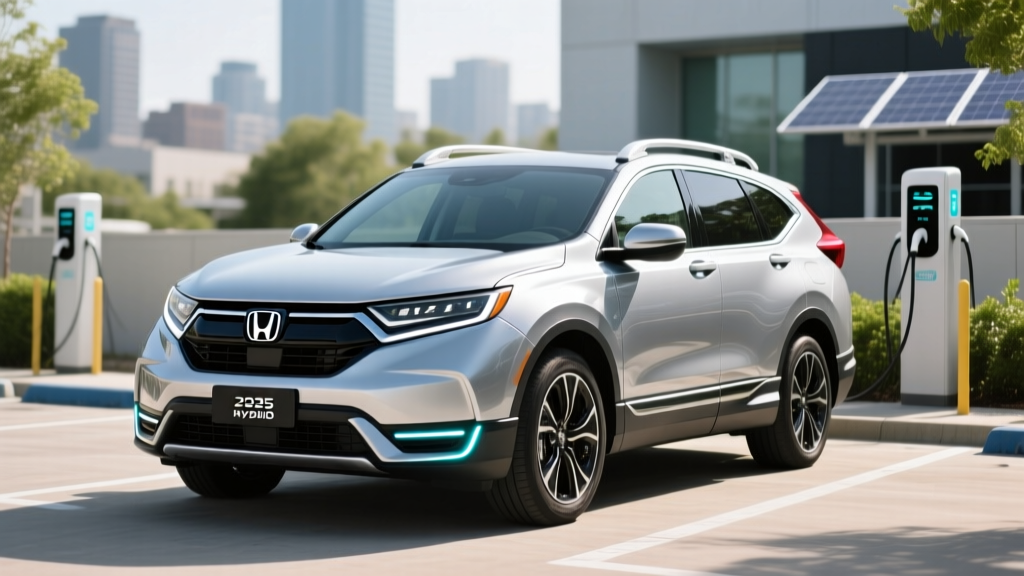
Honda's two-motor hybrid system (found in the CR-V Hybrid and Accord Hybrid) takes a different approach: the electric motor handles most propulsion duties while the engine acts primarily as a generator, only directly driving the wheels at highway speeds. This series-parallel architecture delivers seamless electric-like acceleration around town with 204 combined hp in the CR-V Hybrid.
The key insight: hybrid powertrains prioritize torque fill — the electric motor provides instant low-end torque while the engine builds power higher in the rev range. The result is responsive acceleration without the lag of a turbocharged gas-only engine, and it's a big reason hybrids feel quicker than their horsepower numbers suggest.
Hybrid and PHEV Pricing: Base MSRP and Tax Credit Eligibility
Hybrids carry a modest price premium over their gas-only counterparts — typically $1,000–$3,000 for a conventional HEV, reflecting the cost of the battery pack and electric motor hardware. PHEVs command a larger premium of $4,000–$8,000 due to the substantially larger battery.
| Vehicle | Type | Base MSRP | Gas-Only Equivalent | Hybrid Premium |
|---|---|---|---|---|
| Toyota Prius LE | HEV | $29,450 | N/A (hybrid only) | — |
| Toyota RAV4 Hybrid LE | HEV | $33,850 | $30,850 (RAV4 LE) | +$3,000 |
| Honda CR-V Hybrid Sport | HEV | $36,350 | $33,350 (CR-V LX) | +$3,000 |
| Toyota RAV4 Prime SE | PHEV | $44,900 | $33,850 (RAV4 HEV) | +$11,050 |
| Hyundai Tucson PHEV SEL | PHEV | $39,990 | $32,250 (Tucson SEL) | +$7,740 |
Federal tax credit for PHEVs (§30D): Under current IRS rules, qualifying plug-in hybrids can receive up to $7,500 in federal tax credits, but eligibility is far from automatic. The requirements include:
- Battery capacity: At least 7 kWh (most current PHEVs meet this)
- Final assembly: Vehicle must be assembled in North America
- Critical minerals: A percentage of battery minerals must be sourced from the U.S. or free-trade-agreement partners (threshold increases annually)
- Battery components: A percentage of battery components must be manufactured or assembled in North America (threshold increases annually)
- MSRP caps: Vans, SUVs, and trucks ≤ $80,000; sedans ≤ $55,000
- Buyer income caps: Modified AGI ≤ $150,000 (single), $225,000 (head of household), $300,000 (joint)
- Point-of-sale transfer: You can apply the credit as a down-payment reduction at the dealer rather than waiting for tax filing
Conventional hybrids (HEVs) do not qualify for the §30D federal tax credit. Some states offer their own rebates for both HEVs and PHEVs — check your state energy office or the Alternative Fuels Data Center for local programs. Always verify current eligibility on IRS.gov before purchasing, as battery-sourcing rules tighten annually and can disqualify a previously eligible model mid-year.
Hybrid Battery Reliability, Warranties, and Replacement Costs
Hybrid Battery Warranty: What's Covered
Federal emissions regulations mandate that hybrid and PHEV battery packs carry a minimum warranty of 8 years / 100,000 miles (10 years / 150,000 miles in California Air Resources Board states including CA, CO, CT, ME, MA, NJ, NY, OR, RI, VT, WA). Most manufacturers match or exceed this baseline:
- Toyota: 10 years / 150,000 miles (all states, hybrid battery)
- Honda: 8 years / 100,000 miles (10/150,000 in CARB states)
- Hyundai/Kia: 10 years / 100,000 miles (nationwide)
- Ford: 8 years / 100,000 miles
The warranty covers battery capacity loss below a specified threshold (typically 60–70% of original capacity) and outright failure. It does not cover damage from accidents, flooding, or improper modifications.
How long do hybrid batteries actually last? Real-world data is encouraging. Toyota's nickel-metal hydride (NiMH) packs in the Prius have a well-documented track record of lasting 150,000–200,000+ miles with gradual capacity loss. The current generation uses lithium-ion packs that are lighter, more energy-dense, and managed by sophisticated thermal systems that keep cells in their optimal temperature window — extending lifespan further.
PHEV batteries are larger and typically use NMC (nickel manganese cobalt) lithium-ion chemistry. Because PHEVs cycle through a wider state-of-charge range daily (charging to 100% and depleting to near zero), they experience more cycle wear than HEV batteries, which operate in a narrow 40–60% buffer. Even so, modern PHEV packs are engineered for 3,000–5,000 charge cycles before significant degradation — equivalent to 10–15 years of daily use for most owners.
Battery replacement cost: This is the question that keeps hybrid shoppers up at night. Here are current replacement estimates (parts + labor):
- Toyota Prius HEV: $2,500–$4,000
- Toyota RAV4 Hybrid: $3,000–$5,000
- Toyota RAV4 Prime (PHEV): $8,000–$12,000
- Honda CR-V Hybrid: $3,000–$4,500
- Hyundai Tucson PHEV: $6,000–$9,000
These are out-of-warranty costs. In practice, the vast majority of hybrid owners never replace the battery — it outlasts the vehicle's economic life. Third-party refurbishment and individual cell-module replacement services have also emerged, offering repairs at 40–60% below full-pack dealer pricing for out-of-warranty vehicles.
Hybrid vs PHEV vs Full EV: Which Powertrain Fits Your Life?
The Hybrid Decision Framework
Choose a conventional hybrid (HEV) if:
- You lack access to home or workplace charging
- You want maximum MPG without changing your fueling habits
- Your driving is mostly city and suburban (where regen braking pays off most)
- You want the lowest purchase price among electrified options
- You plan to keep the vehicle 10+ years and value Toyota/Honda reliability data
Choose a plug-in hybrid (PHEV) if:
- You can install a Level 2 charger at home (or have reliable workplace charging)
- Your daily round-trip commute falls within the electric-only range (20–45 mi)
- You regularly take longer road trips where a full EV's charging logistics feel risky
- You want electric daily driving without range anxiety on highway trips
- You qualify for the §30D tax credit, which can offset the PHEV price premium
Choose a full battery-electric vehicle (BEV) if:
- You have reliable home charging and your daily driving is under 250 miles
- You want zero tailpipe emissions and the lowest per-mile fuel cost
- You want minimal maintenance (no oil changes, no engine, fewer moving parts)
- You're comfortable with DC fast charging on road trips (300+ mi range models)
- You want access to the full $7,500 §30D credit (more BEVs qualify than PHEVs)
The hybrid's fundamental value proposition is flexibility. An HEV eliminates the need for any behavioral change — you buy gas as always, but burn significantly less of it. A PHEV lets you choose electric driving when it's convenient and gas when it's not, making it the pragmatic bridge for drivers who aren't ready to commit to a full EV but want to electrify their daily commute.
One often-overlooked economic point: if your PHEV's electric range covers your daily driving and you charge at home, your effective fuel cost can match or beat a full EV on a per-mile basis — because you're only charging a 13–18 kWh battery, not a 75–100 kWh BEV pack. The PHEV's smaller battery charges faster, costs less per fill-up, and puts less demand on your home electrical panel.
Pros and Cons: The Honest Hybrid Scorecard
Conventional Hybrid (HEV) Pros
- 40–57 MPG combined with zero plug-in routine
- Proven long-term reliability (20+ years of Prius data)
- Modest price premium over gas-only models
- Strong resale value, especially Toyota/Honda
- Excellent city MPG — often exceeds EPA estimate
Conventional Hybrid (HEV) Cons
- No electric-only driving mode
- No federal tax credit eligibility
- Highway MPG advantage is smaller than city
- Still 100% dependent on gasoline
- Limited performance benefit over turbo gas engines
Plug-In Hybrid (PHEV) Pros
- 20–50 miles of zero-gas daily commuting
- Eligible for up to $7,500 federal tax credit (if qualified)
- Full gas-engine range for road trips — no charging-stress
- Lower daily fuel cost when charging at home
- Stronger combined HP and acceleration than HEV counterparts
Plug-In Hybrid (PHEV) Cons
- $4,000–$8,000 price premium over HEV equivalent
- Requires home charging setup to realize value
- Heavier than HEV (larger battery) — slightly worse MPG when battery depleted
- No DC fast charging on most models
- Higher battery replacement cost out of warranty ($6,000–$12,000)
Frequently Asked Questions
Does a hybrid car need to be plugged in?
Only plug-in hybrids (PHEVs) require plugging in. A conventional hybrid (HEV) charges its small battery entirely through regenerative braking and the gasoline engine — you simply drive and refuel like any gas car. If you see a hybrid advertised as "self-charging," that's marketing language for a conventional HEV.
How long do hybrid batteries last before replacement?
Most hybrid batteries last the life of the vehicle. Toyota's HEV packs routinely exceed 150,000–200,000 miles. PHEV batteries, while cycling more deeply, are engineered for 10–15 years of daily use. All are covered by a minimum 8-year/100,000-mile federal warranty, with many manufacturers offering 10 years/150,000 miles.
Is a PHEV worth it if I can't charge at home?
Generally, no. The PHEV premium over an HEV ($4,000–$8,000) is justified by the fuel savings from electric-only commuting. Without regular charging, you're carrying a heavy, depleted battery that slightly reduces fuel economy compared to a lighter HEV. If you can't charge at home or work, a conventional hybrid delivers better value.
What's the difference between MPG and MPGe?
MPG measures miles traveled per gallon of gasoline. MPGe (miles per gallon equivalent) is the EPA's way of expressing electricity consumption in familiar terms — one gallon of gasoline contains roughly 33.7 kWh of energy, so a PHEV using 33.7 kWh to travel 94 miles earns a 94 MPGe rating. MPGe only applies to the electric-only portion of PHEV driving.
Do hybrids cost more to insure than gas cars?
Slightly, in most cases. Insurance premiums for hybrids and PHEVs run 5–15% higher than equivalent gas-only models, driven by higher repair costs for battery and powertrain components. However, the fuel savings from a hybrid (typically $500–$1,200/year depending on driving and local gas prices) usually outweigh the insurance increase. Get quotes before purchasing to compare.
Can I get a tax credit on a used hybrid or PHEV?
The §25E used clean vehicle credit offers up to $4,000 (or 30% of the sale price, whichever is less) on qualifying used PHEVs and BEVs purchased from a dealer for $25,000 or less. The vehicle must be at least two model years old, and the buyer must meet income caps ($75,000 single / $150,000 joint). Used conventional HEVs do not qualify. Verify eligibility on IRS.gov.
Are hybrids good in cold weather?
Hybrids handle cold weather better than full EVs because the gasoline engine provides cabin heat without draining the battery. However, expect a 5–10% MPG drop in sustained sub-30°F temperatures as the engine runs more frequently for warmth and battery efficiency decreases. PHEV electric-only range drops 15–25% in extreme cold due to reduced battery performance and electric cabin heating demands.
The car hybrid meaning ultimately comes down to one question: do you want to plug in or not? If you don't — or can't — a conventional HEV delivers meaningfully better fuel economy with zero lifestyle change. If you can charge at home and your commute is under 40 miles round-trip, a PHEV lets you drive electric most days while keeping the gas engine as a road-trip safety net. Both are proven, reliable technologies backed by decade-long warranties. The right choice depends on your charging access, your commute, and whether the PHEV tax credit offsets its price premium in your specific situation.