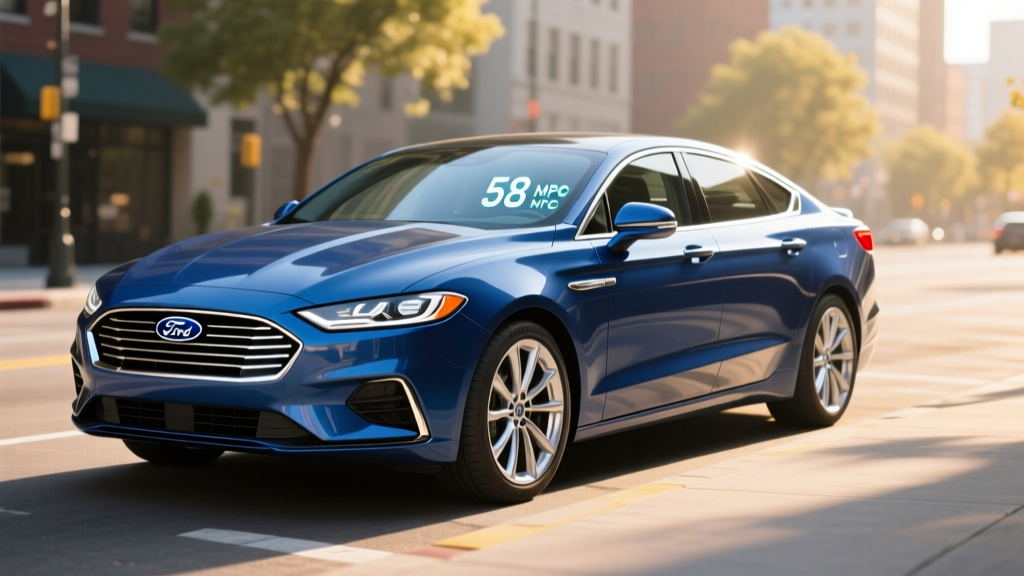
The Ford Fusion Hybrid was one of the most popular midsize hybrid sedans ever sold in the United States, and for good reason: strong EPA fuel economy, a comfortable ride, and a relatively affordable entry price on the used market. Ford discontinued the Fusion after the 2020 model year to focus on SUVs and trucks, which means every Fusion Hybrid you'll find today is a used vehicle. But that also means lower prices, proven reliability data, and a well-documented ownership track record.
If you're researching gas mileage for the Ford Fusion Hybrid, you're likely comparing it against other used hybrids, a conventional gas sedan, or wondering whether to look at a full EV instead. This guide covers every generation's EPA MPG, real-world fuel economy expectations, the plug-in Energi variant, battery longevity, and whether a used Fusion Hybrid still makes financial sense in 2026.
Ford Fusion Hybrid Gas Mileage: EPA Ratings by Generation
The Fusion Hybrid spanned two distinct generations, each with different powertrains and fuel economy ratings. The second generation (2013–2020) is by far the more common find on the used market and offers the best efficiency.
| Generation | Model Years | City MPG | Highway MPG | Combined MPG |
|---|---|---|---|---|
| 1st Gen (2.5L I4) | 2010–2012 | 41 | 36 | 39 |
| 2nd Gen (2.0L I4) | 2013–2020 | 43 | 41 | 42 |
| Fusion Energi (PHEV) 2013–2018 | 2013–2018 | 88 MPGe combined (hybrid mode: 42 MPG) | ||
| Fusion Energi (PHEV) 2019–2020 | 2019–2020 | 103 MPGe combined (hybrid mode: 42 MPG) | ||
The second-generation 2.0-liter Atkinson-cycle four-cylinder paired with an electric motor and a 1.4 kWh lithium-ion battery pack delivers the best balance. At 43 city / 41 highway / 42 combined MPG, it trails the Toyota Camry Hybrid (51/53/52 for the 2025 LE) but remains competitive with the Honda Accord Hybrid (48/47/48) and significantly outperforms any gas-only midsize sedan.
Source: EPA Fuel Economy Guide — Ford Fusion Hybrid
Real-World MPG: What Fusion Hybrid Owners Actually Report
EPA Combined: 42 MPG (2nd Gen)
Real-World City: 42–47 MPG (hybrids often exceed EPA in stop-and-go driving due to regenerative braking)
Real-World Highway: 37–40 MPG (aerodynamic drag and sustained engine load reduce efficiency at 70+ mph)
Cold Weather Penalty: Expect 3–5 MPG reduction in sub-40°F conditions due to cabin heating demands and reduced battery efficiency
Like all hybrids, the Fusion Hybrid benefits enormously from city driving. The electric motor handles low-speed propulsion, regenerative braking recaptures energy at every stoplight, and the gas engine shuts off frequently. Many owners on FuelEconomy.gov's My MPG tracker report averaging 43–46 MPG in mixed suburban commuting with frequent stops.
Highway driving tells a different story. At sustained 75–80 mph speeds, the gasoline engine does most of the work, and the Fusion's 188 combined horsepower has to push a 3,600-pound sedan through the air. Expect 37–40 MPG on long highway trips. This is still excellent for a midsize sedan — a comparable gas-only Fusion with the 1.5L EcoBoost averages around 27 MPG combined — but it's where the hybrid advantage narrows.
Cold weather hits hybrids harder than conventional cars. The engine must run more often to provide cabin heat (unless equipped with an electric heater, which the Fusion Hybrid partially uses), the battery's charge/discharge efficiency drops, and thicker fluids increase parasitic losses. Plan for mid-to-upper 30s in winter city driving if you live in a cold climate.
HEV vs. PHEV: Fusion Hybrid vs. Fusion Energi Explained
Conventional Hybrid (HEV) — Fusion Hybrid: No plug required. A small 1.4 kWh battery recharges through regenerative braking and the gas engine. You simply fill up at a gas station and drive. The electric motor assists the engine and enables brief electric-only driving at low speeds.
Plug-in Hybrid (PHEV) — Fusion Energi: Features a larger 7.6 kWh battery (2013–2018) or 9.0 kWh (2019–2020) that you can plug in to charge. Provides 19–26 miles of electric-only range before the gas engine kicks in. Functions as a regular hybrid once the battery is depleted.
| Spec | Fusion Hybrid (HEV) | Fusion Energi 2019–2020 (PHEV) |
|---|---|---|
| Powertrain | 2.0L I4 + electric motor | 2.0L I4 + electric motor |
| Combined Horsepower | 188 hp | 188 hp |
| Battery Capacity | 1.4 kWh (Li-ion) | 9.0 kWh (Li-ion) |
| Electric-Only Range | N/A (brief low-speed EV mode) | 26 miles (EPA) |
| Total Range | ~620 miles (13.5-gal tank) | ~610 miles (14.0-gal tank + EV range) |
| Plug-In Charging | No | Yes — Level 1 (120V) or Level 2 (240V) |
| Level 2 Charge Time | N/A | ~2.5 hours (0–100%) |
| DC Fast Charging | N/A | No |
| Combined MPG (hybrid mode) | 42 MPG | 42 MPG |
| MPGe (with full battery) | N/A | 103 MPGe |
The Energi is the better choice if you have a short commute (under 25 miles round-trip), access to a garage or driveway for overnight Level 2 charging, and want to minimize gasoline use for daily driving. On a full charge, the 2019–2020 Energi covers 26 miles on electricity alone — enough for most errands and commutes without burning a drop of gas. Once the battery depletes, it operates exactly like the standard Hybrid at 42 MPG combined.
The standard Hybrid is the simpler, more affordable pick. No charging infrastructure needed, lower used-market pricing, and marginally more trunk space (the Energi's larger battery pack reduces cargo room from 16.0 to 8.2 cubic feet).
Powertrain, Performance, and Driving Impressions
Both the Hybrid and Energi share Ford's 2.0-liter Atkinson-cycle inline-four paired with an electric motor integrated into the transmission housing. Total system output is 188 horsepower, routed to the front wheels through an electronically controlled continuously variable transmission (eCVT). The 0–60 mph time sits around 8.4 seconds — adequate for merging and passing but not quick by modern standards.
The eCVT is a power-split device (similar to Toyota's Hybrid Synergy Drive), not a belt-driven CVT. This means there's no rubber-banding effect under acceleration; the engine RPM rises proportionally with vehicle speed. It's one of the smoothest hybrid drivetrains of its era, with seamless transitions between electric and gas power that are nearly imperceptible from the driver's seat.
Handling is competent rather than sporty. The added weight of the hybrid battery (roughly 200 pounds over a gas Fusion) gives the car a planted feel at highway speeds, though the low-rolling-resistance tires prioritize efficiency over grip. The regenerative braking system offers two modes — standard (feels like normal brake pedal feel) and enhanced (stronger regen for more one-pedal-like driving in the city).
Battery Longevity, Warranty, and Replacement Costs
Coverage: 8 years / 100,000 miles (whichever comes first)
California & PZEV states: 10 years / 150,000 miles
Capacity Threshold: Ford warranted the battery to retain sufficient capacity for normal hybrid operation; no specific percentage was published (unlike EV warranties that guarantee 70% retention)
What's Covered: Battery pack, power electronics, electric motor, hybrid-specific components
Battery longevity is the single biggest concern for used hybrid buyers. The good news: Ford's hybrid battery packs have proven remarkably durable. The 1.4 kWh lithium-ion pack in the Fusion Hybrid is relatively small and operates within a conservative state-of-charge window (typically 40–60%), which minimizes degradation. Many Fusion Hybrids have surpassed 150,000 and even 200,000 miles on the original battery without significant capacity loss.
That said, all lithium-ion batteries degrade with age and use. A 2015 Fusion Hybrid in 2026 is 11 years old, and the original warranty has expired. If the battery does fail out of warranty, replacement costs typically range from $2,000 to $4,000 depending on whether you source a new OEM pack, a refurbished unit, or an aftermarket option. Independent hybrid shops often offer refurbished packs at the lower end of that range with 1–3 year warranties.
The Energi's larger 7.6 or 9.0 kWh pack faces slightly more degradation risk because it cycles through a wider state-of-charge range during daily plug-in use. However, reported failures remain uncommon. A replacement Energi battery is more expensive — approximately $5,000 to $7,500 — due to the larger capacity and more complex thermal management.
For a used purchase, prioritize vehicles with documented hybrid system service history and check for any remaining powertrain warranty coverage. A pre-purchase inspection at a Ford dealer or hybrid-specialist shop can assess battery state of health through the OBD-II port.
Used Fusion Hybrid Pricing and Tax Credit Eligibility
Because Ford discontinued the Fusion after 2020, all available examples are used vehicles. Pricing in early 2026 varies significantly by model year, mileage, condition, and trim:
| Model Year Range | Mileage Range | Typical Price Range |
|---|---|---|
| 2017–2020 | 30,000–70,000 mi | $14,000–$20,000 |
| 2014–2016 | 70,000–120,000 mi | $9,000–$14,000 |
| 2010–2013 | 100,000–160,000 mi | $5,000–$9,000 |
The Fusion Energi (PHEV) commands a $1,500–$3,000 premium over the equivalent Hybrid model year due to its electric-only capability and higher original MSRP.
- Used Clean Vehicle Credit (§25E): Up to $4,000 or 30% of the sale price (whichever is less) for qualified used EVs and PHEVs purchased from a dealer for $25,000 or less.
- Fusion Hybrid (HEV): Does NOT qualify. Conventional hybrids are not eligible for any federal clean vehicle tax credit — they are not plug-in vehicles.
- Fusion Energi (PHEV): MAY qualify under the §25E used vehicle credit IF: the sale price is $25,000 or less, the buyer meets income limits ($75K single / $150K married filing jointly), the vehicle is purchased from a licensed dealer, and the vehicle is at least two model years old.
- New vehicle credits (§30D): Not applicable — the Fusion is discontinued and no longer sold new.
The Fusion Energi's eligibility for the used clean vehicle credit is a genuine advantage over the standard Hybrid. On a $16,000 used Energi, the 30% calculation yields a $4,000 credit (the maximum), effectively bringing the net cost to $12,000. However, this credit is subject to IRS income caps and must be claimed on your federal tax return — it is not currently available as a point-of-sale transfer for used vehicles the way §30D credits are for new EVs. Consult a tax professional to confirm your eligibility.
Reliability Ratings and Common Issues
The Ford Fusion Hybrid has a solid reliability record across both generations, with the second-gen (2013–2020) being the more refined and dependable choice. Common issues reported by owners and tracked by NHTSA include:
- 12-volt battery drain: Like many modern vehicles, the Fusion can experience parasitic drain on the 12V auxiliary battery if left sitting for extended periods. This is separate from the hybrid traction battery.
- Infotainment glitches: The SYNC 3 system (2016+) is generally reliable, but earlier SYNC versions (2013–2015) are prone to freezing and slow response.
- Brake actuator assembly: Some 2013–2014 models experienced issues with the regenerative brake actuator. Ford issued recalls for affected vehicles — verify recall completion via NHTSA's recall lookup.
- Coolant intrusion (2.0L engine): A small number of 2017–2019 2.0L engines experienced coolant leaks into the cylinder head. While not widespread, it's worth checking for service records addressing this.
Overall, the Fusion Hybrid ranks behind the Toyota Camry Hybrid and Prius in long-term reliability surveys but ahead of most domestic and European hybrid competitors. With regular maintenance (oil changes every 7,500–10,000 miles, coolant service, brake fluid checks), these powertrains routinely reach 200,000+ miles.
Fusion Hybrid vs. Full EV vs. Gas Car: Which Should You Choose?
- You want 42+ MPG without changing your fueling habits
- You lack access to home or workplace charging for a plug-in vehicle
- Your budget is $8,000–$18,000 for a reliable used sedan
- You take frequent long road trips and don't want to plan around charging stations
- Your daily commute is under 25 miles and you can charge at home overnight
- You want to drive mostly on electricity for daily errands but need gas flexibility for longer trips
- You want to potentially claim the $4,000 used clean vehicle tax credit
- You can accept reduced trunk space (8.2 cu ft vs. 16.0 cu ft)
- You have reliable home Level 2 charging and your daily driving is under 200 miles
- You want to eliminate gasoline costs entirely
- You're willing to plan charging stops on road trips or primarily drive locally
- You want the lowest per-mile fuel cost (electricity at $0.13/kWh = ~$0.04/mile vs. $0.10/mile for the Hybrid at 42 MPG and $3.50/gal)
- Your budget is under $5,000 and you need the cheapest possible transportation
- You drive very few miles per year (under 5,000) and the hybrid fuel savings won't offset a higher purchase price
The Fusion Hybrid occupies a practical middle ground: it delivers meaningful fuel savings over a gas car (roughly $600–$900 per year at 15,000 miles driven, depending on gas prices) without requiring any behavioral changes. For buyers not ready to commit to plug-in ownership, it's one of the most accessible used hybrid options available.
Frequently Asked Questions
How many MPG does the Ford Fusion Hybrid get?
The second-generation Ford Fusion Hybrid (2013–2020) is EPA-rated at 43 city / 41 highway / 42 combined MPG. The first generation (2010–2012) is rated at 41 city / 36 highway / 39 combined. Real-world city driving often yields 43–47 MPG, while sustained highway driving at 75+ mph typically drops to 37–40 MPG.
How far can the Fusion Energi go on electric only?
The 2019–2020 Fusion Energi delivers 26 miles of EPA-rated electric-only range. The 2013–2018 Energi provides approximately 19–21 miles on a full charge. After the battery depletes, the Energi operates as a standard hybrid at 42 MPG combined, so total range exceeds 600 miles with a full tank and full battery.
Is the Ford Fusion Hybrid reliable, and what does a battery replacement cost?
Yes — the Fusion Hybrid has a solid reliability record, and the hybrid battery pack commonly lasts 150,000+ miles without significant degradation. If replacement is needed out of warranty, expect to pay $2,000–$4,000 for the standard Hybrid battery and $5,000–$7,500 for the Energi's larger pack. The original warranty covers 8 years/100,000 miles (10 years/150,000 miles in California and PZEV states).
Does the Ford Fusion Hybrid qualify for any tax credit?
The conventional Fusion Hybrid (HEV) does not qualify for any federal tax credit — it is not a plug-in vehicle. The Fusion Energi (PHEV) may qualify for the IRS §25E Used Clean Vehicle Credit of up to $4,000, provided the sale price is $25,000 or less, the buyer meets income limits, and the vehicle is purchased from a licensed dealer. Always verify current eligibility with a tax professional or the IRS guidelines.
Should I buy a Fusion Hybrid or a Toyota Camry Hybrid?
The Camry Hybrid (2018+) offers better fuel economy (52 MPG combined for the LE), stronger reliability data, and higher resale values, but commands a premium on the used market — typically $3,000–$6,000 more than a comparable Fusion Hybrid. If budget is the primary concern, the Fusion Hybrid delivers excellent value. If you plan to keep the car 10+ years and want the lowest total cost of ownership, the Camry Hybrid is the stronger long-term bet.
Do I need to plug in the Ford Fusion Hybrid?
No. The standard Fusion Hybrid is a conventional hybrid (HEV) that charges its small battery through regenerative braking and the gasoline engine. You never plug it in — you simply fill up at a gas station as normal. Only the Fusion Energi (PHEV) requires plug-in charging to access its electric-only range, though the Energi can also operate without plugging in as a standard hybrid.
- 42 MPG combined is excellent for a midsize sedan
- Smooth, unobtrusive hybrid powertrain with no plug-in required (HEV)
- Affordable used pricing — $8K–$18K depending on year
- Comfortable ride quality and spacious cabin (HEV)
- Proven battery longevity with many examples exceeding 150K miles
- Energi PHEV may qualify for $4,000 used clean vehicle tax credit
- Discontinued after 2020 — no new models available
- Highway MPG drops to 37–40 at sustained high speeds
- Energi trunk space severely reduced (8.2 cu ft) by battery pack
- Older SYNC infotainment (pre-2016) is dated and sluggish
- Trails Camry Hybrid in fuel economy and long-term resale value
- No DC fast charging on Energi — Level 2 only, ~2.5 hours