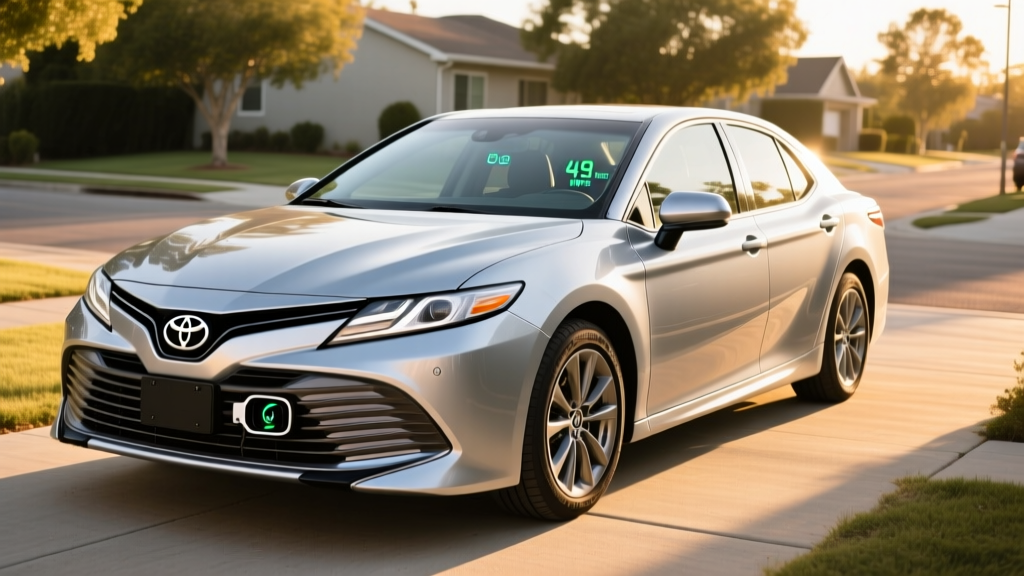
The 2018 Toyota Camry Hybrid was a watershed year for Toyota's midsize sedan. Sitting on the new TNGA-K platform, it shed weight, gained rigidity, and delivered class-leading efficiency that still holds up against 2026 competition. If you're researching 2018 Camry Hybrid MPG as a used-car buyer, you're looking at one of the most reliable and fuel-efficient midsize sedans ever sold — but real-world numbers and long-term battery costs deserve a closer look before you sign.
This guide covers every trim's EPA rating, what owners actually see at the pump, the hybrid battery's lifespan and replacement cost, and how this conventional HEV stacks up against plug-in hybrids and full EVs in 2026.
2018 Camry Hybrid MPG: EPA Ratings by Trim
The 2018 Camry Hybrid came in three trims — LE, SE, and XLE — and the fuel economy varies slightly depending on wheel size and curb weight. The LE trim, riding on 16-inch wheels and a lighter curb weight, is the efficiency champion of the lineup.
| Trim | City MPG | Highway MPG | Combined MPG | Fuel Tank (gal) | Est. Total Range |
|---|---|---|---|---|---|
| LE | 51 | 53 | 52 | 13.2 | ~686 mi |
| SE | 44 | 47 | 46 | 13.2 | ~607 mi |
| XLE | 44 | 47 | 46 | 13.2 | ~607 mi |
Source: EPA fueleconomy.gov
That 6-MPG gap between the LE and the SE/XLE is significant. It comes down to the LE's low-rolling-resistance tires, lighter alloy wheels, and slightly different final-drive tuning. If maximum fuel savings is the goal, the LE is the trim to find.
Real-World MPG: What Owners Actually Report
EPA stickers are a starting point, not a guarantee. The 2018 Camry Hybrid's real-world fuel economy depends heavily on driving style, climate, and trip length.
- City / suburban driving: 48–55 MPG (hybrids often exceed EPA in stop-and-go thanks to regenerative braking)
- Highway (70–80 mph): 42–48 MPG (aerodynamic drag and less regen opportunity reduce efficiency)
- Cold weather (below 35°F): 38–44 MPG (engine runs more often for cabin heat; battery chemistry is less efficient)
- Owner-reported average (Fuelly data): ~47–50 MPG combined across all trims
The key insight for hybrid newcomers: unlike gas cars, hybrids are more efficient in the city than on the highway. Frequent stops mean more regenerative braking, which recaptures kinetic energy and recharges the hybrid battery. If your commute is 80% city driving, you'll likely meet or beat the EPA city number. If it's 80% interstate, expect to fall short.
Cold weather is the biggest efficiency killer. The 2.5-liter Atkinson-cycle engine must run more frequently to provide cabin heat (the Camry Hybrid does not use a heat pump), and the nickel-metal-hydride (NiMH) battery in the LE and lithium-ion (Li-ion) battery in the SE/XLE both lose some charge/discharge efficiency at low temperatures. Owners in northern climates should budget a 10–15% MPG reduction from December through February.
Powertrain Specs: Engine, Motor, and Combined Output
| Engine | 2.5L 4-cyl Atkinson-cycle (A25A-FXS) |
| Engine HP / Torque | 176 hp / 163 lb-ft |
| Electric Motor | Permanent-magnet synchronous (eCVT-integrated) |
| Motor Output | 118 hp / 149 lb-ft |
| Net Combined System HP | 208 hp |
| Transmission | eCVT (planetary gearset, no belt) |
| Drivetrain | Front-wheel drive |
| Hybrid Battery (LE) | NiMH, ~1.6 kWh (gross) |
| Hybrid Battery (SE/XLE) | Li-ion, ~1.6 kWh (gross) |
| 0–60 mph | ~7.6 seconds |
Toyota's Hybrid Synergy Drive uses a planetary gearset — not a traditional belt-and-pulley CVT — to blend engine and motor power. This eCVT design is mechanically simple, with no belts to wear or pulleys to fail, which is a major factor in the Camry Hybrid's long-term reliability.
The 208 combined horsepower is competitive with the non-hybrid 2.5L Camry (203 hp) and noticeably quicker than the previous-generation Camry Hybrid (200 hp). The 0–60 time of roughly 7.6 seconds means confident highway merging, though it's not a sports sedan. The instant torque from the electric motor makes it feel quicker off the line than the number suggests.
HEV vs. PHEV vs. EV: Which Fits Your Driving Pattern?
The 2018 Camry Hybrid is a conventional hybrid electric vehicle (HEV). It has no plug, no electric-only range to speak of, and charges its small battery entirely through regenerative braking and the gasoline engine. This is fundamentally different from a plug-in hybrid (PHEV) or a battery-electric vehicle (BEV).
| Factor | HEV (Camry Hybrid) | PHEV (e.g., Prius Prime) | BEV (e.g., Model 3) |
|---|---|---|---|
| Plug-in Required? | No | Yes (for EV range) | Yes (always) |
| Electric-Only Range | ~1 mi (low-speed only) | 25–44 mi (model dependent) | 250–360 mi |
| Home Charging Needed? | No | Recommended (Level 2) | Essential (Level 2) |
| Gas Station Visits | Regular, but infrequent | Rare if commute < EV range | Never |
| Federal Tax Credit (§30D) | Not eligible | Up to $7,500 (if eligible) | Up to $7,500 (if eligible) |
| Used Price Range (2026) | $17,000–$26,000 | $22,000–$32,000 | $20,000–$35,000 |
| Best For | No home charging access; long highway commutes | Short commute + home charging; weekend road trips | Home charging + mostly <250 mi daily |
- You rent or live somewhere without reliable access to a Level 2 charger
- Your daily driving exceeds 40 miles and you don't want to think about charging
- You want a proven, low-maintenance sedan with 500+ mile total range
- Your budget is under $25,000 and you want minimal depreciation risk
- You have home Level 2 charging and a commute under 35 miles (a PHEV can run mostly on electricity)
- You want to eliminate gasoline entirely (BEV)
- You qualify for the federal used-EV tax credit (up to $4,000 on qualifying pre-owned BEVs/PHEVs under IRS §25E)
Tax Credits and Incentives for a Used 2018 Camry Hybrid
Here's the straightforward answer: the 2018 Camry Hybrid does not qualify for any federal tax credit. The IRS §30D new clean vehicle credit and the §25E previously owned clean vehicle credit both apply only to plug-in vehicles (PHEVs and BEVs) with a minimum battery capacity of 7 kWh for new vehicles or 7 kWh for used. The Camry Hybrid's ~1.6 kWh battery is far below that threshold, and as a conventional HEV, it was never eligible for plug-in credits even when new.
Some states offer modest rebates or HOV lane access for hybrids, but these programs have largely shifted toward PHEVs and BEVs. Check your state's energy office or AFDC incentive database for any remaining state-level hybrid incentives in your area.
What the Camry Hybrid does offer is a lower purchase price and no charging infrastructure cost — savings that can offset the lack of a tax credit for many buyers.
Hybrid Battery Lifespan, Warranty, and Replacement Cost
For any used hybrid buyer, battery longevity is the top concern. The 2018 Camry Hybrid benefits from Toyota's extensive hybrid experience and a robust warranty structure.
- Hybrid Battery Warranty: 8 years / 100,000 miles (10 years / 150,000 miles in California and states adopting CARB emissions standards)
- Hybrid System Components: 8 years / 100,000 miles (inverter, converter, control module)
- Warranty Type: Defect and capacity — covers replacement if the battery fails or drops below a functional threshold
Note: For a 2018 model, the standard 8-year/100,000-mile warranty is expiring in 2026 for most vehicles unless covered under the extended CARB-state 10-year provision.
How Long Do Camry Hybrid Batteries Actually Last?
Toyota's hybrid batteries routinely last well beyond their warranty period. Data from fleet operators, taxi services, and long-term owners shows Camry and Prius hybrid batteries commonly reaching 150,000–200,000 miles before significant degradation, with many lasting the life of the vehicle. The key factor is that Toyota's hybrid system never fully charges or fully depletes the battery — it operates in a narrow state-of-charge window (roughly 40–80%), which dramatically reduces cell stress.
Battery Replacement Cost
If the battery does eventually need replacement on a 2018 Camry Hybrid:
- New OEM battery (Toyota dealer): $2,500–$4,000 (parts + labor)
- Refurbished/remanufactured battery: $1,200–$2,200 (installed at independent hybrid specialists)
- Individual module replacement: $300–$800 (if only one or two modules are weak — a common repair at hybrid-specialty shops)
The NiMH battery in the LE trim is well-understood and widely available in refurbished form. The Li-ion pack in the SE/XLE is slightly more expensive but also readily serviced. Neither battery chemistry in this model year has shown systemic early-failure patterns.
Reliability and Long-Term Ownership Costs
The 2018 Camry Hybrid is one of the most reliable vehicles in its class. The A25A-FXS engine has no turbocharger, no direct-injection carbon buildup issues (it uses a combination of port and direct injection), and the eCVT has no wearable belts or clutches. The hybrid system adds complexity but Toyota has been refining it since the 1997 Prius.
According to IIHS, the 2018 Camry earned a Top Safety Pick+ rating when equipped with specific headlights, and the standard Toyota Safety Sense-P (pre-collision, lane departure alert, automatic high beams, full-speed adaptive cruise) was included on every trim — a significant value for a used vehicle.
| Category | Estimated Cost | Notes |
|---|---|---|
| Purchase Price (avg.) | $20,000 | Private party, ~70k miles, good condition |
| Fuel (15,000 mi/yr × 5 yr) | $5,400 | At 50 MPG real-world, $3.60/gal avg |
| Insurance (avg.) | $6,500 | $1,300/yr — varies significantly by driver/state |
| Maintenance & Repairs | $2,800 | Oil, tires, brakes (regen extends pad life), cabin filter |
| Depreciation (5-yr est.) | $7,000 | Resale value ~$13,000 at ~145k miles |
| Total 5-Year Cost | ~$41,700 | ~$8,340/year all-in |
For comparison, a similarly priced used 2018 Camry LE (gas-only, EPA 29 combined MPG) would spend roughly $9,300 on fuel over the same period — nearly $4,000 more. The hybrid premium pays for itself in fuel savings within 3–4 years at current gas prices, even on the used market.
Pros and Cons of the 2018 Camry Hybrid
Pros
- 52 MPG combined (LE) — among the best of any midsize sedan, gas or hybrid
- No plug-in charging required — works with existing fueling habits
- 208 hp combined is adequate for daily driving and highway merging
- Standard Toyota Safety Sense-P on every trim
- Proven hybrid powertrain with 20+ years of Toyota refinement
- Strong resale value; parts and service widely available
- Regenerative braking extends brake pad life significantly
- ~686 miles of total range on a single tank (LE)
Cons
- SE and XLE trims drop to 46 MPG combined — still good, but a notable penalty
- No electric-only driving capability; cannot access HOV lanes in most states
- No federal tax credit eligibility (HEV, not PHEV/BEV)
- Rear seat is tighter than some competitors (Honda Accord Hybrid)
- Infotainment system feels dated by 2026 standards (no wireless CarPlay)
- Cargo space slightly reduced vs. gas Camry due to hybrid battery placement
- NiMH battery in LE is older chemistry — heavier and slightly less efficient than Li-ion
Frequently Asked Questions
How many MPG does the 2018 Camry Hybrid get?
The EPA rates the 2018 Camry Hybrid LE at 51 city / 53 highway / 52 combined MPG. The SE and XLE trims are rated at 44 city / 47 highway / 46 combined MPG. Real-world driving typically yields 47–50 MPG combined for the LE in mixed driving, with city driving sometimes exceeding the EPA estimate and highway-only driving falling 5–8 MPG below the sticker.
Does the 2018 Camry Hybrid need to be plugged in?
No. The Camry Hybrid is a conventional hybrid (HEV), not a plug-in hybrid (PHEV). It charges its hybrid battery entirely through regenerative braking and the gasoline engine. You fuel it like any other car at a gas station — there is no charging port or cable.
Is the 2018 Camry Hybrid reliable?
Yes. Toyota's hybrid powertrain has an exceptional reliability track record. The eCVT transmission uses a planetary gearset with no belts or clutches to wear, the 2.5L Atkinson-cycle engine runs under less stress than a conventional engine, and the hybrid battery is designed to last 150,000–200,000+ miles. The 2018 model year has no widespread defect patterns reported to NHTSA related to the hybrid system.
What does it cost to replace the hybrid battery?
A new OEM replacement battery at a Toyota dealer typically costs $2,500–$4,000 installed. Refurbished batteries from hybrid specialists run $1,200–$2,200. In many cases, only one or two battery modules need replacement rather than the entire pack, which can cost as little as $300–$800. Most Camry Hybrid batteries outlast 150,000 miles without intervention.
Does the 2018 Camry Hybrid qualify for any tax credit?
No. Federal tax credits under IRS §30D (new vehicles) and §25E (used vehicles) apply only to plug-in electric vehicles — PHEVs and BEVs with sufficient battery capacity. The Camry Hybrid is a conventional HEV and has never qualified for these credits. Some states may offer minor incentives, but these are increasingly rare for non-plug-in hybrids.
How does the Camry Hybrid compare to the Accord Hybrid?
The 2018 Honda Accord Hybrid is rated at 47–48 MPG combined depending on trim — a few MPG behind the Camry Hybrid LE's 52 combined. The Accord offers a larger rear seat and more cargo space, but the Camry Hybrid holds an edge in city fuel economy and total driving range. Both have excellent reliability records. If backseat room is a priority, test-drive both.
Should I buy a used Camry Hybrid or a new EV?
It depends on your budget and charging situation. A used 2018 Camry Hybrid at ~$20,000 with no charging requirement is ideal if you lack home charging access or regularly drive more than 300 miles in a day. A new or used BEV makes more sense if you have Level 2 home charging, want to eliminate gasoline, and can benefit from the up-to-$4,000 used EV tax credit (§25E) or up-to-$7,500 new vehicle credit (§30D). The Camry Hybrid is the pragmatic low-risk choice; an EV offers lower per-mile energy costs if charging access is solved.
Ownership costs and fuel prices are estimates based on 2026 national averages. Actual costs vary by driving habits, location, fuel prices, and insurance profile. Tax credit information reflects current IRS rules and is subject to change — consult a tax professional for personal eligibility. Always verify a used vehicle's condition with a pre-purchase inspection, including a hybrid battery health check at a Toyota dealer or qualified hybrid specialist.