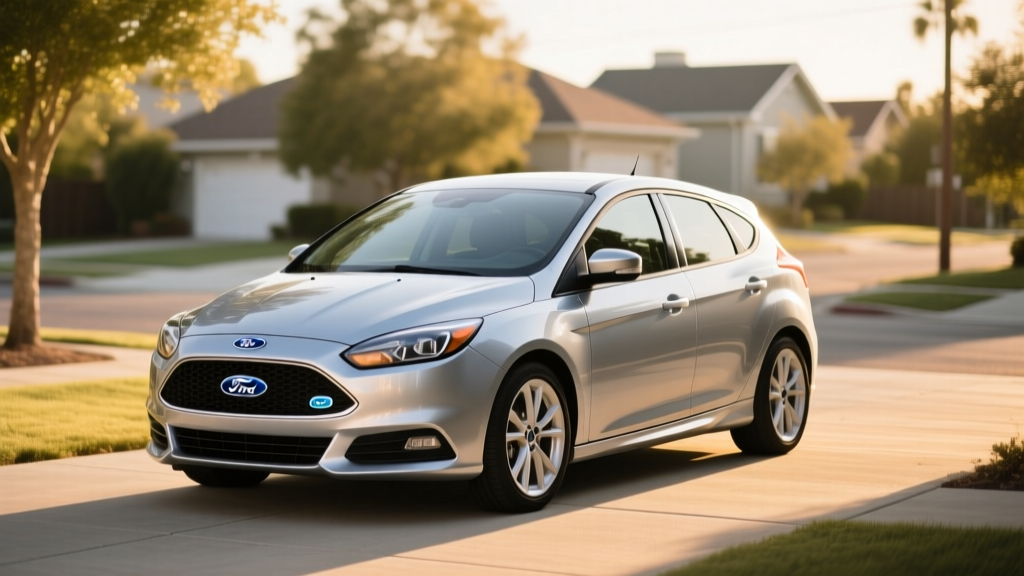
If you've been searching for a Ford Focus Hybrid, you've likely hit a wall — and for good reason. Ford never sold a hybrid version of the Focus in the United States, and the Focus itself was discontinued in the US market after the 2018 model year. What many buyers don't realize is that a Ford Focus mild-hybrid (the EcoBoost Hybrid with a 48-volt system) was offered in Europe, but it never crossed the Atlantic, and it was never a full hybrid or plug-in hybrid in the way American shoppers typically mean when they search for "hybrid."
This guide clears up the confusion around the Ford Focus Hybrid, explains exactly what Ford offered in Europe, and — most importantly — points you toward the hybrid and PHEV alternatives actually available in the US market in 2026 that deliver the fuel economy and price point you're probably looking for.
Why There's No Ford Focus Hybrid in America
Ford made a strategic decision to exit the compact car segment in the US after 2018, discontinuing the Focus, Fiesta, and Taurus to concentrate on trucks, SUVs, and crossovers. The Focus sedan and hatchback simply aren't sold here anymore. While Ford did introduce a Focus EcoBoost Hybrid in Europe around 2020 — a 48-volt mild-hybrid system paired with a 1.0-liter EcoBoost three-cylinder engine — this was never a conventional full hybrid (HEV) like a Toyota Prius, nor a plug-in hybrid (PHEV).
The distinction matters enormously:
Understanding Hybrid Types
| Type | How It Works | Plug In? | Electric-Only Driving |
|---|---|---|---|
| Mild Hybrid (MHEV) | 48V system assists gas engine; cannot drive on electric alone | No | None — electric motor only assists |
| Full Hybrid (HEV) | Larger battery + electric motor can propel car alone at low speeds; recharges via engine and regen braking | No | Limited (1-2 miles at low speed) |
| Plug-In Hybrid (PHEV) | Even larger battery; plug in to charge; substantial electric-only range before gas engine kicks in | Yes | 20-45 miles typical |
The European Ford Focus EcoBoost Hybrid is a mild hybrid (MHEV) — the least electrified of the three. It improves fuel economy by roughly 5-10% versus a standard gas car but cannot drive on electricity alone.
What the European Ford Focus Hybrid Actually Delivered
For completeness, here's what Ford sold in Europe before winding down Focus production entirely (Ford of Europe confirmed the Focus would end production in 2025):
| Specification | Focus EcoBoost Hybrid (Europe, 1.0L MHEV) |
|---|---|
| Powertrain | 1.0L EcoBoost 3-cylinder + 48V mild-hybrid system |
| Combined Output | 125 hp or 155 hp (depending on tune) |
| Transmission | 6-speed manual or 7-speed dual-clutch automatic |
| Battery | 48-volt lithium-ion (under 1 kWh; not a traction battery) |
| Electric-Only Range | None — MHEV cannot drive on electric power alone |
| Fuel Economy (WLTP) | ~47-52 MPG combined (WLTP; EPA equivalent would differ) |
| Plug-In Charging | No |
| US Availability | Not sold — Focus discontinued in US after 2018 |
Even by mild-hybrid standards, the fuel economy improvement was modest. A true full hybrid like the Toyota Prius or Hyundai Elantra Hybrid delivers significantly better real-world efficiency.
US Hybrid Alternatives: What You Can Actually Buy in 2026
If you want a compact hybrid sedan or hatchback in the Ford price range, here are the models actually available to American buyers. All figures are EPA estimates from fueleconomy.gov:
| Model (2025-2026) | Type | City MPG | Highway MPG | Combined MPG | Base MSRP |
|---|---|---|---|---|---|
| Toyota Prius LE | HEV | 57 | 56 | 57 | ~$28,350 |
| Toyota Prius PHEV (Prius Prime) | PHEV | 52 (hybrid mode) | 48 | 50 | ~$33,445 |
| Hyundai Elantra Hybrid | HEV | 51 | 58 | 54 | ~$26,250 |
| Honda Civic Hybrid | HEV | 50 | 47 | 49 | ~$29,845 |
| Toyota Corolla Hybrid | HEV | 53 | 46 | 50 | ~$24,225 |
If you're specifically loyal to Ford, the closest current hybrid offerings are the Ford Escape Hybrid (HEV, EPA ~37-42 MPG combined depending on trim and FWD/AWD, starting around $34,000) and the Ford Escape PHEV (EPA 37 miles electric-only range, ~40 MPG combined in hybrid mode, starting around $40,000). These are compact SUVs rather than sedans, but they're the electrified Fords closest to the Focus in footprint.
Real-World MPG: What to Actually Expect
EPA hybrid ratings are among the most achievable in the industry — unlike EV range estimates, hybrid MPG figures often hold up well in real-world driving, and some hybrids actually exceed their EPA city estimates because regenerative braking is most effective in stop-and-go traffic.
Here's what to expect from the top alternatives:
- City driving: Hybrids shine here. Expect the Toyota Prius LE to deliver 55-60 MPG in urban stop-and-go conditions, sometimes beating its 57 MPG EPA rating.
- Highway driving: Efficiency drops to roughly 50-54 MPG at sustained 70-80 mph speeds. Aerodynamic drag hurts all vehicles, but hybrids lose their regen-braking advantage on open highways.
- Cold weather: Expect a 10-15% fuel economy drop in winter. The engine runs more frequently to provide cabin heat, and battery efficiency decreases in cold temperatures. This applies to all hybrids and PHEVs.
- PHEV electric-only mode: The Prius Prime's EPA-rated 44 miles of electric range typically delivers 38-44 miles in mixed driving, dropping to ~30-35 miles in cold weather or at sustained highway speeds.
Hybrid vs. PHEV vs. Full EV: Which Fits Your Situation?
Choose a Conventional Hybrid (HEV) If:
- You cannot install a home charger (apartment, street parking, no garage)
- You want maximum simplicity — no plugging in, no range planning
- Your budget is under $30,000
- You drive 15,000+ miles/year and want consistently strong MPG everywhere
Choose a Plug-In Hybrid (PHEV) If:
- You can charge at home (Level 1 120V outlet is sufficient overnight)
- Your daily commute is under 30-40 miles round trip (covers most errands on electricity)
- You take occasional long road trips and don't want charging-infrastructure dependency
- You want EV-like daily driving with gas-engine backup
Choose a Full EV (BEV) If:
- You have reliable home Level 2 charging (240V)
- Your daily driving is under 250 miles and you can plan road-trip charging stops
- You want zero tailpipe emissions and minimal maintenance
- You qualify for the §30D federal tax credit (up to $7,500 with point-of-sale transfer)
Tax Credits: What Hybrids and PHEVs Qualify For
This is where the distinction between HEV, PHEV, and BEV matters for your wallet. Under current IRS §30D rules:
- Conventional hybrids (HEV): Do NOT qualify for any federal tax credit. The Toyota Prius, Elantra Hybrid, and Corolla Hybrid are ineligible.
- Plug-in hybrids (PHEV): MAY qualify for up to $7,500 if they meet battery capacity (≥7 kWh), critical mineral sourcing, battery component manufacturing, MSRP cap ($55,000 for sedans, $80,000 for SUVs/vans/trucks), and buyer income limits ($150K single / $300K joint). The Toyota Prius Prime currently qualifies for the full $7,500 when all sourcing requirements are met. The Ford Escape PHEV may also qualify — verify current-year eligibility with your dealer and tax professional.
- Full EVs (BEV): Same §30D rules apply as PHEVs, with many models qualifying. Point-of-sale transfer allows you to apply the credit as a purchase-price reduction at the dealership.
Critical caveat: Battery sourcing and critical mineral requirements have tightened significantly since 2024. Some PHEVs that previously qualified may have reduced or eliminated credits depending on supply-chain changes. Always confirm current eligibility on fueleconomy.gov before purchasing.
Battery Reliability, Warranty, and Replacement Costs
Hybrid Battery Warranty Standards
Federal emissions regulations mandate that hybrid and PHEV battery packs carry a minimum warranty of 8 years / 100,000 miles. In California Air Resources Board (CARB) states (California, New York, Massachusetts, and others adopting CARB standards), this extends to 10 years / 150,000 miles.
Most manufacturers match or exceed these minimums:
- Toyota: 10 years / 150,000 miles on hybrid battery (all 50 states for 2020+ models)
- Hyundai: 10 years / 100,000 miles on hybrid/PHEV battery
- Honda: 8 years / 100,000 miles (10/150K in CARB states)
- Ford: 8 years / 100,000 miles on hybrid/PHEV battery components
Real-world battery longevity: Hybrid battery packs routinely last 150,000-200,000+ miles before significant degradation. Toyota Prius batteries, in particular, have an extensive track record — many original packs exceed 200,000 miles. The smaller, less-stressed battery packs in conventional hybrids experience shallower charge-discharge cycles than full EVs, contributing to longer lifespans.
Replacement cost if out of warranty:
- Toyota Prius hybrid battery: $2,000-$4,000 (remanufactured or new OEM)
- Hyundai Elantra Hybrid battery: $2,500-$4,500
- PHEV battery packs (larger): $5,000-$9,000 depending on capacity
These costs have declined steadily as the hybrid repair ecosystem has matured. Independent hybrid specialists and refurbished battery options are widely available in most metro areas.
Pros and Cons: Compact Hybrids vs. the Focus Hybrid That Never Was
✅ Pros of Buying a Compact Hybrid (Prius, Elantra Hybrid, Civic Hybrid)
- 50+ MPG combined — real, verified EPA figures
- No plug-in required; zero lifestyle change from a gas car
- Proven reliability with 20+ years of hybrid track record (Toyota)
- Low maintenance: no plug changes, minimal brake wear from regen
- Strong resale value, especially Prius
- Base prices starting $24,000-$30,000
❌ Cons / Limitations
- No federal tax credit for conventional HEVs
- Less electric-only driving than PHEVs (1-2 miles max at low speed)
- Compact sedan segment is shrinking — limited new model options
- Ford specifically offers no compact hybrid sedan (only Escape Hybrid SUV)
- Performance is adequate, not thrilling — most prioritize efficiency over acceleration
Frequently Asked Questions
How many MPG does the Ford Focus Hybrid get?
The Ford Focus Hybrid (EcoBoost Hybrid) was only sold in Europe as a mild hybrid, delivering approximately 47-52 MPG combined under the WLTP test cycle. It was never sold in the United States, and the Focus was discontinued in the US after 2018. For a comparable US-market compact hybrid, the Toyota Prius LE achieves an EPA-estimated 57 MPG combined, and the Hyundai Elantra Hybrid achieves 54 MPG combined.
Can the Ford Focus Hybrid drive on electric power alone?
No. The European Ford Focus EcoBoost Hybrid uses a 48-volt mild-hybrid system that only assists the gasoline engine — it cannot propel the car on electricity alone. This is fundamentally different from a full hybrid (HEV) like the Prius, which can drive short distances on electric power, or a PHEV like the Prius Prime, which offers 44 miles of electric-only range.
Does any Ford hybrid qualify for a tax credit?
The Ford Escape PHEV may qualify for a partial or full §30D federal tax credit (up to $7,500) depending on current-year battery sourcing requirements, buyer income limits, and MSRP caps. Conventional Ford hybrids like the Escape Hybrid and Maverick Hybrid do not qualify for the federal EV tax credit. Always verify current eligibility on fueleconomy.gov and consult a tax professional.
Is a hybrid battery expensive to replace?
Out-of-warranty hybrid battery replacement typically costs $2,000-$4,500 for conventional hybrids and $5,000-$9,000 for PHEVs. However, most hybrid batteries last 150,000-200,000+ miles, and all are covered by a minimum 8-year/100,000-mile warranty (10 years/150,000 miles in CARB states). Battery replacement is uncommon within the typical ownership period.
Should I wait for Ford to release a new compact hybrid?
Ford has not announced any plans to reintroduce a compact hybrid sedan or hatchback in the US. The company's electrification strategy focuses on SUVs, trucks (F-150 PowerBoost hybrid, Maverick hybrid), and commercial vehicles. If you need a compact hybrid sedan now, the Toyota Prius, Hyundai Elantra Hybrid, and Honda Civic Hybrid are all available and well-proven.
Hybrid vs. PHEV vs. EV — which should I choose?
If you can't charge at home, choose a conventional hybrid (HEV). If you can charge at home and your daily commute is under 40 miles, a PHEV gives you electric daily driving with gas-engine flexibility for road trips. If you have reliable home charging and rarely drive over 250 miles between stops, a full EV offers the lowest operating cost and zero tailpipe emissions. Your charging access is the single most important factor in this decision.