If you need full-size truck capability without the fuel-pump punishment of a traditional V8, Ford's 3.5L PowerBoost Full-Hybrid V6 is one of the most compelling powertrains on the market. Available exclusively in the F-150, it pairs a twin-turbocharged 3.5-liter V6 with a 35-kW electric motor integrated into the 10-speed automatic transmission. The result: 430 combined horsepower, 570 lb-ft of torque, and EPA-rated fuel economy that beats nearly every gas-only competitor in the segment. This guide covers everything a buyer or owner needs to know about the PowerBoost system — from real-world MPG to battery longevity and tax-credit eligibility.
HEV vs PHEV: Where the PowerBoost Fits
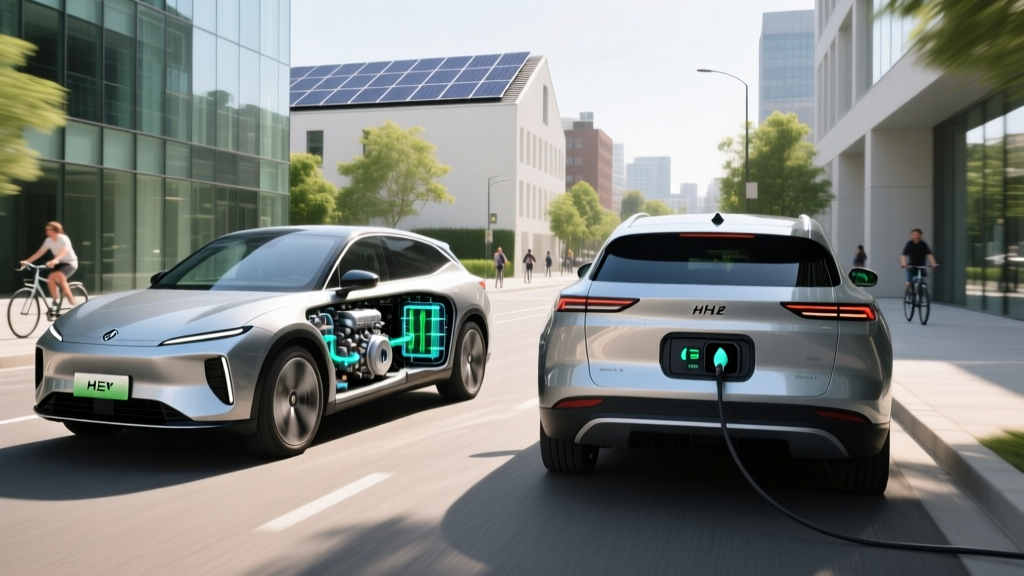
Before we dig into specs, it's critical to understand what the PowerBoost is — and what it isn't. Ford's 3.5L PowerBoost is a conventional full hybrid (HEV), not a plug-in hybrid (PHEV). That distinction matters for your daily routine and your wallet.
| Feature | HEV (PowerBoost) | PHEV (e.g., F-150 Lightning EREV / Raptor PHEV concepts) | BEV (F-150 Lightning) |
|---|---|---|---|
| Plugs in? | No — regenerative braking charges the battery | Yes — external charging required for EV range | Yes — sole energy source |
| Electric-only driving | Limited low-speed EV mode (~1-2 mi) | 20-40 mi typical electric-only | 230-320 mi full electric |
| Gasoline engine | Primary power source + electric assist | Backup / range extender | None |
| Fueling | Gas station only | Gas station + plug | Plug only |
| Tax credit (federal) | Not eligible (§30D requires plug-in) | Potentially eligible | Eligible if requirements met |
The PowerBoost recovers energy through regenerative braking and engine-driven generation to charge its small 1.5 kWh lithium-ion battery pack. You never plug it in. You simply fuel up at any gas station and drive. The hybrid system works transparently in the background, optimizing the balance between electric motor assist and gasoline combustion.
Fuel Economy: EPA Ratings and Real-World MPG
The headline number is what draws most buyers to the PowerBoost. Here's the official EPA breakdown for the 2025–2026 F-150 PowerBoost 4x2 configuration, via fueleconomy.gov:
| Configuration | City MPG | Highway MPG | Combined MPG |
|---|---|---|---|
| F-150 PowerBoost 4x2 | 25 | 26 | 25 |
| F-150 PowerBoost 4x4 | 22 | 24 | 23 |
| Comparable 3.5L EcoBoost V6 (gas, 4x4) | 17 | 22 | 19 |
| 5.0L V8 Gas (4x4) | 16 | 22 | 18 |
Against the standard 3.5L EcoBoost V6, the PowerBoost gains roughly 4 MPG combined in 4x4 trim — a 21% improvement. Against the 5.0L Coyote V8, the advantage widens to 5 MPG combined, or 28%.
Real-World MPG: What Owners Actually See
Hybrids tend to perform close to or slightly above EPA city estimates because stop-and-go driving maximizes regenerative braking. Highway driving is a different story — sustained high speeds reduce the hybrid system's advantage.
Based on aggregated owner reports and independent testing:
- City / suburban driving: 23–27 MPG (4x4) — the electric motor does heavy work at low speeds, and regen recovers significant energy at each stop.
- Highway cruising (70–75 mph): 19–22 MPG (4x4) — the gasoline engine carries most of the load; the hybrid benefit narrows.
- Towing (5,000–7,000 lbs): 12–16 MPG — towing always crushes fuel economy, but the PowerBoost still edges out the EcoBoost V6 and V8 under load thanks to electric torque fill.
- Cold weather (below 30°F): Expect a 1–3 MPG reduction as the engine runs more frequently for cabin heat and battery warm-up.
For a driver covering 15,000 miles annually in mixed 4x4 driving at 23 MPG combined, the PowerBoost saves approximately 130 gallons per year versus the 5.0L V8 (at 18 MPG). At $3.40/gallon, that's roughly $440 in annual fuel savings — or $2,200 over five years.
Powertrain Specs: 430 HP, 570 lb-ft, and 7,000-lb Towing
| Specification | 3.5L PowerBoost Full-Hybrid V6 |
|---|---|
| Engine | 3.5L twin-turbo V6 + 35-kW electric motor |
| Combined horsepower | 430 hp |
| Combined torque | 570 lb-ft |
| Transmission | 10-speed automatic (modular hybrid) |
| 0–60 mph | ~5.8 seconds (4x4, unladen) |
| Max towing capacity | 7,000 lbs (properly equipped, 4x2: up to 7,000; varies by config) |
| Max payload | ~2,120 lbs (varies by trim/config) |
| Hybrid battery | 1.5 kWh lithium-ion (under bed) |
| Pro Power Onboard | 2.4 kW standard / 7.2 kW optional (120V & 240V outlets) |
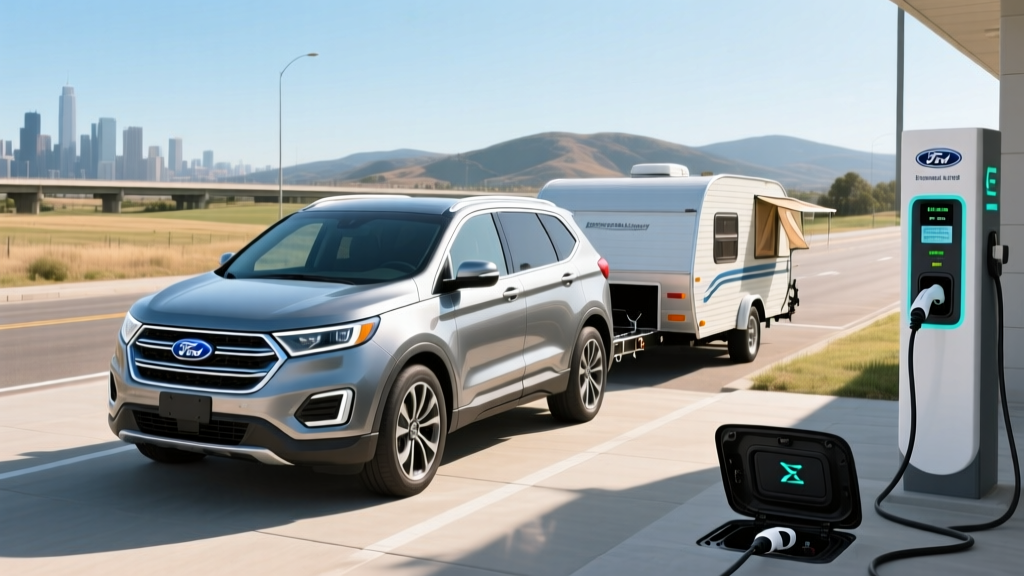
The PowerBoost's 570 lb-ft of torque is particularly useful for towing and hauling. The electric motor provides instant low-RPM torque fill while the turbochargers spool, eliminating the lag you feel in the standard EcoBoost. Ford's Pro Power Onboard system — available up to 7.2 kW — turns the truck into a mobile generator capable of running power tools, a job-site compressor, or even a small welder. This feature alone has pulled commercial buyers from diesel generators to the PowerBoost.
Hybrid Battery Warranty and Longevity
The number-one concern among hybrid shoppers is battery lifespan. Unlike full EVs with large 75–130 kWh packs, the PowerBoost's 1.5 kWh battery is small, lightly stressed, and rarely cycled through deep charge-discharge swings. The hybrid control system keeps the battery in a narrow state-of-charge window (roughly 40–60%), which dramatically extends cell life.
| Coverage Item | Ford Hybrid Battery Warranty |
|---|---|
| Hybrid battery (traction) | 8 years / 100,000 miles (10 years / 150,000 mi in CARB states) |
| Hybrid system components | 8 years / 100,000 miles |
| Capacity retention threshold | Warranty covers failure or capacity below ~60% of original |
| Estimated out-of-warranty replacement | $2,500–$4,500 (parts + labor, based on current dealer pricing) |
In practice, Toyota and Ford hybrid batteries routinely last 150,000–200,000+ miles before meaningful degradation. The small pack in the PowerBoost is far less thermally stressed than a BEV battery, and Ford's liquid cooling system maintains optimal temperature. Out-of-warranty replacement cost is substantially lower than a full EV battery swap — typically $2,500 to $4,500 versus $10,000–$20,000 for a BEV pack. According to Ford's official F-150 powertrain page, the hybrid-specific components are covered under the same warranty framework.
Pricing, Trims, and Tax Credit Eligibility
The PowerBoost is available across multiple F-150 trims, from XLT through Platinum and Limited. Pricing for the 2025–2026 model year (MSRP before destination):
- XLT PowerBoost: ~$57,000–$61,000
- Lariat PowerBoost: ~$64,000–$68,000
- Platinum PowerBoost: ~$72,000–$76,000
- PowerBoost package premium (over equivalent EcoBoost): ~$2,500–$3,500 depending on trim
Does the PowerBoost Qualify for a Federal Tax Credit?
No. The federal Clean Vehicle Credit under IRS §30D applies exclusively to plug-in electric vehicles — battery-electric (BEV) and plug-in hybrid (PHEV) models with a minimum battery capacity of 7 kWh. Because the PowerBoost is a conventional HEV with a 1.5 kWh battery and no plug, it does not qualify for the §30D credit or the point-of-sale transfer. Per IRS.gov clean vehicle tax credits, only vehicles that can be recharged from an external power source are eligible.
However, some states and local utilities offer separate incentives for hybrid vehicles, and the fuel savings over time partially offset the lack of a federal credit. Commercial buyers may also explore §179 deduction and bonus depreciation benefits for the truck's business use — consult a tax professional for specifics.
Reliability Track Record and Ownership Costs
The PowerBoost system has been in production since the 2021 model year, giving it a multi-year track record. Early 2021–2022 models had some software-related complaints (rough transitions between EV and gas modes, occasional generator-mode glitches), but Ford issued multiple OTA updates and TSBs that addressed most issues. By the 2024–2026 model years, the system has matured considerably.
Key reliability considerations:
- 10-speed transmission: Shared with the broader F-150 lineup; well-proven with millions of units on the road.
- Turbochargers: The 3.5L EcoBoost architecture has been in service since 2011 — the hybrid variant uses the same proven block.
- Hybrid-specific components: The electric motor, inverter, and battery have shown low failure rates. Ford's hybrid system is less complex than a PHEV because there's no onboard charger, charge port, or large battery thermal management system.
- Maintenance: Hybrid F-150s have no additional scheduled maintenance versus gas models. Brake pad life is often extended due to regenerative braking.
Insurance premiums for the PowerBoost run 5–10% higher than the base EcoBoost V6, reflecting the higher replacement cost of hybrid components. Depreciation has been favorable — hybrid F-150s hold value well due to strong demand in the used market.
Who Should Choose the PowerBoost vs. an EV or Gas Truck?
Pros
- 4 MPG improvement over EcoBoost V6; 5 MPG over V8
- 570 lb-ft torque for confident towing and merging
- No plug-in required — zero change to fueling habits
- Pro Power Onboard up to 7.2 kW (mobile generator)
- Lower battery replacement cost vs. BEV ($2,500–$4,500)
- Strong resale value in hybrid-demanding markets
Cons
- No federal tax credit (§30D ineligible)
- Hybrid premium of ~$2,500–$3,500 over EcoBoost
- Highway MPG advantage narrows vs. city driving
- Towing MPG still drops to 12–16 MPG under heavy load
- Not available in all trim/config combinations
- Slightly reduced payload vs. some gas configs (battery weight)
Decision Framework
- Choose the PowerBoost if: You drive 12,000–20,000 miles/year in mixed city/highway conditions, tow occasionally (under 7,000 lbs), want fuel savings without plug-in infrastructure, or need Pro Power Onboard for job-site or tailgate use.
- Choose a gas EcoBoost V6 if: Your budget is tight, you mostly drive highway miles where the hybrid advantage shrinks, or you need maximum payload in a specific configuration the PowerBoost doesn't offer.
- Choose the F-150 Lightning (BEV) if: You have home Level 2 charging, your daily driving is under 250 miles, you want the lowest per-mile fuel cost (~$0.04–$0.06/mi on home electricity vs. ~$0.15/mi on gas), and you qualify for the §30D credit.
PowerBoost vs. Competing Hybrid Trucks
The PowerBoost's closest rival is the Toyota Tundra i-FORCE MAX hybrid, which pairs a 3.4L twin-turbo V6 with a 36-kW electric motor for 437 hp and 583 lb-ft. The Tundra hybrid is rated at 20–21 MPG combined (4x4), giving the PowerBoost a 2–3 MPG edge. The Ram 1500 currently offers the eTorque mild-hybrid system (48V, not a full hybrid), which provides minimal fuel-economy benefit — roughly 1 MPG improvement over the standard V6.
Frequently Asked Questions
How many MPG does the 3.5L PowerBoost Full-Hybrid V6 get?
The EPA rates the F-150 PowerBoost 4x4 at 22 city / 24 highway / 23 combined MPG. The 4x2 version achieves 25 city / 26 highway / 25 combined. Real-world city driving often matches or slightly exceeds the EPA city number, while highway cruising tends to return 19–22 MPG.
Does the PowerBoost need to be plugged in?
No. The PowerBoost is a conventional full hybrid (HEV). Its 1.5 kWh battery charges through regenerative braking and engine-driven generation. You never plug it in — you fuel it at a standard gas station.
How far can the PowerBoost drive on electric power alone?
Very limited — roughly 1–2 miles at low speeds (under 25 mph) in EV mode. This is not a plug-in hybrid; the electric motor's primary role is torque assist and efficiency optimization, not extended electric-only driving.
Is the PowerBoost hybrid battery reliable, and what does replacement cost?
Ford covers the hybrid battery for 8 years/100,000 miles (10 years/150,000 miles in CARB states). Real-world data from Ford and Toyota hybrids suggests these batteries routinely last 150,000–200,000+ miles. Out-of-warranty replacement runs approximately $2,500–$4,500 — far less than a full EV battery swap.
Does the 3.5L PowerBoost qualify for a federal tax credit?
No. The federal §30D Clean Vehicle Credit requires a plug-in vehicle with a battery of at least 7 kWh. The PowerBoost is a non-plug-in HEV with a 1.5 kWh battery and is ineligible. Some state or utility incentives may apply — check local programs.
How much does the PowerBoost add to the F-150's price?
The PowerBoost hybrid package adds approximately $2,500–$3,500 over the equivalent 3.5L EcoBoost V6 configuration, depending on trim. Fuel savings of roughly $400–$500/year (versus the V8) can recoup this premium in 5–8 years depending on mileage and gas prices.
Can the PowerBoost tow as much as the gas V6 or V8?
The PowerBoost is rated for up to 7,000 lbs of towing when properly equipped (varies by cab, drivetrain, and axle ratio). This is slightly below the maximum 13,000–14,000 lbs available with certain gas EcoBoost configurations and the Max Tow Package. If you regularly tow over 8,000 lbs, the gas 3.5L EcoBoost with Max Tow may be the better choice.
What is Pro Power Onboard and how does the hybrid enable it?
Pro Power Onboard turns the F-150 into a mobile generator with 120V and 240V outlets in the bed. The PowerBoost's hybrid battery and electric motor allow it to deliver up to 7.2 kW of continuous power — enough for power tools, air compressors, and small appliances. The gas engine automatically starts and stops as needed to recharge the hybrid battery, providing up to 32 hours of runtime at 7.2 kW on a full tank.