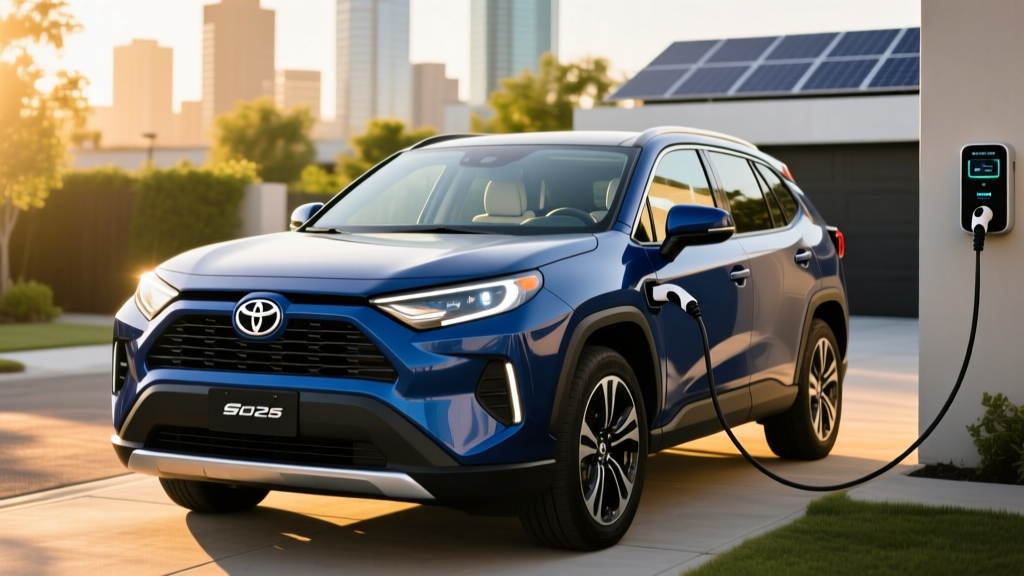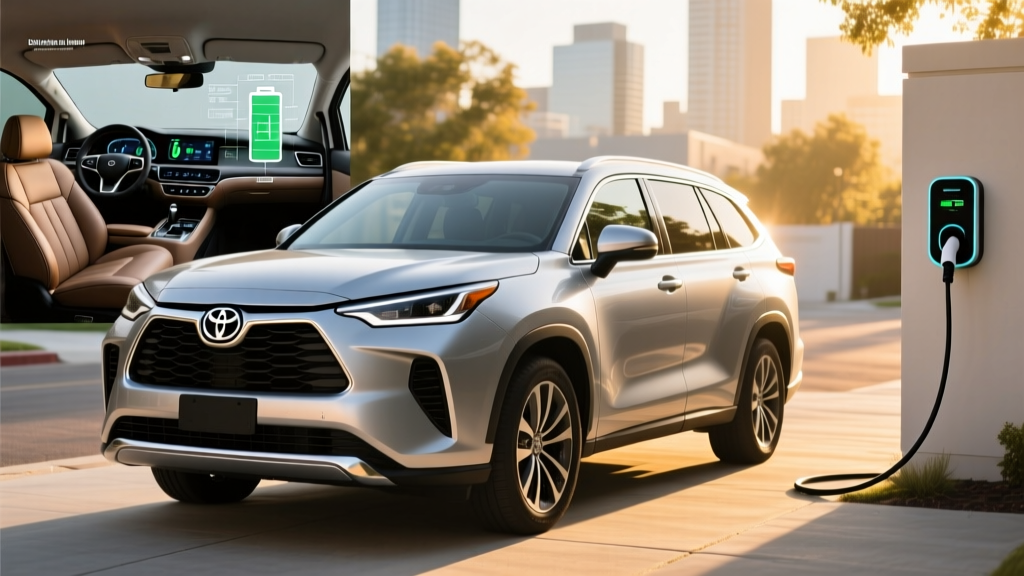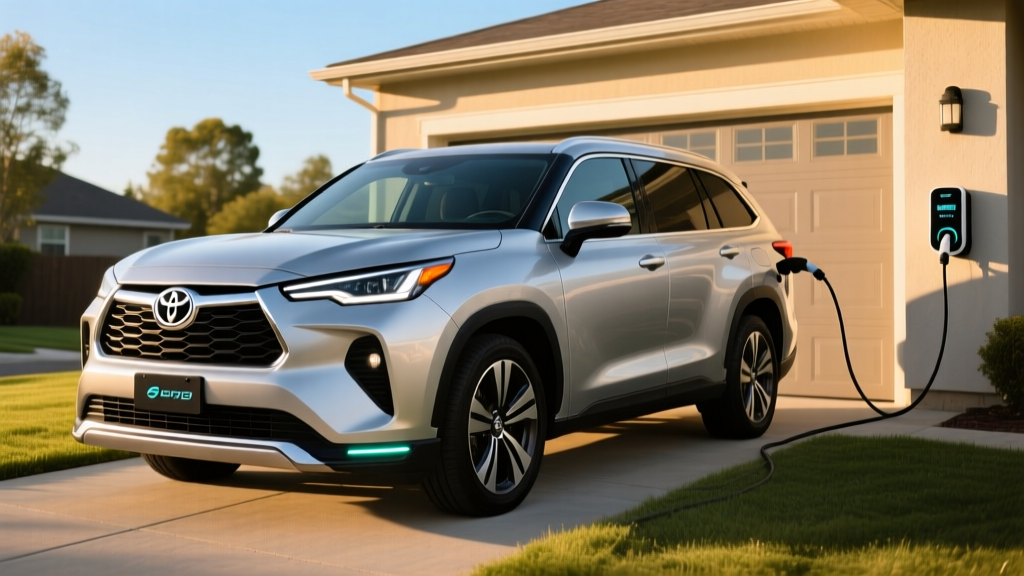
If you need three rows of seating but refuse to accept the fuel bills that typically come with a midsize SUV, the Toyota Highlander Hybrid has been a default choice for years. For 2026, Toyota continues to offer the Highlander exclusively as a conventional hybrid (HEV) — there is no plug-in variant in the US lineup. That means no charging cord, no electric-only range, and no dependence on public charging infrastructure. Just a 2.5-liter four-cylinder paired with Toyota's hybrid system, delivering an EPA-estimated 35 MPG combined across most trims.
But EPA stickers only tell part of the story. Below, we break down the real-world MPG you can expect, how the powertrain works, what the battery warranty actually covers, and whether the Highlander Hybrid still makes sense against full-electric three-row competitors like the Kia EV9 or a gas-only Honda Pilot.
How Many MPG Does the Toyota Highlander Hybrid Get?
The 2026 Toyota Highlander Hybrid is rated by the EPA at 36 MPG city / 35 MPG highway / 35 MPG combined for front-wheel-drive (FWD) trims. All-wheel-drive (AWD) models drop slightly to 35 MPG city / 34 MPG highway / 35 MPG combined. These figures have held steady since Toyota switched to the 2.5L four-cylinder hybrid powertrain for the 2023 model year, replacing the earlier 3.5L V6 hybrid.
| Drivetrain | City MPG | Highway MPG | Combined MPG | Est. Annual Fuel Cost* |
|---|---|---|---|---|
| FWD (LE, XLE, Limited, Platinum) | 36 | 35 | 35 | $1,650 |
| AWD (all trims) | 35 | 34 | 35 | $1,700 |
*Based on 15,000 miles/year, 55% city driving, and $3.50/gallon regular unleaded. Source: fueleconomy.gov.
Real-World MPG vs. EPA Estimates: What Owners Actually See
Hybrids tend to outperform their EPA city estimates in stop-and-go traffic because regenerative braking recaptures energy that a gas car wastes as heat. The Highlander Hybrid is no exception. Owner-reported data on platforms like Fuelly and Spritmonitor consistently shows real-world combined averages between 33 and 38 MPG, with city-heavy commuters sometimes hitting 39-40 MPG in warm weather.
Highway driving is where the Highlander Hybrid's efficiency dips relative to its sticker. At sustained 75-80 MPH speeds, expect 30-33 MPG. Aerodynamic drag rises with the square of velocity, and a three-row SUV is no teardrop. Cold weather compounds this: in sub-30°F conditions, the engine runs more frequently to heat the cabin and keep the catalytic converter warm, dropping observed economy to 28-31 MPG on short trips.
- City (warm weather): 36-40 MPG
- Highway (70-80 MPH): 30-33 MPG
- Cold-weather combined: 28-33 MPG
- Year-round average (mixed driving): 33-36 MPG
For comparison, the gas-only 2026 Toyota Highlander (turbocharged 2.4L four-cylinder, no hybrid) is rated at roughly 22 MPG combined. That's a 13 MPG advantage for the hybrid — translating to roughly 180 fewer gallons per year at 15,000 miles, or about $630 in annual fuel savings at $3.50/gallon.
Powertrain Specs: What's Under the Hood
The 2026 Highlander Hybrid uses Toyota's fourth-generation hybrid system, pairing a naturally aspirated 2.5-liter inline-four engine with two electric motor-generators (three on AWD models) through an electronically controlled continuously variable transmission (eCVT).
| Specification | Detail |
|---|---|
| Engine | 2.5L DOHC 4-cylinder (Atkinson cycle) |
| Engine Power | 186 HP / 186 lb-ft torque |
| Front Electric Motor | 134 HP / 199 lb-ft |
| Rear Electric Motor (AWD only) | 54 HP / 120 lb-ft |
| Net Combined System Output | 243 HP |
| Transmission | eCVT (planetary gearset) |
| 0-60 MPH | ~7.8 seconds (FWD) |
| Towing Capacity | 3,500 lbs (all trims) |
| Hybrid Battery | 1.87 kWh, nickel-metal hydride (NiMH) |
| Fuel Tank | 17.1 gallons |
| Total Driving Range | ~598 miles (FWD combined) |
A few things worth noting: the hybrid battery is small — just 1.87 kWh — because it's a conventional HEV, not a PHEV. It never charges from a wall outlet. Instead, it recovers energy from braking and from the engine during low-load cruising. The battery acts as a buffer, enabling short electric-only bursts at low speeds (typically under 1 mile at under 25 MPH) but never sustained electric driving.
The 243 combined horsepower is adequate for a family hauler but not quick by EV standards. Merge onto a fast-moving highway and you'll feel the eCVT drone as the engine holds high RPM. This is normal hybrid behavior — the electric motors provide instant low-end torque to mask the four-cylinder's lazy character around town.
HEV vs. PHEV vs. Full EV: Which Three-Row SUV Fits You?
Buyers cross-shopping the Highlander Hybrid often wonder whether they should consider a plug-in hybrid (PHEV) or a full battery-electric vehicle (BEV) instead. Here's how the three powertrain types compare in this segment:
Conventional Hybrid (HEV)
Example: Toyota Highlander Hybrid
Electric-only range: ~0.5 mi at low speed
Plug-in charging: No
MPG: 35 combined
Best for: Buyers without home charging access who want lower fuel bills with zero behavior change
Plug-in Hybrid (PHEV)
Example: Toyota Grand Highlander Hybrid MAX (note: no PHEV Highlander exists in the US; the closest Toyota PHEV SUV is the RAV4 Prime with 42 mi EV range)
Electric-only range: 30-42 mi (typical PHEV)
Plug-in charging: Yes (Level 2, ~2.5-5 hrs)
MPG after battery depleted: 35-38 combined
Best for: Households with home charging and commutes under 40 miles who still want road-trip flexibility
Full Electric (BEV)
Example: Kia EV9 (3-row)
Electric-only range: 230-304 mi (EPA)
Plug-in charging: Yes (Level 2 + DC fast charge)
MPGe: 83-88 combined
Best for: Buyers with reliable home charging who drive under 250 miles daily and want the lowest operating cost
The Highlander Hybrid occupies the lowest-friction entry point into electrified driving. You never plug in, never change your fueling habits, and still cut fuel consumption roughly 40% compared to the gas Highlander. If you can install a Level 2 charger at home and your daily driving stays under 40 miles, a PHEV like the RAV4 Prime (though smaller) or a three-row BEV like the Kia EV9 could eliminate most of your gasoline use entirely.
Pricing, Trims, and Tax Credit Eligibility
The 2026 Toyota Highlander Hybrid starts at $41,165 (including destination) for the LE FWD trim and climbs to approximately $53,000 for the Platinum AWD. Here's the trim-by-trim breakdown:
| Trim | FWD MSRP | AWD MSRP |
|---|---|---|
| LE | $41,165 | $42,765 |
| XLE | $44,665 | $46,265 |
| Limited | $49,065 | $50,665 |
| Platinum | $51,465 | $53,065 |
Federal Tax Credit: Does the Highlander Hybrid Qualify?
No. The federal §30D Clean Vehicle Credit applies only to plug-in electric vehicles (BEVs and PHEVs) with a minimum battery capacity of 7 kWh. The Highlander Hybrid's 1.87 kWh NiMH battery does not meet this threshold, and as a conventional HEV, it is categorically ineligible. There is no federal tax credit for conventional hybrids.
Some states offer their own incentives for hybrids, though these have largely phased out in favor of PHEV and BEV incentives. Check your state's energy or environmental agency website for current programs. A few states (e.g., Colorado, previously) offered modest hybrid rebates, but availability varies and changes annually.
For buyers specifically seeking the §30D federal credit of up to $7,500, you would need to look at a qualifying PHEV or BEV — subject to MSRP caps ($80,000 for SUVs), buyer income limits ($300,000 joint / $150,000 single), and critical-mineral/battery-component sourcing requirements that eliminate many models.
Battery Warranty, Lifespan, and Replacement Cost
Hybrid battery longevity is the single most common concern among first-time hybrid buyers. Toyota addresses this with one of the strongest warranties in the segment.
- Coverage: 10 years / 150,000 miles (whichever comes first)
- Applies to: Hybrid battery pack, hybrid control module, inverter, and related hybrid-system components
- Transferable: Yes, to subsequent owners
- Additional powertrain warranty: 5 years / 60,000 miles
In practice, Toyota's hybrid batteries — particularly the NiMH chemistry used in the Highlander — have proven extremely durable. Data from fleet operators and long-term owners shows most Toyota hybrid batteries lasting 150,000-200,000+ miles before significant capacity loss. The Prius, which uses similar NiMH technology, has documented cases of original batteries exceeding 300,000 miles.
NiMH chemistry degrades more gracefully than lithium-ion: rather than sudden capacity cliff failure, NiMH cells lose capacity gradually over thousands of charge-discharge cycles. You may notice slightly reduced electric-assist responsiveness at very high mileage, but the vehicle remains fully drivable.
If replacement is needed out of warranty, a new OEM hybrid battery for the Highlander Hybrid typically costs $3,000-$4,500 installed at a Toyota dealer. Refurbished/reconditioned packs are available from third-party shops for $1,500-$2,500 installed. Individual cell replacement (replacing only the degraded modules within the pack) can cost as little as $500-$1,000 at specialist hybrid repair shops.
Who Should Buy the Highlander Hybrid — and Who Shouldn't
✅ Choose the Highlander Hybrid If:
- You need three rows but can't install a home charger (apartment, street parking)
- You take frequent road trips exceeding 300 miles and don't want to plan around DC fast chargers
- You want lower fuel costs with zero behavior change
- You value Toyota's long-term reliability track record and strong resale value
- Your annual mileage is high (15,000+ miles/year maximizes fuel savings)
❌ Look Elsewhere If:
- You have home charging and want to eliminate gasoline for daily driving (consider a PHEV or BEV)
- You want a federal tax credit — the HEV doesn't qualify
- You prioritize acceleration — 7.8 seconds to 60 MPH is adequate, not quick
- You want the latest EV tech (frunk, V2L power export, over-the-air powertrain updates)
- You mostly drive in the city and want true zero-emission operation (a BEV is better for urban air quality)
How the Highlander Hybrid Compares to Key Rivals
| Vehicle | Combined MPG | HP | Starting MSRP | Hybrid Type | Tax Credit |
|---|---|---|---|---|---|
| Toyota Highlander Hybrid | 35 | 243 | $41,165 | HEV | None |
| Toyota Grand Highlander Hybrid | 35-36 | 245 | $45,120 | HEV | None |
| Kia Sorento Hybrid | 34-37 | 227 | $39,490 | HEV | None |
| Hyundai Santa Fe Hybrid | 34-36 | 232 | $40,200 | HEV | None |
| Mazda CX-90 PHEV | 25 (gas) / 56 MPGe | 323 | $51,400 | PHEV (26 mi EV) | Up to $7,500* |
| Kia EV9 (BEV) | 83-88 MPGe | 215-379 | $54,900 | BEV (230-304 mi) | Up to $7,500* |
*§30D credit eligibility depends on buyer income, MSRP caps, battery sourcing, and point-of-sale transfer rules. Verify at irs.gov before purchase.
The Highlander Hybrid sits in the middle of the pack on MPG but leads in proven long-term reliability and resale value. The Grand Highlander offers more third-row and cargo space for growing families. The Mazda CX-90 PHEV and Kia EV9 offer electrification with tax-credit potential but at higher base prices — and with the charging-infrastructure considerations that come with plug-in vehicles.
Frequently Asked Questions
Does the Toyota Highlander Hybrid need to be plugged in?
No. The Highlander Hybrid is a conventional HEV. Its small 1.87 kWh battery charges exclusively through regenerative braking and the gasoline engine. You fuel it like any other car — with gasoline at a gas station. There is no charging port.
How far can the Highlander Hybrid drive on electric power alone?
Less than one mile, and only at low speeds (typically under 25 MPH). The hybrid system uses the electric motor to assist acceleration and enable brief engine-off coasting, but it cannot sustain highway-speed electric driving. If you want meaningful electric-only range, you need a PHEV (30-42 miles typical) or a BEV (230-300+ miles).
Is the Highlander Hybrid good for towing?
It's rated for 3,500 pounds across all trims — enough for a small boat, utility trailer, or a pair of jet skis, but not a large travel trailer. Expect fuel economy to drop to roughly 22-26 MPG while towing, depending on trailer weight and terrain.
How reliable is the Toyota Highlander Hybrid?
Toyota's hybrid system is among the most proven in the industry, with over 25 years of real-world deployment since the original Prius. The Highlander Hybrid carries a 10-year/150,000-mile hybrid battery warranty. Toyota consistently ranks at or near the top in long-term reliability studies from Consumer Reports and J.D. Power, and the hybrid powertrain has fewer wear items than a conventional gas powertrain (no traditional starter motor, no alternator, regenerative braking extends brake pad life).
What is the total cost of ownership vs. the gas Highlander?
Over five years and 75,000 miles, the Highlander Hybrid saves approximately $3,150 in fuel costs compared to the gas-only Highlander (at $3.50/gallon). The hybrid carries a roughly $3,000-$4,000 price premium over comparable gas trims, so the fuel savings largely offset the upfront cost within the first ownership cycle. The hybrid also tends to hold stronger resale value, further narrowing the gap.
Does the Highlander Hybrid qualify for any incentives?
Not at the federal level. The §30D Clean Vehicle Credit requires a plug-in vehicle with at least 7 kWh of battery capacity. Some states or local utilities may offer small rebates for hybrids, but these are uncommon and vary by jurisdiction. Check your state energy office or Alternative Fuels Data Center for current local programs.