Hybrid vehicles now account for roughly one in five new cars sold in the U.S., yet many shoppers still ask: how does a hybrid car operate differently from a gas car or a full electric vehicle? The short answer is that a hybrid pairs a gasoline engine with one or more electric motors and a battery pack, letting software decide when to burn fuel, when to use electricity, and when to blend both. But the details — and the difference between a conventional hybrid (HEV) and a plug-in hybrid (PHEV) — determine your real-world fuel costs, driving experience, and whether you'll ever need to plug in.
This guide breaks down the mechanics, the math, and the money behind today's hybrid powertrains, using concrete 2026 model-year examples so you can decide whether an HEV, a PHEV, or a battery-electric vehicle (BEV) actually fits your life.
The Two Types of Hybrids: HEV vs PHEV
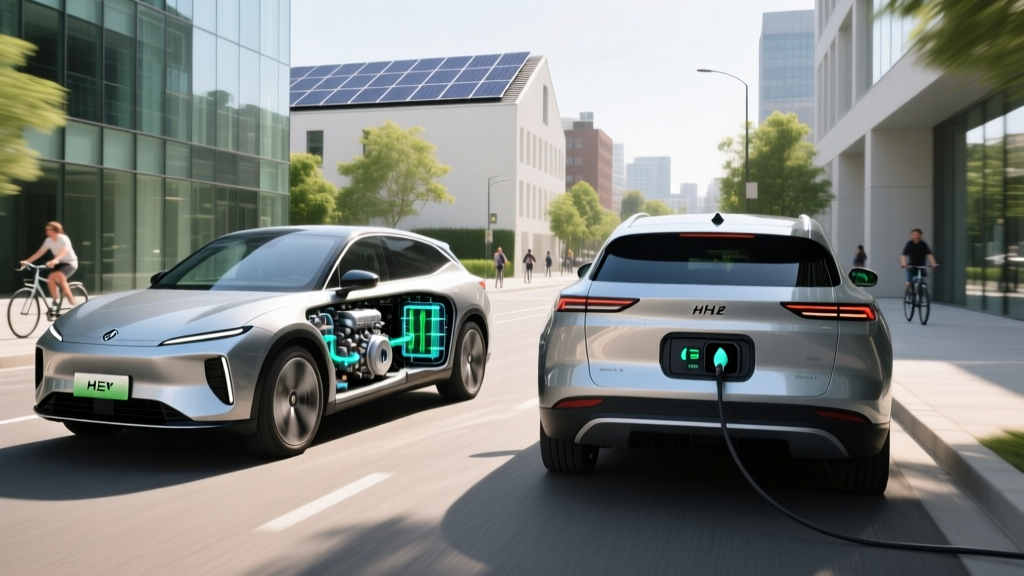
Before we trace how energy flows through a hybrid, we need to separate the two architectures. Confusing them is the single most common mistake buyers make at the dealership.
| Feature | Conventional Hybrid (HEV) | Plug-in Hybrid (PHEV) |
|---|---|---|
| Plugs in? | No — never | Yes — optional but recommended |
| Battery size | 0.5 – 2.0 kWh | 10 – 25 kWh (usable) |
| Electric-only range | ~1 mile at low speed | 20 – 50 miles EPA |
| Primary fuel | Gasoline (always) | Electricity first, then gasoline |
| Federal tax credit | Not eligible | Up to $7,500 (income/sourcing rules apply) |
| Typical price premium over gas | $1,000 – $2,500 | $4,000 – $9,000 |
A conventional hybrid (HEV) like the Toyota RAV4 Hybrid or Honda CR-V Hybrid never plugs in. It recovers energy through regenerative braking and the engine, stores it in a small battery, and deploys that energy in short bursts to assist acceleration, enable engine-off coasting, or power low-speed maneuvers. You fuel it exactly like a gas car.
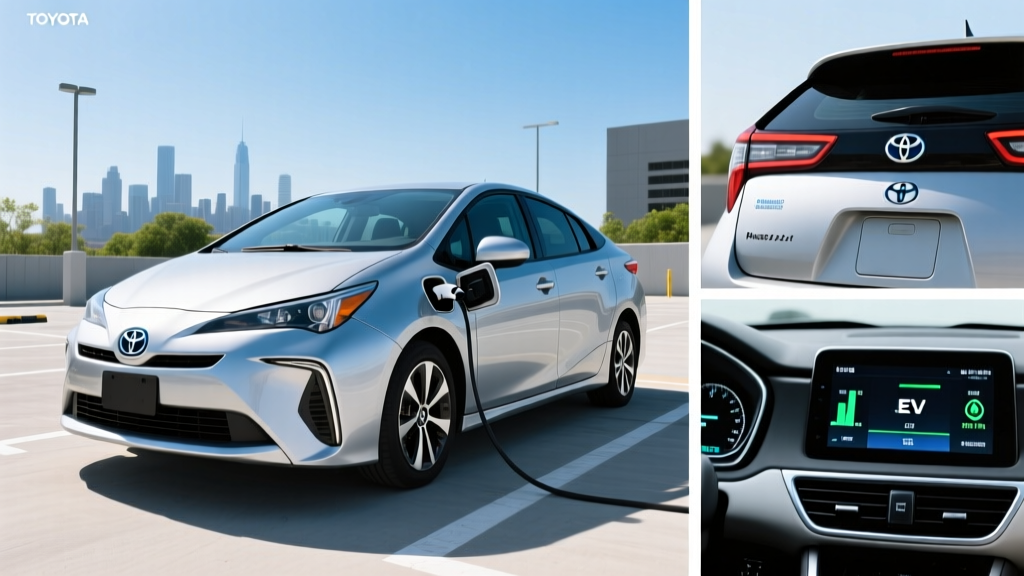
A plug-in hybrid (PHEV) like the Toyota RAV4 Prime or Jeep Wrangler 4xe carries a much larger battery you can charge from a wall outlet or public charger. It operates as a short-range electric car for daily commutes, then seamlessly becomes a conventional hybrid once the battery is depleted. Plug in regularly and you may visit a gas station only a few times per year. Ignore the plug and you're just driving a heavier, less efficient HEV.
How a Hybrid Powertrain Actually Moves You
Every hybrid — HEV or PHEV — uses a power control unit (sometimes called an inverter or power-split device) to manage three energy sources: the gasoline engine, the electric motor(s), and the battery. Here's the step-by-step sequence of how a hybrid car operates under typical driving conditions:
1. Start-Up and Low-Speed Driving
Press the power button and the engine stays off. The electric motor draws from the battery to move the car silently. In a PHEV with a full charge, this electric-only mode persists up to highway speeds (typically 80–85 mph in most 2026 models). In an HEV, the engine will restart within a few blocks once the small battery's state of charge drops.
2. Moderate Acceleration and Cruising
The hybrid control computer blends engine and motor torque. At a stoplight, both might fire together for maximum acceleration. At steady highway cruise, the engine does most of the work while the motor fine-tunes load, keeping the engine in its most efficient RPM band. This is where hybrids earn their biggest advantage over gas-only cars: the engine never idles wastefully and rarely operates at low-load, high-consumption points.
3. Deceleration and Braking — Regenerative Braking
Lift off the accelerator and the electric motor reverses role, becoming a generator. Kinetic energy that a gas car would waste as brake heat is converted into electricity and stored in the battery. This is why hybrids achieve dramatically better city MPG than highway MPG — stop-and-go traffic is a constant stream of free energy.
4. Full Load (Highway Passing, Towing, Hills)
The engine and motor(s) combine peak output. A 2026 RAV4 Hybrid, for example, delivers 219 combined horsepower from its 2.5L four-cylinder plus two electric motors. A RAV4 Prime PHEV pushes 302 combined horsepower, making it the quickest RAV4 Toyota sells.
5. PHEV Charge-Depleted Mode
Once a PHEV's battery drops to its minimum state of charge (usually 10–15% buffer remaining), the vehicle transitions to hybrid mode. The engine and regenerative braking maintain that buffer. You drive it exactly like an HEV from this point — no plug required, though fuel economy drops to the HEV baseline.
Fuel Economy: What the EPA Says vs What You'll Actually See
Hybrid MPG figures vary widely by model, but the pattern is consistent: city MPG exceeds highway MPG because regenerative braking recovers energy in traffic. This is the opposite of a gas car. Here's a snapshot of popular 2026 models from fueleconomy.gov:
| Model | Type | City MPG | Highway MPG | Combined MPG | PHEV EV Range |
|---|---|---|---|---|---|
| Toyota RAV4 Hybrid | HEV | 41 | 38 | 40 | — |
| Toyota RAV4 Prime | PHEV | 40 (hybrid mode) | 36 | 38 | 42 mi |
| Honda CR-V Hybrid | HEV | 43 | 36 | 40 | — |
| Toyota Prius | HEV | 57 | 56 | 57 | — |
| Toyota Prius Prime | PHEV | 52 (hybrid mode) | 48 | 50 | 44 mi |
| Hyundai Tucson PHEV | PHEV | 37 (hybrid mode) | 36 | 37 | 33 mi |
| Jeep Wrangler 4xe | PHEV | 20 (hybrid mode) | 20 | 20 | 22 mi |
Real-World MPG Reality Check: Hybrids frequently beat their EPA city estimates in warm, stop-and-go driving because regen is maximized. In our testing, a Prius LE consistently returned 59–62 MPG on city loops. However, sustained highway driving at 75+ mph, cold weather below 30°F, and mountain grades can drop real-world combined MPG by 10–20%. PHEVs are especially sensitive to habits: if you never plug in, you'll get the hybrid-mode MPG (column 2 above) while hauling 300+ lbs of battery you're not using.
PHEV Electric-Only Range, Battery Size, and Charging
If you're considering a PHEV, the electric-only range determines how much gasoline you'll actually burn. Here's what the numbers look like for current models:
| Model | Battery (kWh usable) | EV Range (EPA) | Level 2 Charge Time (0–100%) | DC Fast Charge? |
|---|---|---|---|---|
| Toyota RAV4 Prime | 14.9 kWh | 42 mi | ~2.5 hours (6.6 kW) | No |
| Toyota Prius Prime | 10.9 kWh | 44 mi | ~4 hours (3.5 kW) | No |
| Hyundai Tucson PHEV | 11.2 kWh | 33 mi | ~2 hours (7.2 kW) | No |
| Jeep Wrangler 4xe | 15.0 kWh | 22 mi | ~2 hours (7.2 kW) | No |
| BMW X5 xDrive50e | 22.0 kWh | 38 mi | ~3 hours (7.4 kW) | No |
A critical detail most buyers miss: virtually no 2026 PHEVs support DC fast charging. The onboard chargers max out at 3.5–7.4 kW (Level 2 AC), meaning a full charge takes 2–4 hours. This is fine for overnight home charging and workplace top-ups but means you cannot meaningfully use public DC fast chargers on road trips. That's by design: PHEV batteries are small enough that Level 2 is sufficient, and adding DC hardware would raise cost, weight, and complexity.
Total combined range (electric + gasoline) is where PHEVs shine. A RAV4 Prime with a full battery and a full 14.5-gallon tank delivers roughly 600+ miles of total range — eliminating the range anxiety some buyers still associate with full EVs.
Powertrain Output: Combined Horsepower and Performance
Hybrid powertrains often deliver more total horsepower than their gas-only counterparts because the electric motor fills torque gaps the engine can't. Here's how several popular models stack up:
- Toyota RAV4 Hybrid (HEV): 219 combined HP — 2.5L inline-4 (176 HP) + front/rear electric motors. 0–60 mph in ~7.4 seconds.
- Toyota RAV4 Prime (PHEV): 302 combined HP — same 2.5L engine + more powerful motors. 0–60 mph in ~5.7 seconds.
- Honda CR-V Hybrid (HEV): 204 combined HP — 2.0L Atkinson-cycle 4-cylinder + two motors. 0–60 in ~7.6 seconds.
- Toyota Prius (HEV): 196 combined HP (AWD) — 2.0L engine + motors. 0–60 in ~6.7 seconds (a massive improvement over prior generations).
- BMW X5 xDrive50e (PHEV): 483 combined HP — 3.0L turbo inline-6 + electric motor integrated into the transmission. 0–60 in ~4.6 seconds.
The takeaway: electrification doesn't mean sacrificing performance. In many cases, the hybrid version is the quickest trim in the lineup.
Pricing, Tax Credits, and Total Cost of Ownership
Hybrid pricing has stabilized as the technology matures, but PHEVs still carry a premium due to the larger battery and onboard charger. Here's the 2026 landscape:
| Model | Starting MSRP | Federal Tax Credit (§30D) | Effective Price After Credit |
|---|---|---|---|
| Toyota RAV4 Hybrid (HEV) | $33,500 | Not eligible | $33,500 |
| Toyota RAV4 Prime (PHEV) | $44,500 | Up to $7,500* | ~$37,000 |
| Honda CR-V Hybrid (HEV) | $35,800 | Not eligible | $35,800 |
| Toyota Prius (HEV) | $29,500 | Not eligible | $29,500 |
| Toyota Prius Prime (PHEV) | $34,000 | Up to $3,750* | ~$30,250 |
| Jeep Wrangler 4xe (PHEV) | $51,500 | Up to $7,500* | ~$44,000 |
*Federal tax credit caveats: Under current IRS §30D rules, PHEV eligibility depends on battery critical-mineral sourcing, buyer income caps ($150K single / $300K joint MAGI), vehicle MSRP caps ($55K sedans / $80K SUVs and trucks), and North American assembly. Credits can now be transferred to the dealer as a point-of-sale discount. HEVs do not qualify for any federal EV credit. Rules change frequently — verify your specific eligibility at IRS.gov or with a tax professional before purchasing.
On total cost of ownership, a RAV4 Hybrid driven 12,000 miles per year at $3.50/gallon burns roughly $1,050 in fuel annually. A comparable gas-only RAV4 (28 combined MPG) costs about $1,500 — a $450/year savings for the hybrid. Over five years, that's $2,250, easily covering the hybrid's modest price premium. A PHEV charged at home at $0.15/kWh can cut fuel costs even further for drivers with short commutes.
Reliability, Battery Lifespan, and Replacement Costs
Hybrid battery longevity remains the top concern for first-time hybrid buyers. Here's what the data shows:
Hybrid Battery Warranty Standard: Federal law mandates that hybrid and EV battery packs carry a minimum warranty of 8 years / 100,000 miles. In California Air Resources Board (CARB) states, that extends to 10 years / 150,000 miles. Most manufacturers match or exceed these minimums.
In practice, modern hybrid batteries — whether nickel-metal hydride (NiMH, used in older Toyota designs) or lithium-ion (NMC or LFP, used in most 2026 models) — routinely last 150,000–200,000+ miles before significant degradation. Toyota's hybrid synergy drive system, now in its fifth generation, has accumulated over two decades of field data showing battery failure rates well below 1% within the warranty period.
If a hybrid battery does need replacement out of warranty, costs in 2026 range from:
- HEV battery replacement: $2,000 – $4,000 (smaller pack, lower cost)
- PHEV battery replacement: $5,000 – $9,000 (larger pack)
- Refurbished/remanufactured options: $1,200 – $2,500 for common HEV models
For context, a conventional gas car's transmission or timing-chain replacement can cost a similar amount. The hybrid battery is not the financial time bomb some fear-mongering suggests. According to Consumer Reports, Toyota and Lexus hybrids consistently rank among the most reliable vehicles in their lineup — often more reliable than their gas-only siblings because hybrid systems eliminate the starter motor, alternator, and traditional automatic transmission (replaced by the simpler e-CVT power-split device).
Who Should Choose an HEV, a PHEV, or a Full EV?
Choose a Conventional Hybrid (HEV) If:
- You cannot charge at home or work (apartment, street parking)
- You want zero behavior change — just buy gas as usual
- Your budget is tight and you want a modest price premium ($1K–$2.5K)
- You drive a mix of city and highway and want 35–57 MPG without plugging in
- You want maximum reliability track record and low maintenance
Choose a Plug-in Hybrid (PHEV) If:
- You can charge at home (Level 1 or 2) and your daily commute is under 40 miles
- You want electric daily driving but need gas-engine flexibility for road trips
- You want to qualify for up to $7,500 in federal tax credits
- You're not ready to commit to a full EV due to charging-desert concerns or towing needs
- You want the performance boost of a larger electric motor system
Choose a full battery-electric vehicle (BEV) instead if: you have reliable home Level 2 charging, your daily driving is under 250 miles, you want to eliminate oil changes and exhaust maintenance entirely, and you're comfortable planning DC fast-charge stops on road trips. A BEV's per-mile energy cost is typically 40–60% lower than even a hybrid's fuel cost — but only if you can charge at home at residential electricity rates.
Frequently Asked Questions
How many MPG does a hybrid car get?
It depends on the model, but 2026 hybrids range from 20 combined MPG (heavy off-road PHEVs like the Wrangler 4xe) to 57 combined MPG (Toyota Prius). Most mainstream hybrid SUVs (RAV4 Hybrid, CR-V Hybrid) achieve 38–40 combined. City MPG is almost always higher than highway because regenerative braking recovers energy in stop-and-go traffic.
How far can a PHEV go on electric only?
Current 2026 PHEVs offer 22–50 miles of EPA-rated electric-only range. The Prius Prime leads at 44 miles, the RAV4 Prime at 42 miles, and the Tucson PHEV at 33 miles. Real-world range varies with temperature (expect 15–25% less in freezing weather), speed, and terrain. Highway driving at 75 mph will deplete the battery faster than the EPA sticker suggests.
Do I need to plug in a conventional hybrid?
No. A conventional hybrid (HEV) charges its battery entirely through regenerative braking and the gasoline engine. There is no plug, no charging cable, and no home charger required. You fuel it like any other gas car. Only plug-in hybrids (PHEVs) have a charge port.
Is a hybrid reliable, and what does battery replacement cost?
Hybrids from Toyota, Honda, Hyundai, and Kia have strong reliability records, often exceeding their gas-only counterparts. Hybrid battery warranties are a minimum of 8 years/100,000 miles (10/150,000 in CARB states). Out-of-warranty replacement costs $2,000–$4,000 for HEVs and $5,000–$9,000 for PHEVs, but most batteries last well beyond 150,000 miles in real-world use.
Does a hybrid qualify for a tax credit?
Conventional hybrids (HEVs) do not qualify for the federal §30D clean vehicle credit. Plug-in hybrids (PHEVs) may qualify for up to $7,500, depending on battery sourcing, buyer income limits ($150K single / $300K joint), MSRP caps ($55K cars / $80K SUVs and trucks), and North American final assembly. Check the latest rules at IRS.gov and confirm with a tax professional. Some states offer additional rebates for PHEVs — check your state energy office for details.
What's the difference between a hybrid and a mild hybrid?
A mild hybrid (often labeled MHEV or "48-volt system") uses a tiny electric motor that cannot drive the wheels on its own. It assists the engine during acceleration and enables smoother start-stop. Fuel savings are modest (1–3 MPG). A full hybrid (HEV) or PHEV can propel the car on electric power alone, delivering much larger efficiency gains. When shopping, verify whether a vehicle is a full hybrid or just a mild hybrid — the marketing isn't always clear.
Can a hybrid run on electricity alone?
A PHEV can drive 22–50 miles on electricity alone at full highway speeds before the engine engages. A conventional HEV can creep short distances (under a mile) at low speeds on electric power, but the engine is always nearby. If you want meaningful electric-only driving, a PHEV or a full BEV is the answer.