If you've typed "first Prius hybrid" into a search bar, you're likely weighing whether Toyota's iconic hybrid is the right entry point into electrified driving — or you're curious how the original hybrid nameplate stacks up in a market now flooded with plug-in hybrids, extended-range EVs, and full battery-electric vehicles. The 2026 Toyota Prius and Prius Prime are no longer the slow, egg-shaped econoboxes of the early 2000s. They're genuinely compelling machines with real performance, modern styling, and fuel economy that still sets the benchmark.
This guide covers exactly what you need to know: EPA MPG numbers, the critical difference between the conventional Prius (HEV) and the Prius Prime (PHEV), battery longevity, pricing, and whether any tax credits apply. Let's get specific.
HEV vs PHEV: Which Prius Are We Talking About?
The 2026 Prius lineup splits into two distinct vehicles under one nameplate. Confusing them is the single most common mistake first-time hybrid buyers make.
| Feature | 2026 Toyota Prius (HEV) | 2026 Toyota Prius Prime (PHEV) |
|---|---|---|
| Powertrain Type | Conventional Hybrid — no plug | Plug-in Hybrid — charges from outlet |
| Battery Size | ~1.0 kWh (small, self-charging) | 13.6 kWh usable (lithium-ion) |
| Electric-Only Range | N/A (EV mode limited to ~1 mi at low speed) | EPA-est. 44 miles (SE trim) |
| Needs to Plug In? | No — regenerative braking + engine recharge | Yes, for EV range; runs as hybrid when depleted |
| DC Fast Charging | N/A | No — Level 2 AC only |
| Level 2 Charge Time (0-100%) | N/A | ~4 hours at 240V / 3.3 kW |
| Combined Horsepower | 194 hp (FWD) / 196 hp (AWD) | 220 hp combined |
| 0-60 mph | ~7.0 sec (FWD) | ~6.6 sec |
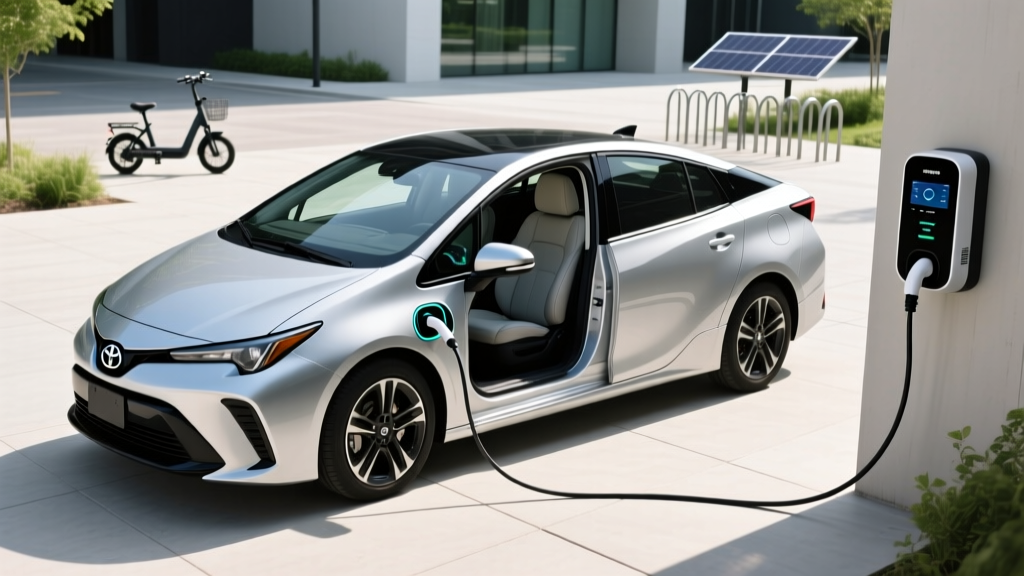
The bottom line: The standard Prius HEV generates all its electricity internally — you never plug it in. The Prius Prime PHEV has a much larger battery that you charge at home or at public Level 2 stations, giving you a meaningful electric-only commute before the gas engine kicks in. Both are excellent; they serve different driving patterns.
Fuel Economy: EPA Numbers and Real-World MPG
This is where the Prius earns its reputation. Here are the official EPA figures for the 2026 model year, sourced from fueleconomy.gov:
| Model / Trim | City MPG | Highway MPG | Combined MPG | MPGe (PHEV EV Mode) |
|---|---|---|---|---|
| Prius LE (FWD, HEV) | 57 | 56 | 57 | N/A |
| Prius XLE / Limited (FWD, HEV) | 52 | 52 | 52 | N/A |
| Prius AWD (HEV) | 53 | 54 | 54 | N/A |
| Prius Prime SE (PHEV) | 52 (hybrid mode) | 50 (hybrid mode) | 52 (hybrid mode) | 127 MPGe |
| Prius Prime XSE / XSE Premium | 50 (hybrid mode) | 48 (hybrid mode) | 50 (hybrid mode) | 119 MPGe |
Real-World MPG: What to Actually Expect
Toyota hybrids consistently match or exceed their EPA city ratings in real-world driving because regenerative braking recovers energy in stop-and-go traffic — the exact opposite of gas cars, which are least efficient in the city. In mixed driving, most Prius HEV owners report 50-58 MPG. Highway-heavy commutes at 75+ mph will drop that to the mid-40s, as aerodynamic drag dominates at higher speeds and the engine runs more continuously.
For the Prius Prime, the math changes based on your commute. If you drive 30 miles round-trip and charge nightly, you may use almost zero gasoline for months. Once the battery depletes, the Prime operates as a conventional hybrid at roughly 50 MPG combined — so even on a road trip with no charging, you're still getting exceptional efficiency. Total combined range (electric + gas tank) exceeds 450 miles for the Prime SE.
Powertrain Details: Engine, Motors, and Performance
The 2026 Prius uses Toyota's fifth-generation hybrid system. The HEV pairs a 2.0-liter inline-four Atkinson-cycle engine with two front motor-generators (and an optional rear motor for AWD). Combined system output is 194 hp for FWD and 196 hp for AWD models.
The Prius Prime uses the same 2.0L engine but with a more powerful electric motor and the larger 13.6 kWh battery, yielding 220 hp combined. That makes it the quickest Prius ever sold — 0-60 mph in approximately 6.6 seconds. For context, the original 2001 Prius managed 0-60 in roughly 13 seconds.
Neither the HEV nor the PHEV supports DC fast charging. The Prime charges exclusively via AC: a standard 120V household outlet (Level 1) takes roughly 11 hours for a full charge, while a 240V Level 2 outlet cuts that to about 4 hours at the Prime's 3.3 kW onboard charger rate.
Pricing, Trims, and Tax Credit Eligibility
| Model / Trim | Starting MSRP (2026 est.) | Drivetrain |
|---|---|---|
| Prius LE | $29,445 | FWD |
| Prius XLE | $32,695 | FWD |
| Prius Limited | $35,895 | FWD |
| Prius XLE AWD | $34,095 | AWD-e |
| Prius Prime SE | $34,095 | FWD |
| Prius Prime XSE | $37,245 | FWD |
| Prius Prime XSE Premium | $40,595 | FWD |
Does the Prius Qualify for a Federal Tax Credit?
Here's where the HEV and PHEV diverge sharply. Under current IRS §30D rules:
- Conventional Prius (HEV): Does NOT qualify for the federal clean vehicle tax credit. HEVs are not plug-in vehicles and are ineligible under §30D.
- Prius Prime (PHEV): May qualify for up to $3,750 of the federal credit, contingent on battery component and critical mineral sourcing requirements that have tightened annually through 2026. The full $7,500 requires meeting both sourcing thresholds, and many PHEVs currently qualify for the $3,750 partial credit.
- Income caps apply: Modified AGI must not exceed $150,000 (single), $225,000 (head of household), or $300,000 (joint).
- MSRP cap: The vehicle's MSRP must be under $55,000 (sedans). All Prius Prime trims clear this threshold.
- Point-of-sale transfer: As of 2024+, you can transfer the credit to the dealer at purchase, reducing your out-of-pocket cost immediately rather than waiting for tax filing.
Some states offer additional rebates for PHEVs (California's CVRP, for example, though funding varies). Always check your state's current programs — these change frequently and are separate from federal rules.
Battery Longevity, Warranty, and Replacement Cost
2026 Prius Hybrid Battery Warranty
Coverage: 10 years / 150,000 miles (whichever comes first) on the hybrid battery and all hybrid-system components, in all 50 states. This applies to both the HEV and the Prime PHEV.
Capacity retention (Prime PHEV): Toyota warrants that the Prime's traction battery will retain at least 70% of its original capacity during the warranty period. If it drops below that threshold, Toyota will repair or replace it at no cost.
How Long Do Prius Hybrid Batteries Actually Last?
Real-world data from millions of Prius vehicles on the road shows that Toyota's hybrid batteries routinely last 150,000-200,000+ miles before significant degradation. The HEV's small nickel-metal-hydride (NiMH) or lithium-ion pack undergoes shallow charge cycles — it never fully depletes or fully charges, which dramatically extends cycle life. Many original Prius batteries from the 2004-2009 era are still functional at 200,000+ miles.
The Prime's larger lithium-ion pack follows a similar pattern when owners use moderate charging habits (avoiding frequent 100% charges when unnecessary, though Toyota's built-in buffer already protects against extreme states of charge).
Battery Replacement Cost
If your hybrid battery does fail outside of warranty:
- Prius HEV battery replacement: $2,000-$4,000 for a new OEM battery pack, including labor. Refurbished/remanufactured units are available for $1,000-$2,000.
- Prius Prime PHEV battery replacement: $4,500-$7,000 for a new OEM pack, given the larger 13.6 kWh capacity.
For context, these costs are a fraction of full EV battery replacements (which can exceed $10,000-$15,000 for larger packs). And with Toyota's 10-year/150,000-mile warranty, most owners will never pay out of pocket.
Reliability: What the Data Shows
The Prius nameplate has one of the strongest long-term reliability records in the automotive industry. Consumer Reports consistently rates the Prius among the most reliable vehicles in its class, and the hybrid powertrain's simplicity — no traditional starter motor, no alternator, no conventional transmission with friction clutches — means fewer wear items to fail.
The e-CVT (planetary gearset) used in Toyota hybrids has no belts, bands, or torque converter to wear out. Brake pads last significantly longer than in conventional cars because regenerative braking handles most deceleration — it's common for Prius owners to report original brake pads at 80,000+ miles.
IIHS safety ratings for the current-generation Prius include a Top Safety Pick designation, with good ratings across crashworthiness tests.
Who Should Buy a Prius Hybrid vs. a Full EV or Gas Car?
Choose the Prius HEV If:
- You cannot charge at home (no garage, no outlet access, apartment living)
- You want maximum MPG with zero behavior change — just drive and refuel
- Your budget is under $35,000 and you want the lowest cost-per-mile in a gas-hybrid
- You regularly drive in extreme cold where EV range loss is a concern
Choose the Prius Prime (PHEV) If:
- You can charge at home (even a standard 120V outlet covers ~20 miles overnight)
- Your daily commute is under 40 miles round-trip — you'll rarely use gas
- You want EV-like daily driving but need gas flexibility for road trips
- You want to capture some federal tax credit that the HEV doesn't offer
Choose a Full BEV (e.g., Tesla Model 3, Hyundai Ioniq 6) If:
- You have reliable home Level 2 charging
- You want zero tailpipe emissions and the lowest per-mile energy cost
- Your daily driving is under 250 miles and you're comfortable with public DC fast charging for road trips
- You want to qualify for the full $7,500 federal credit (on eligible models)
Pros and Cons at a Glance
Pros
- Class-leading fuel economy: 57 MPG combined (HEV LE)
- 44-mile electric-only range on the Prime SE covers most commutes
- 10-year / 150,000-mile hybrid battery warranty
- Quick: 0-60 in 6.6 seconds (Prime) — no longer the slow lane
- Low running costs: minimal brake wear, no plug-in required for HEV
- Strong resale value and proven long-term reliability
- All trims under the $55,000 federal MSRP cap
Cons
- No DC fast charging on the Prime — Level 2 only
- Rear seat and cargo space tighter than crossover alternatives
- HEV trims get no federal tax credit
- AWD only available on the HEV, not the Prime
- Infotainment system functional but not class-leading in UX
- Prime's 3.3 kW onboard charger is slow compared to some PHEV rivals
Frequently Asked Questions
How many MPG does the 2026 Prius hybrid get?
The 2026 Toyota Prius LE (FWD HEV) achieves an EPA-estimated 57 city / 56 highway / 57 combined MPG. The XLE and Limited trims drop to 52 combined due to added weight from features. AWD models earn 54 combined. In real-world city driving, many owners report matching or slightly exceeding these numbers thanks to regenerative braking.
How far can the Prius Prime go on electric only?
The 2026 Prius Prime SE delivers an EPA-estimated 44 miles of electric-only range. The heavier XSE and XSE Premium trims get approximately 39-40 miles. This is enough for most daily commutes without using any gasoline. Once the battery depletes, the Prime seamlessly transitions to hybrid mode at roughly 50 MPG combined.
Does the Prius need to be plugged in?
The standard Prius (HEV) never needs to be plugged in — it charges its small battery through regenerative braking and the gasoline engine. The Prius Prime (PHEV) should be plugged in to take advantage of its 44-mile electric range, but it will still operate as a conventional hybrid if you don't charge it.
Is the Prius hybrid reliable and what does battery replacement cost?
The Prius has one of the strongest reliability records in the industry. Toyota's hybrid battery is warrantied for 10 years / 150,000 miles, and real-world data shows many batteries lasting 200,000+ miles. Out-of-warranty HEV battery replacement costs $2,000-$4,000; Prime PHEV replacement is $4,500-$7,000. These are far less than full EV battery replacements.
Does the 2026 Prius qualify for any tax credit?
The conventional Prius HEV does not qualify for the federal §30D clean vehicle credit — it is not a plug-in vehicle. The Prius Prime PHEV may qualify for up to $3,750 depending on current battery sourcing requirements. Buyer income caps ($150K single / $300K joint) and the $55,000 MSRP cap apply. The credit can be transferred to the dealer at point of sale. Check the IRS §30D page for current eligibility details, as sourcing rules tighten annually.
Hybrid vs. PHEV vs. full EV — which should I choose?
If you can't charge at home, the Prius HEV is the clear answer — no plug needed, 57 MPG. If you can charge at home and commute under 40 miles, the Prius Prime gives you daily electric driving with gas backup for road trips. If you have Level 2 home charging, drive under 250 miles daily, and want the lowest operating cost and zero tailpipe emissions, a full BEV like the Tesla Model 3 or Chevrolet Equinox EV may be a better long-term fit — but at a higher purchase price.