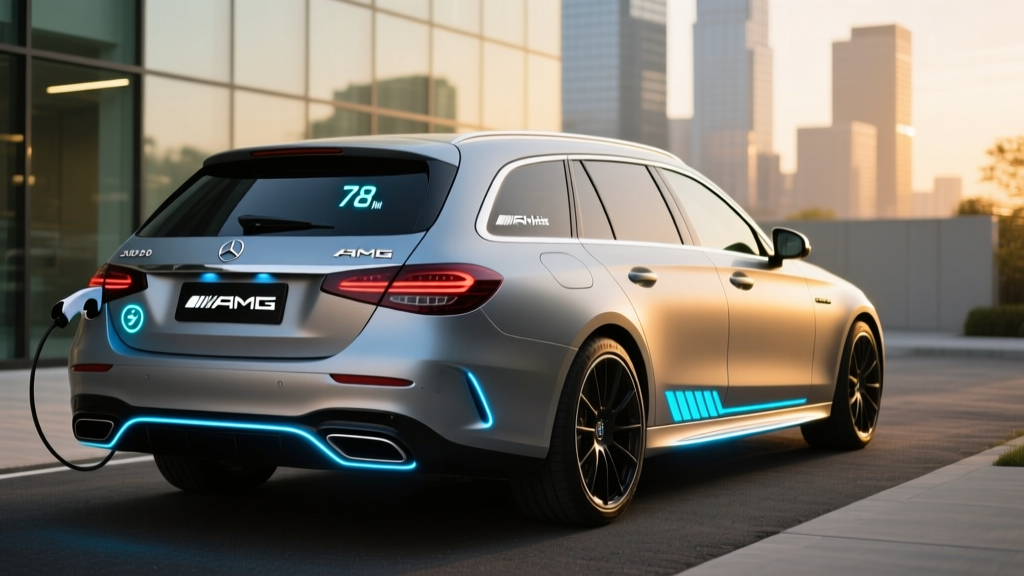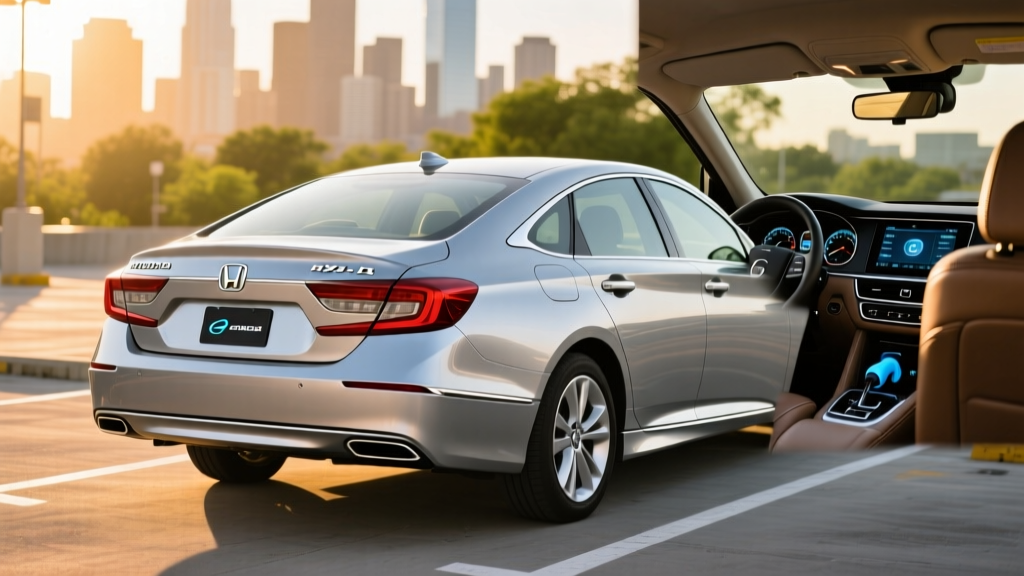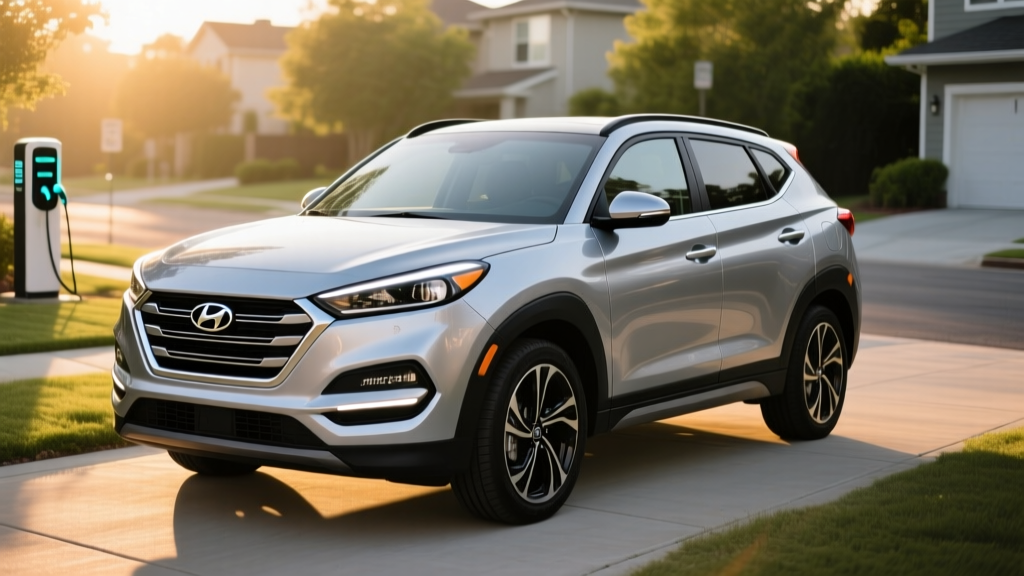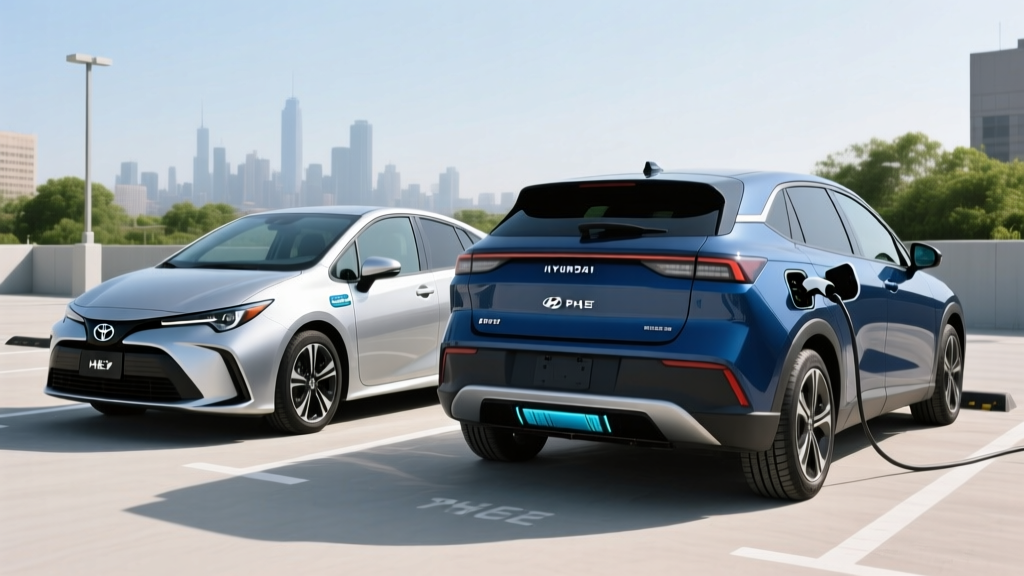
Short answer: yes, every hybrid on the road in 2026 still uses gasoline. But how much gas — and whether you ever need to visit a station on a normal commute — depends entirely on which type of hybrid you choose. Conventional hybrids (HEVs) burn gas every time you drive but sip it at rates that can dip below 40 MPG combined. Plug-in hybrids (PHEVs) can run 30–45 miles on electricity alone before the gas engine wakes up, making them functionally electric for daily errands while keeping a gas tank for road trips.
This guide breaks down the physics, the EPA numbers, and the real-world ownership math so you can pick the right powertrain for your driving pattern — without marketing fluff.
HEV vs PHEV: Two Very Different Answers to 'Do Hybrids Use Gas?'
Conventional Hybrid (HEV)
Examples: Toyota Prius, Honda Accord Hybrid, Hyundai Tucson Hybrid
Battery: 0.6–1.6 kWh (small, nickel-metal hydride or lithium-ion)
Plugs in? No. Recharges via regenerative braking and the gas engine.
Gas usage: Every trip. The electric motor assists but never drives alone for meaningful distances.
Typical EPA combined MPG: 38–57 MPG
Plug-In Hybrid (PHEV)
Examples: Toyota RAV4 Prime, Jeep Wrangler 4xe, Chrysler Pacifica Hybrid
Battery: 13–22 kWh usable (lithium-ion, sometimes NMC chemistry)
Plugs in? Yes — Level 1 (120V) or Level 2 (240V). No DC fast charging on most models.
Gas usage: Zero on short trips within electric range. Gas engine activates after battery depletes or under heavy acceleration.
Typical EPA electric range: 25–45 miles | Combined MPG after depletion: 28–40 MPG
The distinction matters for your wallet and your carbon footprint. An HEV is essentially a very efficient gas car that never needs a charger. A PHEV is a short-range EV with a gas-engine safety net — but only if you actually plug it in. Drive a PHEV without charging and you're hauling 400+ pounds of dead battery weight, often getting worse MPG than a comparable HEV.
Real-World MPG: What the EPA Sticker Doesn't Tell You
The EPA tests hybrids on standardized city and highway cycles, but hybrid powertrains behave differently than the sticker suggests — especially in city driving where regenerative braking recaptures energy at every stoplight.
| Model | Type | EPA City | EPA Hwy | EPA Combined | Real-World City* | Real-World Hwy* | PHEV Electric Range |
|---|---|---|---|---|---|---|---|
| Toyota Prius (LE AWD) | HEV | 53 | 54 | 54 | 55–60 | 48–52 | — |
| Toyota Prius Prime (SE) | PHEV | 127 MPGe | — | 52 MPG / 127 MPGe | — | — | 44 mi |
| Honda Accord Hybrid (Sport) | HEV | 51 | 44 | 48 | 52–56 | 40–43 | — |
| Toyota RAV4 Prime (XSE) | PHEV | 94 MPGe | — | 38 MPG / 94 MPGe | — | — | 42 mi |
| Hyundai Tucson PHEV (Limited) | PHEV | 80 MPGe | — | 35 MPG / 80 MPGe | — | — | 33 mi |
| Ford Maverick Hybrid (FWD) | HEV | 42 | 33 | 38 | 44–48 | 30–33 | — |
| Jeep Wrangler 4xe (Sahara) | PHEV | 49 MPGe | — | 20 MPG / 49 MPGe | — | — | 22 mi |
*Real-world estimates based on aggregated owner reports and independent testing. City driving often exceeds EPA for HEVs due to regenerative braking. Highway MPG typically falls 5–10% below EPA at sustained 75+ mph speeds. Source: fueleconomy.gov
The pattern is clear: conventional hybrids consistently beat their EPA city numbers in stop-and-go traffic. The electric motor handles low-speed acceleration — the least efficient range for a gas engine — while regen captures braking energy. On the highway, the gas engine does most of the work and aerodynamic drag dominates, so real-world highway MPG often underperforms the sticker by a few points.
For PHEVs, the MPGe figure only applies while the battery has charge. Once depleted, you're running on the gas engine alone, and the combined MPG drops to whatever the rightmost column shows. A RAV4 Prime that gets 94 MPGe on a charged battery drops to 38 MPG once the 42 miles of electric range are used up — still respectable for a 4,200-pound AWD SUV, but not miraculous.
Powertrain Specs: Where the Gas Meets the Electric
| Model | Engine | Electric Motor | Combined HP | 0–60 mph | Drivetrain |
|---|---|---|---|---|---|
| Toyota Prius (LE AWD) | 2.0L I4 (150 hp) | Dual motors (83 hp front + 41 hp rear) | 196 | 7.0s | AWD (e-rear) |
| Toyota Prius Prime (SE) | 2.0L I4 (150 hp) | Single motor (161 hp) | 220 | 6.6s | FWD |
| Honda Accord Hybrid | 2.0L I4 (146 hp) | Dual motors (181 hp) | 204 | 7.1s | FWD |
| Toyota RAV4 Prime | 2.5L I4 (177 hp) | Dual motors (180 hp front + 54 hp rear) | 302 | 5.7s | AWD (e-rear) |
| Ford Maverick Hybrid | 2.5L I4 (162 hp) | Single motor (131 hp) | 191 | 7.7s | FWD |
Modern hybrids use the electric motor to fill the torque gap where gas engines are weakest — low RPM. The result is smooth, responsive acceleration from a stop, even though peak horsepower numbers look modest. The RAV4 Prime's 302 combined hp and 5.7-second 0–60 make it one of the quickest compact SUVs on the market, hybrid or otherwise.
PHEV Electric Range, Charging, and Battery Specs
If you're considering a PHEV, the electric-only range is the number that determines whether you'll actually burn gas on a normal day. Here's what the current crop offers:
| Model | Usable Battery (kWh) | EPA Electric Range | Total Range (Elec + Gas) | Level 2 Charge Time (0–100%) | DC Fast Charge? |
|---|---|---|---|---|---|
| Toyota Prius Prime | 13.6 kWh | 44 mi (SE) | ~440 mi | ~4 hours (240V/16A) | No |
| Toyota RAV4 Prime | 18.1 kWh | 42 mi | ~600 mi | ~2.5 hours (240V/32A) | No |
| Hyundai Tucson PHEV | 13.8 kWh | 33 mi | ~400 mi | ~3.5 hours (240V/16A) | No |
| Jeep Wrangler 4xe | 17.3 kWh | 22 mi | ~370 mi | ~2 hours (240V/32A) | No |
| Chrysler Pacifica Hybrid | 16.0 kWh | 32 mi | ~520 mi | ~2 hours (240V/32A) | No |
A few things to notice: no mainstream 2026 PHEV supports DC fast charging. The batteries are too small (13–18 kWh usable) to justify the added cost and weight of DC charge hardware. Level 2 home charging on a 240V outlet fully replenishes any of these in 2–4 hours, which is fine for overnight top-ups but means you can't meaningfully recharge on a road trip. Once the battery is depleted on the highway, you're running on gas until you plug in again.
Cold weather reduces PHEV electric range by 15–25%, just as it does for full EVs. A RAV4 Prime rated for 42 miles of electric range may deliver only 32–35 miles on a 20°F morning. If your one-way commute is right at the edge of the rated range, plan for seasonal shortfalls.
Hybrid Battery Warranty & Replacement Costs
Hybrid and PHEV battery packs are covered under federal mandate for a minimum of 8 years / 100,000 miles. In California and states adopting CARB standards, coverage extends to 10 years / 150,000 miles for PZEV-certified models.
Typical out-of-warranty replacement costs (2026):
- Toyota Prius HEV battery: $2,200–$3,500 (refurbished) / $4,000–$5,500 (new OEM)
- Toyota RAV4 Prime PHEV battery: $6,000–$9,000
- Honda Accord Hybrid battery: $2,500–$4,000
- Jeep Wrangler 4xe battery: $7,000–$10,000+
In practice, modern lithium-ion hybrid batteries degrade slowly. Data from fleet operators and owner surveys shows most HEV batteries retain 85–90% capacity at 150,000 miles. PHEV batteries, cycled more deeply, may lose 15–20% capacity over the same distance — reducing electric range but not eliminating it. Toyota's hybrid battery track record is among the best in the industry, with many Prius packs exceeding 200,000 miles without replacement.
Pricing, Tax Credits, and Total Cost of Ownership
| Model | Base MSRP | Federal Tax Credit (§30D) | Effective Price* |
|---|---|---|---|
| Toyota Prius LE | $29,445 | $0 (HEVs not eligible) | $29,445 |
| Toyota Prius Prime SE | $34,045 | Up to $3,750† | ~$30,295 |
| Honda Accord Hybrid Sport | $33,990 | $0 (HEV) | $33,990 |
| Toyota RAV4 Prime XSE | $45,850 | Up to $3,750† | ~$42,100 |
| Hyundai Tucson PHEV Limited | $41,850 | Up to $3,750† | ~$38,100 |
| Jeep Wrangler 4xe Sahara | $52,590 | Up to $3,750† | ~$48,840 |
*Effective price assumes full credit eligibility. †PHEV credit amounts for 2026 vary based on critical-mineral and battery-component sourcing requirements under IRS §30D rules. Most PHEVs qualify for $3,750 (critical minerals met, battery components not fully compliant), not the full $7,500. HEVs (conventional hybrids) never qualify for §30D credits — they have no plug.
Key eligibility requirements for the PHEV federal credit:
- Buyer AGI must not exceed $150,000 (single) / $300,000 (joint) / $225,000 (head of household)
- Vehicle MSRP must not exceed $80,000 (SUVs, vans, trucks) or $55,000 (sedans)
- Battery must contain minimum percentages of critical minerals and North American-assembled components (thresholds increase annually)
- Credit can be transferred to the dealer at point of sale, reducing the purchase price directly
For total cost of ownership, consider fuel savings alongside the premium price. A Prius Prime owner who drives 30 miles round-trip daily and charges nightly might use zero gasoline on weekdays, filling the tank only for weekend road trips — perhaps 10–15 gallons per month. At $3.50/gallon, that's $35–$53/month in fuel. A comparable gas-only compact SUV burning 28 MPG over 1,000 monthly miles spends $125/month. The PHEV saves $70–$90/month in fuel, recouping its price premium in roughly 3–4 years before any tax credit.
Who Should Buy a Hybrid, a PHEV, or a Full EV?
Choose a Conventional Hybrid (HEV) If:
- You have no access to home or workplace charging
- You want maximum MPG with zero behavior change
- Your budget is under $35,000
- You drive mostly city/suburban routes where regen braking shines
- You want proven, decade-plus reliability data
Choose a Plug-In Hybrid (PHEV) If:
- You can install a 240V Level 2 charger at home
- Your daily round-trip commute is under 40 miles
- You take road trips too often to commit to a full EV
- You live in a region with extreme cold that hammers EV range
- You want electric daily driving with a gas backup
The Decision Framework
HEV over PHEV: You can't charge at home, your budget is tight, or you don't want to think about plugging in. The Prius at 54 MPG combined is hard to beat for simplicity.
PHEV over HEV: You have home charging and a short commute. The math favors PHEVs hard — you'll use gasoline only on road trips and save $800–$1,200/year on fuel.
Full EV over PHEV: You have reliable home charging, your daily driving exceeds 40 miles (where the PHEV's electric range runs out and you're burning gas anyway), and you want zero maintenance on the powertrain. If a 300+ mile EV with 20-minute DC fast charging covers your longest trips, the PHEV's gas engine becomes dead weight you pay for but rarely need.
Hybrid Reliability: What the Data Shows
Hybrid powertrains have been in mass production since the 1997 Toyota Prius. That's nearly three decades of field data, and the results are unambiguous: hybrid drivetrains are among the most reliable in the automotive industry.
Toyota's Hybrid Synergy Drive uses a planetary gearset with no traditional transmission clutches or bands to wear out. The electric motors have no brushes and no consumable parts. The gas engine in a hybrid runs fewer total hours than in a conventional car because the electric motor handles low-speed driving and the engine shuts off at stops.
Consumer Reports and J.D. Power data consistently rank Toyota and Lexus hybrids at or near the top for long-term reliability. Honda's two-motor hybrid system (used in the Accord and CR-V Hybrid) has also proven durable, with no widespread failure patterns through the 2024–2026 model years.
The primary reliability concern for older hybrids is the 12V auxiliary battery (not the high-voltage traction battery), which can fail every 3–5 years like any car battery. The traction battery itself, as noted above, typically outlasts 150,000 miles with gradual, manageable degradation.
Frequently Asked Questions
Do hybrids use gas all the time?
Conventional hybrids (HEVs) use gas on every trip, though the electric motor assists at low speeds and during acceleration to reduce consumption. Plug-in hybrids (PHEVs) use zero gas on trips within their electric range (typically 25–45 miles) but switch to gas once the battery is depleted or under hard acceleration.
How many MPG does a hybrid get?
It varies by model. The 2026 Toyota Prius achieves 53 city / 54 highway / 54 combined MPG. The Honda Accord Hybrid gets 51/44/48 MPG. The Ford Maverick Hybrid delivers 42/33/38 MPG. In real-world city driving, many hybrids exceed their EPA city rating by 2–5 MPG thanks to regenerative braking.
Can I drive a PHEV without ever plugging it in?
Yes, but you shouldn't. A PHEV that's never charged operates as a heavy conventional hybrid. The extra battery weight (300–500 lbs) reduces fuel economy below what a comparable HEV would achieve. You're paying a premium for electric capability you never use.
Do PHEVs qualify for the $7,500 federal tax credit?
Most 2026 PHEVs qualify for up to $3,750 under IRS §30D rules, not the full $7,500. The credit depends on battery component sourcing and critical mineral requirements, which tighten annually. HEVs (conventional hybrids without a plug) never qualify. Always verify current eligibility on the IRS website or with a tax professional before purchasing.
How long do hybrid batteries last and what does replacement cost?
Modern hybrid batteries typically last 150,000–200,000+ miles with gradual capacity loss. Federal law mandates a minimum 8-year/100,000-mile warranty (10 years/150,000 miles in CARB states). Out-of-warranty replacement runs $2,200–$5,500 for HEV batteries and $6,000–$10,000+ for PHEV batteries, depending on the model. Refurbished options reduce cost by 30–50%.
Do hybrids need to be plugged in?
Conventional hybrids (HEVs) never need to be plugged in — they recharge their small battery through regenerative braking and the gas engine. Plug-in hybrids (PHEVs) need to be plugged in to access their electric-only range, though they will still drive on gas alone if you forget.
Is a hybrid better than a full EV?
It depends on your charging access and driving pattern. If you can charge at home and your daily driving is under 40 miles, a PHEV offers EV-like daily operation with road-trip flexibility. If you drive more than 40 miles daily, a full EV with 300+ miles of range and DC fast charging is more cost-effective — you'd burn gas constantly in a PHEV. If you can't charge at home at all, an HEV is the practical choice.
Hybrids in 2026 are mature, efficient, and data-proven. The question isn't whether they use gas — they do — but how little gas they use relative to your specific commute, charging access, and budget. Pick the type that matches your reality, not the one that sounds best in a commercial.