Quick Verdict: A 500-HP Hybrid Wagon That Actually Makes Sense
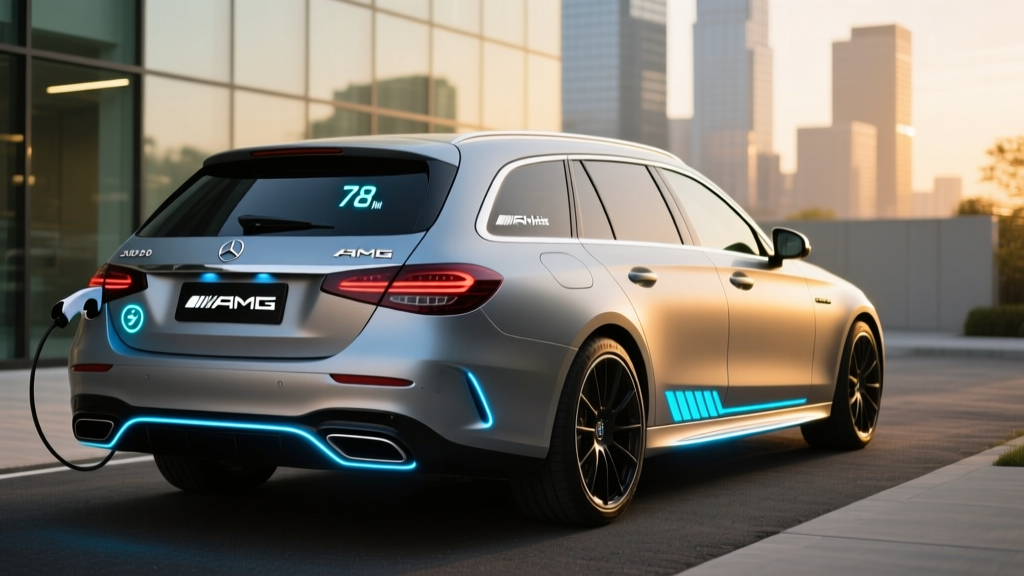
The 2026 Mercedes-AMG E 53 Hybrid Wagon occupies a rare intersection in the automotive market: a performance-oriented plug-in hybrid (PHEV) estate that delivers genuine electric-only commuting, sub-4-second acceleration, and the cargo practicality wagon buyers demand. Built on the W214 E-Class platform with AMG performance tuning, the E 53 Hybrid pairs a turbocharged 3.0L inline-six with an integrated electric motor for a combined output of approximately 500 horsepower — while still offering an EPA-estimated 40+ miles of zero-emission driving on its 21.2 kWh battery pack.
This isn't a conventional hybrid (HEV) that simply sips fuel. The E 53 Hybrid is a full plug-in hybrid (PHEV), meaning you charge it from a wall outlet or charger to access its electric-only range. Plug it in nightly, and most commutes happen without a drop of gasoline. Let it run as a hybrid, and the inline-six delivers the AMG performance pedigree with improved efficiency over the non-hybrid E 53.
| Spec | Value |
|---|---|
| Powertrain | 3.0L Turbo I-6 + Electric Motor (PHEV) |
| Combined Output | ~500 hp / ~516 lb-ft torque |
| Battery (usable) | 21.2 kWh (lithium-ion NMC) |
| Electric-Only Range (EPA) | ~40 miles |
| Total Combined Range | ~440 miles |
| 0-60 mph | ~3.9 seconds |
| DC Fast Charge | Yes, up to ~60 kW (10-80% in ~20 min) |
| Level 2 AC Charge | ~7.4 kW (full charge ~3 hours) |
| Cargo Volume | ~22 cu ft (rear seats up) / ~64 cu ft (folded) |
| Base MSRP | ~$89,500 (est.) |
| Federal Tax Credit (§30D) | Up to $3,750 (income/MSRP/sourcing dependent) |
How the PHEV Powertrain Works — and Why It Matters
The E 53 Hybrid uses Mercedes-AMG's latest plug-in hybrid architecture, where a permanently excited synchronous electric motor is integrated directly into the 9G-Tronic automatic transmission. This isn't a mild-hybrid system with a small 48-volt motor assisting briefly — it's a full PHEV capable of sustained electric-only propulsion at highway speeds up to approximately 87 mph.
The 21.2 kWh battery pack is positioned low in the chassis beneath the rear cargo area, which preserves the wagon's flat load floor — a critical design win compared to some competitors whose PHEV batteries intrude into trunk space. The inline-six engine produces roughly 443 hp on its own, with the electric motor contributing an additional ~161 hp for combined peak output.
HEV vs. PHEV: What's the Difference Here?
Some buyers confuse conventional hybrids (HEVs) with plug-in hybrids (PHEVs). The distinction is essential for the E 53 Hybrid:
| Feature | Conventional Hybrid (HEV) | Plug-in Hybrid (PHEV) |
|---|---|---|
| Battery Size | Small (~1-2 kWh) | Large (21.2 kWh on E 53) |
| Plug-in Charging | No — charges via regen/engine | Yes — plug in for full charge |
| Electric-Only Range | ~1 mile or less at low speed | ~40 miles EPA (E 53 Hybrid) |
| Tax Credit Eligibility | Generally no | Potentially yes (§30D) |
| Example | Toyota Prius | Mercedes-AMG E 53 Hybrid |
The E 53 Hybrid Wagon is firmly a PHEV. If you don't plug it in regularly, you're carrying 21.2 kWh of battery weight without accessing its benefits — reducing the efficiency advantage over the conventional E 53.
Fuel Economy and Electric Range: The Numbers
| Mode | City | Highway | Combined |
|---|---|---|---|
| Charge-Depleting (Electric + Engine) | ~52 MPGe | ~48 MPGe | ~50 MPGe |
| Charge-Sustaining (Hybrid Mode) | ~24 mpg | ~28 mpg | ~26 mpg |
| Electric-Only | ~40 miles EPA / ~2.0 kWh/mi | ||
Real-World MPG vs. EPA Estimates
The EPA combined figure of ~50 MPGe (charge-depleting mode) assumes you start with a full battery and drive approximately 40 miles before the engine engages regularly. In practice, real-world results depend heavily on your driving pattern:
- City commuting under 40 miles daily: Expect to burn almost zero gasoline if you charge nightly. Effective "MPG" is essentially infinite for liquid fuel.
- Highway road trips: Once the battery depletes, the E 53 operates as a conventional hybrid. Expect ~26 mpg combined — roughly 24 mpg at sustained 75-80 mph highway speeds, given the wagon's aerodynamic profile and performance-tuned powertrain calibration.
- Cold weather (below 32°F): Electric-only range drops 15-25% due to battery chemistry limitations and cabin heating demands. Expect ~30-34 miles of EV range in winter conditions.
Compared to the non-hybrid AMG E 53 (which returns approximately 22 mpg combined), the PHEV version delivers a measurable efficiency improvement in hybrid mode alone — and dramatically better results when charged regularly.
Charging the E 53 Hybrid Wagon: Speeds and Logistics
One of the E 53 Hybrid's advantages over many European PHEVs is its support for DC fast charging — a feature that many competitors still omit. Here's the full charging picture:
| Level | Power | Time (10-80%) | Miles of EV Range Added |
|---|---|---|---|
| Level 1 (120V household) | ~1.4 kW | ~14 hours (full) | ~4 mi/hour |
| Level 2 (240V home/public) | ~7.4 kW | ~3 hours (full) | ~22 mi/hour |
| DC Fast Charge | ~60 kW peak | ~20 min (10-80%) | ~80 mi/hour (peak) |
The 60 kW DC fast-charge capability means you can replenish most of the battery during a 20-minute stop — useful for extending electric-only driving on longer trips where public chargers are available. However, at 60 kW peak, this isn't comparable to a full BEV's 200+ kW charging. The charge curve tapers significantly above 80% state of charge (SoC) to protect the NMC battery chemistry, so charging to 100% on DC adds roughly another 15 minutes.
For daily use, a Level 2 home charger is the practical standard. A full overnight charge on a 32-amp Level 2 unit (7.4 kW) takes approximately 3 hours — easily replenishing the battery between evening arrival and morning departure.
Home Charging Setup Considerations
Mercedes recommends a dedicated 240V/32A circuit for optimal Level 2 charging. Installation costs for a home Level 2 charger typically range from $500 to $2,500 depending on electrical panel capacity, conduit run distance, and local permit requirements. If your home's electrical panel is already near capacity, a panel upgrade (adding $1,500-$3,000) may be necessary. Consult a licensed electrician for a site-specific quote — never assume your existing panel can handle the additional load without verification.
Pricing, Trim Levels, and Tax Credit Eligibility
The 2026 Mercedes-AMG E 53 Hybrid Wagon carries a base MSRP of approximately $89,500, with options (AMG Performance Package, Executive Rear Seat, advanced driver-assistance bundles) pushing well-equipped examples past $100,000.
Does the E 53 Hybrid Qualify for the Federal EV Tax Credit?
Under IRS §30D rules for 2026, PHEVs must meet several criteria to qualify for the federal clean vehicle credit. Here's the eligibility checklist:
- Battery capacity: Must be ≥7 kWh — the E 53's 21.2 kWh pack qualifies. ✓
- MSRP cap: Vans/SUVs/trucks capped at $80,000; sedans/wagons at $55,000. The E 53 Hybrid Wagon at ~$89,500 exceeds the $55,000 wagon cap. ✗
- Buyer income limits: AGI ≤$150,000 (single) / ≤$300,000 (joint). Varies by filer.
- Battery sourcing / critical minerals: Must meet phased-in percentage requirements per IRS guidance. Mercedes sources vary by build date.
- Final assembly: Must be assembled in North America. The W214 E-Class is assembled in Sindelfingen, Germany. ✗
Bottom line: The 2026 AMG E 53 Hybrid Wagon almost certainly does not qualify for the full $7,500 federal tax credit under current §30D rules. The combination of its MSRP exceeding the $55,000 wagon cap and German final assembly disqualifies it. Some buyers may be eligible for partial credits or state-level incentives depending on jurisdiction — check IRS.gov §30D guidance and your state's energy office for current programs.
Mercedes also occasionally offers manufacturer incentives or lease credits that can offset the purchase price. Check current offers on MBUSA.com before negotiating.
Reliability, Battery Warranty, and Long-Term Ownership
Hybrid Battery Warranty Coverage
Mercedes-Benz provides a high-voltage battery warranty of 6 years or 62,000 miles (whichever comes first) for the E 53 Hybrid's PHEV battery pack, covering defects and capacity loss below a specified threshold (typically 70% state of health). The broader powertrain warranty covers 4 years / 50,000 miles, which is standard for Mercedes-Benz but shorter than some competitors offering 8-10 year hybrid battery coverage.
Is the E 53 Hybrid Reliable?
Mercedes-AMG's inline-six powertrain has proven robust in its non-hybrid applications, and the PHEV variant shares the same core engine architecture. The electric motor, being integrated into the transmission, has fewer moving parts than a standalone motor and generally exhibits strong reliability.
However, the E 53 Hybrid's complexity — combining a turbocharged engine, high-voltage battery, power electronics, and a 9-speed transmission — means more potential failure points than a simpler BEV or conventional ICE vehicle. Mercedes' warranty coverage is adequate but not class-leading. Buyers prioritizing long-term peace of mind should consider an extended warranty, particularly for the power electronics and battery system beyond year six.
Battery Replacement Cost
Out-of-warranty replacement of the 21.2 kWh PHEV battery pack is estimated at $12,000 to $18,000 including parts and labor, based on current Mercedes-Benz high-voltage battery pricing. This is less than a full BEV battery replacement (which can exceed $20,000 for larger packs) but still a significant expense. Real-world data from earlier-generation Mercedes PHEVs suggests the battery retains 85-90% capacity after 100,000 miles under normal use — degradation is typically modest thanks to conservative buffer management and liquid thermal conditioning.
Who Should Buy the E 53 Hybrid Wagon — and Who Shouldn't
Pros
- ~40 miles EV range covers most daily commutes emissions-free
- ~500 hp with 3.9-second 0-60 — genuine AMG performance
- Wagon cargo practicality (~64 cu ft with seats folded)
- DC fast charging at 60 kW — rare for PHEVs
- Flat cargo floor — battery doesn't intrude on load space
- Reduced fuel consumption vs. non-hybrid E 53 (~26 mpg hybrid vs. ~22 mpg)
Cons
- $89,500+ MSRP — does not qualify for federal §30D tax credit
- Shorter battery warranty (6 yr / 62k mi) than some competitors
- Complex powertrain — more components than a BEV or ICE car
- Electric-only highway range drops significantly at 75+ mph
- Requires regular plug-in charging to realize efficiency benefits
- German assembly limits incentive eligibility
Decision Framework: Is This the Right Electrified Wagon for You?
Choose the AMG E 53 Hybrid Wagon if:
- You want AMG performance with daily electric commuting under 40 miles
- You need wagon cargo space but aren't ready for a full BEV
- You have reliable Level 2 home charging access
- You take regular road trips and want 440+ miles of total range without charging stops
Choose a full BEV wagon (e.g., Porsche Taycan Cross Turismo, Audi A6 Avant e-tron) if:
- You want zero gasoline dependency and 250+ miles of electric range
- You want lower long-term maintenance (no engine oil, spark plugs, or exhaust system)
- You qualify for the full $7,500 federal tax credit on a qualifying BEV
Choose a conventional hybrid (HEV) wagon if:
- You don't have access to home or workplace charging
- You want hybrid efficiency without the plug-in routine or PHEV price premium
2026 Mercedes-AMG E 53 Hybrid Wagon FAQ
How many MPG does the Mercedes-AMG E 53 Hybrid Wagon get?
In charge-sustaining (hybrid) mode after the battery depletes, the E 53 Hybrid returns approximately 24 mpg city / 28 mpg highway / 26 mpg combined. In charge-depleting mode with a full battery, the EPA combined rating is approximately 50 MPGe. Real-world highway fuel economy at 75-80 mph in hybrid mode typically falls to ~24 mpg due to the wagon's aerodynamics and performance-tuned calibration.
How far can the E 53 Hybrid go on electric only?
The EPA-estimated electric-only range is approximately 40 miles on a full 21.2 kWh charge. In real-world conditions, expect 35-40 miles in mild weather at moderate speeds, dropping to 30-34 miles in cold weather (below 32°F) or during aggressive driving. Highway driving at 75+ mph reduces EV range to approximately 28-32 miles due to increased aerodynamic drag.
Does the AMG E 53 Hybrid qualify for a tax credit?
Under 2026 IRS §30D rules, the E 53 Hybrid Wagon likely does not qualify for the federal clean vehicle credit. Its ~$89,500 MSRP exceeds the $55,000 cap for wagons/sedans, and its German final assembly does not meet the North American assembly requirement. State-level incentives vary — check your local energy authority. Always consult a tax professional for personal eligibility.
Is the E 53 Hybrid Wagon reliable? What about battery replacement cost?
The inline-six and integrated electric motor have proven robust, but the PHEV system's complexity means more potential service points than a pure EV. Mercedes covers the high-voltage battery for 6 years / 62,000 miles. Out-of-warranty battery replacement is estimated at $12,000-$18,000. Real-world degradation data from prior Mercedes PHEVs suggests 85-90% capacity retention at 100,000 miles under normal use.
Can the E 53 Hybrid DC fast charge?
Yes. The E 53 Hybrid supports DC fast charging at up to ~60 kW, enabling a 10-80% charge in approximately 20 minutes. This is uncommon for PHEVs and adds flexibility for road trips where public DC chargers are available. Level 2 AC charging at 7.4 kW fully replenishes the battery in about 3 hours.
Hybrid vs. PHEV vs. EV — which should I choose?
If you have home charging and a commute under 40 miles, the E 53 PHEV lets you drive electric daily while keeping the inline-six for road trips — the best of both worlds. If you want zero gasoline and 250+ miles of range, a full BEV wagon eliminates engine maintenance entirely. If you can't charge at home, a conventional HEV provides hybrid efficiency without plug-in requirements — though no current HEV wagon matches the E 53's performance envelope.
Sources: fueleconomy.gov (EPA efficiency data), IRS.gov §30D Clean Vehicle Credits, Mercedes-Benz USA E-Class Wagon specifications.