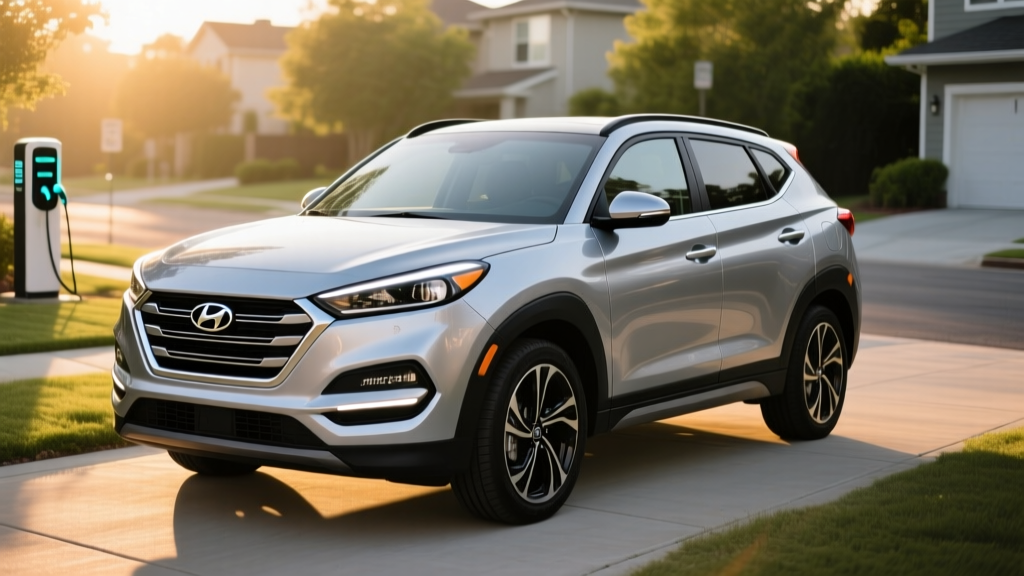
The 2022 Hyundai Tucson Hybrid arrived as a complete redesign, pairing a turbocharged 1.6-liter engine with an electric motor for a combined 226 horsepower and an EPA-estimated 38 MPG combined. For buyers in 2026 weighing a used electrified SUV, the Tucson Hybrid (HEV) and its plug-in sibling, the Tucson Plug-in Hybrid (PHEV), represent two distinct approaches to cutting fuel costs without committing to a full battery-electric vehicle. This guide breaks down every number that matters — from real-world MPG to battery warranty coverage — so you can decide which version fits your driving life.
HEV vs PHEV: Which Tucson Hybrid Are You Looking At?
Hyundai sold the 2022 Tucson in two electrified flavors, and confusing them is the most common buyer mistake. Here is the hard line between them:
| Attribute | Tucson Hybrid (HEV) | Tucson Plug-in Hybrid (PHEV) |
|---|---|---|
| Plugs in? | No — self-charging via engine & regen | Yes — 13.8 kWh battery, Level 2 chargeable |
| EPA Combined MPG / MPGe | 38 MPG (combined) | 80 MPGe (elec+gas) / 35 MPG (gas-only) |
| Electric-Only Range | N/A (EV assist only, ~1 mi creep) | 33 miles EPA electric-only |
| Total Range | ~440 miles | ~400 miles combined (elec + gas) |
| Combined Horsepower | 226 HP | 261 HP |
| Battery Capacity | 1.49 kWh (lithium-ion polymer) | 13.8 kWh (lithium-ion polymer) |
| DC Fast Charging | N/A | No — Level 1/2 only (J1772) |
| Federal Tax Credit (§30D) | Not eligible | Up to $7,500 (subject to eligibility rules) |
The conventional HEV never plugs in. It recovers energy through regenerative braking and the gasoline engine, storing it in a small battery that assists acceleration and enables brief low-speed electric driving. The PHEV carries a much larger battery you charge at home or at public Level 2 stations, giving you a genuine electric-only commute before the gas engine takes over.
Fuel Economy: EPA Numbers and Real-World MPG
According to fueleconomy.gov, the 2022 Hyundai Tucson Hybrid (HEV) carries these EPA ratings:
| Driving Cycle | EPA Estimate |
|---|---|
| City | 37 MPG |
| Highway | 38 MPG |
| Combined | 38 MPG |
The PHEV variant rates at 35 MPG combined once the battery is depleted, and 80 MPGe when factoring in electric-only driving. Its 33-mile electric-only range covers most daily commutes.
Real-World MPG: What Owners Actually See
Hyundai's hybrid system uses a conventional 6-speed automatic rather than a CVT or planetary gearset, which gives it a more natural driving feel but slightly limits city efficiency compared to Toyota's e-CVT approach. In real-world ownership:
- City / suburban driving: Expect 35–39 MPG. Hybrids generally meet or slightly beat EPA city estimates because stop-and-go traffic maximizes regenerative braking.
- Highway cruising (70+ mph): Expect 33–36 MPG. Aerodynamic drag reduces the hybrid advantage at sustained high speeds.
- Cold weather (below 30°F): Expect a 5–10% drop (roughly 32–36 MPG combined) as the engine runs more frequently for cabin heat and the battery is less efficient at low temperatures.
Owners who drive predominantly in stop-and-go urban traffic often report lifetime averages of 37–40 MPG, while heavy highway commuters may settle around 34–36 MPG. These are strong numbers for a 3,800-pound AWD crossover.
Powertrain and Performance Specs
| Specification | HEV | PHEV |
|---|---|---|
| Engine | 1.6L Turbo GDI 4-cyl | 1.6L Turbo GDI 4-cyl |
| Engine HP / Torque | 178 HP / 195 lb-ft | 178 HP / 195 lb-ft |
| Electric Motor | 44.2 kW (59 HP) / 195 lb-ft | 66.9 kW (90 HP) / 224 lb-ft |
| Combined System Output | 226 HP / 258 lb-ft | 261 HP / 258 lb-ft |
| Transmission | 6-speed automatic | 6-speed automatic |
| Drivetrain | AWD (HTRAC) | AWD (HTRAC) |
| 0–60 mph (est.) | ~7.1 seconds | ~6.3 seconds |
| Towing Capacity | 2,000 lbs | 2,000 lbs |
| Cargo Volume (behind 2nd row) | 38.7 cu ft | 38.5 cu ft |
Both models come standard with HTRAC all-wheel drive. The PHEV's larger electric motor provides noticeably stronger off-the-line acceleration and the ability to drive purely on electricity at speeds up to 84 mph before the engine engages.
PHEV Charging: Battery Size, Charge Time, and Range
The Tucson PHEV's 13.8 kWh lithium-ion polymer battery is its defining feature. Here is what charging looks like in practice:
| Charge Level | Power | Time (0–100%) | Connector |
|---|---|---|---|
| Level 1 (120V household) | ~1.4 kW | ~10 hours | J1772 (standard 120V cord included) |
| Level 2 (240V home/public) | ~7.2 kW | ~2 hours | J1772 |
| DC Fast Charge | N/A | N/A | Not supported |
The Tucson PHEV does not support DC fast charging. That is typical for PHEVs in this class — the battery is small enough that a Level 2 home charger fills it quickly overnight or during a workday. If you lack access to Level 2 charging at home or work, the PHEV's advantage shrinks considerably; you will drive mostly on gasoline, making the HEV the more practical and affordable choice.
Battery and Powertrain Warranty Coverage
Hyundai backs both the HEV and PHEV hybrid batteries with one of the strongest warranties in the segment:
- Hybrid/EV Battery: 10 years / 100,000 miles (whichever comes first)
- Powertrain: 10 years / 100,000 miles
- New Vehicle Limited: 5 years / 60,000 miles
- Capacity Retention Threshold: Hyundai replaces or repairs the battery if capacity drops below approximately 70% during the warranty period (confirm exact threshold with dealer at purchase)
For a used 2022 model purchased in 2026, approximately 6 years / 60,000+ miles of battery warranty remains — but note that the 10-year/100,000-mile powertrain and hybrid battery warranty applies to the original owner. Second owners receive a reduced 5-year/60,000-mile powertrain warranty unless Hyundai's certified pre-owned (CPO) program extends it. Always verify transferability with the selling dealer.
Pricing and Tax Credit Eligibility
Original MSRP for the 2022 Tucson Hybrid (HEV) ranged from approximately $32,650 (Blue trim) to $38,860 (Limited trim), including destination. The Tucson PHEV started around $36,190 (SEL Convenience) and topped out near $40,160 (Limited).
As a used vehicle in 2026, expect pricing in the used market to range roughly from $22,000 to $32,000 depending on trim, mileage, and condition.
Federal Tax Credit Rules
- Tucson HEV (conventional hybrid): Not eligible for the federal §30D clean vehicle credit. This credit applies only to plug-in electric vehicles (PHEVs and BEVs).
- Tucson PHEV (plug-in hybrid): The Tucson PHEV may qualify for up to $7,500 under the §30D credit when purchased new, subject to MSRP caps ($80,000 for SUVs), buyer income limits ($150K single / $300K joint), and critical-mineral/battery-component sourcing requirements. Per IRS guidelines, these rules tighten annually. For a used 2022 Tucson PHEV purchased in 2026, the used clean vehicle credit (§25E) may apply — up to $4,000 or 30% of the sale price (whichever is lower), with income caps of $75K single / $150K joint and a vehicle price cap of $25,000. Consult a tax professional for your specific situation.
Hybrid vs PHEV vs Full EV: Which Fits You?
Choose the Tucson HEV if:
- You cannot install a home charger or lack reliable Level 2 access
- Your commute is longer than 35 miles one-way
- You want maximum simplicity — no charging cables, no plug-in routine
- Budget is a priority (lower purchase price than the PHEV)
Choose the Tucson PHEV if:
- You can charge at home (Level 2 strongly recommended)
- Your daily round-trip commute is under 30 miles (you may rarely use gas)
- You want the option of electric-only driving for errands and school runs
- You qualify for the used EV tax credit, offsetting the higher purchase price
Choose a full EV (e.g., Hyundai Ioniq 5, Tesla Model Y) if:
- You want zero gasoline expenses and minimal drivetrain maintenance
- You have reliable home and/or workplace charging
- Your typical trips fall within 200–250 miles (or you are comfortable with DC fast charging on road trips)
- You want the strongest federal tax credit and lowest per-mile energy cost
Reliability and Long-Term Ownership Costs
The 2022 Tucson was the first model year of Hyundai's fourth-generation Tucson platform. First-year redesigns sometimes carry early-production teething issues. Owner forums and NHTSA complaint data show a moderate number of reports related to infotainment glitches and minor transmission hesitation — typical of new-platform launches — but no widespread hybrid battery or powertrain failure patterns.
Battery Replacement Cost
Should the hybrid battery require replacement out of warranty:
- HEV (1.49 kWh battery): Estimated $2,000–$3,500 for parts and labor. The small battery pack is far less expensive to replace than a full EV battery.
- PHEV (13.8 kWh battery): Estimated $5,000–$8,000 for parts and labor. Larger capacity means higher cost, but still well below full-EV battery replacement pricing.
Hyundai's lithium-ion polymer packs have proven durable in the brand's earlier hybrid models (Ioniq Hybrid, Sonata Hybrid), with many exceeding 150,000 miles without significant degradation. The 10-year/100,000-mile original-owner warranty provides substantial peace of mind, and CPO certification can extend coverage for second owners.
Pros and Cons at a Glance
Pros
- 38 MPG combined (HEV) is competitive for a turbocharged AWD compact SUV
- 226 HP (HEV) / 261 HP (PHEV) provides confident highway merging
- Standard AWD on all hybrid trims — no FWD-only base model
- 10-year/100,000-mile hybrid battery warranty (original owner)
- PHEV's 33-mile EV range covers most daily commutes gas-free
- Spacious interior: 38.7 cu ft cargo behind second row
- Conventional 6-speed automatic avoids CVT drone some buyers dislike
Cons
- Real-world highway MPG drops to low-to-mid 30s at 70+ mph
- PHEV lacks DC fast charging — Level 2 only
- First model year of new generation — some early-production quirks reported
- HEV not eligible for any federal tax credit
- Hybrid battery warranty reduces significantly for second owners
- Towing limited to 2,000 lbs (below some turbo gas competitors)
- PHEV cargo floor slightly higher due to battery placement
Frequently Asked Questions
How many MPG does the 2022 Hyundai Tucson Hybrid get?
The EPA rates the 2022 Tucson Hybrid (HEV) at 37 city / 38 highway / 38 combined MPG. Real-world owners typically see 35–39 MPG depending on driving mix, with city driving often matching or slightly exceeding the EPA estimate thanks to regenerative braking.
How far can the Tucson PHEV go on electric only?
The 2022 Tucson Plug-in Hybrid delivers an EPA-estimated 33 miles of electric-only range on a full charge of its 13.8 kWh battery. At highway speeds or in cold weather, expect 25–28 miles. Once the battery is depleted, the vehicle operates as a conventional hybrid at 35 MPG combined.
Is the 2022 Tucson Hybrid reliable?
The Tucson Hybrid uses a proven 1.6L turbo engine and Hyundai's hybrid system, both carried over from earlier models with strong durability records. NHTSA complaint data for the 2022 model year shows no systemic hybrid battery or drivetrain failures. The main concerns are minor infotainment and transmission calibration issues typical of first-year redesigns. Hyundai's 10-year/100,000-mile hybrid battery warranty (original owner) is among the best in the industry.
What does it cost to replace the Tucson Hybrid battery?
Out-of-warranty replacement for the HEV's 1.49 kWh battery is estimated at $2,000–$3,500. The PHEV's larger 13.8 kWh pack runs approximately $5,000–$8,000. Both figures include parts and labor. Given Hyundai's track record with hybrid batteries lasting well past 150,000 miles, most owners will never face this expense.
Does the 2022 Tucson Hybrid qualify for a tax credit?
The conventional Tucson HEV does not qualify for any federal tax credit — it is not a plug-in vehicle. The Tucson PHEV, when purchased new, was eligible for up to $7,500 under §30D (subject to income, MSRP, and sourcing rules). For a used 2022 Tucson PHEV purchased in 2026, the §25E used clean vehicle credit may provide up to $4,000, with a vehicle price cap of $25,000 and buyer income limits of $75K (single) / $150K (joint). Always verify current rules at IRS.gov and consult a tax professional.
Do I need to plug in the Tucson Hybrid (HEV)?
No. The conventional Tucson HEV charges its own small battery through regenerative braking and the gasoline engine. You never plug it in. Only the Tucson Plug-in Hybrid (PHEV) requires — and benefits from — being connected to a charger.
How does the Tucson Hybrid compare to the Toyota RAV4 Hybrid?
The RAV4 Hybrid rates at 41 MPG combined (EPA), beating the Tucson Hybrid's 38 MPG. However, the Tucson offers more horsepower (226 vs. 219 HP), a more upscale interior, and a longer original-owner powertrain warranty (10 years vs. 5 years). If pure fuel economy is your top priority, the RAV4 Hybrid edges ahead. If you value performance, interior quality, and warranty length, the Tucson Hybrid is the stronger pick.