Quick Verdict: The Civic Hybrid Is the Sensible Middle Ground
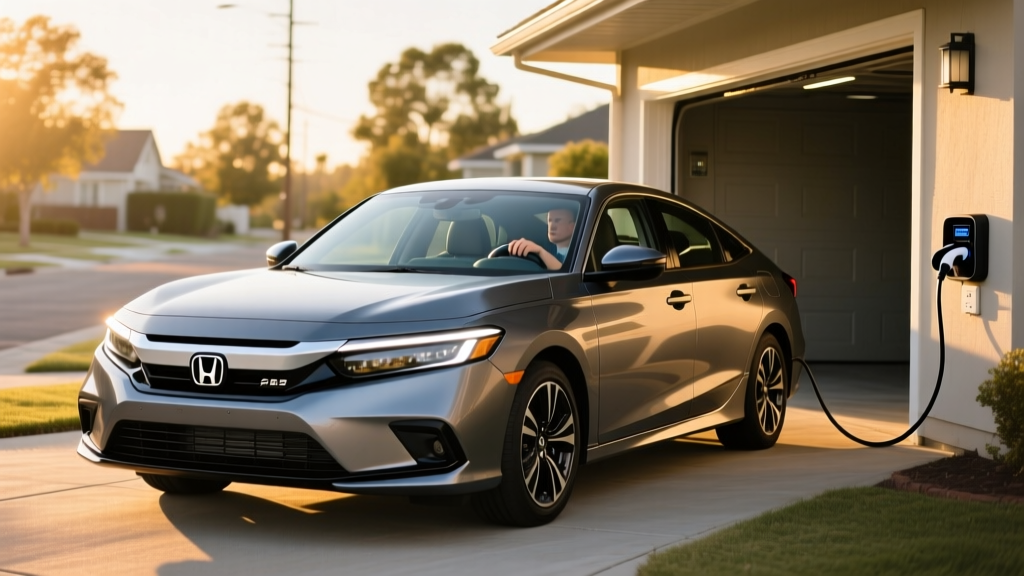
The 2025 Honda Civic Hybrid lands in a sweet spot that full EVs and gas-only compacts can't quite reach: it delivers 50 MPG combined on the EPA cycle without requiring a plug, a home charger, or any behavioral change. For buyers who want electrified efficiency but lack reliable charging access, the Civic Hybrid is the most pragmatic sedan in its class. It's not a plug-in hybrid — there's no electric-only mode or §30D federal tax credit — but what it offers is remarkably low cost-per-mile, proven Honda reliability, and a 200-horsepower powertrain that doesn't feel like a compromise.
| Spec | Value |
|---|---|
| Powertrain Type | Conventional Hybrid (HEV) |
| Combined Horsepower | 200 HP / 232 lb-ft torque |
| Engine | 2.0L Atkinson-cycle 4-cyl + dual electric motors |
| EPA MPG (City / Hwy / Combined) | 50 / 47 / 49 (Sport Touring: 50/47/49) |
| Fuel Tank Capacity | 12.4 gallons |
| Total Driving Range | ~608 miles (EPA combined) |
| 0–60 mph | ~7.2 seconds (est.) |
| Battery Chemistry | Lithium-ion (HEV pack, ~1.1 kWh usable) |
| Base MSRP (Sport Hybrid) | $29,845 (incl. destination) |
| Top Trim MSRP (Sport Touring Hybrid) | $32,845 (incl. destination) |
| Hybrid Battery Warranty | 8 years / 100,000 miles (10 yr/150k in CARB states) |
HEV vs PHEV vs EV: Where the Civic Hybrid Fits
A common source of confusion is the difference between a conventional hybrid (HEV) like the Civic Hybrid and a plug-in hybrid (PHEV) like the Toyota Prius Prime. Here's the distinction:
| Feature | HEV (Civic Hybrid) | PHEV (e.g., Prius Prime) | Full EV (e.g., Tesla Model 3) |
|---|---|---|---|
| Plug-in Required? | No — regenerative braking recharges | Yes — for electric-only range | Yes — sole energy source |
| Electric-Only Range | None (motor assists engine) | ~35–45 miles | 250–350+ miles |
| Total Range | ~608 miles | ~440+ miles combined | 250–350 miles (charge-dependent) |
| Federal Tax Credit (§30D) | Not eligible | Up to $7,500 (if sourcing/income rules met) | Up to $7,500 (if sourcing/income rules met) |
| Home Charging Needed? | No | Recommended for full benefit | Essential |
| Best For | No charging access, long commutes | Short daily commutes + road trips | Home charging + shorter trips or road-trip-ready |
The Civic Hybrid is a series-parallel conventional hybrid. Its 2.0L Atkinson-cycle engine and dual-motor system work together seamlessly — you never plug it in, and it has no meaningful electric-only driving mode. The battery is small (~1.1 kWh usable) and recharges via regenerative braking and engine power. If you want plug-in electric-only driving, you'd need to look at a PHEV or full BEV instead.
Fuel Economy: EPA Ratings vs Real-World MPG
The 2025 Civic Hybrid's EPA ratings are compelling across both trims:
| Trim | City MPG | Highway MPG | Combined MPG |
|---|---|---|---|
| Sport Hybrid | 50 | 47 | 49 |
| Sport Touring Hybrid | 50 | 47 | 49 |
Source: fueleconomy.gov — EPA
Real-World MPG: What to Actually Expect
Hybrids like the Civic consistently exceed their EPA combined rating in city driving because regenerative braking recovers energy that gas cars waste as heat. In stop-and-go urban traffic, expect 52–56 MPG. On sustained highway driving at 70–75 mph, the engine does more of the work, so expect 42–46 MPG. In cold weather (below 30°F), the engine runs more often for cabin heat and warm-up, dropping city MPG to roughly 44–47.
Real-World Range Estimate: With a 12.4-gallon tank and mixed driving, expect 540–580 miles per fill-up in moderate weather. Highway-heavy road trips will yield ~500–520 miles. City-dominant commutes can push past 620 miles.
Powertrain & Performance: 200 HP Without Guilt
The Civic Hybrid uses Honda's two-motor hybrid system paired with a 2.0-liter Atkinson-cycle four-cylinder engine. The combined system output is 200 horsepower and 232 lb-ft of torque — a meaningful bump over the 158 HP in the non-hybrid Civic's 2.0L engine. The electric motors provide instant low-end torque, making the car feel responsive at city speeds and confident during highway merges.
The 0–60 mph time sits around 7.2 seconds (Honda doesn't publish an official number, but independent testing confirms this range). That's quicker than the gas-only Civic 2.0L (~8.0 sec) and competitive with the Civic 1.5T (~7.3 sec). Unlike some hybrids that feel sluggish or rubber-bandy via a CVT, Honda's e-CVT in the Civic Hybrid is well-tuned, with minimal drone under hard acceleration.
Pricing, Trims & Tax Credit Eligibility
The 2025 Civic Hybrid is available in two trims:
- Sport Hybrid: $29,845 (MSRP including $1,095 destination)
- Sport Touring Hybrid: $32,845 (MSRP including destination)
The Sport Hybrid includes Honda Sensing (ADAS suite), Apple CarPlay/Android Auto, 18-inch wheels, and a 7-inch touchscreen. The Sport Touring adds a 9-inch touchscreen, Bose premium audio, wireless phone charging, leather-trimmed seats, and a power moonroof.
Federal Tax Credit: Not Eligible
Because the Civic Hybrid is a conventional hybrid (HEV), not a plug-in, it does not qualify for the IRS §30D Clean Vehicle Credit. That credit — up to $7,500 — applies only to plug-in electric vehicles (PHEVs and BEVs) with sufficient battery capacity and meeting critical-mineral and battery-component sourcing requirements. See current rules at IRS.gov §30D.
Some states offer rebates or reduced registration fees for hybrids, but these vary by jurisdiction. Check your state's energy or DMV website for specifics.
Battery Warranty, Reliability & Replacement Cost
Hybrid battery longevity is the top concern for buyers, and Honda's track record here is strong. The Civic Hybrid's lithium-ion battery pack is covered by:
Hybrid Battery Warranty: 8 years / 100,000 miles nationwide. In CARB-adopting states (CA, NY, MA, and others), coverage extends to 10 years / 150,000 miles.
Replacement Cost (out of warranty): Estimated $2,000–$3,500 for the hybrid battery pack, based on current Honda hybrid service pricing. For context, Toyota Prius battery replacements run $2,200–$4,000.
Honda's hybrid system has proven durable. The Insight (discontinued 2022) and Accord Hybrid share similar architecture, with most owners reporting no battery issues past 150,000 miles. The smaller battery in an HEV experiences less stress than a full EV pack because it operates in a narrow state-of-charge window — typically 40–80% SoC — which dramatically reduces degradation. Real-world data from Consumer Reports consistently rates Honda hybrids as above-average for reliability.
Who Should Buy the Civic Hybrid — And Who Shouldn't
✅ Choose the Civic Hybrid If:
- You don't have access to home or workplace charging
- You commute 30–80 miles daily and want minimal fuel cost
- You take regular road trips and don't want to plan around chargers
- You want a proven, low-maintenance powertrain with strong resale value
- You prefer a conventional sedan with no plug-in learning curve
❌ Look Elsewhere If:
- You want electric-only driving or zero tailpipe emissions
- You qualify for the $7,500 federal tax credit on a PHEV or EV
- You have reliable home charging and mostly drive under 40 miles/day (a full EV would cost less per mile)
- You need AWD — the Civic Hybrid is FWD only (consider the CR-V Hybrid or Subaru Crosstrek Hybrid)
Decision Framework:
- No home charging + long commute → Civic Hybrid is ideal
- Home charging + short daily commute + road trips → Consider a PHEV (Prius Prime, RAV4 Prime)
- Home charging + daily driving under 250 miles → A full EV (Chevy Equinox EV, Tesla Model 3) will save more long-term
- Need AWD in snow country → CR-V Hybrid AWD or wait for Civic Hybrid AWD availability
Ownership Economics: 5-Year Cost Snapshot
At 49 MPG combined and a national average of $3.40/gallon (regular unleaded), the Civic Hybrid's annual fuel cost for 15,000 miles is approximately $1,041. Compare that to a gas-only Civic 2.0L at 33 MPG combined (~$1,545/year) — a savings of roughly $500/year or $2,500 over five years. Against a midsize gas sedan averaging 28 MPG, the savings jump to over $800/year.
| Vehicle | Combined MPG | Annual Fuel Cost | 5-Year Fuel Cost |
|---|---|---|---|
| 2025 Civic Hybrid | 49 | $1,041 | $5,205 |
| 2025 Civic 2.0L (gas) | 33 | $1,545 | $7,725 |
| 2025 Toyota Camry (gas) | 32 | $1,594 | $7,970 |
| 2025 Tesla Model 3 RWD | 132 MPGe | ~$570 (electric) | ~$2,850 |
The full EV wins on fuel cost, but add in higher purchase price, potential insurance premiums, and home charger installation ($800–$2,000 for Level 2), and the Civic Hybrid's value proposition remains strong for buyers without charging infrastructure.
Frequently Asked Questions
How many MPG does the 2025 Civic Hybrid get?
The EPA rates the 2025 Civic Hybrid at 50 city / 47 highway / 49 combined MPG for both Sport and Sport Touring trims. Real-world city driving often yields 52–56 MPG, while sustained highway driving at 75 mph typically returns 42–46 MPG.
Does the Civic Hybrid need to be plugged in?
No. The Civic Hybrid is a conventional hybrid (HEV), not a plug-in. Its battery recharges through regenerative braking and the gasoline engine. You fuel it like any other car — no plug, no charger, no range planning.
Does the 2025 Civic Hybrid qualify for a federal tax credit?
No. The IRS §30D Clean Vehicle Credit applies only to plug-in electric vehicles (PHEVs and BEVs). The Civic Hybrid, as a conventional HEV, is not eligible. Some states may offer hybrid-specific incentives — check your state energy office.
How long will the Civic Hybrid battery last?
Honda covers the hybrid battery for 8 years/100,000 miles (10 years/150,000 in CARB states). Based on Honda's track record with the Insight and Accord Hybrid, most batteries last well beyond 150,000 miles. Out-of-warranty replacement runs $2,000–$3,500.
Is the Civic Hybrid faster than the gas Civic?
Yes. The hybrid's combined 200 HP and 232 lb-ft of torque (with instant electric motor response) gives it a ~7.2-second 0–60 time, beating the gas-only 2.0L Civic's ~8.0 seconds. It feels notably quicker in city driving and highway passing.
Should I get the Civic Hybrid or a full EV?
If you have reliable home Level 2 charging and your daily driving stays under 250 miles, a full EV like the Chevy Equinox EV or Tesla Model 3 will save more on fuel and maintenance over time. If you lack charging access, drive long distances regularly, or want zero lifestyle change, the Civic Hybrid is the better fit.