Quick Verdict: The Silverado Hybrid at a Glance
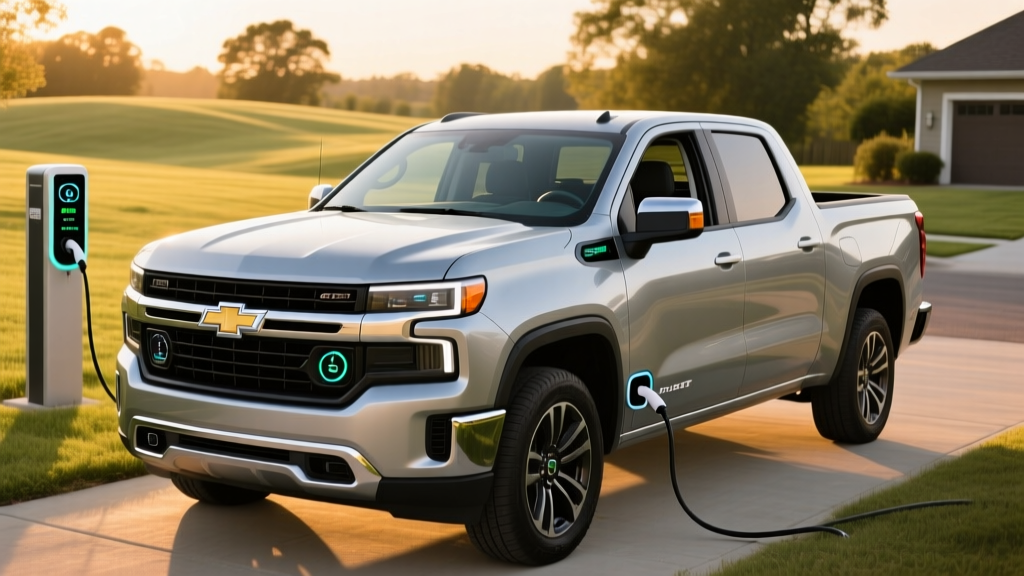
The 2026 Chevrolet Silverado Hybrid pairs GM's turbocharged 2.7-liter four-cylinder engine with a mild-hybrid electric assist system, delivering improved city fuel economy and smoother stop-start behavior over the standard gas-only Silverado 1500. This is a conventional hybrid (HEV) — it does not plug in, has no electric-only driving range, and recharges its small battery pack entirely through regenerative braking and engine operation. If you're searching for a "Silverado hybrid" expecting a plug-in truck that commutes on electricity alone, it's critical to understand exactly what this powertrain delivers — and where it falls short.
The Silverado Hybrid is best understood as a fuel-efficiency enhancement to an already capable half-ton truck, not a bridge to full electrification. For buyers weighing this against the fully electric Silverado EV or a gas-only Silverado 1500, the hybrid sits in a specific middle ground that suits some use cases well and others poorly.
| Specification | 2026 Silverado Hybrid |
|---|---|
| Powertrain Type | Conventional Hybrid (HEV) — no plug |
| Engine | 2.7L Turbocharged I4 |
| Electric Motor | Integrated starter-generator (mild hybrid assist) |
| Combined Horsepower | 310 hp |
| Combined Torque | 430 lb-ft |
| Transmission | 10-speed automatic |
| EPA MPG (City / Hwy / Combined) | 20 / 23 / 21 MPG |
| Drivetrain | 4WD (standard on Hybrid trim) |
| Max Towing Capacity | ~9,300 lbs (properly equipped) |
| Hybrid Battery Warranty | 8 years / 100,000 miles |
| Starting MSRP | ~$52,300 (LTZ Hybrid, est.) |
HEV vs. PHEV: What Kind of Hybrid Is the Silverado?
This is the single most important distinction for any truck shopper researching hybrid pickups. Chevrolet's Silverado Hybrid is a conventional hybrid electric vehicle (HEV). There is no plug, no charging cable, and no electric-only driving mode. The small lithium-ion battery pack (approximately 1.5 kWh) is recharged exclusively by the gasoline engine and regenerative braking during deceleration.
| Feature | Silverado Hybrid (HEV) | Plug-In Hybrid (PHEV) Example |
|---|---|---|
| Plugs in to charge? | No | Yes (Level 1 or Level 2) |
| Electric-only range | None | 20–50 miles typical |
| Battery capacity | ~1.5 kWh | 12–25 kWh typical |
| Fuel economy improvement | ~1–3 MPG vs. gas-only | Significant (electric commuting) |
| Federal tax credit (§30D) | Not eligible | Up to $7,500 (if eligible) |
| Driver behavior change | None required | Benefits from regular plug-in charging |
A plug-in hybrid (PHEV) truck — like the Ford Maverick PHEV concept or the approach used in the Jeep Wrangler 4xe — carries a much larger battery that can be charged from a wall outlet, enabling 20 to 50 miles of electric-only driving before the gas engine engages. As of the 2026 model year, Chevrolet does not offer a Silverado PHEV. If electric-only commuting is a priority, you'd need to look at either a PHEV from another brand or the fully electric Silverado EV.
Fuel Economy: EPA Numbers and Real-World MPG
The 2026 Silverado Hybrid carries an EPA-estimated 20 city / 23 highway / 21 combined MPG in its standard 4WD configuration, according to fueleconomy.gov. For comparison, the gas-only 2.7L Turbo Silverado 1500 4WD typically rates around 18 city / 21 highway / 19 combined MPG — meaning the hybrid system provides a modest 1–2 MPG improvement across the board.
| Configuration | City MPG | Highway MPG | Combined MPG |
|---|---|---|---|
| Silverado Hybrid 4WD | 20 | 23 | 21 |
| Silverado 2.7L Turbo Gas 4WD | 18 | 21 | 19 |
| Silverado 5.3L V8 Gas 4WD | 15 | 20 | 17 |
Real-World MPG: What Owners Actually See
Hybrid systems tend to outperform their EPA city estimates in stop-and-go traffic, where regenerative braking recaptures energy most effectively. In mixed suburban driving with frequent stops, some owners report 22–24 MPG — slightly above the EPA city figure. However, highway-dominant commutes and heavy-load towing will push fuel economy below the EPA highway estimate. Towing a 6,000-pound trailer on the highway can drop fuel economy to 11–14 MPG, consistent with any half-ton truck regardless of hybrid assist.
In cold weather (below freezing), expect a 5–10% reduction in fuel economy as the engine runs more frequently to provide cabin heat and the battery operates less efficiently. This is normal for all hybrids and is less severe than the 20–30% range loss seen in full EVs in winter conditions.
Powertrain, Towing, and Performance
The Silverado Hybrid uses GM's turbocharged 2.7-liter inline-four engine — the same base engine in the standard Silverado 1500 — augmented by a mild-hybrid system. The integrated starter-generator provides electric torque fill during acceleration and enables seamless engine stop-start at traffic lights, eliminating the shudder common in non-hybrid stop-start systems.
Combined output is rated at 310 horsepower and 430 lb-ft of torque, routed through a 10-speed automatic transmission to all four wheels. The torque figure is particularly relevant for truck buyers: 430 lb-ft from the turbo-four hybrid setup exceeds the output of many V6 competitors and provides strong low-end pull for merging and light towing.
Maximum towing capacity for the Silverado Hybrid is approximately 9,300 pounds when properly equipped with the trailering package. This is competitive for the half-ton segment, though the available 5.3L V8 and 6.2L V8 gas models (when equipped with the Max Trailering Package) can pull more. Payload capacity is approximately 1,870 pounds.
Pricing, Trims, and Tax Credit Eligibility
The 2026 Silverado Hybrid is available on higher trims (typically LTZ and above), with a starting MSRP around $52,300 before destination charges. Fully loaded examples with premium packages can push past $65,000.
Federal Tax Credit: Does the Silverado Hybrid Qualify?
No. The Silverado Hybrid does not qualify for the federal §30D clean vehicle tax credit. Under current IRS rules, only plug-in electric vehicles (BEVs and PHEVs with sufficient battery capacity) are eligible for the up-to-$7,500 credit. Conventional hybrids (HEVs) that do not plug in are explicitly excluded from §30D, as confirmed by the IRS clean vehicle tax credit guidelines.
§30D Tax Credit Eligibility — Silverado Hybrid:
- Plug-in capable? ❌ No — HEV only
- Battery capacity ≥ 7 kWh? ❌ No (~1.5 kWh)
- Eligible for §30D credit? ❌ No
- State/local hybrid incentives? Varies — check your state's energy office
Some states offer modest rebates or reduced registration fees for hybrid vehicles, but these vary widely by jurisdiction. Check your state's official energy or environmental agency for current programs.
Battery Warranty, Reliability, and Replacement Cost
Hybrid battery longevity is consistently the top concern for buyers considering their first hybrid vehicle. Chevrolet covers the Silverado Hybrid's battery pack and hybrid-specific components under a 8-year / 100,000-mile warranty, which is standard across the industry for hybrid systems. This warranty covers defects and capacity loss below a specified threshold (typically 60–70% of original capacity).
| Component | Warranty Coverage |
|---|---|
| Hybrid battery pack | 8 years / 100,000 miles |
| Hybrid system components (inverter, motor) | 8 years / 100,000 miles |
| Powertrain (engine, transmission) | 5 years / 60,000 miles |
| Bumper-to-bumper | 3 years / 36,000 miles |
Real-World Hybrid Battery Lifespan
Because the Silverado Hybrid uses a mild-hybrid system with a relatively small battery that is never deeply discharged (the system maintains a narrow state-of-charge window to preserve longevity), real-world battery degradation is minimal. GM's eAssist and similar mild-hybrid systems have demonstrated strong durability across millions of vehicle miles in prior applications. Most hybrid batteries in comparable systems last well beyond the warranty period — often 150,000+ miles — before any significant capacity loss.
If replacement is eventually needed out of warranty, a mild-hybrid battery pack for a vehicle of this type typically costs between $1,500 and $3,500 including labor — significantly less than the $8,000–$20,000+ replacement costs associated with full EV traction batteries. The smaller battery size and simpler chemistry keep replacement costs manageable.
Overall Reliability
The 2.7L turbocharged engine has been in GM's truck lineup since the 2019 model year and has accumulated a substantial reliability track record. The mild-hybrid system adds minimal mechanical complexity — the starter-generator replaces the conventional alternator and starter motor rather than adding a separate drive unit. This simplicity is a reliability advantage over full-hybrid and PHEV systems that incorporate larger electric motors and more complex power-splitting transmissions.
Silverado Hybrid vs. Gas-Only vs. Silverado EV: Which Fits You?
Choosing between the Silverado Hybrid, a conventional gas Silverado, and the fully electric Silverado EV depends on your driving patterns, charging access, and budget.
Choose the Silverado Hybrid (HEV) if:
- You want slightly better fuel economy without changing your fueling habits
- You do a lot of city/suburban stop-and-go driving where hybrid assist shines
- You don't have access to home or workplace charging
- You need full truck capability (towing, payload, range) without compromise
- You want smoother stop-start operation and mild electric torque fill
Choose the gas-only Silverado 1500 if:
- Maximum towing capacity is your top priority (V8 options)
- You want the lowest purchase price and widest trim selection
- Your driving is predominantly highway where hybrid gains are minimal
- You prefer a proven, simple powertrain with the largest dealer service network
Choose the Silverado EV if:
- You have reliable Level 2 home charging and want the lowest per-mile fuel cost
- Your daily driving is under 300 miles (within the EV's EPA range)
- You qualify for the §30D federal tax credit (up to $7,500) and state EV incentives
- You want instant torque, a frunk, and zero tailpipe emissions
- You're willing to plan around DC fast charging on longer road trips
Silverado Hybrid Pros
- 1–2 MPG improvement over gas-only, especially in city driving
- Smoother, less intrusive stop-start system
- 430 lb-ft of torque for strong low-end acceleration
- No plug-in required — fuel it like any gas truck
- 8-year/100,000-mile hybrid battery warranty
- Full towing and payload capability retained
Silverado Hybrid Cons
- Modest fuel economy gain — not transformative
- No electric-only driving capability
- Not eligible for the $7,500 federal EV tax credit
- Available only on higher trims (~$52,300+ starting)
- Four-cylinder engine lacks the sound and feel of a V8
- Highway towing MPG remains poor (11–14 MPG under load)
Frequently Asked Questions
How many MPG does the Silverado Hybrid get?
The 2026 Silverado Hybrid is EPA-rated at 20 city / 23 highway / 21 combined MPG with 4WD. Real-world city driving with frequent stops can yield 22–24 MPG thanks to regenerative braking. Highway-dominant driving and towing will reduce these figures.
Does the Silverado Hybrid plug in?
No. The Silverado Hybrid is a conventional hybrid (HEV). It has no charging port and no electric-only range. The small battery recharges through regenerative braking and the gasoline engine. You fuel it exactly like a standard gas truck.
How far can the Silverado Hybrid go on electric only?
It cannot. As a mild-hybrid system, the Silverado Hybrid's electric motor assists the gas engine but cannot propel the truck on electricity alone. If electric-only commuting is important to you, consider a PHEV from another brand or the fully electric Silverado EV.
Is the Silverado Hybrid reliable, and what does battery replacement cost?
The mild-hybrid system adds minimal complexity to an established powertrain. The hybrid battery is covered for 8 years / 100,000 miles and typically lasts well beyond that period. Out-of-warranty replacement runs approximately $1,500–$3,500 — far less than a full EV battery replacement.
Does the Silverado Hybrid qualify for a tax credit?
No. Under IRS §30D rules, only plug-in electric vehicles (BEVs and qualifying PHEVs) are eligible for the federal clean vehicle tax credit of up to $7,500. The Silverado Hybrid, as a non-plug-in HEV, does not qualify. Some states may offer separate hybrid incentives — check your local programs.
How much can the Silverado Hybrid tow?
When properly equipped with the trailering package, the Silverado Hybrid can tow approximately 9,300 pounds. This is competitive within the half-ton segment, though V8-equipped gas models with the Max Trailering Package can exceed this figure.
Should I buy the Silverado Hybrid or the Silverado EV?
If you have home charging, drive under 300 miles daily, and want the lowest operating cost, the Silverado EV is the stronger choice — and it qualifies for federal tax credits. If you need unlimited range without charging stops, frequently tow heavy loads long distances, or lack home charging access, the Silverado Hybrid gives you a modest efficiency bump without any lifestyle change.