Quick Verdict: A Proven Luxury Hybrid With Modest Electrification
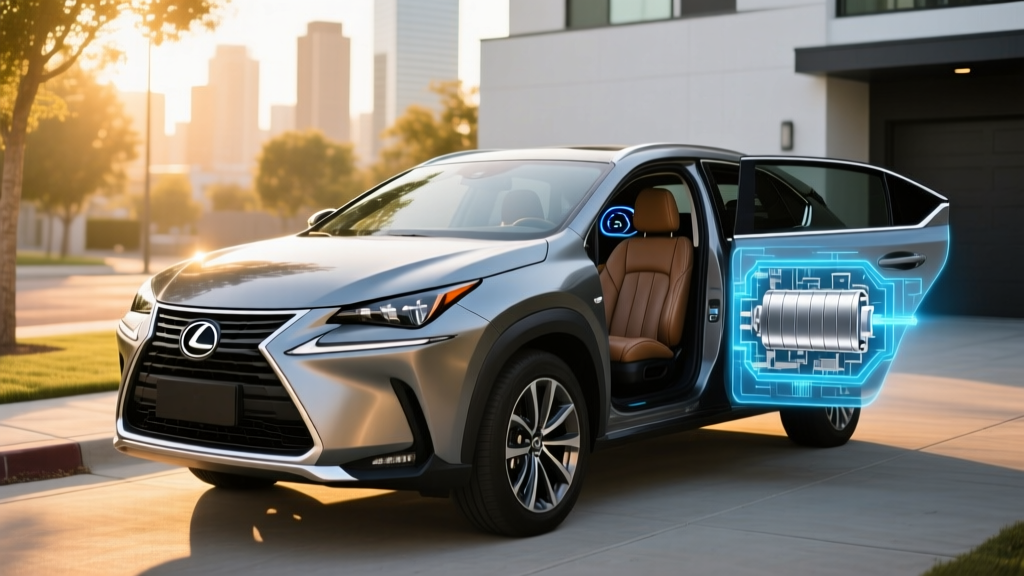
The 2016 Lexus NX 300h is a conventional hybrid electric vehicle (HEV) — not a plug-in. It pairs a 2.5-liter Atkinson-cycle four-cylinder engine with an electric motor and a compact nickel-metal hydride (NiMH) battery pack that recharges through regenerative braking and the engine. You never plug it in. For used-car shoppers in 2026 eyeing a luxury compact SUV with low running costs, the NX 300h remains one of the most reliable entries in its class, though its electrification is mild by today's standards.
This guide covers exactly what you need to know: real-world MPG, battery longevity, replacement costs, and how this HEV stacks up against modern PHEVs and full EVs.
HEV vs PHEV: Where the 2016 NX 300h Fits
Before diving into specs, it's critical to understand what the NX 300h is — and what it isn't. The automotive market in 2026 offers three main electrified powertrains, and confusing them is the most common buyer mistake.
| Feature | HEV (NX 300h) | PHEV (e.g., NX 450h+) | BEV (e.g., RZ 450e) |
|---|---|---|---|
| Plug-in charging? | No | Yes | Yes |
| Electric-only range | ~1 mile at low speed | 30–40 miles typical | 200–350+ miles |
| Battery size | ~1.6 kWh (NiMH) | 18–20 kWh (lithium-ion) | 65–95 kWh (lithium-ion) |
| Federal tax credit (new) | None | Up to $7,500 (§30D) | Up to $7,500 (§30D) |
| Fuel needed? | Yes — gasoline | Yes — gasoline + electricity | No — electricity only |
The 2016 NX 300h is a self-charging hybrid. Its small battery assists the gasoline engine during acceleration, captures energy during braking, and enables brief electric-only creeping at low speeds. It does not have a charge port, cannot be plugged in, and has no meaningful electric-only driving range. If you want plug-in capability from a Lexus NX, you'd need the newer NX 450h+ PHEV (introduced for the 2022 model year on the redesigned NX platform).
Fuel Economy: EPA Ratings vs Real-World MPG
The headline number for the 2016 NX 300h is its EPA-rated fuel economy. Here's the official breakdown from fueleconomy.gov:
| Driving Cycle | EPA MPG |
|---|---|
| City | 33 MPG |
| Highway | 30 MPG |
| Combined | 31 MPG |
Real-world expectations: Hybrid fuel economy behaves differently than gas-only vehicles. The Atkinson-cycle engine and regenerative braking shine in stop-and-go city driving, where many owners report matching or even slightly exceeding the 33 MPG city figure. On sustained highway trips at 70–80 mph, expect closer to 28–30 MPG as aerodynamic drag dominates and the hybrid system has fewer opportunities to recapture energy.
In mixed real-world driving — the kind most owners actually do — you can reasonably expect 29–32 MPG. That's a meaningful improvement over the non-hybrid 2016 NX 200t, which was EPA-rated at 25 MPG combined. Over 15,000 miles per year at $3.50/gallon, the hybrid saves roughly $300–$400 annually in fuel compared to its turbocharged sibling.
Powertrain Specs: Engine, Motor, and Combined Output
| Specification | 2016 Lexus NX 300h |
|---|---|
| Engine | 2.5L Atkinson-cycle inline-4 |
| Engine horsepower | 150 HP @ 5,700 RPM |
| Electric motor | Front-mounted permanent magnet |
| Combined net horsepower | 194 HP |
| Transmission | eCVT (electronically controlled) |
| Drivetrain | AWD (e-motor rear axle on some trims) |
| Battery type | Nickel-metal hydride (NiMH) |
| Battery capacity | ~1.6 kWh (gross) |
| 0–60 mph | ~8.9 seconds |
| Cargo volume (rear seats up) | 17.7 cu ft |
| Cargo volume (rear seats folded) | 54.6 cu ft |
The NX 300h uses Toyota's well-proven Hybrid Synergy Drive system. The eCVT is not a traditional belt-and-cone CVT — it's a planetary gearset that blends engine and motor power seamlessly, with no rubber-band effect. The AWD system on equipped trims uses a small rear electric motor rather than a mechanical driveshaft, which improves efficiency but provides modest rear-axle torque — adequate for rain and light snow, not aggressive off-road use.
At 194 combined HP, acceleration is adequate but unhurried. The 8.9-second 0–60 time trails the turbocharged NX 200t (7.0 seconds). If passing power matters to you, the hybrid trades performance for efficiency.
Battery Longevity, Warranty, and Replacement Cost
Original hybrid battery warranty: 8 years / 100,000 miles (10 years / 150,000 miles in CARB states including California, New York, Massachusetts, and others adopting California emissions standards).
2026 status: A 2016 model is now 10 years old. The federal 8-year warranty has expired for most original owners. CARB-state 10-year coverage may still apply if under 150,000 miles — verify with a Lexus dealer using the VIN.
How long do these batteries actually last? The NiMH pack in the NX 300h shares architecture with the Toyota RAV4 Hybrid and Camry Hybrid — powertrains with extensive real-world track records. Data from owner forums, repair databases, and Consumer Reports suggest these NiMH packs commonly reach 150,000–200,000 miles before significant degradation or failure. Some units exceed 250,000 miles.
NiMH chemistry degrades more gracefully than early lithium-ion packs. You won't see sudden capacity cliff-falloff; instead, fuel economy gradually declines as the battery loses its ability to hold charge and assist the engine.
Replacement cost in 2026:
- OEM Lexus battery pack: $3,500–$4,800 (part + dealer installation)
- Refurbished/remanufactured pack: $1,500–$2,800 (aftermarket suppliers like Green Bean Battery, Dorman)
- Individual module replacement: $300–$800 (specialist hybrid shops can replace failed cells rather than the full pack)
For a used 2016 NX 300h purchase, the key question is battery health. Ask for a hybrid battery health check from a Lexus dealer — they can read the State of Health (SoH) via OBD-II diagnostics. A pack showing >70% SoH at under 120,000 miles is generally a sound bet.
Pricing in 2026: Used Market and Tax Credit Reality
The 2016 NX 300h originally started at an MSRP of approximately $39,720 (including destination). In the 2026 used market, expect to pay:
- 80,000–100,000 miles: $16,000–$19,500
- 100,000–130,000 miles: $13,000–$16,500
- 130,000+ miles: $10,500–$13,500
Prices vary by trim, condition, region, and battery health documentation. Lexus Certified Pre-Owned (CPO) examples command a $1,500–$2,500 premium but include an extended powertrain warranty.
Tax credit eligibility: The 2016 NX 300h does not qualify for the federal §30D new clean vehicle credit — it's a conventional hybrid, not a plug-in. For used purchases, the IRS §25E used clean vehicle credit (up to $4,000 or 30% of sale price, whichever is less) applies only to plug-in EVs and fuel cell vehicles, not conventional HEVs. The NX 300h is excluded. There is no federal tax incentive for buying this vehicle in 2026.
Some states may offer minor registration discounts or HOV lane access for hybrids, but these programs have largely shifted toward plug-in vehicles. Check your state's DMV or energy office for current rules.
Reliability and Ownership Costs
The 2016 NX 300h benefits from one of the most extensively validated hybrid powertrains in the industry. The 2AR-FXE engine and hybrid transaxle are shared across multiple Toyota/Lexus models with millions of units on the road. According to IIHS, the NX earned Good ratings in moderate overlap front, side, roof strength, and head restraint tests.
Common maintenance items (non-hybrid):
- Brake pads last 60,000–90,000 miles (regenerative braking reduces pad wear significantly)
- eCVT fluid change recommended at 60,000-mile intervals (~$150–$250)
- Standard 12V auxiliary battery replacement every 4–6 years (~$200–$300)
- Timing chain (not belt) — typically lifetime service interval
Insurance: Expect moderate premiums, roughly in line with a non-hybrid luxury compact SUV. The hybrid's higher original MSRP and repair costs for body damage push rates slightly above mainstream competitors, but Lexus's strong safety record helps. Budget $1,400–$2,000 annually depending on your profile.
Who Should Choose the 2016 NX 300h — And Who Shouldn't
Reasons to Buy
- Proven reliability — Toyota/Lexus hybrid system with massive real-world track record
- 31 MPG combined without any behavior change — no plugging in, no range planning
- Luxury interior and quiet ride at a used price well under $20,000
- Strong safety ratings (IIHS Good across key crash tests)
- Lower brake wear thanks to regenerative braking
- AWD capability for four-season climates
Reasons to Pass
- No electric-only range — this is a fuel-efficiency play, not an EV experience
- 8.9-second 0–60 is leisurely for a luxury SUV
- Cargo space (17.7 cu ft) is tight vs modern competitors
- Infotainment system is dated — no Apple CarPlay/Android Auto on 2016 models
- No federal or state tax incentives available
- NiMH battery replacement cost ($1,500–$4,800) is a looming expense at high mileage
Choose the 2016 NX 300h if: You want a used luxury compact SUV that sips fuel in city driving, requires zero charging infrastructure, and offers Lexus reliability at a sub-$20K price. It's ideal for drivers who lack home charging access but still want hybrid efficiency.
Look at a PHEV instead if: You have home charging and want 30+ miles of electric-only commuting. The newer Lexus NX 450h+ or Toyota RAV4 Prime delivers daily electric driving with a gas backup. Budget will be significantly higher ($35,000+ used).
Go full EV if: You have reliable Level 2 home charging, your daily driving is under 250 miles, and you want zero gasoline expenses. Options like the Hyundai Ioniq 5, Tesla Model Y, or Ford Mustang Mach-E offer far more range, tech, and available tax credits — but at higher purchase prices.
Frequently Asked Questions
How many MPG does the 2016 Lexus NX 300h get?
The EPA rates it at 33 MPG city, 30 MPG highway, and 31 MPG combined. Real-world mixed driving typically yields 29–32 MPG, with city driving sometimes exceeding the EPA figure thanks to regenerative braking.
Can the 2016 NX 300h drive on electric power alone?
Only for very short distances (roughly 1 mile) at low speeds under 25 mph, such as in a parking lot or heavy traffic crawl. This is not a plug-in hybrid — the battery is too small (1.6 kWh) for meaningful electric-only commuting. The engine engages frequently and seamlessly.
Is the 2016 NX 300h reliable, and what does battery replacement cost?
Yes. The Toyota/Lexus hybrid powertrain is among the most reliable in the industry, with NiMH battery packs commonly lasting 150,000–200,000 miles. OEM replacement runs $3,500–$4,800; refurbished packs cost $1,500–$2,800. Always get a hybrid battery health check before buying used.
Does the 2016 Lexus NX 300h qualify for any tax credit?
No. As a conventional hybrid (HEV), it is ineligible for the federal §30D new vehicle credit, the §25E used clean vehicle credit, or most state EV incentives. These programs are reserved for plug-in vehicles (PHEVs and BEVs).
Hybrid vs PHEV vs EV — which should I choose?
A conventional hybrid like the NX 300h suits drivers who want better fuel economy with zero lifestyle changes — no charging, no range planning. A PHEV is best if you can charge at home and want electric-only commuting with a gas backup for road trips. A full EV (BEV) offers the lowest per-mile energy cost and strongest incentives, but requires reliable charging access and a higher upfront budget.
Does the 2016 NX 300h require premium gasoline?
Yes. Lexus recommends premium unleaded (91 octane or higher) for the 2AR-FXE engine. Using regular fuel may reduce performance and efficiency slightly. Factor this into your fuel cost calculations — premium typically costs $0.40–$0.70 more per gallon than regular.
How does the 2016 NX 300h handle in snow?
The available AWD system uses a rear electric motor to send torque to the rear axle when slip is detected. It provides competent traction in light to moderate snow and rain. For severe winter conditions, dedicated winter tires make a far bigger difference than the AWD system alone.