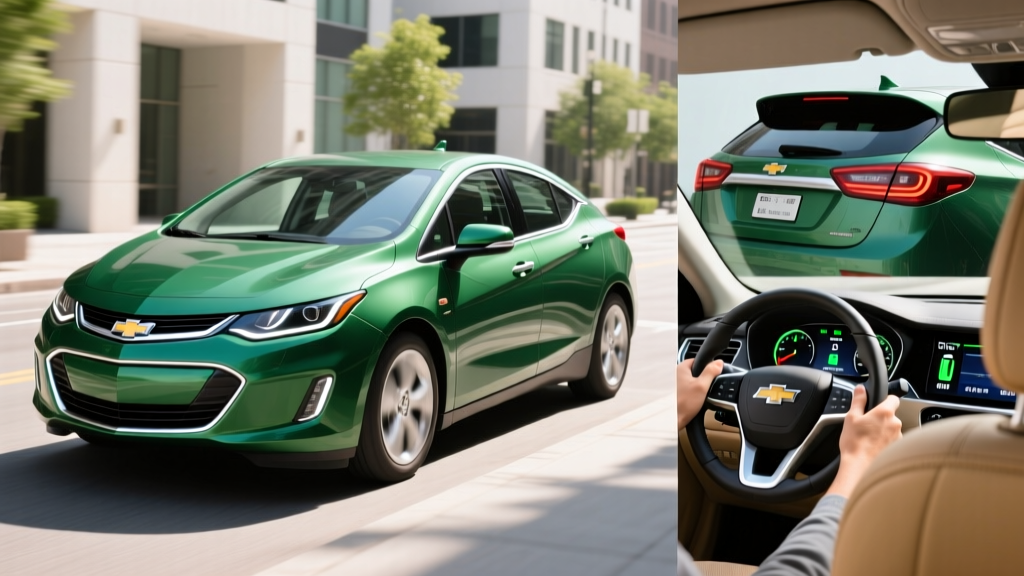
The Chevrolet Volt remains one of the most practical plug-in hybrids ever sold in the United States. Though GM discontinued the Volt after the 2019 model year to focus on full battery-electric vehicles, thousands of these PHEVs continue to serve daily drivers who want electric commuting without range anxiety. If you're searching for a chevy volt hybrid on the used market in 2026, this guide covers every spec, real-world efficiency figure, and ownership cost you need to evaluate.
Before going further, a critical clarification: the Volt is not a conventional hybrid (HEV) like the Toyota Prius. It is a plug-in hybrid electric vehicle (PHEV) with a large battery you charge from a wall outlet and a gasoline engine that acts primarily as a generator. This distinction matters for your daily routine, fuel costs, and tax implications.
HEV vs PHEV: Where the Chevy Volt Fits
Conventional Hybrid (HEV)
- Battery: 1–2 kWh, charges via regenerative braking and engine
- No plug — never needs external charging
- Electric-only driving: minimal (under 1 mile at low speed)
- Example: Toyota Prius, Honda Accord Hybrid
Plug-In Hybrid (PHEV) — Chevy Volt
- Battery: 16.5–18.4 kWh usable, charges from a plug
- Plug required to access full electric range
- Electric-only driving: 38–53 miles depending on generation
- Gas engine extends range indefinitely once battery depletes
The Volt operates as a pure EV for its first 38–53 miles (depending on model year), then seamlessly transitions to extended-range mode where a 1.5L four-cylinder engine generates electricity to keep the battery at a low state of charge while the electric motors continue to drive the wheels. This series-hybrid architecture is why GM marketed it as an "extended-range electric vehicle" (EREV), though it qualifies as a PHEV under EPA and IRS definitions.
Generation Breakdown: Gen 1 (2011–2015) vs Gen 2 (2016–2019)
| Specification | Gen 1 (2011–2015) | Gen 2 (2016–2019) |
|---|---|---|
| Battery Capacity (usable) | 10.3 kWh (2011–2012) / 10.9 kWh (2013–2015) | 14.0 kWh (2016) / 14.4 kWh (2017–2019) |
| Gross Battery Capacity | 16.0–16.5 kWh | 18.4 kWh |
| EPA Electric-Only Range | 35 mi (2011–2012) / 38 mi (2013–2015) | 53 mi (2016–2019) |
| EPA Combined Gas-Only MPG | 37 MPG | 42 MPG |
| EPA MPGe (Electric Mode) | 94–98 MPGe | 106 MPGe |
| Total Combined Range | ~350–380 miles | ~420 miles |
| Combined Horsepower | 149 hp | 149 hp (two-motor drive unit) |
| Gas Engine | 1.4L 4-cyl (84 hp) | 1.5L 4-cyl (101 hp, Atkinson cycle) |
| 0–60 mph | ~9.0 seconds | ~8.4 seconds |
| Level 2 Charge Time (240V) | ~4 hours (3.3 kW onboard charger) | ~4.5 hours (3.6 kW); ~2.3 hours with optional 7.2 kW charger |
| DC Fast Charging | No | No |
| Seating | 4 passengers | 5 passengers (2017+ added rear middle seat) |
The generational leap is substantial. The Gen 2 Volt gained 15 miles of electric range, a more efficient engine, a fifth seat (on 2017+ models), and available faster Level 2 charging. If your budget allows, a 2017–2019 model with the 7.2 kW onboard charger option is the sweet spot for used buyers.
Fuel Economy: EPA Stickers vs Real-World MPG
| Mode | Gen 1 (2013–2015) | Gen 2 (2017–2019) |
|---|---|---|
| Electric-Only MPGe (Combined) | 98 MPGe | 106 MPGe |
| Gas-Only City MPG | 35 MPG | 43 MPG |
| Gas-Only Highway MPG | 40 MPG | 42 MPG |
| Gas-Only Combined MPG | 37 MPG | 42 MPG |
Source: EPA Fueleconomy.gov
Real-world results for the Volt depend heavily on your driving pattern. Owners who charge nightly and commute under 40 miles may go months without buying gas, effectively achieving well over 100 MPGe. According to aggregated owner data on Fueleconomy.gov, Gen 2 Volt owners report average combined real-world efficiency of 80–120 MPGe when regularly charging, with gas-only highway trips yielding 38–44 MPG.
A few real-world caveats:
- Cold weather: Expect electric range to drop 20–30% in freezing temperatures. A Gen 2 Volt rated at 53 miles may deliver 35–42 miles of EV range at 20°F, as the battery's thermal management system draws energy and cabin heating increases load.
- Highway speeds: Sustained 75+ mph driving reduces electric range to roughly 40–45 miles on a Gen 2 due to aerodynamic drag.
- Mountain driving: Climbing passes will deplete the battery faster, but regenerative braking on descents recovers meaningful energy.
- Gas-only city driving: Hybrids and PHEVs in gas mode often exceed EPA city estimates because regenerative braking recaptures energy in stop-and-go traffic. Many Volt owners report 44–48 MPG city in charge-sustaining mode.
Charging the Chevy Volt: What You Need to Know
The Volt uses a standard J1772 connector for AC charging. It cannot DC fast charge — there is no CCS or CHAdeMO port. All charging is Level 1 (120V household outlet) or Level 2 (240V).
| Charging Level | Power (kW) | Gen 1 Time (0–Full) | Gen 2 Time (0–Full) |
|---|---|---|---|
| Level 1 (120V, 12A) | ~1.4 kW | ~10–12 hours | ~12–14 hours |
| Level 2 (240V, 3.6 kW) | 3.6 kW | ~4 hours | ~4.5 hours |
| Level 2 (240V, 7.2 kW option) | 7.2 kW | N/A | ~2.3 hours |
For daily use, Level 1 charging from a standard 120V outlet is often sufficient. Plugging in at 7 PM when you get home and unplugging at 7 AM gives you 12 hours × 1.4 kW = ~16.8 kWh delivered, which fully replenishes even the Gen 2 battery. However, a Level 2 home station (typically $500–$1,200 installed for a basic 32A unit) provides faster turnaround if you make multiple trips per day or want to precondition the cabin while plugged in.
Important: The 7.2 kW Charger Is a Rare Option
Only 2017–2019 Volts could be optioned with the 7.2 kW onboard charger, and it was not standard on any trim. When shopping used, check the vehicle's window sticker or the charge settings menu on the infotainment screen. A Volt with the 7.2 kW charger is significantly more convenient for mid-day top-ups and commands a $500–$1,000 premium on the used market.
Battery Health, Degradation, and Replacement Costs
The Chevy Volt's battery is its most scrutinized component, and for good reason. Both generations use lithium-ion cells (Gen 1: LG Chem; Gen 2: LG Chem with improved chemistry), and GM engineered a substantial buffer — the Volt only uses a portion of the gross battery capacity. The Gen 2's 18.4 kWh gross battery yields about 14.4 kWh usable, meaning roughly 22% of the pack is reserved as buffer to protect against degradation.
Real-world degradation data is encouraging. Multiple owner surveys and fleet analyses show Gen 2 Volts retaining 85–92% of original electric range after 100,000 miles. A 2017 Volt that originally delivered 53 EV miles might show 45–48 miles at 100k. Gen 1 batteries, now 11–15 years old, show more variance: some units retain 80%+ capacity, while others have degraded to 65–75%, particularly in hot-climate states like Arizona and Texas where sustained heat accelerates cell aging.
Battery Warranty
GM warranted the Volt's battery for 8 years / 100,000 miles (10 years / 150,000 miles in CARB states including California, New York, Massachusetts, and others that follow California emissions standards). The warranty covers capacity loss below 60–70% of original capacity, depending on model year. As of 2026, most Gen 1 Volts are outside warranty, while late Gen 2 models (2018–2019) may still have partial warranty coverage if under 100,000 miles.
Battery replacement cost: A new or remanufactured Volt battery pack costs between $3,000 and $5,500 including labor at a dealership. Independent EV shops sometimes source refurbished packs for $2,000–$3,500. Given the robust degradation data, most used Volt buyers will never need a replacement, but budgeting for this possibility on a high-mileage Gen 1 is prudent.
When evaluating a used Volt, check the battery's State of Health (SoH) by:
- Using an OBD-II scanner with an app like MyGreenVolt or Torque Pro to read battery capacity data
- Checking the full-charge EV range displayed on the dash — compare it to the original 38 or 53 miles
- Looking for the battery conditioning system's coolant level and service history (the Volt's liquid-cooled battery requires proper coolant maintenance)
2026 Used Market Pricing and Tax Credit Eligibility
As of early 2026, used Chevy Volt pricing varies significantly by generation, mileage, and condition:
- Gen 1 (2011–2015): $5,500–$10,000 depending on mileage (60k–140k typical)
- Gen 2 (2016–2019): $11,000–$18,000 depending on mileage and trim (Premier trims command a premium)
- Low-mileage 2018–2019 examples: $16,000–$20,000 from private sellers; dealer-certified examples can exceed $20,000
Does a Used Chevy Volt Qualify for a Tax Credit?
Yes — potentially. Under the Previously Owned Clean Vehicle Credit (IRC §25E), a used Volt purchased from a dealer may qualify for up to $4,000 (or 30% of the sale price, whichever is less). Key eligibility requirements for 2026:
- Sale price cap: The vehicle must sell for $25,000 or less (all used Volts qualify)
- Buyer income limits: AGI must not exceed $75,000 (single), $112,500 (head of household), or $150,000 (married filing jointly)
- Dealer sale required: Private-party purchases do not qualify
- Model year requirement: Vehicle must be at least 2 model years old (all Volts qualify)
- First transfer since 8/16/2022: The credit applies only to the first qualifying resale after that date — verify with the dealer that the credit hasn't already been claimed on this specific VIN
- Point-of-sale transfer: You can apply the credit as an immediate discount at the dealership
Always confirm eligibility with a tax professional and review the latest rules at IRS.gov, as credit availability depends on your individual tax situation and the specific vehicle's history.
Who Should Buy a Chevy Volt in 2026?
Pros
- 53 miles EV range (Gen 2) covers most commutes gas-free
- No range anxiety — gas engine provides 420+ total miles
- Strong real-world MPG in city driving (regen braking excels in traffic)
- Liquid-cooled battery with excellent degradation track record
- Affordable entry into electrified driving ($8k–$15k used)
- Potential $4,000 used-EV tax credit
- Smooth, torquey electric acceleration in daily driving
Cons
- No DC fast charging — road trips rely entirely on gas engine
- Gen 1 seats only 4 passengers
- Cargo space limited by T-shaped battery (10.6 cu ft Gen 2)
- Discontinued — no new models, limited dealer support in some areas
- Infotainment feels dated compared to 2026 vehicles
- Gen 1 battery degradation more variable at this age
Chev Volt vs Alternatives: Which Fits You?
- Choose the Volt if: You commute under 50 miles round-trip, have home charging access, want to drive electric daily but need gas flexibility for road trips, and want to spend under $18,000.
- Choose a full EV (Bolt EV, Model 3) if: You have reliable home charging, rarely drive over 250 miles in a day, want zero maintenance on an engine, and can spend $15,000–$25,000 used.
- Choose a conventional HEV (Prius) if: You cannot charge at home or work, want maximum simplicity with no plug, and prioritize proven long-term reliability above all else.
- Choose a newer PHEV (Prius Prime, RAV4 Prime) if: You want current-model safety tech, warranty coverage, and more cargo space, and are willing to pay $28,000+.
Reliability and Common Issues
The Volt's powertrain is generally robust. The electric drive unit has few wear components, and the gas engine runs infrequently for owners who charge regularly — some Gen 2 Volts have engines with under 20,000 actual miles despite the odometer reading 80,000+. Common issues to inspect for:
- Battery coolant system: The Volt uses a dedicated coolant loop for the battery. Verify that coolant has been flushed per the maintenance schedule (every 5 years or 150,000 miles). Neglected coolant can lead to cell imbalance.
- Charge port door: The motorized charge port door on Gen 2 models can fail. Test it during your inspection — replacement is ~$300–$500.
- 12V auxiliary battery: Like all EVs and PHEVs, the Volt has a standard 12V battery that can die and prevent the car from starting. Budget $150–$250 for replacement if the current one is over 4 years old.
- Brakes: Thanks to aggressive regenerative braking, Volt brake pads often last 80,000–120,000 miles. However, the infrequent use of friction brakes can lead to rotor rust — check for surface corrosion and warped rotors during test drives.
- Engine maintenance: The Volt's gas engine still needs oil changes (GM recommends every 2 years or based on the oil-life monitor, whichever comes first). Some owners neglect this because the engine runs so rarely — check service records.
Frequently Asked Questions
How many MPG does the Chevy Volt get?
In charge-sustaining (gas-only) mode, the Gen 2 Volt achieves an EPA-rated 42 MPG combined (43 city / 42 highway). The Gen 1 achieves 37 MPG combined. Real-world city driving often exceeds these numbers thanks to regenerative braking, with many owners reporting 44–48 MPG in stop-and-go traffic.
How far can the Chevy Volt go on electric only?
The Gen 2 (2016–2019) Chevy Volt delivers an EPA-rated 53 miles of electric-only range. The Gen 1 (2013–2015) achieves 38 miles. In cold weather (below 32°F), expect a 20–30% reduction, bringing a Gen 2 down to approximately 35–42 miles of real-world EV range.
Is the Chevy Volt a hybrid or an electric car?
The Volt is a plug-in hybrid (PHEV), specifically an extended-range electric vehicle (EREV). It drives on electricity for 38–53 miles, then a gasoline engine activates as a generator to extend range indefinitely. It is not a conventional hybrid — you must plug it in to access the full electric range.
What does it cost to replace a Chevy Volt battery?
A replacement Volt battery pack costs between $3,000 and $5,500 installed at a dealership. Refurbished packs from independent shops can be found for $2,000–$3,500. However, Volt batteries degrade slowly — most retain 85–92% capacity at 100,000 miles — so replacement is uncommon.
Does the Chevy Volt qualify for a tax credit in 2026?
A used Chevy Volt purchased from a dealer may qualify for the Previously Owned Clean Vehicle Credit (IRC §25E) of up to $4,000. Eligibility requires a sale price of $25,000 or less, buyer income below IRS thresholds ($75k single / $150k joint), and that the credit hasn't been previously claimed on that VIN after August 16, 2022. Consult a tax professional and verify at IRS.gov.
Can the Chevy Volt charge at Tesla Superchargers or DC fast chargers?
No. The Volt only accepts AC charging via the J1772 connector (Level 1 at 120V or Level 2 at 240V). It has no DC fast-charge capability. A full charge takes 2.3–4.5 hours on Level 2, depending on the onboard charger option.
How reliable is the Chevy Volt compared to a Prius?
The Volt's powertrain is reliable, with the electric drive unit having very few failure points. The Prius has a longer track record and a larger service network, but Volt owners report comparable satisfaction. The main reliability differentiator is that the Volt has more complex systems (dual power sources, liquid battery cooling, motorized charge port) that add potential failure points compared to the simpler Prius HEV architecture.
Should I buy a Gen 1 or Gen 2 Chevy Volt?
The Gen 2 (2016–2019) is the stronger choice for most buyers: 53 miles of EV range versus 38, a more efficient 1.5L engine, a fifth seat (2017+), available 7.2 kW charging, and a more modern interior. Gen 1 examples are cheaper ($5,500–$10,000) and can be a good budget pick if you accept the shorter range and older tech, but prioritize finding one with documented battery health data.