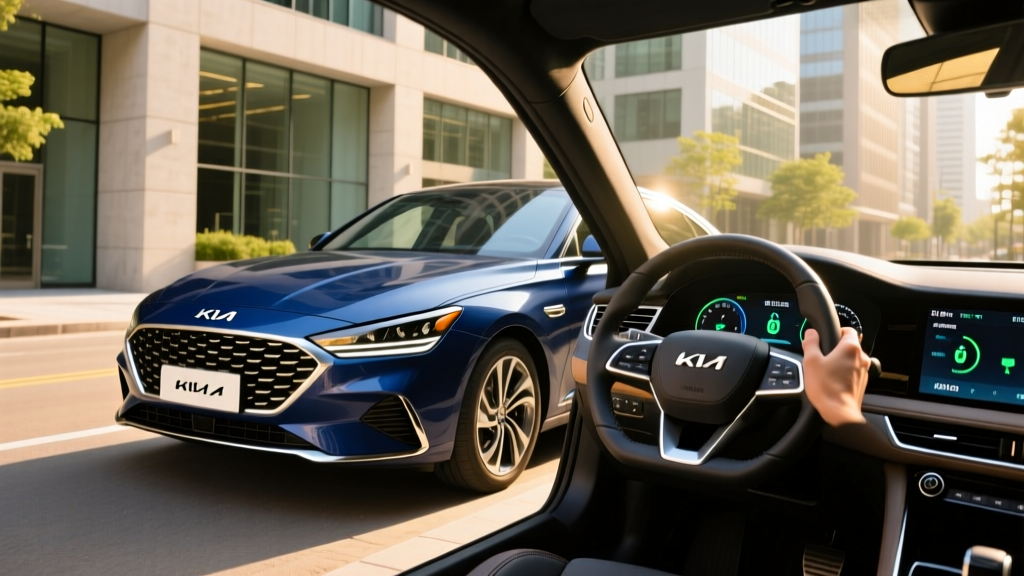
The midsize sedan segment has thinned out, but the Kia Sonata Hybrid remains one of the most fuel-efficient and value-packed options on the market. For 2026, Kia continues to offer the Sonata exclusively as a conventional hybrid (HEV) in the United States — meaning no plug required and no range anxiety. If you're cross-shopping the Toyota Camry Hybrid or Honda Accord Hybrid, the Sonata Hybrid's 47 MPG combined EPA rating and aggressive pricing demand attention.
This guide covers every number that matters: real-world fuel economy, powertrain specs, battery warranty, ownership costs, and how the Sonata Hybrid stacks up against plug-in hybrids and full battery-electric vehicles.
HEV vs PHEV: What the Sonata Hybrid Actually Is
Before diving into specs, it's critical to understand what you're buying. The 2026 Kia Sonata Hybrid is a conventional hybrid (HEV). It pairs a gasoline engine with an electric motor and a small battery pack that recharges through regenerative braking and the engine. You never plug it in — you simply fill up at a gas station like any other car.
| Feature | HEV (Sonata Hybrid) | PHEV (e.g., Toyota Prius Prime) | BEV (e.g., Tesla Model 3) |
|---|---|---|---|
| Plug-in charging | No | Yes | Yes |
| Electric-only range | ~1 mile at low speed | 25-45 miles typical | 250-360+ miles |
| Gas engine | Yes (primary) | Yes (backup) | No |
| Battery size | ~1.6 kWh | 10-18 kWh | 60-82 kWh |
| Fuel/energy source | Gasoline only | Gasoline + electricity | Electricity only |
| Tailpipe emissions | Yes | Yes (when engine runs) | None |
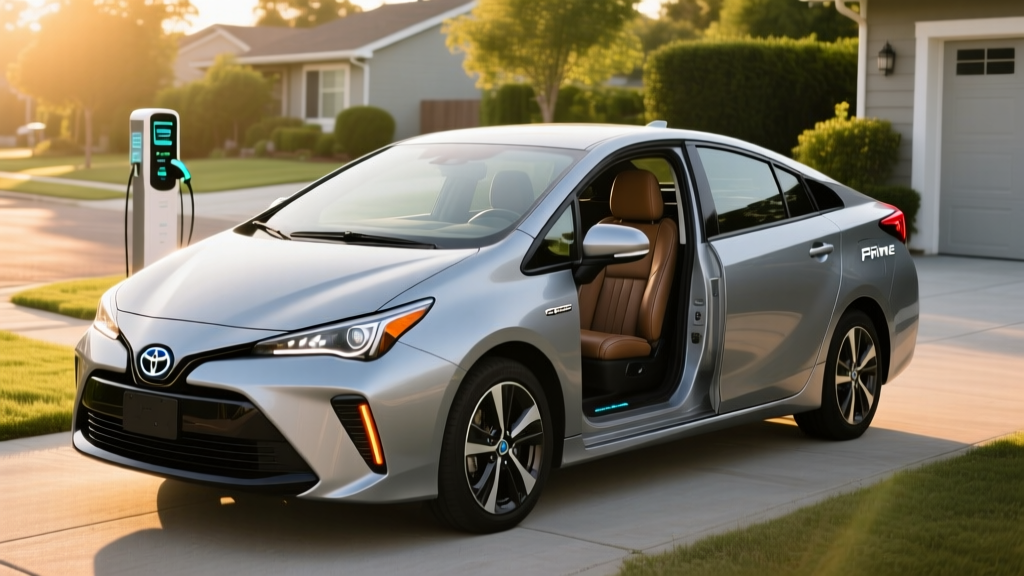
Kia does not currently sell a plug-in hybrid (PHEV) version of the Sonata in the U.S. market. If you need electric-only commuting capability, you'd need to look at competitors like the Toyota Prius Prime or consider stepping up to a full BEV.
Fuel Economy: EPA Ratings and Real-World MPG
The 2026 Kia Sonata Hybrid is rated by the EPA at 47 MPG combined, with a breakdown of 45 MPG city and 51 MPG highway for the Blue trim (the most efficient variant). Higher trims with larger wheels drop slightly to approximately 44 MPG combined. According to fueleconomy.gov, these figures place the Sonata Hybrid near the top of the midsize hybrid sedan class.
| Trim | City MPG | Highway MPG | Combined MPG | Annual Fuel Cost* |
|---|---|---|---|---|
| Blue (base) | 45 | 51 | 47 | ~$1,150 |
| SEL / Limited | 43 | 47 | 44 | ~$1,225 |
*Based on 15,000 miles/year at $3.50/gallon regular unleaded. Actual costs vary by region and driving habits.
Real-World MPG: What Owners Actually Report
Hybrid sedans tend to perform close to — or even exceed — their EPA ratings in city driving because stop-and-go traffic maximizes regenerative braking. On the highway, sustained high speeds reduce the electric motor's contribution, and you may see 38-44 MPG at 75-80 mph depending on terrain and wind.
Based on aggregated owner reports and independent testing, expect the following real-world figures:
- City driving (mixed stop-and-go): 44-50 MPG — often exceeds EPA
- Highway cruising (70-75 mph): 40-46 MPG
- Cold weather (below 30°F): 37-42 MPG combined — engine runs more for cabin heat and battery conditioning
- Overall mixed driving: 42-48 MPG for most owners
The Sonata Hybrid's 15.9-gallon fuel tank gives it a theoretical maximum range of approximately 747 miles on the Blue trim — enough for most drivers to go two weeks between fill-ups.
Powertrain Specs: Engine, Motor, and Performance
The 2026 Sonata Hybrid pairs a 2.0-liter four-cylinder gasoline engine with a permanent-magnet synchronous electric motor, mated to a 6-speed automatic transmission (no CVT). This is a key differentiator from competitors — the conventional automatic delivers more natural shift feel compared to the drone of a CVT under hard acceleration.
| Specification | 2026 Kia Sonata Hybrid |
|---|---|
| Engine | 2.0L 4-cylinder GDI |
| Engine horsepower | 150 HP @ 6,000 RPM |
| Electric motor output | 39 kW (52 HP) |
| Combined system output | 192 HP |
| Combined torque | 271 lb-ft |
| Transmission | 6-speed automatic |
| Drivetrain | Front-wheel drive |
| 0-60 mph (est.) | ~7.6 seconds |
| Battery capacity | ~1.6 kWh (lithium-ion polymer) |
| Drive modes | Eco / Normal / Sport |
The 192 combined horsepower is competitive with the Toyota Camry Hybrid (225 HP AWD) and Honda Accord Hybrid (204 HP). The Sonata prioritizes efficiency over outright power, and the 0-60 time of roughly 7.6 seconds is adequate for highway merging but won't win any drag races.
Pricing, Trims, and Tax Credit Eligibility
The 2026 Kia Sonata Hybrid starts at approximately $30,250 MSRP for the Blue trim (including destination), with the range-topping Limited landing around $37,500. That positions it competitively against the Camry Hybrid ($29,995 base) and Accord Hybrid ($34,000 base).
| Trim | MSRP (est.) | Key Features |
|---|---|---|
| Blue | $30,250 | Best MPG (47 combined), 16" aero wheels, 12.3" touchscreen, wireless CarPlay/Android Auto |
| SEL | $33,500 | SynTex leather seats, heated front seats, Smart cruise control, 17" wheels |
| Limited | $37,500 | Leather, ventilated front seats, Bose 12-speaker audio, HUD, panoramic sunroof, Highway Driving Assist 2 |
Does the Sonata Hybrid Qualify for a Federal Tax Credit?
No. Under current IRS §30D rules, the federal clean vehicle credit applies only to plug-in electric vehicles (PHEVs and BEVs) with a battery capacity of at least 7 kWh. Because the Sonata Hybrid is a conventional HEV with a ~1.6 kWh battery, it does not qualify for the $7,500 federal tax credit. This is confirmed on irs.gov.
However, some states and local utilities offer rebates or incentives for hybrid vehicles. Check your state energy office or utility provider for current programs. The lower purchase price compared to a PHEV or BEV often offsets the lack of federal credit.
Battery Warranty, Reliability, and Replacement Cost
Hybrid battery longevity is one of the most common concerns among buyers. Kia addresses this with one of the strongest powertrain warranties in the industry.
Kia Sonata Hybrid Warranty Coverage
- Hybrid battery: 10 years / 100,000 miles (whichever comes first)
- Hybrid system components: 10 years / 100,000 miles
- Powertrain (engine + transmission): 10 years / 100,000 miles
- Bumper-to-bumper: 5 years / 60,000 miles
The 10-year hybrid battery warranty is a significant advantage over the industry standard of 8 years / 100,000 miles offered by Toyota and Honda. In practice, modern lithium-ion hybrid batteries rarely fail within warranty. Data from fleet operators and long-term owner surveys suggest hybrid batteries typically last 150,000 to 200,000+ miles before significant degradation.
What Does a Hybrid Battery Replacement Cost?
If you keep the Sonata Hybrid well past the warranty period and the battery eventually needs replacement, expect to pay between $2,000 and $3,500 for a refurbished or new hybrid battery pack, including labor. This is substantially less than a full EV battery replacement ($5,000-$20,000+) because the HEV battery is small (~1.6 kWh).
Third-party hybrid battery refurbishers also offer reconditioned packs for $1,200-$2,000 as vehicles age out of warranty.
Charging and Daily Operation: No Plug Needed
Since the Sonata Hybrid is a conventional HEV, there is no charging port and no plug-in requirement. The 1.6 kWh battery charges itself through:
- Regenerative braking: Captures kinetic energy during deceleration
- Engine-driven generation: The gas engine charges the battery when needed
- Coasting regen: Light regeneration when you lift off the accelerator
The electric motor assists during acceleration, enables brief electric-only driving at very low speeds (under ~25 mph for roughly one mile), and allows the engine to shut off at stops. You'll see the EV indicator light up frequently in city traffic, but this is automatic — no driver action required.
Who Should Buy the Sonata Hybrid vs. a PHEV or Full EV?
Choosing between a hybrid, plug-in hybrid, and full electric vehicle depends on your driving patterns, charging access, and budget. Here's a practical decision framework:
Choose the Sonata Hybrid (HEV) if:
- You don't have access to home or workplace charging
- You want maximum fuel efficiency with zero behavior change
- Your budget is under $35,000 and you need a spacious sedan
- You regularly take long road trips and don't want to plan charging stops
- You live in an apartment or street-park and can't install a charger
Choose a PHEV (e.g., Prius Prime) if:
- You have home Level 2 charging and a commute under 40 miles
- You want electric-only daily driving with gas backup for road trips
- You want to qualify for the $7,500 federal tax credit (income/MSRP/sourcing rules apply)
Choose a full EV (e.g., Tesla Model 3, Hyundai Ioniq 6) if:
- You have reliable home charging (Level 2)
- Your daily driving is under 250 miles and you road-trip occasionally
- You want zero tailpipe emissions and the lowest per-mile fuel cost
- You want to qualify for federal and state EV incentives
Pros
- 47 MPG combined — among the best in the midsize sedan class
- No plug-in required; zero lifestyle change from a gas car
- 10-year/100,000-mile hybrid battery warranty
- 6-speed automatic (no CVT drone)
- Spacious interior with 16.0 cu ft trunk
- Strong standard safety tech (forward collision, lane keeping, blind spot)
- Competitive pricing starting ~$30,250
Cons
- No PHEV option — cannot drive on electric-only for commutes
- No all-wheel-drive option (Camry Hybrid offers AWD)
- 192 HP is adequate but not sporty
- No federal tax credit eligibility
- Highway MPG drops at sustained 80+ mph speeds
Ownership Costs: 5-Year Total Cost Breakdown
One of the Sonata Hybrid's strongest arguments is its low total cost of ownership. Here's a 5-year/75,000-mile estimate compared to a typical gas-only midsize sedan averaging 30 MPG combined:
| Cost Category | Sonata Hybrid (47 MPG) | Gas Sedan (30 MPG) | Difference |
|---|---|---|---|
| Fuel (75,000 mi @ $3.50/gal) | $5,585 | $8,750 | Save $3,165 |
| Maintenance (est.) | $2,200 | $2,800 | Save $600 |
| Insurance (est. avg) | $7,500 | $7,200 | +$300 |
| Depreciation (est.) | $12,500 | $13,000 | Save $500 |
| 5-Year Total | $27,785 | $31,750 | Save ~$3,965 |
Estimates based on national averages. Actual costs vary by region, driving habits, and insurance profile. Source: author calculations based on EPA fuel economy data.
The Sonata Hybrid saves roughly $4,000 over five years in fuel and maintenance compared to a conventional gas sedan. Hybrids also tend to have lower brake wear thanks to regenerative braking, which reduces pad replacement frequency.
FAQ: Common Kia Sonata Hybrid Questions
How many MPG does the Kia Sonata Hybrid get?
The 2026 Kia Sonata Hybrid Blue trim is EPA-rated at 45 city / 51 highway / 47 combined MPG. Higher trims with larger wheels rate at approximately 44 MPG combined. Real-world owners typically see 42-48 MPG in mixed driving.
Does the Kia Sonata Hybrid need to be plugged in?
No. The Sonata Hybrid is a conventional hybrid (HEV) and charges its own battery through regenerative braking and the gasoline engine. There is no charging port and no plug-in capability.
Is there a plug-in hybrid (PHEV) version of the Sonata?
Kia does not offer a PHEV version of the Sonata in the U.S. market for 2026. If you need plug-in hybrid capability, consider the Toyota Prius Prime or Hyundai Tucson PHEV.
Does the Kia Sonata Hybrid qualify for a federal tax credit?
No. The federal §30D clean vehicle credit requires a plug-in vehicle with at least 7 kWh of battery capacity. The Sonata Hybrid's ~1.6 kWh battery does not meet this threshold. Check irs.gov for current credit rules.
How long will the Sonata Hybrid battery last?
Kia covers the hybrid battery for 10 years or 100,000 miles. In practice, modern hybrid batteries commonly last 150,000-200,000+ miles before needing replacement. Replacement cost is typically $2,000-$3,500 if needed out of warranty.
How does the Sonata Hybrid compare to the Camry Hybrid?
The Toyota Camry Hybrid offers 44 MPG combined (LE FWD) and available AWD, with a starting price around $29,995. The Sonata Hybrid edges it out on efficiency (47 MPG Blue trim) and offers a longer 10-year battery warranty vs. Toyota's 10-year/150,000-mile coverage. The Camry offers AWD, which the Sonata does not.
Is the Sonata Hybrid good for highway driving?
Yes, but with a caveat. At sustained 75-80 mph highway speeds, expect 40-46 MPG rather than the EPA's 51 MPG highway rating. The EPA highway test cycle includes lower-speed segments that favor hybrid efficiency. For pure highway commuters, the advantage over a gas car narrows but remains significant.
What safety ratings does the Sonata Hybrid have?
The Sonata carries strong standard safety equipment including forward collision-avoidance assist, lane keeping assist, blind-spot collision warning, and rear cross-traffic alert. Check NHTSA and IIHS for the latest crash-test ratings for the current model year.
Final Verdict: Who the Sonata Hybrid Is For
The 2026 Kia Sonata Hybrid is the right choice for sedan buyers who want excellent fuel economy without changing their refueling habits. At 47 MPG combined, ~$30,250 starting price, and a class-leading 10-year hybrid battery warranty, it's one of the most rational midsize sedan purchases available. If you can charge at home and want electric-only commuting, a PHEV or BEV will save more on fuel — but at a higher purchase price and with more lifestyle adjustment. For the driver who just wants to fill up less often and spend less money doing it, the Sonata Hybrid delivers exactly what it promises.