Quick Verdict: A Pioneer That Still Hauls
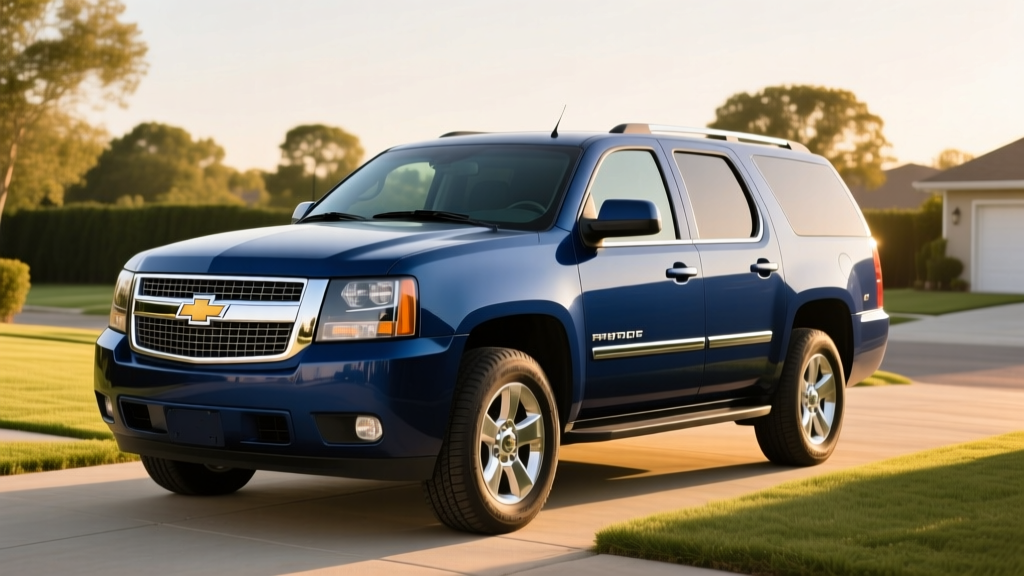
The 2010 Chevrolet Tahoe Hybrid was one of the first full-size SUVs to pair a two-mode hybrid system with serious towing capability. Over a decade later, it remains a compelling used buy for families who need three rows, 6,200 pounds of towing, and better fuel economy than a gas-only Tahoe — without ever plugging in. But with a 16-year-old hybrid battery in play, prospective buyers need clear-eyed data on what this HEV actually delivers, what can go wrong, and whether a newer PHEV or full EV might serve them better.
The 2010 Tahoe Hybrid is a conventional hybrid (HEV). It has no plug, no electric-only driving range to speak of, and charges its 1.8 kWh nickel-metal hydride (NiMH) battery solely through regenerative braking and the gasoline engine. If you're looking for plug-in electric miles, this isn't it — you'll want to look at modern PHEVs like the Jeep Wrangler 4xe or a full EV like the Rivian R1S.
EPA Fuel Economy and Real-World MPG
The headline number for the 2010 Tahoe Hybrid is its EPA rating, which was genuinely impressive for a 5,800-pound body-on-frame SUV when new. Here's the breakdown from fueleconomy.gov:
| Metric | Value |
|---|---|
| City MPG | 21 |
| Highway MPG | 22 |
| Combined MPG | 21 |
| Gas-only Tahoe (5.3L V8, 2010) | 15 city / 21 hwy / 17 combined |
| Annual fuel cost (15k mi, $3.40/gal) | ~$2,429 |
Real-World MPG: What Owners Actually Report
The two-mode hybrid system excels in stop-and-go city driving, where the electric motors do significant low-speed work and regenerative braking recaptures energy. Owner-reported data from Fuelly and Edmunds forums clusters around 18–20 MPG combined in mixed real-world driving — slightly below the EPA sticker, which is typical for large SUVs driven at highway speeds.
City-heavy commuters can see the EPA's 21 MPG or even nudge above it. Highway-dominant drivers at 75+ mph should expect 17–19 MPG. Towing drops economy sharply — expect 12–14 MPG with a loaded trailer, though that's still meaningfully better than the gas V8's 10–11 MPG under load.
Two-Mode Hybrid Powertrain: Specs and How It Works
The 2010 Tahoe Hybrid uses GM's Two-Mode Hybrid system, co-developed with BMW and Chrysler (then DaimlerChrysler). It's a sophisticated setup that was engineering-overkill for its era.
| Specification | Value |
|---|---|
| Engine | 6.0L V8 (Vortec, cylinder deactivation / Active Fuel Management) |
| Engine horsepower | 332 hp @ 5,100 rpm |
| Electric motors | Two 60 kW motors integrated in transmission |
| Combined system output | 379 hp |
| Transmission | Electrically variable transmission (EVT) — 2 modes + 4 fixed gears |
| Hybrid battery | 1.8 kWh NiMH (nickel-metal hydride) |
| Drivetrain | 4WD (standard on Hybrid trim) |
| 0–60 mph | ~7.8 seconds |
| Towing capacity | 6,200 lbs |
| Curb weight | ~5,840 lbs |
What "Two-Mode" Actually Means
Mode 1 operates at low speeds and light loads — the Tahoe can creep on electric power alone at up to about 25 mph in stop-and-go traffic, with the V8 shut off entirely. This is where the city MPG advantage comes from. Mode 2 engages at higher speeds and under load, blending engine and motor power for highway passing and towing. The system seamlessly transitions between modes and four fixed mechanical gear ratios without any driver input.
Active Fuel Management (AFM) lets the V8 shut down four of its eight cylinders under light-load cruising, further saving fuel. The net effect: a 5,800-pound SUV that sips fuel like a midsize sedan of its era.
Hybrid Battery Lifespan, Warranty, and Replacement Cost
This is the single biggest concern for any used hybrid buyer, and at 16 years old, the 2010 Tahoe Hybrid's NiMH battery pack is well past its original warranty coverage.
How Long Do These Batteries Actually Last?
NiMH packs in GM's two-mode system have a strong longevity track record. The 1.8 kWh pack is relatively small and is never deeply cycled — the system keeps the battery in a narrow state-of-charge window (roughly 40–60%), which dramatically reduces degradation. Many owners report the original battery functioning adequately past 180,000 miles.
That said, age degrades NiMH chemistry regardless of mileage. At 16 years old, expect reduced hybrid-assist capability even if the battery hasn't "failed." You'll notice the engine kicking on sooner at stops, slightly reduced city MPG, and less aggressive regenerative braking.
Battery Replacement Cost (2026 Estimates)
| Option | Estimated Cost | Notes |
|---|---|---|
| New OEM GM pack (dealer) | $3,500–$5,000 | Limited availability for 2010 model |
| Remanufactured pack (specialist) | $2,000–$3,200 | GreenTech, Dorman aftermarket options |
| Individual cell/module repair | $800–$1,500 | Requires hybrid-specialist shop |
| Used/salvage pack | $500–$1,200 | Risk of same-age degradation |
Before committing to a used Tahoe Hybrid, budget $2,000–$3,500 for a battery replacement within the first few years of ownership. A pre-purchase inspection at a hybrid-capable shop should include a battery state-of-health (SoH) scan — any pack below 70% capacity is a near-term replacement candidate.
What the 2010 Tahoe Hybrid Got Right (and Wrong)
Pros
- 21 MPG combined in a 5,800-lb SUV — still respectable
- 6,200-lb towing capacity (hybrid system doesn't compromise hauling)
- Smooth, seamless electric assist in city driving
- Proven NiMH battery chemistry with narrow SoC window = longevity
- Spacious three-row interior with 108.9 cu ft max cargo
- Significantly lower used prices vs gas-only equivalents with similar mileage
Cons
- 16-year-old hybrid battery is a ticking expense
- No electric-only range — this is an HEV, not a PHEV
- Only available in a single, loaded trim (~$53,000 MSRP when new)
- AFM (cylinder deactivation) has known lifter-failure risk on 6.0L Vortec
- Dated infotainment and no modern ADAS (no auto emergency braking, lane keep)
- Hybrid-specific parts availability shrinking as fleet ages
Tax Credits and Incentives: What Applies in 2026?
The 2010 Tahoe Hybrid qualified for a $2,200 federal tax credit under the old Energy Policy Act hybrid credit when new — but that credit phased out for GM vehicles in 2010 and has been unavailable for over a decade.
Under current IRS §30D rules, the federal clean vehicle credit applies only to new plug-in EVs and PHEVs meeting battery-sourcing, MSRP, and buyer-income requirements. The 2010 Tahoe Hybrid is:
- Not a plug-in vehicle — ineligible for any federal EV/PHEV credit
- Not available on the used-EV credit (§25E, up to $4,000) — that credit requires a plug-in EV or PHEV, not a conventional HEV
- Not eligible for any current state hybrid rebate in most jurisdictions
Bottom line: There are no tax credits or incentives available for purchasing a used 2010 Tahoe Hybrid in 2026. You're buying on pure economics — the fuel savings and lower used price.
HEV vs PHEV vs EV: Is This Tahoe Right for You?
The 2010 Tahoe Hybrid occupies a specific niche. Here's a decision framework to help you evaluate whether it — or a modern alternative — fits your situation:
| Choose This If... | Vehicle Type | Example |
|---|---|---|
| You need 3 rows + towing on a tight budget ($8k–$14k used), can't charge at home, and want modest fuel savings | Used HEV (like this Tahoe) | 2010 Tahoe Hybrid |
| You have home charging, want 30–45 electric miles for daily commutes, but need gas range for road trips | PHEV | 2026 Jeep Grand Cherokee 4xe |
| You have reliable home charging, drive under 300 mi/day, and want lowest operating cost + tax credits | Full EV (BEV) | 2026 Rivian R1S / Tesla Model X |
| You need max towing (8,000+ lbs) and drive mostly highway — hybrid benefit is minimal | Gas/Diesel SUV | Used Tahoe 6.2L V8 / Duramax |
Frequently Asked Questions
How many MPG does the 2010 Chevrolet Tahoe Hybrid get?
The EPA rates it at 21 city / 22 highway / 21 combined MPG. Real-world driving typically yields 18–20 MPG combined, with city-heavy routes sometimes matching or exceeding the EPA figure and highway-dominant driving falling to 17–19 MPG.
Can the 2010 Tahoe Hybrid drive on electric power only?
Only at very low speeds (up to ~25 mph) for short distances in stop-and-go traffic. It has no meaningful electric-only range — this is a conventional hybrid, not a plug-in. The 1.8 kWh NiMH battery is far too small for sustained electric driving.
Is the 2010 Tahoe Hybrid reliable?
The two-mode hybrid system itself has proven durable, with many examples exceeding 200,000 miles. The primary concerns are age-related: the NiMH battery will need replacement ($2,000–$3,500), and the 6.0L Vortec V8's Active Fuel Management system has a known pattern of lifter failure that can lead to camshaft damage. A pre-purchase inspection focusing on battery SoH and engine compression is essential.
What does it cost to replace the hybrid battery?
Expect $2,000–$3,200 for a remanufactured pack from an aftermarket supplier, or $3,500–$5,000 for a new OEM pack if one is still available through GM. Individual module repair runs $800–$1,500 at a hybrid specialist. Budget for this expense within your first two years of ownership.
Does the 2010 Tahoe Hybrid qualify for any tax credit in 2026?
No. Under current IRS rules, federal clean vehicle credits apply only to new plug-in EVs and PHEVs meeting specific battery-sourcing, MSRP, and income requirements. The used-EV credit (§25E) also requires a plug-in vehicle. The conventional HEV Tahoe Hybrid is ineligible for all current federal and most state incentives.
How does it compare to a modern hybrid SUV?
A 2026 Toyota Grand Highlander Hybrid achieves 36 MPG combined — 71% better than the Tahoe Hybrid — with more cargo room, modern safety tech, and a fresh 10-year/150,000-mile hybrid battery warranty. However, the Grand Highlander starts at ~$45,000 and tows only 5,000 lbs. If budget and towing are your priorities, the used Tahoe Hybrid still has a role.
Should I buy a 2010 Tahoe Hybrid or just get the gas version?
If you drive mostly city miles and keep vehicles 5+ years, the hybrid's fuel savings (~$680/year) and lower used pricing can justify the battery-replacement risk. If you drive mostly highway or tow frequently, the fuel-economy gap narrows and the simpler gas V8 may be the lower-risk choice. Either way, get a hybrid-system diagnostic scan before purchase.