Quick Verdict: The GMC Sierra Hybrid in 2026
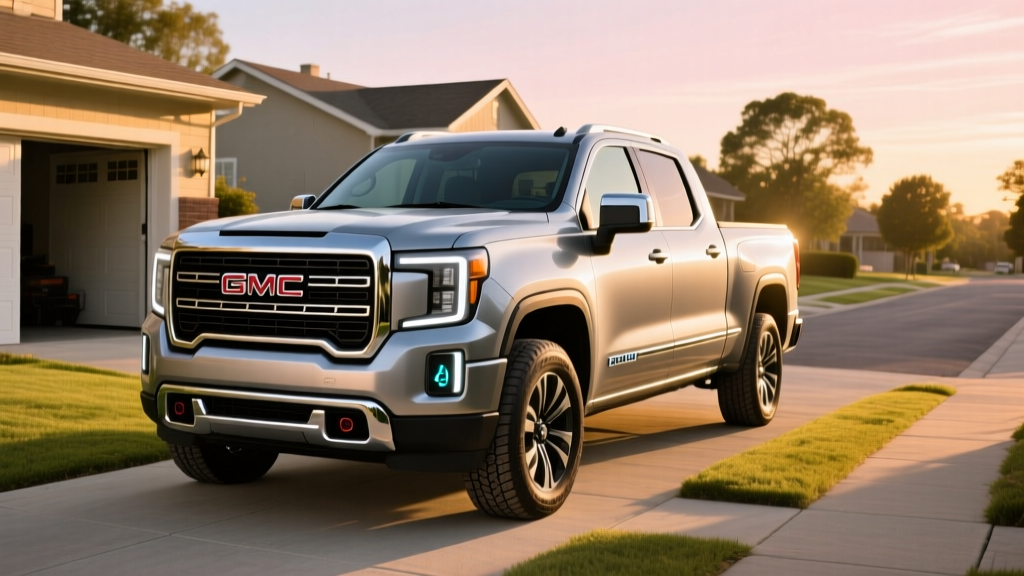
Full-size pickup buyers who want meaningful fuel savings without plugging in or sacrificing towing capacity land squarely on the GMC Sierra Hybrid. For 2026, GMC continues to offer the Sierra 1500 with the 3.0L Duramax turbo-diesel inline-six (which delivers hybrid-like efficiency through a mild-hybrid-assisted powertrain in certain trims) alongside the conventional gasoline V8 lineup. However, the dedicated GMC Sierra Hybrid as a standalone nameplate — once offered with a two-mode hybrid system — has been discontinued since the 2013 model year. What remains in 2026 is a Sierra lineup that leans on advanced turbo-diesel and mild-hybrid technology to achieve competitive fuel economy figures in the full-size truck segment.
This guide breaks down exactly what hybrid and hybrid-adjacent technology GMC offers in the 2026 Sierra, the real-world MPG you can expect, battery warranty coverage, and whether a hybrid truck, PHEV, or full EV better fits your needs.
HEV vs. PHEV vs. Mild Hybrid: What GMC Actually Offers
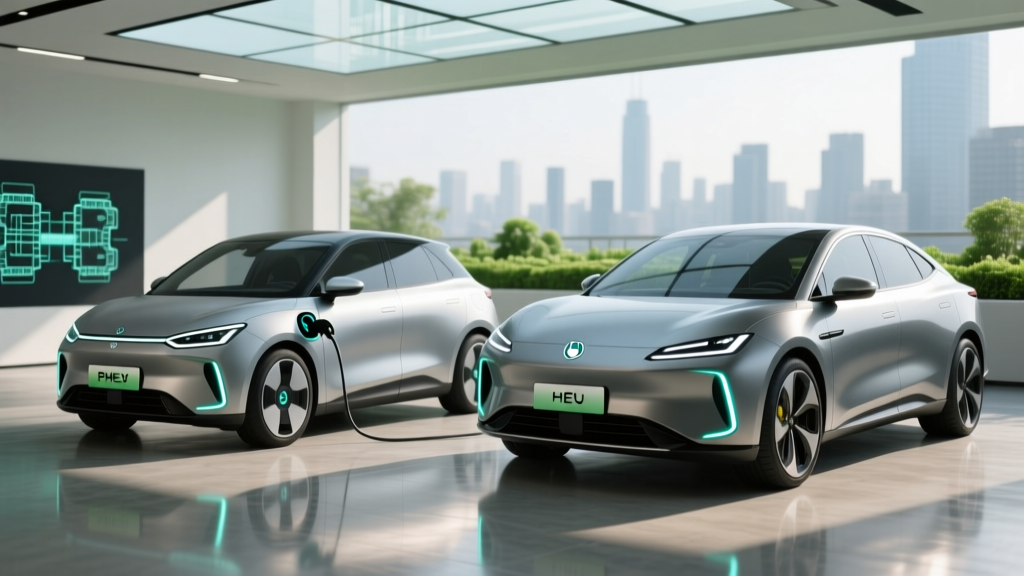
Before evaluating specs, it is essential to distinguish the three types of electrified powertrains relevant to the Sierra discussion:
| Type | Plug-In Required? | Electric-Only Range | How It Works |
|---|---|---|---|
| Conventional Hybrid (HEV) | No | None (motor assists engine) | Regenerative braking charges a small battery; electric motor supplements the gas engine |
| Plug-In Hybrid (PHEV) | Yes | Typically 20-50 miles | Larger battery allows electric-only driving; gas engine kicks in for longer trips |
| Mild Hybrid (MHEV) | No | None (motor cannot drive alone) | Small 48V system assists engine during acceleration and enables smoother stop/start |
The original GMC Sierra Hybrid (2009–2013) used a full two-mode hybrid system — a conventional HEV with a ~1.5 kWh nickel-metal hydride battery and two electric motors integrated into the transmission. That system delivered roughly 21 MPG combined in a 5,800-lb truck, which was remarkable at the time. GMC has not reintroduced a dedicated full-hybrid Sierra since. For 2026, the most fuel-efficient Sierra 1500 variant is the 3.0L Duramax turbo-diesel I6, which achieves diesel-level efficiency that rivals what a full hybrid gasoline system would deliver in a truck this size.
2026 GMC Sierra 1500 Fuel Economy: EPA MPG Breakdown
Below are the EPA-estimated fuel economy figures for the most efficiency-focused 2026 Sierra 1500 configurations, sourced from fueleconomy.gov:
| Powertrain | City MPG | Highway MPG | Combined MPG | Drivetrain |
|---|---|---|---|---|
| 3.0L Duramax Diesel I6 | 22 | 27 | 24 | 4WD |
| 3.0L Duramax Diesel I6 | 23 | 29 | 25 | 2WD |
| 2.7L TurboMax I4 (Mild Hybrid Assist) | 19 | 23 | 20 | 4WD |
| 5.3L V8 | 15 | 20 | 17 | 4WD |
| 6.2L V8 | 14 | 19 | 16 | 4WD |
Real-world MPG note: Diesel engines tend to deliver their EPA numbers more consistently than gasoline engines in mixed driving. In real-world highway cruising at 70 mph, owners of the Duramax-equipped Sierra report 26–28 MPG on level terrain — often exceeding the EPA highway estimate. City driving with frequent stops can dip to 19–20 MPG, slightly below the 22 MPG EPA city figure. If you do predominantly city driving with light loads, the Duramax still significantly outperforms the V8 options but won't match the 30+ MPG you'd see in a midsize hybrid like the Ford Maverick Hybrid.
Powertrain Specs: Engine, Motor, and Combined Output
| Specification | 3.0L Duramax Diesel I6 | 2.7L TurboMax I4 (MHEV) |
|---|---|---|
| Engine Type | Turbocharged 3.0L inline-6 diesel | Turbocharged 2.7L inline-4 gasoline |
| Horsepower | 305 hp @ 3,750 rpm | 310 hp @ 5,600 rpm |
| Torque | 495 lb-ft @ 1,500 rpm | 430 lb-ft @ 1,500 rpm |
| Hybrid Assist | None (pure diesel efficiency) | 48V mild-hybrid system |
| Transmission | 10-speed automatic | 10-speed automatic |
| Max Towing Capacity | 13,200 lbs (properly equipped) | 9,600 lbs (properly equipped) |
| 0–60 mph (est.) | ~6.8 seconds | ~7.2 seconds |
The 2.7L TurboMax I4 features a mild-hybrid system that uses a small 48-volt battery and integrated motor-generator. This system cannot propel the truck on electric power alone — it smooths out stop/start events, provides a brief torque fill during acceleration, and enables regenerative braking to recover small amounts of energy. It is not a full hybrid in the traditional sense, but it does contribute to a modest efficiency improvement over a purely non-hybrid gasoline engine of similar displacement.
Battery Warranty, Reliability, and Replacement Cost
GMC Hybrid/Mild-Hybrid Battery Warranty
GMC covers hybrid and mild-hybrid battery components under the Powertrain Limited Warranty: 5 years / 60,000 miles (whichever comes first). Additionally, emissions-related hybrid components may fall under the Federal Emissions Warranty: 8 years / 80,000 miles for certain parts. This is notably shorter than the 8-year/100,000-mile hybrid battery warranties offered by Toyota and Hyundai on their full-hybrid systems.
For the 48V mild-hybrid battery in the 2.7L TurboMax, real-world longevity data is still maturing since this powertrain was introduced for the 2022 model year. The 48V lithium-ion battery is relatively small (under 1 kWh) and operates under low stress compared to a full-hybrid or PHEV battery pack. Replacement cost for a 48V mild-hybrid battery is estimated at $800–$1,500 — far less than a full-hybrid or EV battery replacement.
The 3.0L Duramax diesel has no hybrid battery at all. Its reliability track record through the 2023+ generation (the LMZ engine code) has been strong, with the primary maintenance items being standard diesel service: DEF fluid top-ups (~$30–$50 every 5,000–7,000 miles), fuel filter changes, and oil changes with diesel-rated synthetic oil. Long-term durability of the inline-six Duramax is expected to exceed 250,000 miles with proper maintenance, consistent with GM's diesel lineage.
Pricing and Tax Credit Eligibility
The 2026 GMC Sierra 1500 with the 3.0L Duramax diesel is available across multiple trims. Here is the current MSRP breakdown:
| Trim | Base MSRP (4WD) | Diesel Engine Premium |
|---|---|---|
| SLE | ~$54,800 | +$1,295 |
| SLT | ~$58,300 | +$1,295 |
| AT4 | ~$65,200 | +$1,295 |
| Denali | ~$69,900 | +$1,295 |
| Denali Ultimate | ~$78,500 | Included |
Federal tax credit status: The 2026 GMC Sierra 1500 — whether equipped with the Duramax diesel or the 2.7L mild-hybrid — does not qualify for the IRS §30D Clean Vehicle Credit. That credit applies only to battery electric vehicles (BEVs) and plug-in hybrids (PHEVs) that meet battery sourcing, critical mineral, MSRP cap ($80,000 for trucks/SUVs), and buyer income requirements. Since the Sierra 1500 has no plug-in variant, no federal purchase credit applies.
Some states offer diesel efficiency incentives or commercial-use tax deductions for diesel trucks used in business, but these vary significantly by jurisdiction. Check your state's energy office or consult a tax professional for specifics.
Hybrid vs. PHEV vs. Full EV: Which Truck Fits You?
Decision Framework
Choose the GMC Sierra 1500 Diesel (hybrid-level efficiency) if:
- You need 13,000+ lb towing capacity and full-size truck utility
- You drive long highway miles where diesel efficiency shines (26+ MPG)
- You cannot charge at home or lack access to reliable public charging
- You want fuel savings without changing your refueling habits
Choose a PHEV truck (e.g., Ford F-150 PowerBoost if PHEV variant becomes available) if:
- You have home Level 2 charging and a short commute (<30 miles)
- You want electric-only daily driving with gas backup for long trips
- You want to qualify for partial federal tax credits (PHEV eligibility varies)
Choose a full EV truck (e.g., Rivian R1T, Chevrolet Silverado EV, Ford F-150 Lightning) if:
- You have reliable home charging (Level 2, 240V)
- Your daily driving is under 300 miles and you can plan charging on road trips
- You want to maximize fuel cost savings ($0.04–$0.12/mile vs. $0.18–$0.25/mile for diesel)
- You qualify for the full $7,500 §30D federal tax credit
Pros and Cons: 2026 GMC Sierra Hybrid-Efficiency Options
Pros
- Diesel achieves 24–25 MPG combined — best in full-size truck class without plug-in
- 495 lb-ft of torque at 1,500 rpm delivers exceptional towing performance
- No charging infrastructure needed; refuel at any diesel pump
- Strong resale value for diesel-equipped Sierra trims
- Mild-hybrid 2.7L offers a lower entry price with modest efficiency gains over V8
Cons
- No full hybrid (HEV) or plug-in hybrid (PHEV) Sierra available for 2026
- Diesel requires DEF fluid and higher-cost fuel in some regions
- No federal tax credit eligibility (not a BEV or PHEV)
- Mild-hybrid battery warranty shorter than Toyota/Hyundai hybrid coverage
- City MPG still trails dedicated hybrids like the Ford Maverick Hybrid (42 MPG combined)
Frequently Asked Questions
How many MPG does the GMC Sierra Hybrid get?
The original GMC Sierra Hybrid (discontinued after 2013) achieved approximately 21 MPG combined. For the 2026 model year, GMC does not offer a dedicated full-hybrid Sierra. The most efficient current Sierra is the 3.0L Duramax diesel at 24 MPG combined (4WD) or 25 MPG combined (2WD) per the EPA. Real-world highway driving can yield 26–28 MPG.
Does the 2026 GMC Sierra have a plug-in hybrid option?
No. GMC has not announced a plug-in hybrid (PHEV) variant of the Sierra 1500 for the 2026 model year. The electrified options are limited to the 48V mild-hybrid system on the 2.7L TurboMax I4 gasoline engine. If you need a PHEV truck, the closest current alternatives are the upcoming Ram 1500 REV (extended-range EV) or the Ford F-150 Lightning (full BEV).
Is the GMC Sierra mild-hybrid system reliable?
The 48V mild-hybrid system on the 2.7L TurboMax is relatively simple — it uses a small lithium-ion battery and belt-integrated motor-generator. There are no reports of widespread failures as of early 2026, but long-term data beyond 4–5 years is still limited. The system operates under low electrical stress, which typically favors longevity. GMC's powertrain warranty covers it for 5 years / 60,000 miles.
What does it cost to replace the mild-hybrid battery?
Estimated replacement cost for the 48V mild-hybrid battery is $800–$1,500 including labor. This is significantly less than a full-hybrid battery ($2,000–$4,000) or an EV traction battery ($8,000–$20,000+). The small size and low voltage of the 48V system keep costs manageable.
Does the GMC Sierra qualify for any federal tax credit?
No. The IRS §30D Clean Vehicle Credit applies only to battery electric vehicles and plug-in hybrids that meet battery component sourcing, critical mineral, MSRP, and buyer income requirements. The 2026 GMC Sierra 1500 — whether diesel, mild-hybrid, or conventional gasoline — does not have a plug-in variant and therefore does not qualify.
Should I buy the Sierra diesel or wait for a hybrid truck?
If you need a full-size truck now with hybrid-level efficiency and strong towing, the Sierra Duramax diesel is the pragmatic choice. If you can wait and are open to a plug-in solution, GM's Ultium-based Silverado EV (and a potential Sierra EV variant) may expand options in future model years. However, no official GMC Sierra Hybrid or Sierra PHEV has been announced as of 2026.