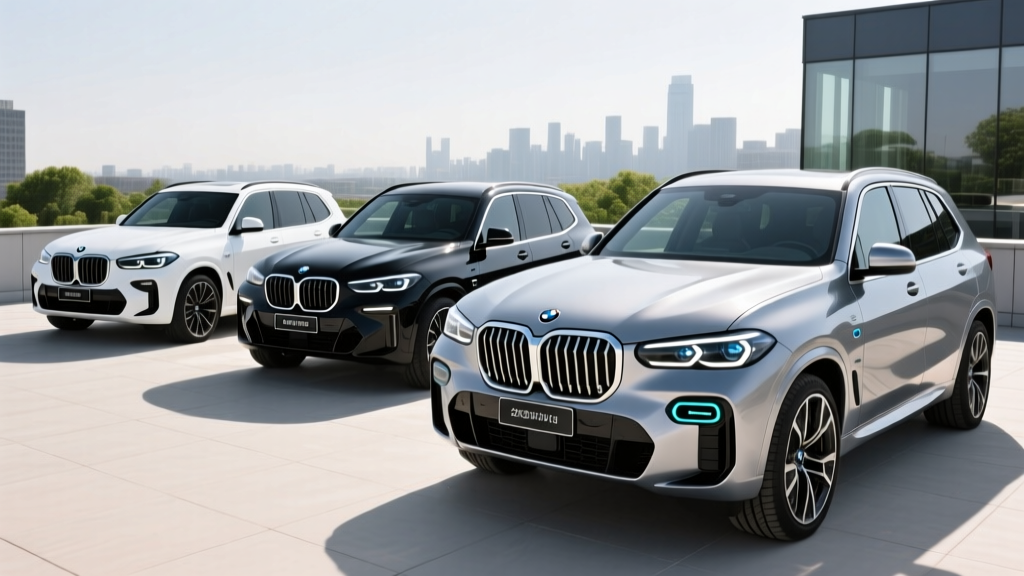
If you're shopping for a BMW hybrid SUV in 2026, the automaker offers three plug-in hybrid (PHEV) options spanning compact luxury to high-performance flagship territory. Unlike conventional hybrids (HEVs) that never plug in, every current BMW hybrid SUV is a plug-in — meaning you can drive 30–40 miles on electricity alone before the gasoline engine engages. That distinction matters enormously for daily commuting costs, tax credit eligibility, and whether you need a home charger.
This guide breaks down the 2026 BMW X5 xDrive50e, the redesigned X3 xDrive30e, and the performance-oriented XM, with exact EPA figures, battery specs, real-world efficiency observations, and a clear framework for deciding which one — if any — fits your garage.
HEV vs PHEV: Why Every BMW Hybrid SUV Plugs In
BMW discontinued its last conventional hybrid (non-plug-in) offerings years ago. The current BMW hybrid SUV lineup is entirely PHEV. Here's why that matters:
Conventional Hybrid (HEV)
- Small battery (~1–2 kWh), charged only by regenerative braking and the engine
- Never plugs in
- No electric-only driving beyond very low-speed creep
- No federal tax credit eligibility
- Example: Toyota RAV4 Hybrid
Plug-In Hybrid (PHEV)
- Larger battery (18–29 kWh usable), charges via plug or regen
- Plugs into Level 1 (120V) or Level 2 (240V) chargers
- 30–40 miles of electric-only range at highway speeds
- May qualify for partial or full §30D federal tax credit depending on battery sourcing
- Example: BMW X5 xDrive50e
The practical upshot: if you can charge at home overnight, a BMW PHEV lets you commute all week on electricity (costing roughly $0.04–$0.06 per mile depending on your utility rate) while keeping a gas engine for road trips. If you cannot charge at home or at work, a PHEV's advantage shrinks considerably — you'll mostly drive it as a heavy, less-efficient conventional hybrid once the battery depletes.
2026 BMW Hybrid SUV Lineup at a Glance
| Spec | X3 xDrive30e | X5 xDrive50e | XM |
|---|---|---|---|
| Powertrain | 2.0L turbo I4 + e-motor | 3.0L turbo I6 + e-motor | 4.4L twin-turbo V8 + e-motor |
| Combined HP | 292 hp | 483 hp | 644 hp (738 hp Label Red) |
| 0–60 mph | 5.9 sec | 4.6 sec | 4.1 sec (3.7 sec Label Red) |
| Battery (usable) | ~19.7 kWh | ~25.7 kWh | ~25.7 kWh |
| EPA Electric Range | ~37 mi | ~38 mi | ~31 mi |
| EPA Combined MPG (gas) | ~30 MPG | ~27 MPG | ~17 MPG |
| MPGe (electric + gas) | ~58 MPGe | ~56 MPGe | ~29 MPGe |
| Max AC Charge Rate | 7.4 kW (Level 2) | 7.4 kW (Level 2) | 7.4 kW (Level 2) |
| DC Fast Charge | No | No | No |
| 0–100% L2 Charge Time | ~3.25 hours | ~4.25 hours | ~4.25 hours |
| Total Range (est.) | ~420 mi | ~460 mi | ~350 mi |
| Starting MSRP | ~$58,900 | ~$74,500 | ~$160,000 |
Sources: fueleconomy.gov, BMW USA product specifications. Figures reflect 2026 model-year EPA estimates where available; some are carryover projections from the latest confirmed testing cycle.
Electric-Only Range: How Far Can a BMW PHEV Really Go?
EPA vs Real-World Electric Range
The X5 xDrive50e carries an EPA rating of approximately 38 electric-only miles. In real-world testing, expect 32–36 miles in mild weather at mixed speeds, dropping to 25–28 miles in freezing temperatures or sustained 75+ mph highway driving. The smaller X3 xDrive30e, despite a smaller battery, benefits from lower vehicle weight and achieves similar real-world results around 30–35 miles.
BMW's PHEV system defaults to electric mode at startup and can maintain electric-only driving up to roughly 84 mph. Above that speed — or under heavy throttle — the gasoline engine engages automatically. You can also select "Battery Control" mode to reserve charge for later (useful if you're highway-driving to a city destination where you want electric-only operation).
For context, the average American one-way commute is roughly 16 miles according to the U.S. Census Bureau. That means most X5 or X3 PHEV owners with home charging will complete their daily commute entirely on electricity, only burning gas on weekend trips or longer errands.
Fuel Economy Breakdown: MPG When the Battery Runs Out
| Model | City MPG (gas) | Highway MPG (gas) | Combined MPG (gas) | Combined MPGe |
|---|---|---|---|---|
| X3 xDrive30e | ~31 | ~29 | ~30 | ~58 |
| X5 xDrive50e | ~28 | ~26 | ~27 | ~56 |
| XM | ~18 | ~16 | ~17 | ~29 |
A critical note on interpreting these numbers: the MPGe figure (miles per gallon equivalent) blends electric and gasoline operation and is heavily influenced by how often you charge. If you charge daily and drive under 35 miles, your actual fuel consumption may approach zero gallons for weeks at a time. If you never charge, the combined gas-only MPG is your realistic baseline — and the X5's 27 MPG combined is respectable for a 5,400-pound luxury SUV, while the XM's 17 MPG reflects its V8 performance mission.
In city driving with a depleted battery, BMW's PHEVs often slightly exceed their EPA city ratings thanks to aggressive regenerative braking recapturing energy in stop-and-go traffic. Highway driving, by contrast, typically runs 1–3 MPG below the EPA highway figure due to aerodynamic drag and the engine working harder at sustained speed.
Charging the BMW PHEV Battery: Level 2 Only, No DC Fast Charging
Every 2026 BMW hybrid SUV uses a J1772 connector for Level 1 (120V household) and Level 2 (240V) AC charging. None of BMW's current PHEVs support DC fast charging — a deliberate engineering choice to save weight, cost, and packaging space in vehicles with relatively small batteries.
Here's what charging looks like in practice:
- Level 1 (120V, ~1.4 kW): Adds roughly 5–6 miles of range per hour. A full X5 charge takes approximately 20 hours — impractical for daily use unless your commute is very short.
- Level 2 (240V, 7.4 kW): Adds roughly 20–25 miles of range per hour. A full X5 charge completes in about 4–4.5 hours, easily replenishing overnight on a home wallbox or at a workplace charger.
BMW includes a portable Level 1 charging cord with each PHEV. For regular home use, a Level 2 wallbox (such as the BMW Wallbox or a third-party unit like a ChargePoint Home Flex) is strongly recommended. Expect $500–$800 for the equipment and $600–$2,000 for professional installation depending on your electrical panel's proximity to the garage and whether a panel upgrade is needed.
Because BMW PHEV batteries max out at 7.4 kW AC, there's no benefit to installing a 48-amp (11.5 kW) charger — a 32-amp (7.7 kW) circuit is sufficient and may save on installation costs.
Battery Warranty, Degradation, and Replacement Costs
BMW PHEV High-Voltage Battery Warranty
BMW covers the high-voltage battery in all U.S.-spec PHEVs for 8 years or 80,000 miles (whichever comes first) against defects and excessive capacity loss. California Air Resources Board (CARB) states extend this to 10 years or 150,000 miles for emissions-related components, which in practice includes the traction battery. BMW defines "excessive degradation" as falling below approximately 70% of original capacity during the warranty period.
Real-world degradation data from BMW PHEV owners suggests the high-voltage batteries hold up well. Because the battery is relatively small and the vehicle's thermal management system actively conditions it, most owners report 5–8% capacity loss over the first 4–5 years — well within the warranty threshold. The battery management system also maintains a top and bottom buffer (you never truly use 100% or 0% of the cells), which extends cycle life.
If replacement is needed out of warranty, expect the following approximate costs:
- X3 xDrive30e battery pack: $8,000–$12,000 (parts + labor)
- X5 xDrive50e battery pack: $12,000–$16,000 (parts + labor)
- XM battery pack: $12,000–$16,000 (parts + labor)
These are significant sums, but the likelihood of needing a full replacement within the vehicle's typical 10–12 year lifespan remains low based on current field data. Individual module replacement (rather than the full pack) may also be possible at lower cost, depending on the failure mode.
Federal Tax Credit Eligibility for BMW PHEVs
Under the current IRS §30D clean vehicle credit, plug-in hybrids with at least 7 kWh of battery capacity can qualify for up to $7,500 — but actual eligibility depends on a web of requirements that change annually:
- Battery sourcing: A percentage of critical minerals and battery components must be sourced from the U.S. or free-trade-agreement partners. BMW sources cells from suppliers with varying compliance — check the fueleconomy.gov tax credit lookup for the specific model and model year.
- MSRP cap: SUVs must have an MSRP at or below $80,000. This eliminates the XM entirely and restricts X5 trims to the base xDrive50e without excessive options.
- Buyer income cap: Modified AGI must not exceed $150,000 (single), $225,000 (head of household), or $300,000 (joint).
- Point-of-sale transfer: As of 2024, you can transfer the credit to the dealer at purchase, reducing your out-of-pocket cost immediately rather than waiting for tax filing.
- Final assembly: The vehicle must undergo final assembly in North America. The X5 PHEV is built in Spartanburg, South Carolina, which satisfies this requirement. Verify X3 assembly location for your model year, as production sourcing can shift.
As of early 2026, the X5 xDrive50e (base MSRP ~$74,500) is the strongest candidate for the full $7,500 credit when optioned under the $80,000 SUV cap. The X3 xDrive30e's credit status depends on battery-component sourcing compliance for the specific model year — always confirm on fueleconomy.gov before signing paperwork. The XM exceeds the MSRP cap and does not qualify.
Note: Tax rules are subject to legislative change. Consult a tax professional for advice specific to your situation.
BMW Hybrid SUV vs Full EV vs Gasoline SUV: Which Fits You?
Choose a BMW PHEV (X5 xDrive50e or X3 xDrive30e) if:
- You can install a Level 2 charger at home and your daily driving is under 35 miles
- You regularly take road trips of 200+ miles and don't want to plan around public charging
- You want luxury-badge refinement with significantly reduced (but not zero) fuel consumption
- You're not ready to commit to full-electric ownership due to apartment living, unreliable public charging in your area, or frequent long-distance towing
Choose a full EV (like the BMW iX) if:
- You have reliable home Level 2 charging and drive under 250 miles daily
- You want to eliminate oil changes, spark plugs, and transmission fluid forever
- You value the lowest per-mile energy cost (electricity at $0.04–$0.06/mi vs gasoline at $0.12–$0.18/mi for the X5 gas-only)
- You qualify for the full $7,500 credit on an eligible BEV
Choose a conventional gas SUV if:
- You cannot charge at home or at work
- Your budget is under $50,000 and the PHEV premium doesn't pencil out against fuel savings
- You drive very few miles annually (under 8,000), making fuel cost a minor line item
Pros and Cons of the BMW PHEV Lineup
Pros
- 30–38 miles of real-world electric commuting eliminates most daily gas use
- No range anxiety — gas engine provides 400+ total miles for road trips
- X5 xDrive50e delivers 483 hp and a 4.6-second 0–60 while achieving 27 MPG gas-only
- Spartanburg-built X5 qualifies for §30D final-assembly requirement
- 8-year/80,000-mile battery warranty (10yr/150k in CARB states)
- Regenerative braking extends brake pad life significantly
Cons
- No DC fast charging on any model — public charging is limited to slow AC
- PHEV premium over gas-only BMW trims: ~$8,000–$12,000 depending on model
- XM's 17 MPG gas-only and 31-mile electric range offer minimal efficiency benefit at $160K+
- Home Level 2 installation adds $1,100–$2,800 to first-year ownership cost
- Cargo space slightly reduced vs gas-only trims due to battery packaging
- Tax credit eligibility is uncertain for some models and trims due to sourcing rules
Frequently Asked Questions
How many MPG does a BMW hybrid SUV get?
The 2026 BMW X5 xDrive50e achieves an EPA-estimated 27 MPG combined (28 city / 26 highway) when operating on gasoline alone after the battery is depleted. The X3 xDrive30e returns approximately 30 MPG combined. The high-performance XM returns roughly 17 MPG combined. In daily use with regular charging, most owners use far less gasoline than these figures suggest — many X5 PHEV owners report using under 10 gallons per month during commuter-heavy driving.
How far can a BMW PHEV drive on electric only?
The X5 xDrive50e is EPA-rated for approximately 38 miles of electric-only range; the X3 xDrive30e achieves roughly 37 miles; the XM manages about 31 miles. Real-world results vary with temperature and driving style: expect 32–36 miles in mild conditions, 25–28 miles in freezing weather or at sustained highway speeds above 70 mph.
Do BMW hybrid SUVs need to be plugged in?
Yes — all current BMW hybrid SUVs are plug-in hybrids (PHEVs). While they will still drive as conventional hybrids if you never plug them in, you forfeit the electric-only range, most of the fuel savings, and the tax credit benefit. To get the value from a BMW PHEV, plan to plug in nightly at home using a Level 2 (240V) charger.
Is the BMW hybrid battery reliable and expensive to replace?
BMW PHEV batteries have proven reliable in field data, with most owners seeing 5–8% capacity loss over 4–5 years. The battery is covered by an 8-year/80,000-mile warranty (10yr/150k in CARB states) against defects and degradation below ~70% capacity. Out-of-warranty replacement runs $8,000–$16,000 depending on the model, though full-pack replacements remain uncommon within a typical ownership period.
Does the BMW X5 PHEV qualify for the $7,500 federal tax credit?
The X5 xDrive50e is a strong candidate for the §30D credit because it's assembled in Spartanburg, SC, and its base MSRP (~$74,500) falls under the $80,000 SUV cap. However, eligibility depends on battery-component and critical-mineral sourcing requirements that change periodically, plus your personal income limits. Always verify the specific model year on fueleconomy.gov and consult a tax professional before relying on the credit in your purchase decision.
Can I DC fast charge a BMW PHEV on a road trip?
No. None of BMW's current PHEV models support DC fast charging. The maximum charge rate is 7.4 kW on Level 2 AC, meaning a full recharge takes 3–4.5 hours. On road trips, you'll rely on the gasoline engine — which is precisely the PHEV's advantage over a full EV: no charging stops needed.