Hybrid vehicles occupy a compelling middle ground in 2026's automotive landscape. They deliver meaningful fuel savings without the range limitations or charging infrastructure dependencies of full battery-electric vehicles (BEVs). But the term "hybrid" now covers two very different technologies — conventional hybrids (HEVs) and plug-in hybrids (PHEVs) — each with distinct trade-offs that buyers need to understand before signing a purchase agreement.
This guide breaks down the real advantages and disadvantages of hybrid vehicles using EPA data, current MSRP figures, and ownership realities you won't find in dealership brochures.
HEV vs PHEV: Understanding the Two Hybrid Types
The single biggest source of buyer confusion in the hybrid segment is conflating conventional hybrids with plug-in hybrids. They share a name but operate differently.
| Feature | Conventional Hybrid (HEV) | Plug-in Hybrid (PHEV) |
|---|---|---|
| Plug-in charging | No — charges via regenerative braking and engine | Yes — requires Level 1 or Level 2 plug-in charging for EV range |
| Battery size | 0.6–1.6 kWh (small buffer) | 11–25 kWh (usable) |
| Electric-only driving | Very limited (under 1 mile at low speed) | 20–45 miles EPA typical |
| Gas engine | Always available, seamlessly blends with motor | Always available, kicks in after EV range depletes |
| Federal tax credit | Not eligible for §30D new-vehicle credit | Up to $7,500 under §30D (subject to income, MSRP, sourcing rules) |
| Upfront cost premium vs gas car | ~$1,000–$3,000 | ~$4,000–$9,000 |
The core distinction: an HEV is a gas car that uses a small battery and electric motor to assist the engine and recapture braking energy. A PHEV is essentially a short-range EV with a gas engine as a backup generator. Your daily driving pattern and home-charging access should determine which type you choose.
Advantages of Hybrid Vehicles
Superior Real-World Fuel Economy
Hybrids consistently outperform their EPA estimates in city driving, where regenerative braking recovers energy that gas-only cars waste as heat. Here's what current top-selling hybrids deliver:
| Vehicle (2026 MY) | Type | EPA City | EPA Highway | EPA Combined | Real-World Combined* |
|---|---|---|---|---|---|
| Toyota Prius LE | HEV | 57 mpg | 56 mpg | 57 mpg | 52–60 mpg |
| Honda Accord Hybrid Sport | HEV | 51 mpg | 44 mpg | 48 mpg | 44–50 mpg |
| Toyota RAV4 Hybrid XLE | HEV | 41 mpg | 38 mpg | 39 mpg | 36–42 mpg |
| Hyundai Tucson PHEV | PHEV | 80 MPGe | — | 80 MPGe (EV mode) / 35 mpg (gas) | 33–38 mpg (gas mode) |
| Toyota Prius Prime SE | PHEV | 127 MPGe | — | 127 MPGe (EV) / 52 mpg (gas) | 48–55 mpg (gas mode) |
*Real-world figures based on aggregated owner reports and independent testing. City-heavy routes often exceed EPA; highway-heavy and cold-weather driving typically fall 5–15% below. Source: fueleconomy.gov
For context, a comparable gas-only compact SUV averages 28–30 mpg combined. A RAV4 Hybrid at 39 mpg combined saves roughly $500–$700 annually in fuel at 15,000 miles/year and $3.40/gallon regular unleaded.
Zero Range Anxiety
This is the hybrid's strongest advantage over a BEV. With a full tank of gas, a Prius delivers roughly 530–560 miles of total range. A RAV4 Hybrid pushes past 580 miles. You fuel up at any gas station in three minutes. No route planning around chargers, no concern about broken public charging equipment, no cold-weather range degradation beyond the modest fuel-economy dip all vehicles experience.
Lower Maintenance Than Gas-Only Cars
Hybrids reduce wear on several components. Regenerative braking handles much of the deceleration load, extending brake pad life to 80,000–100,000 miles in many cases. The engine cycles off at stops and during low-load driving, reducing oil degradation and engine wear. Toyota and Honda hybrids use proven planetary-gear or series-parallel drivetrains with no traditional transmission to service.
PHEV-Specific Advantage: Electric-Only Commuting
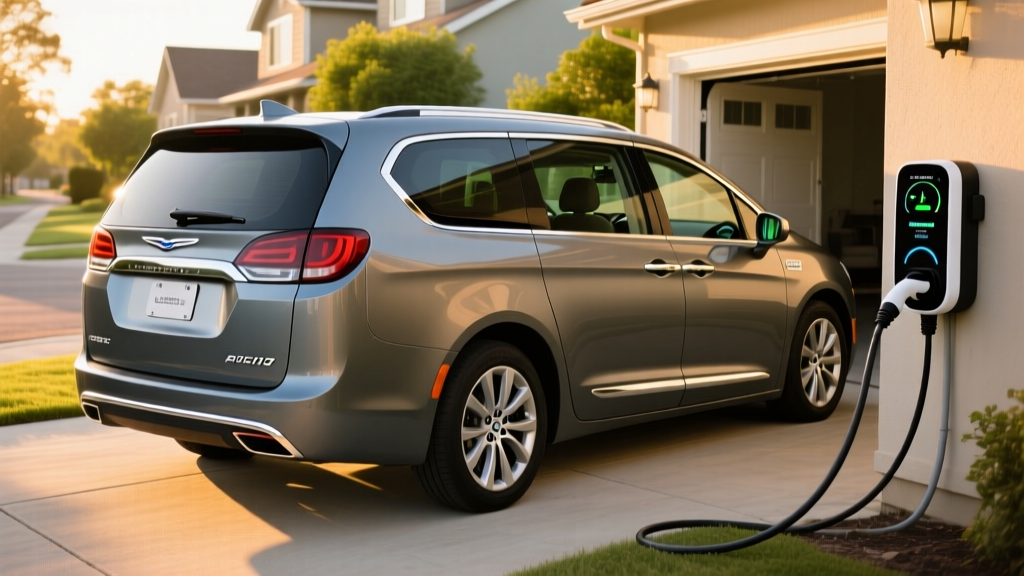
If you can charge at home, a PHEV lets you drive 25–45 miles on electricity alone — covering the average American's daily commute of roughly 35 miles round-trip (FHWA data). You burn zero gasoline on most weekdays while retaining a gas engine for road trips. The Toyota Prius Prime delivers 44 miles of EPA electric range; the Chrysler Pacifica PHEV offers 32 miles.
Battery Warranty Reality Check
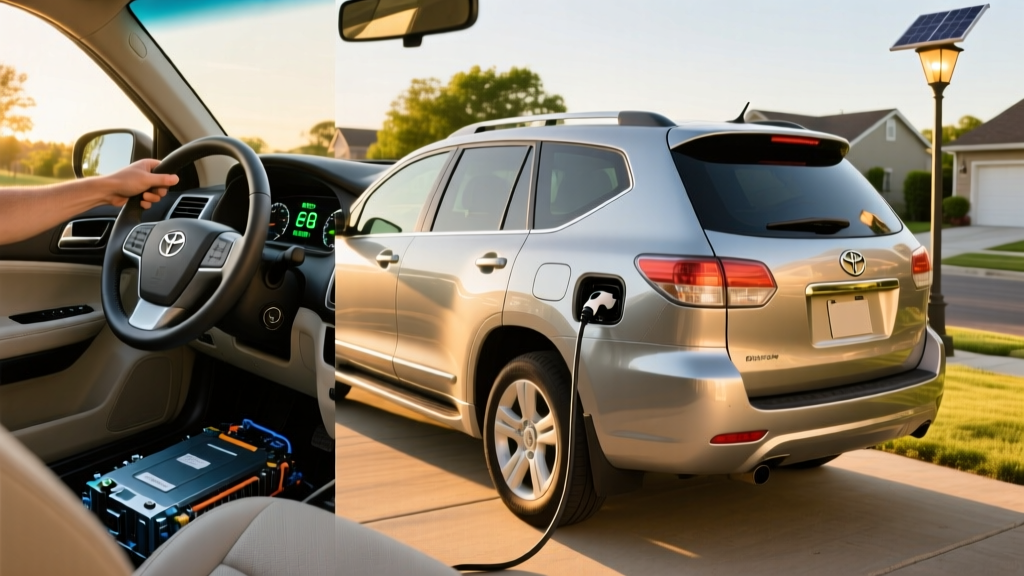
Federal law mandates that hybrid and PHEV batteries carry a minimum warranty of 8 years / 100,000 miles (10 years / 150,000 miles in California and states adopting CARB emissions standards). Toyota, Honda, and Hyundai all meet or exceed this. Out-of-pocket battery replacement for a mainstream hybrid (Prius, RAV4 Hybrid) currently ranges from $2,000 to $4,500 at a dealer, with refurbished units available for $1,000–$2,500 from independent hybrid specialists. Most hybrid batteries last 150,000–200,000+ miles with gradual capacity loss rather than sudden failure.
Disadvantages of Hybrid Vehicles
Higher Upfront Purchase Price
Hybrids carry a cost premium over their gas-only equivalents. A 2026 RAV4 Hybrid XLE starts at approximately $34,500 MSRP compared to the gas RAV4 XLE at roughly $32,000 — a $2,500 delta. For PHEVs, the gap widens: the Prius Prime SE starts around $34,500 versus the standard Prius LE at $29,000. That $5,500 premium can take 4–6 years to recoup through fuel savings alone, depending on your mileage and local gas prices.
PHEV Charging Complexity
Conventional HEVs require zero behavioral change — you just drive and fuel up normally. PHEVs, however, only deliver their efficiency advantage if you plug them in regularly. A PHEV driven without charging operates as a heavier, slightly less efficient conventional hybrid. If you lack access to home or workplace Level 2 charging (240V), a PHEV's value proposition collapses. Most PHEVs charge fully in 2–4 hours on a Level 2 outlet; Level 1 (120V standard outlet) charging takes 8–14 hours depending on battery size.
Notably, most PHEVs do not support DC fast charging. The notable exceptions include some larger-battery models like the Jeep Wrangler 4xe and certain European PHEVs. For the typical PHEV buyer, overnight Level 2 home charging is the practical standard.
Reduced Cargo and Interior Space (Some Models)
The hybrid battery pack requires packaging space. In some models, this reduces cargo volume or eliminates a spare tire. The RAV4 Hybrid loses roughly 2 cubic feet of under-floor cargo space compared to the gas version. The Honda CR-V Hybrid maintains nearly identical cargo volume due to clever under-floor battery placement — packaging varies significantly by model.
Limited Performance Upside
Mainstream hybrids prioritize efficiency over acceleration. The RAV4 Hybrid delivers 219 combined horsepower and a 0–60 mph time of approximately 7.4 seconds — adequate but not quick. The Prius LE produces 194 hp combined and runs 0–60 in about 7.2 seconds. Performance-oriented buyers may find hybrids underwhelming compared to turbocharged gas models or the instant torque of a BEV.
PHEV Tax Credit Uncertainty
Under IRS §30D rules, qualifying new PHEVs can receive up to $7,500 in federal tax credits (available as a point-of-sale transfer since 2024). However, eligibility depends on:
- MSRP caps: $80,000 for SUVs, vans, and trucks; $55,000 for sedans and other vehicles
- Buyer income limits: AGI must not exceed $150,000 (single), $225,000 (head of household), or $300,000 (joint)
- Battery sourcing requirements: Increasingly strict critical-mineral and battery-component rules that disqualify some models each year
- Battery capacity minimum: At least 7 kWh for PHEVs
These rules shift annually. Always verify current eligibility on IRS.gov before assuming a credit. Conventional HEVs do not qualify for the §30D new-vehicle credit, though the separate §25C energy-efficient home improvement credit does not apply to vehicles either.
Hybrid vs PHEV vs EV: Which Fits Your Life?
Choose a conventional hybrid (HEV) if:
- You cannot charge at home or at work
- You want maximum simplicity — no plugs, no apps, no behavioral changes
- You drive more than 15,000 miles/year and want fuel savings without upfront premium
- You regularly take long road trips through areas with sparse charging infrastructure
Choose a plug-in hybrid (PHEV) if:
- You have reliable Level 2 charging at home (garage or driveway)
- Your daily commute is under 40 miles round-trip
- You want EV-like operating costs on weekdays with gas-car freedom on weekends
- You qualify for the §30D tax credit, offsetting the purchase premium
Choose a full battery-electric vehicle (BEV) if:
- You have home charging and rarely drive more than 250 miles in a single day
- You want zero tailpipe emissions and minimal maintenance (no oil changes, no engine)
- You're willing to plan road trips around DC fast-charging networks
- You want the lowest per-mile fuel cost (electricity at $0.12/kWh ≈ $1.20/gallon equivalent)
Spec Comparison: Top 2026 Hybrid Models at a Glance
| Specification | 2026 Toyota Prius LE (HEV) | 2026 Toyota Prius Prime SE (PHEV) | 2026 Toyota RAV4 Hybrid XLE (HEV) |
|---|---|---|---|
| Powertrain | 2.0L 4-cyl + 2 electric motors | 2.0L 4-cyl + 2 electric motors | 2.5L 4-cyl + 2 electric motors |
| Combined HP | 194 hp | 220 hp | 219 hp |
| 0–60 mph | 7.2 sec | 6.6 sec | 7.4 sec |
| Battery (usable) | ~1.0 kWh (NiMH) | 13.6 kWh (Li-ion) | ~1.6 kWh (NiMH) |
| EV-only range | N/A | 44 miles (EPA) | N/A |
| EPA combined MPG / MPGe | 57 mpg | 127 MPGe (EV) / 52 mpg (gas) | 39 mpg |
| Total range | ~550 miles | ~530 miles (EV + gas) | ~580 miles |
| Level 2 charge time | N/A | ~4 hours | N/A |
| DC fast charge | No | No | No |
| Starting MSRP | ~$29,000 | ~$34,500 | ~$34,500 |
| Federal tax credit | Not eligible | Up to $3,750–$7,500* | Not eligible |
| Battery warranty | 10 yr / 150,000 mi | 10 yr / 150,000 mi | 10 yr / 150,000 mi |
*Tax credit amount depends on battery-sourcing compliance for the specific model year and build date. Verify on fueleconomy.gov and IRS.gov before purchase.
Long-Term Reliability and Battery Replacement Costs
Hybrid reliability is among the strongest arguments in the category's favor. Toyota's Hybrid Synergy Drive has been in continuous production since 1997, with over 25 million hybrid vehicles sold globally. The Prius consistently ranks at or near the top of reliability surveys.
The hybrid battery itself is the component buyers worry about most. Here's the data:
- Degradation pattern: Hybrid batteries lose capacity gradually. A 15-year-old Prius may show 15–25% capacity loss, which reduces electric-assist contribution but rarely renders the car undrivable.
- Failure rate: Independent repair shops report hybrid battery failure rates below 5% within the warranty period for Toyota and Honda models.
- Replacement cost (2026): New OEM battery — $2,000–$4,500 installed. Refurbished/reconditioned — $1,000–$2,500. Individual cell replacement (specialist shops) — $500–$1,500.
- Lifespan expectation: 150,000–250,000 miles is typical for Toyota and Honda hybrid batteries. Many original Prius batteries from 2004–2010 are still in service.
For PHEVs, the larger lithium-ion battery carries the same 8yr/100k minimum warranty but may experience more noticeable degradation over time due to deeper charge/discharge cycles. Budget $5,000–$9,000 for an out-of-warranty PHEV battery replacement depending on the model.
Frequently Asked Questions
How many MPG does a hybrid actually get in real driving?
Most mainstream HEVs deliver within 3–5 mpg of their EPA combined rating in mixed driving. City-heavy routes often exceed EPA estimates because regenerative braking recovers energy at low speeds. Highway-dominant driving and cold weather (below 35°F) reduce MPG by 5–15%. A Prius LE rated at 57 mpg combined typically returns 52–60 mpg for most owners.
How far can a PHEV go on electric only?
Current 2026 PHEVs range from 20 to 48 miles of EPA-rated electric-only range. The Prius Prime leads the segment at 44 miles. The Hyundai Tucson PHEV delivers approximately 33 miles. Highway speeds, cold weather, and aggressive acceleration reduce electric range by 15–30%. Once the battery depletes, the gas engine engages seamlessly.
Do conventional hybrids need to be plugged in?
No. Conventional hybrids (HEVs) charge their small battery entirely through regenerative braking and the gas engine. You never plug them in. Only plug-in hybrids (PHEVs) require external charging to access their electric-only driving range.
Is a hybrid more reliable than a gas-only car?
Historical data suggests yes, particularly for Toyota and Honda hybrids. The electric motor has fewer moving parts than a traditional transmission, regenerative braking reduces brake wear, and the engine operates under less stress due to electric assist. The battery is the primary long-term concern, but failure rates are low and warranties are extensive.
Does a hybrid qualify for any tax credit?
Conventional hybrids (HEVs) do not qualify for the federal §30D clean vehicle credit. Qualifying PHEVs can receive up to $7,500 under §30D, subject to buyer income caps, MSRP limits, and battery-sourcing requirements. Rules change frequently — verify on IRS.gov. Some states offer additional rebates for PHEVs; check your state energy office or afdc.energy.gov for local incentives.
What's the total cost of ownership advantage?
Over 5 years at 15,000 miles/year, a RAV4 Hybrid saves approximately $2,500–$3,500 in fuel compared to a gas RAV4 (assuming $3.40/gallon). Add reduced brake maintenance ($300–$500 savings) and the hybrid premium is often recouped within 4–6 years. PHEVs charged at home save more — electricity at $0.14/kWh costs roughly $0.04/mile versus $0.12–$0.15/mile for gasoline.
Bottom Line
Advantages
- 35–57 mpg combined — 30–80% fuel savings over gas equivalents
- Zero range anxiety — fuel anywhere in minutes
- Proven long-term reliability with 8–10 year battery warranties
- No charging infrastructure needed (HEVs)
- Reduced brake wear from regenerative braking
- PHEVs offer EV-like commuting with gas-car flexibility
Disadvantages
- $1,000–$9,000 upfront premium over gas models
- PHEVs require home charging access to realize value
- Most PHEVs lack DC fast-charging capability
- Battery replacement costs $2,000–$9,000 out of warranty
- Some models sacrifice cargo space for battery packaging
- Modest acceleration in most mainstream hybrids
- Federal tax credit eligibility uncertain and subject to annual rule changes
The advantages of hybrid vehicles outweigh the disadvantages for buyers who lack reliable EV charging access, drive long or unpredictable routes, or want a proven technology with minimal lifestyle adjustment. PHEVs reward buyers who can charge at home and commute under 40 miles daily. Neither hybrid type is the cheapest option at purchase — but both deliver measurable, long-term ownership savings backed by decades of real-world data.