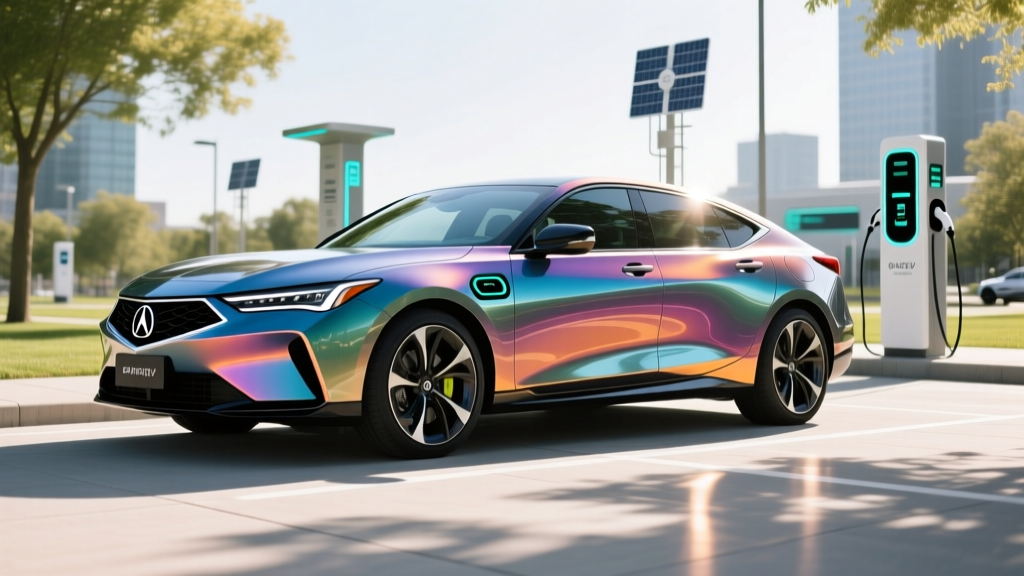
If you're asking whether Acura makes a hybrid car, the short answer is yes — but with an important caveat. As of the 2026 model year, Acura offers one plug-in hybrid (the RDX PHEV) and does not sell a conventional self-charging hybrid (HEV) in the U.S. market. That makes Acura's electrification strategy narrower than rivals like Lexus or BMW, and it's essential to understand exactly what's available before you walk into a dealership.
This guide breaks down every electrified Acura you can buy today, with exact EPA figures, powertrain specs, real-world efficiency expectations, battery warranty details, and federal tax credit eligibility under current IRS §30D rules.
Acura's Electrified Lineup: What's Actually Available in 2026
Acura's approach to electrification has been cautious. While parent company Honda has invested heavily in both conventional hybrids (the Accord Hybrid, CR-V Hybrid) and the all-electric Prologue, Acura has focused its electrified offering on a single plug-in hybrid variant of its best-selling compact SUV.
HEV vs. PHEV — What's the Difference?
Conventional Hybrid (HEV): Uses a small battery (typically 1–2 kWh) recharged by regenerative braking and the gasoline engine. You never plug it in. Fuel economy improves across all driving, especially in stop-and-go city traffic. Acura does not currently sell an HEV in the U.S.
Plug-In Hybrid (PHEV): Carries a larger battery (15–25 kWh) that you can plug in to recharge. It offers a meaningful electric-only driving range (typically 25–50 miles) before the gasoline engine takes over. The 2026 Acura RDX PHEV is the brand's sole electrified model.
2026 Acura RDX PHEV: Full Spec Breakdown
The RDX PHEV is the only way to get an electrified Acura today. It pairs a turbocharged 2.0-liter four-cylinder engine with an electric motor and a larger lithium-ion battery pack compared to the standard RDX. Here are the exact numbers:
| Specification | 2026 Acura RDX PHEV |
|---|---|
| Powertrain | 2.0L turbo I-4 + electric motor |
| Combined Horsepower | 302 hp |
| Combined Torque | 354 lb-ft |
| Battery Capacity (usable) | 17.0 kWh (lithium-ion, NMC) |
| EPA Electric-Only Range | 37 miles |
| Total Combined Range (EV + Gas) | ~410 miles |
| EPA MPGe (electric + gas combined) | 85 MPGe |
| EPA MPG (gas-only, after battery depleted) | 30 city / 29 highway / 29 combined |
| Level 2 Charging (240V, 32A) | ~5.0 hours (0–100%) |
| Level 1 Charging (120V, 12A) | ~14 hours (0–100%) |
| DC Fast Charging | Not available |
| 0–60 mph | 6.1 seconds |
| Drivetrain | SH-AWD (standard) |
| Base MSRP (Technology Package) | $52,400 |
| As-Tested MSRP (Advance Package) | $57,900 |
EPA MPG vs. Real-World Efficiency: What to Actually Expect
The EPA numbers tell part of the story, but real-world PHEV efficiency depends almost entirely on your daily driving habits and charging routine.
| Driving Scenario | Expected Efficiency |
|---|---|
| Daily commute under 35 miles (charged nightly) | 95–100% electric; near-zero gas use |
| Mixed driving, charging most days | 50–70 MPGe equivalent |
| Road trip / highway driving (battery depleted) | 27–29 MPG (gas-only) |
| Never charging (operating as a heavy hybrid) | 25–28 MPG |
| Cold weather (below 30°F), battery depleted | 24–26 MPG; electric range drops ~20% |
The critical takeaway: if you can charge at home every night and your round-trip commute is under 37 miles, the RDX PHEV will run almost entirely on electricity for daily driving. If you can't charge regularly, you're carrying 500+ pounds of battery you're not using — and your gas-only MPG will be slightly worse than a conventional RDX (which gets 21/27/23 EPA).
Charging the RDX PHEV: Home Setup and Costs
The RDX PHEV uses a standard J1772 connector for Level 1 and Level 2 AC charging. It does not support DC fast charging — a notable omission that means you cannot top up quickly on a road trip. For a PHEV with a 17 kWh battery, however, this is less of a practical concern than it would be for a full EV.
Level 1 (120V household outlet): Adds roughly 3–4 miles of range per hour. A full charge from empty takes about 14 hours. This works if you can plug in overnight and drive fewer than 30 miles the next day.
Level 2 (240V home charger): Adds roughly 12–14 miles of range per hour. A full charge takes approximately 5 hours. Most PHEV owners install a 32-amp Level 2 charger, which costs between $500 and $1,500 for the unit and $800 to $2,500 for professional installation depending on your electrical panel's capacity and proximity to the garage. A licensed electrician should assess whether your panel needs an upgrade — older 100-amp panels may require a $1,500–$3,000 upgrade to support a dedicated 40-amp circuit.
At a national average electricity rate of $0.17/kWh, fully charging the RDX PHEV's 17 kWh battery costs approximately $2.89 — enough for 37 miles of electric driving, or about $0.08 per mile. Compare that to gasoline at $3.40/gallon and 29 MPG, which works out to roughly $0.12 per mile.
Battery Warranty, Reliability, and Replacement Cost
Hybrid and PHEV battery longevity is consistently the top concern for buyers considering their first electrified vehicle. Here's what Acura provides:
Acura PHEV Battery Warranty
- Hybrid/PHEV battery warranty: 8 years / 100,000 miles (10 years / 150,000 miles in CARB states including CA, NY, MA, CT, and others)
- Capacity retention threshold: Warranty covers defects and capacity loss below 60% of original capacity
- Powertrain warranty: 6 years / 70,000 miles
- Limited vehicle warranty: 4 years / 50,000 miles
Honda and Acura's hybrid systems have demonstrated strong long-term reliability. Independent data from sources like Consumer Reports and J.D. Power consistently rank Honda/Acura hybrid powertrains among the most dependable. The lithium-ion packs in modern PHEVs are engineered with thermal management systems and conservative state-of-charge buffers (the car never uses the top or bottom ~10% of the battery) that significantly slow degradation.
If the battery does need replacement outside of warranty, expect a cost between $4,000 and $7,500 for the pack itself plus labor, based on current Honda/Acura hybrid battery pricing. However, out-of-warranty PHEV battery failures before 150,000 miles remain uncommon in real-world ownership data.
Federal Tax Credit Eligibility for the Acura RDX PHEV
Under the IRS §30D Clean Vehicle Credit, the 2026 Acura RDX PHEV may qualify for a federal tax credit — but eligibility depends on several factors that change frequently. As of early 2026, here are the key requirements:
- Battery capacity: Must be at least 7 kWh — the RDX PHEV's 17.0 kWh battery qualifies.
- MSRP cap: SUVs must have an MSRP at or below $80,000 — all RDX PHEV trims qualify.
- Buyer income limits: Modified AGI must not exceed $150,000 (single), $225,000 (head of household), or $300,000 (joint filers).
- Critical minerals and battery component sourcing: The vehicle must meet phased-in percentages for U.S.-sourced critical minerals and North American battery component manufacturing. These thresholds increase annually and can change a vehicle's eligibility mid-year.
- Point-of-sale transfer: Buyers can elect to transfer the credit to the dealer at purchase, reducing the purchase price directly rather than waiting for a tax refund.
The RDX PHEV's credit amount depends on current battery sourcing compliance. Check the latest eligibility list at fueleconomy.gov and confirm with your tax professional before purchasing, as sourcing rules have disqualified several PHEVs in recent years. The IRS maintains an updated list at irs.gov.
Who Should Buy the Acura RDX PHEV — and Who Shouldn't
Pros
- 37 miles of electric-only range covers most daily commutes
- SH-AWD standard — excellent all-weather capability
- 302 combined hp makes it the quickest RDX in the lineup
- No range anxiety — gas engine for longer trips
- Strong reliability track record from Honda/Acura hybrid systems
- Premium interior with Acura's latest tech suite
Cons
- No DC fast charging — a drawback for road-trip top-ups
- Gas-only MPG (29 combined) is only marginally better than the standard RDX
- $52,400 starting price is a significant premium over the gas RDX
- Tax credit eligibility is uncertain and subject to sourcing-rule changes
- Only one electrified Acura model — no sedan or larger SUV PHEV option
- Cargo space slightly reduced due to battery placement
Choose the RDX PHEV if:
- You can charge at home nightly (garage or driveway with 120V/240V access)
- Your daily round-trip commute is under 35–40 miles
- You want AWD and premium features but aren't ready for a full EV
- You regularly take road trips where charging infrastructure is sparse
Choose a full EV (like the Acura ZDX) if:
- You want zero gasoline use and lower per-mile fuel costs
- You have reliable home charging and your daily driving is predictable
- You want access to DC fast charging for road trips
Choose the standard gas RDX if:
- You cannot charge at home or at work
- Your budget is under $48,000
- You drive mostly highway miles where the PHEV's electric advantage is minimal
How the RDX PHEV Compares to Rival Luxury PHEVs
The RDX PHEV competes in a small but growing segment of luxury compact PHEV SUVs. Key rivals include the BMW X3 xDrive30e (35 miles electric, 28 MPG gas-only, ~$54,000), the Lexus NX 450h+ (37 miles electric, 36 MPG gas-only, ~$59,000), and the Volvo XC60 Recharge (35 miles electric, 27 MPG gas-only, ~$58,000). The RDX PHEV undercuts most of these on price while matching electric range, though the Lexus NX 450h+ delivers notably better gas-only fuel economy thanks to Toyota's mature hybrid system.
For a detailed efficiency comparison, see the EPA's official data at fueleconomy.gov.
Frequently Asked Questions
Does Acura make a conventional hybrid (HEV) that doesn't need to be plugged in?
No. As of the 2026 model year, Acura does not sell a conventional self-charging hybrid in the U.S. The only electrified Acura is the RDX PHEV, which benefits significantly from being plugged in to recharge its larger battery. If you want a luxury Honda-platform hybrid that doesn't require plugging in, the closest option is the Honda CR-V Hybrid, which shares a platform with the RDX but wears a Honda badge.
How many MPG does the Acura RDX PHEV get?
Once the battery is depleted, the RDX PHEV gets an EPA-rated 30 city / 29 highway / 29 combined MPG on gasoline alone. When factoring in electric driving, the combined rating is 85 MPGe. Real-world gas-only MPG tends to land between 27 and 29 depending on driving style, terrain, and temperature.
How far can the Acura RDX PHEV go on electric only?
The EPA rates the RDX PHEV at 37 miles of electric-only range. In real-world conditions, expect 30–35 miles in mild weather with mixed city/highway driving, and as little as 25–28 miles in cold weather (below 30°F) when the cabin heater draws additional power from the battery.
Is the Acura RDX PHEV reliable?
Acura and Honda hybrid powertrains have historically ranked among the most reliable in the industry. The RDX PHEV's battery is covered by an 8-year/100,000-mile warranty (10 years/150,000 miles in CARB states). Out-of-warranty battery replacement costs approximately $4,000–$7,500, though premature failures are rare based on long-term Honda hybrid data.
Does the Acura RDX PHEV qualify for the $7,500 federal tax credit?
It may, but eligibility depends on current battery sourcing rules, your income, and the vehicle's MSRP — all of which are subject to change. The RDX PHEV meets the battery capacity and MSRP requirements, but critical-mineral and component-sourcing thresholds must be verified at the time of purchase. Always check the IRS qualified vehicles list and consult a tax professional before relying on the credit.
Can I charge the RDX PHEV at a public DC fast charger?
No. The RDX PHEV does not have a DC fast charging port. It can only charge via AC power using a J1772 connector — either Level 1 (120V) or Level 2 (240V). Public Level 2 chargers at shopping centers or workplaces are compatible, but CCS or NACS DC fast chargers will not work.
Does Acura make an all-electric vehicle?
Yes. Acura offers the ZDX, a fully electric SUV built on GM's Ultium platform with up to 325 miles of EPA range. If you're considering the RDX PHEV but have home charging and predictable driving patterns, the ZDX is worth cross-shopping as a zero-emissions alternative.